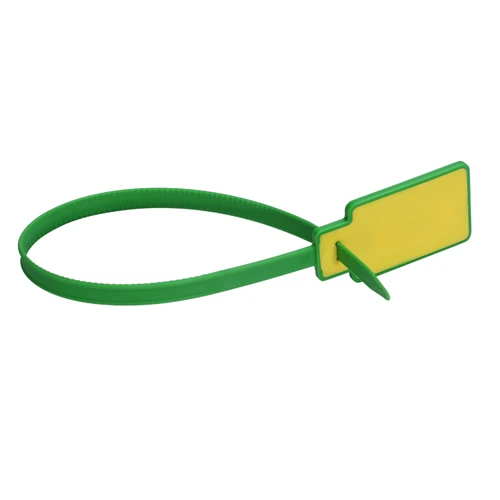
RFID Cable Tie Tags: Loop, Lock & Reader Selection
Updated 2026-09-10
An RFID cable tie tag combines a fastening strap with an identification head for objects that lack a convenient flat label area. Select the usable loop size, lock design and chip for the actual asset and reader. A one-way strap can provide evidence of removal, but a locking tie does not by itself authenticate an asset or report an electronic tamper state.
- MOQ
- 1,000 pieces · standard baseline
- Lead time
- Confirm availability
- Samples
- Stock or custom
Confirm the selected construction, chip and customization.
Preparation and transport are scheduled separately.
Confirm availability, fees, freight and applicable credits.
- Project quote after chip, construction, encoding and quantity review
- Approve the configuration and applicable artwork or data before production
- Stock and custom sample terms are confirmed before shipment
Selection & sample approval
Choose the fastening function before the chip
Include with your request
- Specify the object diameter, strap route, clearance and acceptable contact with the asset.
- Choose a one-way or reusable closure and define what removal evidence is required.
- Match an HF or UHF configuration to the reading task and plan the printed identification face.
Check on the sample
- Close the tie around actual assets and check retention, snagging and handling access.
- Read it in the closed position near the asset’s metal or liquid contents.
- Assess the agreed removal attempts separately for visible damage and RF response.
Spec Check
What to confirm before you sample this tag
Surface material, enclosure, attachment method, and environmental limits usually matter more than a broad tag name alone.
| Construction | Plastic cable tie with an RFID head; approve the material and lock variant |
| Size | Confirm usable loop diameter, strap length and head dimensions in the drawing |
| RF Configuration | HF 13.56 MHz or UHF; select chip and reader protocol separately |
| Marking | Confirm visible ID, artwork and mapping to encoded data |
| Mechanical Acceptance | Agree retention, closure and removal tests; no default pull-strength guarantee |
| Read Performance | Test the closed tie on the actual object |
| MOQ & Timing | Confirm quantities per colour, print and chip configuration in the quote |
Shortlist Logic
Why buyers shortlist this tag format
These features help teams decide whether the tag suits the environment, installation method, and read expectations of the real workflow.
Use Cases
Where this tag format usually works best
Use cases matter because the right tag depends on surface, environment, attachment, and read distance in the field.
Returnable container identification
Pipe and equipment identification
Asset attachment without a flat label area
RFID Cable Tie Tag Types
1A fastening choice with an identification function
A cable tie is useful when adhesive cannot contact a suitable surface, but the strap and tag head still need a safe location. Check that the tie cannot enter moving parts, obstruct handles or damage the item. A larger head may offer more print area while requiring more clearance.
2Define what tamper evidence means for your workflow
Cutting a one-way strap may leave obvious physical evidence while the chip continues to respond. If the project needs a reported tamper state, specify that separately with the detection circuit and software behavior. Do not use the existence of a lock as proof of tag authenticity.
How Ordering Works
From inquiry to delivered rfid cable tie tag in four steps
Agree the configuration, evaluation and release conditions for this order before planning a rollout.
- 1After spec review
Send your inquiry
Send the intended application, reader or system model, selected construction, quantities per design and delivery destination.
- 2Terms confirmed
Validate a representative sample
Agree the sample configuration and charges, then use the product-specific checks on this page before approving production.
- 3You control the clock
Approve the configuration and acceptance plan
Record the drawing revision, chip, materials, identification data and agreed acceptance criteria in the order approval.
- 4Schedule confirmed in the quotation
Production & delivery
Confirm MOQ, production timing after approval, inspection, packing, shipping terms and required arrival date for this configuration.
Details in writing:sample policy ·shipping & Incoterms ·quality control process
Supplier Fit
Why buyers source RFID Cable Tie Tag from RFIDAK
Once the format is right, most teams still need confidence in manufacturing control, sample support, and repeat-order reliability.
Company management-system scope and finished-product evidence are different. Review the certification scope.
RFID sourcing, specification review and production coordination with partner lines.
Test compatibility before bulk approval; stock and custom sample terms follow the published sample policy.
Next Reading
What to read before you lock the tag shortlist
These guides help buyers compare environments, tag formats, and mounting logic before they commit to the first sample plan.
Comparison Pages
Useful if you are still choosing between two directions
These head-to-head pages help buyers compare chip, frequency, material or format decisions before they lock a sample plan for this product.
Commercial Fit
How buyers usually move this product from shortlist to sample
Most inquiry-ready visitors want to know whether this product matches their workflow, region and approval stage. These cues help them move faster without leaving the product page.
Quote Checklist
What to send us for a faster recommendation
- Object, surface material, available mounting area and proposed attachment; include a non-sensitive installation photo or drawing.
- Reader model, protocol, installation region and the required checkpoint or reading zone.
- Temperature with duration, chemicals, pressure, cleaning and mechanical exposure over the actual process.
- Identifier format, print-to-chip mapping, sample quantities, production quantity and delivery destination.
Market Notes
Regional conversations often tied to this category
Before You Order
Procurement guides every RFID Tags buyer reads first
Five short reads on the procurement-side topics every B2B RFID buyer wants answered before signing a quote — MOQ thresholds, lead time reality, pricing transparency, sample policy, and how to audit a Chinese factory before your first order.
Buyer Questions
Questions buyers usually ask before sample approval
These FAQs cover the points that usually come up between a first shortlist and a real sample or quote request.
What quantity and specifications are needed to quote RFID Cable Tie Tag?+
Published order guidance: 1,000 pieces standard category baseline; confirm the selected construction, chip and customization. Specify the chip, dimensions, construction, customization and quantity per design. Include the destination and required date so the offer can identify setup, packing and freight separately.
Can I evaluate RFID Cable Tie Tag before a bulk order?+
Request the available configuration and agree the sample test. The standard policy allows up to 5 free stock pieces; buyer-paid express freight is $25–60, credited against the first production order over $500. Custom samples and qualified evaluation kits have separate terms; confirm which path applies to this product.
How is the lead time for RFID Cable Tie Tag confirmed?+
Request the schedule for the exact configuration and quantity. The schedule depends on approved specifications, materials, artwork or data where required, and the agreed payment conditions. Preparation, carrier transit and destination clearance are separate; confirm the requested arrival date in the quotation.
How do I check RFID Cable Tie Tag compatibility?+
Match the chip protocol, memory and data format to the production reader and software. A shared frequency or similar product shape does not establish compatibility. Validate a representative sample in the intended installation.
What customization and evidence should I request for RFID Cable Tie Tag?+
Agree printing, numbering, attachment and encoding only where supported by the selected construction and chip. Factory identifiers, writable user memory and application keys are different fields. Specify the required inspection and environment tests, and request evidence covering the actual finished product and destination.
How is international delivery of RFID Cable Tie Tag quoted?+
Provide the destination, quantity and packing requirement. Agree the transport mode, named place or port, Incoterms version, importer, insurance and required documents before shipment. Freight cost and risk transfer can occur at different points. Refer to the shipping and Incoterms page for the quotation checklist; no single transit time applies to every destination.