Inventory & logistics
UHF RFID labels
For item, carton and asset identification with a dedicated UHF reader.
- Technology
- UHF / EPC Gen2
- Confirm first
- Country of use, reader, item contents and EPC data format
RFIDAK / Identification that fits
UHF for inventory. NFC for phone interactions. Library labels for your installed system. Start with the reader, then match the label to the item and your printing process.
Printed or blank · Encoding by specification · Rolls or individual labels

Choose the reading workflow
Start with one of these four formats.
Confirm the exact inlay before sampling.
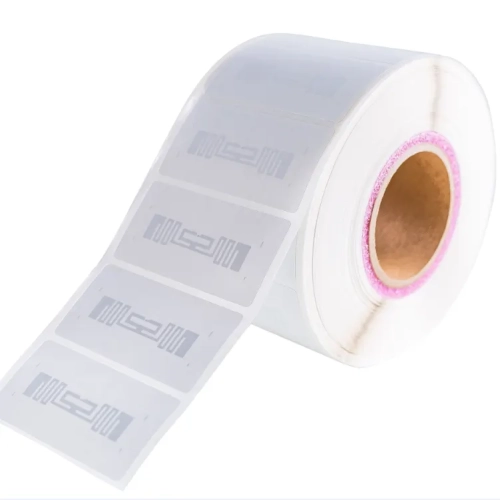
Inventory & logistics
For item, carton and asset identification with a dedicated UHF reader.
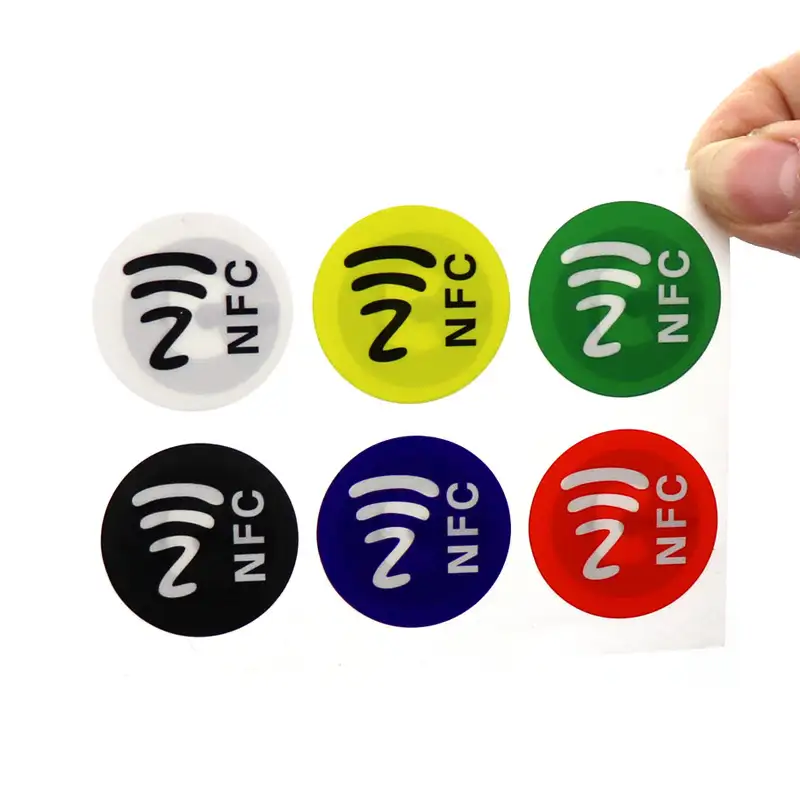
Phone taps & connected packaging
For an intentional tap that opens product information or another supported NFC experience.
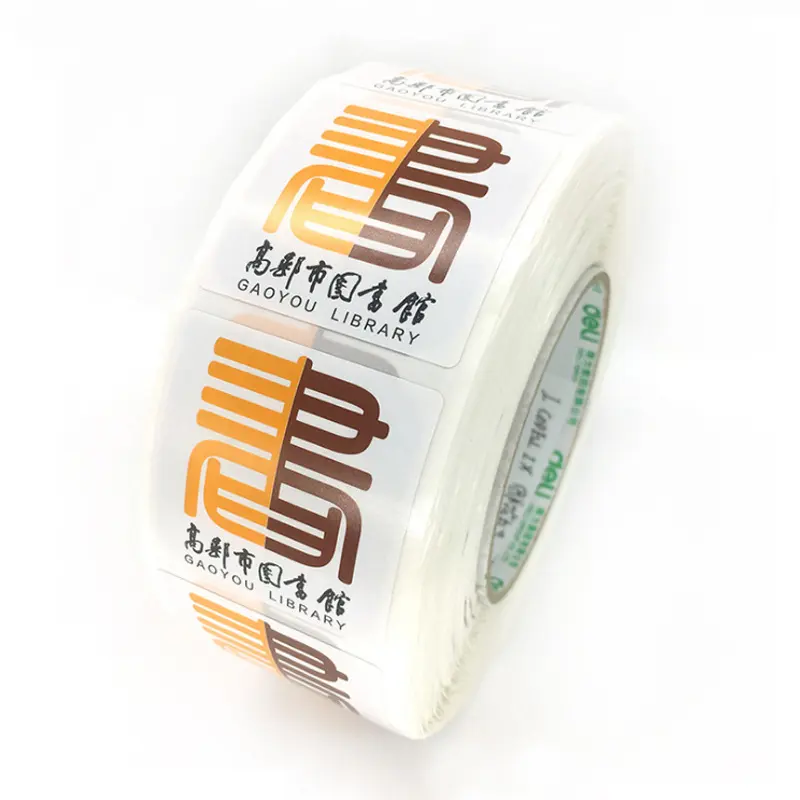
HF / 13.56 MHz
For libraries using compatible HF readers, self-service stations and security gates.
Installed protocol, library data format, security function and placement.
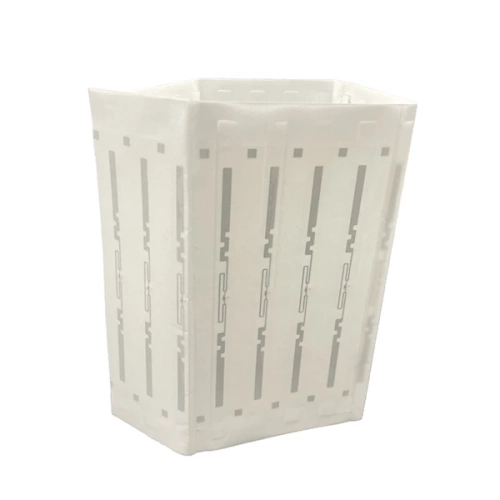
UHF / EPC Gen2
A narrow label format for projects built around a UHF reading workflow.
Available space, file contents, reader position and data mapping.
Library readers and data formats vary. Match the existing installation before choosing HF or UHF; changing the label alone does not migrate the system.
Specify the complete construction
A label that sticks well must also read well.
Check both on your actual product.
Print method, abrasion, moisture and the visible finish.
Protocol, memory, geometry and performance on the item.
Surface, application temperature, permanence and removal.
Swipe to see the surface checks.
| Where it goes | What to tell us | What to check |
|---|---|---|
| Paper & cardboard | Coatings, dust, texture and available flat area. | Adhesive bond, barcode quality and reads on the final carton or item. |
| Plastic packaging | Resin, curvature, flexibility and surface preparation. | Edge lift, label position and reading after normal handling. |
| Metal & foil | Metal location, foil layers and space for a special construction. | RF performance with the actual surface and any required spacer. |
| Glass & filled containers | Container contents, glass treatment, label side and condensation. | Read behavior on the filled container and adhesion in its working conditions. |
For cold rooms, outdoor use or chemicals, state both application and service conditions. Request the relevant material specification and agree the sample acceptance criteria.
Discuss an alternative construction for metal mounting.
Confirm glass treatment, mounting side and reader lane.
Specify the visible and electronic response to removal.
From sample to production roll
A compatible printable surface does not establish RFID encoding compatibility. Approve the roll construction and data workflow together.
Send your printer requirements →Finished width and length, label pitch and gap, liner width, inlay position, core diameter, maximum roll diameter and winding direction.
Share the exact printer and RFID module, ribbon or print process, chip and sample encoding file. Verify calibration and read-back on a sample roll.
Zebra model-specific inlay guidance ↗Define which data belongs in the EPC or writable memory, which appears in a barcode or QR code, and what the output file should contain. Agree how duplicate or failed records are handled.
GS1: EPC, user memory and TID ↗Test feeding, print quality, encoding and reading on the actual items, including filled or stacked packages where relevant. Record the accepted setup before the production order.
Build a useful inquiry
Select what you know. Then add size, quantity, printer or reader, encoding and delivery requirements on the contact page.
Request separate sample, setup, unit price and freight costs. MOQ and timing depend on the reviewed configuration.
Skip these choices and contact us →Buyer questions
Reviewed September 9, 2026.
RFID label and RFID sticker commonly describe an adhesive construction containing a chip and antenna, often with a printable face. An inlay is the chip-and-antenna assembly used within that construction; wet inlays include an adhesive layer. Specify the finished label size, face stock, adhesive and delivery format so the quote covers the product you intend to apply.
Start with the reading device. NFC stickers support compatible phone interactions at 13.56 MHz; UHF inventory labels need a compatible UHF reader. A phone’s built-in NFC function does not read an ordinary UHF EPC Gen2 label. For a project needing both workflows, discuss a separate or dual-technology construction and test both interactions before ordering.
Read distance depends on the finished inlay, label size, mounting surface, item contents, orientation, reader, antenna and operating conditions. State the distance and reading task you need, then agree a sample test on representative items. A successful single-label read does not establish the result for stacked cartons, filled containers or a moving batch.
Metal, foil and liquid can change RF performance. A different inlay, mounting position, spacer or metal-compatible construction may be needed. Share the actual filled package and the available label area. Test adhesion and reading separately: a strong adhesive bond does not establish that the chip can be read in its installed position.
Printing visible text and encoding the RFID chip are separate operations. Your printer needs the correct RFID capability to encode the selected chip. Confirm the exact model, label pitch, inlay position, liner width, roll core, maximum roll diameter and winding direction. Validate media feeding, print quality, RFID calibration and read-back with a sample roll before a bulk order.
Specify which data field your system needs. An EPC can identify a tagged item; TID memory describes the UHF tag itself and is generally manufacturer-programmed. NXP NTAG213/215/216 UIDs are also manufacturer-programmed. An NDEF URL or project serial can be written to suitable writable memory. Approve a sample mapping between chip data, printed barcode or QR code, and your records.
Visible removal evidence, an antenna-break construction and electronic tamper reporting are different requirements. A static NFC URL or a printed serial alone does not prove authenticity. Authentication needs a defined chip and verification service, with agreed key management and failure handling where applicable. Specify what removal should change and test that exact behavior on the package.
The inlay, chip, finished size, face stock, adhesive, print, encoding, quantity and roll setup determine the quote. Provide the destination and required arrival date, plus quantities by artwork or SKU. Ask for sample, setup or tooling, unit price and freight as separate items. Sample availability and production timing are confirmed after the specification has been reviewed.
Technical references: NXP NTAG UID and writable memory · GS1 EPC and TID · Zebra inlay placement. These sources describe technology and equipment requirements, not certification of a particular RFIDAK label.
May we use Google Analytics cookies to measure visits and inquiry actions? Your choice does not affect the contact form. Cookie details