Skip to content
RFID Tags

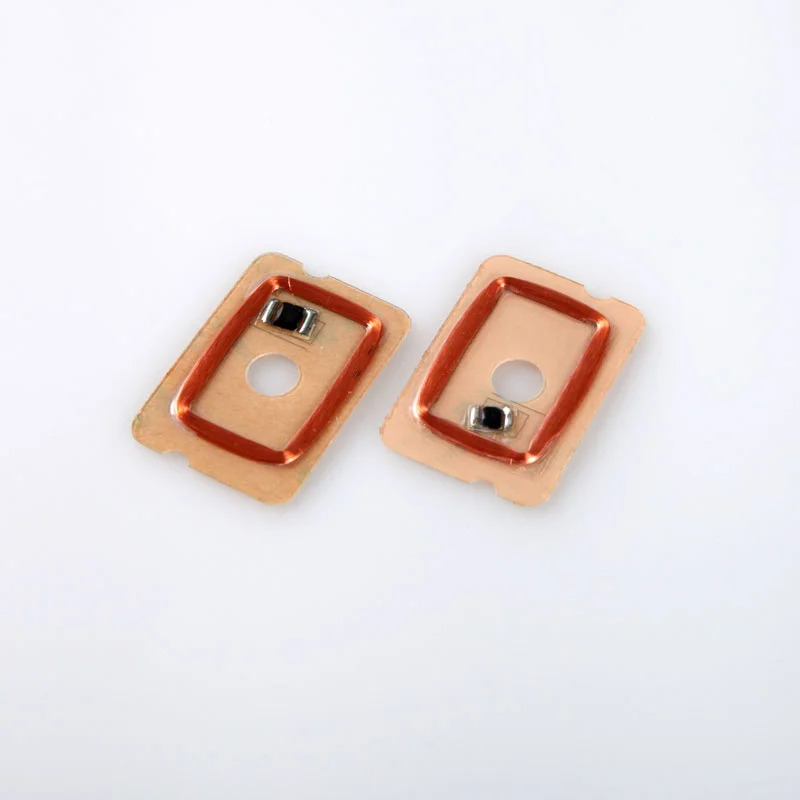
RFID Clear Tag

Will this tag fit the surface, mounting method, and read distance your workflow needs?

MOQ
1,000 pcs

Stock SKU. Custom tooling from 2,000 pcs.

Lead time
7–15 days

Standard; rush possible on request.

Free sample
Ships in 1–3 days

Stock samples via DHL / FedEx.

Use this tag when the workflow depends on matching the right surface, enclosure, and attachment method before sampling. Confirm environment, mounting style, and read expectations before moving into a quote or pilot batch.

What buyers usually confirm first

swipe →

Surface Match

Will it sit on metal, textile, wood, plastic, or rubber?

The mounting surface usually decides tag construction faster than chip selection does.

Environment

Does it need to survive washing, heat, UV, or rough handling?

Laundry, anti-metal, tire, and rugged asset workflows all need different enclosures and materials.

Installation

Adhesive, screw, sew-on, nail-in, or loop install?

Attachment method changes both field speed and real-world read consistency, so it should be confirmed early.

Spec Check

What to confirm before you sample this tag

Surface material, enclosure, attachment method, and environmental limits usually matter more than a broad tag name alone.

Product Name RFID Clear Tag (Transparent Disc / Square)
Card Material Fully transparent PVC (standard); transparent PET (alternative substrate)
Color Transparent (default); frosted / translucent variants available on custom orders
Dimensions Round: Ø15, 18, 20, 25, 30, 35, 40, 50 mm; Square: 15 x 15, 20 x 20, 25 x 25 mm; custom die-cut on request
Thickness 0.6 mm (surface-mount); 0.8 mm (general embedding); 1.0 mm (durable deep-embedding)
Weight 0.3 g (Ø15) to 1.8 g (Ø50)
Operating Frequency 125KHz (LF, ISO 11784/11785); 13.56MHz (HF / NFC, ISO/IEC 14443A); dual-frequency available on custom
Compliance ISO/IEC 14443A (HF), ISO/IEC 18092 (NFC Forum), ISO 11784/11785 (LF), RoHS 3, REACH, FDA 21 CFR (food contact for smart-dining variant)
LF Chip Options EM4200 (R/W 512-bit), TK4100 (read-only 64-bit), ATA5577 (multi-protocol)
HF Chip Options Fudan FM11RF08, NXP MIFARE Classic 1K EV1, Ultralight EV1, NTAG213 (180 bytes), NTAG215 (504 bytes), NTAG216 (888 bytes); NTAG424 DNA available on custom orders
Memory 64-bit (TK4100) to 888 bytes (NTAG216); 128-bit (NTAG424 DNA SUN auth on custom)
Cryptography Open (NTAG, EM, TK), 3DES (Ultralight C), Crypto-1 (MIFARE Classic), AES-128 SUN (NTAG424 DNA custom)
Read Range 2-10 cm (HF, reader dependent); 0.5-3 cm through glass / clear plastic substrate
Read/Write Cycles 100,000 (chip EEPROM)
Data Retention 10-20 years (chip specification)
Adhesive No backing (embedding); standard pressure-sensitive; 3M 467 / 468 (industrial); 3M VHB (outdoor / long-term)
Personalization Inkjet printing (visible on transparent surface as opaque-on-clear); laser engraving (frosted mark in PVC); pre-encoded sequential UID with CSV export
Operating Temperature -25 deg C to +75 deg C
Storage Temperature -40 deg C to +85 deg C
Humidity 20-90% RH non-condensing
Dishwasher Compatibility Survives 500-1,000+ commercial dishwasher cycles at 65-75°C; specialty high-temp variant for 90°C+ extended
Packaging 100 pcs / OPP bag (standard); 1,000 pcs / corrugated carton; bulk reel for OEM embedding (5,000-10,000 pcs / reel)
MOQ 1,000 pieces (stock SKU + standard chip); 5,000 pieces (custom size or chip); 25,000+ for per-unit pricing floor
Lead Time 7-14 business days stock; 15-25 days custom size or encoding

Shortlist Logic

Why buyers shortlist this tag format

These features help teams decide whether the tag suits the environment, installation method, and read expectations of the real workflow.

Fully transparent PVC - invisible when embedded in clear plates, bowls, glass products, or mounted on transparent surfaces
Diameter options from 15 to 50 mm, round or square - fits smart dining plates, gaming tokens, lab containers, and display shelf tags
Variable thickness 0.6-1.0 mm - thinner for surface mounting, thicker for product embedding with structural integration
Optional 3M adhesive backing - secure attachment to glass shelves, lab containers, and display surfaces without visible hardware
Dual-frequency: LF 125KHz and HF 13.56MHz (ISO/IEC 14443A) - covers smart dining, access, and NFC applications
Inkjet-printable surface - add ID numbers, codes, or markings on the transparent body for visual cross-reference

Use Cases

Where this tag format usually works best

Use cases matter because the right tag depends on surface, environment, attachment, and read distance in the field.

Smart dining automation

embed in clear plates and bowls for 2-second automated checkout at 500+ diner/hour cafeteria throughput

Casino and gaming chips

transparent RFID tokens for table games with per-chip authentication and value tracking

Laboratory sample tracking

attach to clear containers, test tubes, and specimen jars without obscuring contents

Retail display tagging

discreet RFID on glass shelves and showcase surfaces for inventory visibility without visual clutter

Art and collectible authentication

hidden tagging behind glass or inside frames that does not alter visible appearance

Translucent product embedding

insert into clear consumer products for NFC-based authentication and warranty registration

Clear Tag vs Standard PVC Card — How To Choose

Invisible transparent or standard opaque white? Pick by visibility requirement

Both are flat PVC-family tags at CR80 or custom sizes — same chip, same reader behavior. The difference is transparency: clear tags disappear into glass / clear plastic / translucent products, white PVC provides full printable face. Pick by whether you want the tag visible or invisible in the final product.

RFIDAK RFID clear tag — transparent PVC or PET disc for embedding into clear consumer products, glass panels, and luxury translucent packaging Option A

Clear Tag (this product — transparent)

Transparent PVC / PET, invisible embed

Material
Transparent PVC or PET
Visibility
Near-invisible when embedded
Print surface
Rim only (frosted laser mark)
Unit price (MOQ 1K)
$0.28 – 0.85

Best for

  • Smart dining tableware (embedded in glass)
  • Translucent luxury packaging authentication
  • Product design with visible-chip aesthetic aversion
RFIDAK standard white PVC RFID card — ISO 7810 CR80 with full CMYK print front and back for visible branding and photo ID Option B

Standard RFID Card (sibling — white printable)

White PVC, full CMYK print face

Material
White PVC (opaque)
Visibility
Visible — branded / photo
Print surface
Full CMYK front + back
Unit price (MOQ 5K)
$0.28 – 0.48

Best for

  • Hotel key cards with property branding
  • Office access with employee photo ID
  • Loyalty / membership with visual identity

Quick decision tip — If the tag must disappear into the product (glass tableware, clear plastic housings, luxury translucent packaging), clear tag (Option A) is the only option — white PVC would stand out. For 95%+ of deployments where the tag is the credential (hotel, office, transit, loyalty), standard white card (Option B) at lower cost delivers full printed brand surface.

RFID Clear Tag Types

1 Should I choose the transparent RFID clear tag for my application?

Yes — if you need an RFID tag that is visually invisible when embedded in clear products (smart dining plates / bowls, gaming chips, lab containers, art frames, retail glass shelves) or when surface-mounted on transparent surfaces where opaque tags would compromise aesthetics or product visibility. The The clear tag delivers fully transparent PVC body, LF + HF dual-frequency options, 15-50 mm round or square shapes, optional 3M adhesive backing, and inkjet-printable surface for ID numbers without sacrificing transparency.

Pick a different tag if visibility doesn’t matter (use opaque PVC at 30-40% lower cost), if you need IP68 immersion (use silicone or hard-shell), or if the surface is metal (use on-metal printable). Pick the clear tag when: smart dining requires plates / bowls to look unmarked; casino gaming chips need RFID without visible logo; lab containers need traceability without obscuring contents; or retail display tagging must stay visually clean.

2 Spec decision matrix — transparent / discreet RFID tag alternatives

Comparison across the 4 transparent / low-visibility RFID tag classes specialty applications typically evaluate. Prices indicative at MOQ 5,000 pieces.

ClassVisibilityFormatChip rangeBest fitUnit price
The transparent PVC clear tagFully transparentDisc 15-50 mm + squareLF / HFSmart dining, gaming, lab, art, retail display$0.55 – 1.45
Frosted / translucent PVCSemi-translucentDisc / squareLF / HFDiscreet but visible (medical, lab, gift)$0.45 – 1.15
Clear epoxy disc (UV-cured)Crystal clear with chip visibleDiscHF NFC (NTAG)Tech promo, hackerspace, transparent showcase$0.65 – 1.85
Embedded inlay (no shell)Invisible (encapsulated in product)Bare wet inlay, customer-encapsulatedHF / UHFOEM product manufacturer embedding chip in own product$0.08 – 0.35

Verdict: clear PVC tag wins when the tag itself must be inherently transparent and ready-to-deploy. Embedded inlay wins for OEMs who handle their own encapsulation. Frosted wins for slight-discretion (chemistry / pharma) where full transparency isn’t required.

3 Typical deployment pattern - smart-dining checkout

Corporate cafeteria operators embed transparent discs in tableware so the checkout station reads the whole tray at once: diners set the tray down, the reader prices it, and payment is a tap. The transparent tag keeps tableware aesthetics intact, which matters for caterers serving client sites.

Typical rollouts begin with one serving line to tune antenna placement under the tray shelf and confirm dishwasher durability before tagging the full tableware inventory.

4 Compatibility reference — chips, sizes, host applications, hardware

Verified compatibility across LF / HF chips, size SKUs, and host applications (smart dining POS, gaming, lab, art, retail).

CategorySupportedNotes
Stock disc sizes 15, 18, 20, 25, 30, 35, 40, 50 mm (round); 15x15, 20x20, 25x25 mm (square)Custom shapes available with NRE $250-650 + 2-3 week tooling
Thickness options0.6 mm (surface mount), 0.8 mm (general), 1.0 mm (deep embedding / durable)Thicker substrate gives better chip protection but adds embedding depth
LF chips (125KHz)EM Microelectronic EM4200 (R/W 512-bit), TK4100 (read-only), ATA5577 (multi-protocol)LF reads through plastic / non-conductive substrates; not for metal-adjacent embedding
HF chips (13.56MHz)Fudan FM11RF08, NXP MIFARE Classic 1K EV1, Ultralight EV1, NTAG213 (180 bytes), NTAG215 (504 bytes)NTAG213 is the smart-dining default; Ultralight C for cryptographic if needed
Smart dining POS systemsCompass Group + custom POS, Sodexo + Foodbuy, Aramark + custom, Eurest, ISS World, Nexalight, FoodPro, Yo-Kai Express tray-scanTray-pad readers from Feig CPR40 / OMNIKEY / dedicated cafeteria-scanner OEMs
Casino gaming chip readersWalker Digital Table Systems, Angel Eye AI, GPI Tag-Track, IGT chip-tracking, Light & Wonder TableConnectNTAG213 typical for RFID gaming chips; NTAG215 for higher-memory premium chips
Lab sample trackingThermo Fisher SampleManager, LabWare LIMS, STARLIMS, Shimadzu LabSolutions, Hamilton STAR autosampler integrationsLab containers (vials, plates) typically use 15 / 18 / 20 mm transparent discs
Retail display taggingDiscreet tagging on glass shelves, jewelry display cases, watch displaysUse 3M adhesive backing variant; reads through glass (1-3 cm range typical)
Art & collectible authenticationFrame-back tagging, painting authentication, sculpture base embeddingNFC NTAG424 DNA (custom variant) for cryptographic provenance verification
Adhesive backingStandard pressure-sensitive (general use), 3M 467 / 468 / 200MP (industrial), 3M VHB (long-term outdoor)Standard for indoor; 3M for permanent / outdoor / multi-year applications
PersonalizationInkjet printing on transparent surface (visible from one side as opaque-ink-on-clear), laser engraving (frosted mark on clear PVC)Variable serial numbers, QR codes, brand marks; printing reduces transparency in marked area only

5 Cost at volume — FAQ

How much does the The clear tag cost at 5K pcs? Stock 25 mm + NTAG213 + 0.8 mm thickness + no adhesive: $0.62-0.85 per unit at MOQ 5,000. Volume brackets: MOQ 1,000 = $0.95-1.45; MOQ 5,000 = $0.62-0.85 (base); MOQ 25,000 = $0.45-0.62; MOQ 100,000+ = $0.32-0.48.

Size up-charge? 15-20 mm: -$0.05-0.10 vs 25 baseline. 30-35 mm: +$0.05-0.10. 40-50 mm: +$0.10-0.20. Square shapes: +$0.02-0.05 over comparable round size.

Chip upgrade? NTAG213 (base): included. NTAG215 (504 bytes): +$0.05-0.08. MIFARE Classic 1K: +$0.08-0.14. Ultralight EV1 (lower-cost transit-style chip): -$0.05-0.10. ATA5577 (LF multi-protocol): +$0.10-0.18.

Adhesive backing? No adhesive (embedding application): included. Standard pressure-sensitive: +$0.04-0.08. 3M 467 / 468 industrial: +$0.08-0.15. 3M VHB long-term outdoor: +$0.12-0.22.

Personalization? Pre-encoded sequential UID + CSV export: included at 1,000+ MOQ. Inkjet printing (single-color logo / serial): +$0.05-0.10. Laser engraving (frosted-mark serial number): +$0.04-0.08.

How should I think about smart-dining cost? The tag spend is one-time per dish, while the savings — cashier labor, pricing accuracy, queue throughput, demand data — recur every service day. Operators typically model it per serving line using their own meal volumes before tagging the full tableware inventory.

Why not just use opaque PVC at lower cost? When the application is purely functional (no aesthetic requirement), opaque PVC is correct — use the rfid-coin / nfc-coin product instead at $0.30-0.60/unit. Clear tag pays its premium only when transparency is part of the design intent.

6 Market context - smart dining, gaming, and lab specialty niches

Specialty form-factor HF tags — transparent discs, custom shapes, embedded formats — serve niches where the tag must disappear into the product: smart dining tableware, gaming chips, laboratory containers, and art or collectible authentication. These segments are smaller than standard card and label volume but growing steadily as traceability and provenance expectations rise.

Supplier Fit

Why buyers source RFID Clear Tag from RFIDAK

Once the format is right, most teams still need confidence in manufacturing control, sample support, and repeat-order reliability.

ISO 9001

Quality-focused manufacturing and sample support for custom RFID projects.

Since 2008

RFID manufacturing experience across cards, tags, labels, wristbands and readers.

Free Samples

Test product compatibility before bulk purchasing and customization decisions.

Commercial Fit

How buyers usually move this product from shortlist to sample

Most inquiry-ready visitors want to know whether this product matches their workflow, region and approval stage. These cues help them move faster without leaving the product page.

System integrators

Often validating tag fit, reader behavior and installation method before including the product in a wider solution.

Laundry and textile operators

Usually focused on wash-cycle durability, attachment method and read consistency in bulk handling.

Industrial tracking teams

Typically comparing on-metal, pallet, tyre or rugged tags for repeat deployment in harsh environments.

Quote Checklist

What to send us for a faster recommendation

  • The exact surface or object the tag will be attached to, especially if metal, textile or plastic is involved.
  • Working environment such as heat, washing, chemicals, UV, outdoor exposure or repeated impact.
  • Required read distance, reader type and whether the tag is disposable or reusable.
  • Preferred attachment method, quantity and whether UID print or encoding is needed.

Market Notes

Regional conversations often tied to this category

North America

Frequent projects include warehouse visibility, IT asset management, returnable packaging and on-metal identification.

Europe

Industrial laundry, reusable transport items and traceability projects often require careful sample validation and repeatability.

Middle East, Africa and Oceania

Outdoor assets, utilities and long-service industrial tagging often put more weight on enclosure durability and field conditions.

Before You Order

Procurement guides every RFID Tags buyer reads first

Five short reads on the procurement-side topics every B2B RFID buyer wants answered before signing a quote — MOQ thresholds, lead time reality, pricing transparency, sample policy, and how to audit a Chinese factory before your first order.

Buyer Questions

Questions buyers usually ask before sample approval

These FAQs cover the points that usually come up between a first shortlist and a real sample or quote request.

What is the minimum order quantity (MOQ) for RFID Clear Tag? +

For RFID Clear Tag, the standard MOQ starts at 1,000 pieces on stock SKUs. Custom shape, material or antenna tooling typically requires 3,000–5,000 pieces to cover one-time mold / die-cut setup cost. Exact MOQ and unit pricing are quoted per project once chip, customization and packaging are confirmed.

Does RFIDAK provide free samples of RFID Clear Tag? +

Yes. Stock rfid tags samples of RFID Clear Tag are typically free; we only ask buyers to cover DHL/FedEx express shipping. Samples ship in 1–3 business days after your order is confirmed and arrive in 2–5 days to most countries. Custom samples (new chip, new size, printed artwork) usually take 3–7 additional days.

What is the production lead time for RFID Clear Tag? +

Standard RFID Clear Tag orders ship in 7–15 business days after PO confirmation and artwork approval. Large runs (>100k units) or orders with complex encoding / custom molds may take 15–25 business days. Rush production is available on request for time-sensitive launches; confirm MOQ and artwork early to protect the timeline.

Can RFID Clear Tag be customized for my brand or project? +

Yes. RFID Clear Tag supports end-to-end customization: full-color CMYK / silk-screen / UV printing, laser engraving, serial numbering, custom chip encoding (UID write, NDEF, sector locking), custom shape / size (subject to tooling MOQ), and packaging. Share your artwork, chip requirement and quantity and we will return a spec sheet + price within 24 hours.

Is RFID Clear Tag compatible with my existing reader or system? +

Compatibility depends on the frequency band (LF 125 kHz / HF 13.56 MHz / UHF 860–960 MHz) and chip family used by your reader or installed system. Send a photo of your current card / reader model and we will recommend the matching chip + test a sample before bulk order.

What certifications and quality control does RFIDAK apply to RFID Clear Tag? +

RFIDAK operates under ISO 9001:2015 (Quality Management) and ISO 14001 (Environmental Management), audited by SGS. RFID Clear Tag is subject to incoming material inspection, in-process QC at every lamination / bonding / encoding step, and 100% electrical performance testing before shipment. Products meet CE, FCC, RoHS and REACH as applicable by market. Full test reports are available on request for buyer audits.

Can RFID Clear Tag be pre-encoded or printed with my artwork before shipment? +

Yes. RFID Clear Tag can ship with UID range assignment, NDEF URL encoding (for NFC), sector-locked user data, serial numbering, and CMYK / silk-screen / UV printing of your artwork. Provide an AI/PDF artwork file at 300 dpi with 3 mm bleed and a chip-encoding spec; we return a digital proof for approval before production.

How does RFIDAK ship RFID Clear Tag internationally? +

RFIDAK ships RFID Clear Tag via DHL / FedEx / UPS (door-to-door, 3–5 days to most countries), air cargo (5–7 days for heavier orders), or sea freight (20–35 days for bulk over 500 kg). Standard Incoterms are EXW, FOB Shenzhen and DDP; choose based on customs clearance preferences. Commercial invoice, packing list and CoC / MSDS are included automatically.

How does RFIDAK handle repeat orders of RFID Clear Tag? +

For repeat buyers, RFIDAK locks tooling, artwork and chip encoding on file so subsequent POs ship faster — typically 5–10 business days for stock chip types at previously-run quantities. Price is adjusted transparently per chip market rate and FX movement; we flag any chip shortage (e.g., DESFire EV3) before quotation so the project plan stays realistic.

What are the technical specifications of RFID Clear Tag? +

Key RFID Clear Tag specs: frequency 125 kHz (LF, ISO 11784/11785); 13.56 MHz (HF / NFC, ISO/IEC 14443A); dual-frequency available on custom; dimensions Round: Ø15, 18, 20, 25, 30, 35, 40, 50 mm; Square: 15x15, 20x20, 25x25 mm; custom die-cut on request. A full technical datasheet including read range, chip memory map, IP / temperature rating and compliance certificates is available on request; attach your reader model and target environment so we can confirm suitability before quoting.

Get Free RFID Samples

Try before you buy. Request free samples of any RFID product from our 50+ SKU catalog. Samples shipped via DHL/FedEx within 1-3 business days worldwide.

Not ready to chat? Just drop your email and we'll send the RFIDAK product catalog (PDF).

We'll only use your email to send the catalog and reply to your inquiry.

WhatsApp Get a Quote