Skip to content
RFID Keyfob

RFID PPS Keyfob

Need a smaller credential than a full-size RFID card?

MOQ
500 pcs

Stock SKU. Custom tooling from 2,000 pcs.

Lead time
7–15 days

Standard; rush possible on request.

Free sample
Ships in 1–3 days

Stock samples via DHL / FedEx.

Use this keyfob or transponder when the credential needs to stay on keys, in pockets, or with everyday access routines. Confirm reader compatibility, shell style, numbering, and branding before production planning starts.

What buyers usually confirm first

swipe →

Reader Match

Will it match the access system already in the field?

Most keyfob projects start by checking reader frequency and installed credential compatibility.

Shell Choice

ABS, epoxy, or a more premium shell style?

Shell material affects durability, branding, and how the credential feels in everyday use.

Supply Plan

Need numbering, encoding, or dependable repeat-order supply?

Replacement and rollout programs often care as much about consistency as the first sample batch.

Spec Check

What to confirm before keyfob sampling

Reader compatibility, shell style, numbering, and branding choices usually decide the right keyfob build.

Product Name RFID PPS Keyfob
Housing Material PPS (polyphenylene sulfide)
Dimensions 40 x 32 x 6 mm (teardrop), custom sizes available
Weight 7-9 g
Standard Colors Black (UV-stable default), white, gray, industrial yellow
Operating Temperature -40 deg C to +150 deg C
Autoclave Rating 134 deg C, 1,000+ cycles
Chemical Resistance Solvents (IPA, acetone, MEK), acids (H2SO4, HCl), bases (NaOH 50%), oils, fuels
Operating Frequency 125KHz (LF), 13.56MHz (HF), 860-960MHz (UHF)
LF Chip Options EM4200, TK4100, T5577
HF Chip Options MIFARE Classic 1K/4K, DESFire EV1/EV2, NTAG213/215, ICODE SLIX, NTAG 424 DNA (automotive grade)
UHF Chip Options NXP UCODE 8/9
MTBF 10+ years in industrial environments
MOQ 500 pieces

Shortlist Logic

Why buyers shortlist this keyfob style

These points usually matter when convenience, system match, and everyday durability all matter at once.

PPS (polyphenylene sulfide) thermoplastic body - highest temperature range of any keyfob material, 40 deg C to +200 deg C intermittent
Autoclave-rated 134 deg C steam sterilization - reusable across 1,000+ cycles without shell degradation or chip displacement
Chemical resistance: solvents, acids, bases, oils - tolerates isopropyl alcohol, acetone, mineral spirits, and pH 1-14 brief exposure
Fully molded single-material body - no adhesive bond lines that could fail under thermal cycling in high-heat environments
Tri-frequency support: 125KHz, 13.56MHz, 860-960MHz - compatible with legacy and modern industrial reader infrastructure
Industrial-grade MTBF 10+ years - substantially longer service life than ABS in 60 deg C+ continuous industrial environments

Use Cases

Where buyers usually deploy this keyfob

These are the access and membership workflows where a compact credential often beats a full-size card.

Chemical plant personnel access

non-degrading credential resistant to process solvents, hydrocarbon fumes, and cleaning chemicals

Hospital central sterile supply tracking

autoclave-compatible fob for surgical instrument tray identification through sterilization cycles

Industrial laundry linen tracking

tag large commercial laundry carts surviving 90 deg C wash and 160 deg C press cycles

Automotive assembly line worker credentials

non-melting ID fobs in paint shops, welding bays, and engine test cells

Food processing and bakery floor ID

autoclave-tolerant credentials compliant with hygiene rotation and sterilization SOPs

Power plant and refinery asset tagging

long-range UHF variant for turbine, pump, and pipe-run inventory in 100+ C steam environments

PPS Keyfob vs FR4 Glassfiber Keyfob — How To Choose

Autoclave / chemical industrial or slim flame-retardant? Pick by hazard type

Both are specialty industrial fob materials for hazard-specific environments — different hazards call for different materials. PPS handles chemistry, autoclave, and high temperatures. FR4 handles flame, slim wallet-fit, and electromagnetic interference. Non-interchangeable; verify the primary hazard before specifying.

RFIDAK PPS RFID keyfob — polyphenylene sulfide thermoplastic for chemical plant, autoclave, industrial laundry, 134°C steam environments Option A

PPS Keyfob (this product — chemical / autoclave)

PPS thermoplastic, 134 °C autoclave

Material
Polyphenylene sulfide (PPS)
Autoclave 134 °C
Yes — 500+ cycles
Chemistry
Acid / base / solvent tolerant
Unit price (MOQ 1K)
$1.45 – 2.75

Best for

  • Chemical plants, refineries, pharmaceutical
  • Industrial laundry and autoclave-reprocessed
  • Power plant steam environments
RFIDAK FR4 glassfiber RFID keyfob — 1.2mm slim fiberglass PCB with UL94 V-0 flame retardant rating, for data centers and defense Option B

FR4 Glassfiber Keyfob (sibling — flame-retardant slim)

1.2 mm slim, UL94 V-0 flame retardant

Material
FR4 glassfiber (flame-retardant)
UL94 rating
V-0 (self-extinguishing)
Thickness
1.2 mm (slim, wallet-fit)
Unit price (MOQ 1K)
$0.75 – 1.45

Best for

  • Data centers (fire-suppression code compliance)
  • Defense / military / avionics
  • Cold-chain logistics, slim wallet carry

Quick decision tip — If the fob is in a chemical / autoclave / high-temperature steam environment, PPS (Option A) is the only option that survives. If the fob is in a fire-code-regulated environment (data center, aircraft) or must slim-fit in a wallet alongside credit cards, FR4 (Option B) at half the cost is the right material. For merely rugged / outdoor environment without extreme hazards, <a href="/product/rfid-silicone-keyfob">silicone</a> or <a href="/product/rfid-abs-keyfob">ABS</a> cover the baseline at further cost savings.

RFID PPS Keyfob Types

1 Should I choose the PPS keyfob for my industrial / chemical / autoclave program?

Yes — if your access program runs in chemical refineries, industrial food processing, hospital central sterile supply, automotive Tier 1 paint shops, industrial laundry, power plants, or any environment where credentials face continuous > 60°C temperatures, autoclave sterilization at 134°C, or chemical exposure to acids / bases / solvents that destroy ABS within 30-90 days. On industrial floors with continuous chemical and heat exposure, ABS keyfobs behave like consumables — PPS is engineered for multi-year service life in exactly those conditions.

Pick a different material if you need waterproof at standard temperatures (use silicone — same IP68 + autoclave 121°C at lower cost when chemical resistance isn’t required), lowest cost at non-extreme environments (use ABS), premium hospitality / corporate gift feel (use leather), tech-promo visible chip (use epoxy), or wallet-fit slim 1.2 mm + flame retardant (use FR4). Pick PPS when chemical resistance + autoclave 134°C + acid / base / solvent tolerance + 10+ year MTBF in 60-150°C continuous operation matter together.

2 Spec decision matrix — keyfob material alternatives (sibling products)

Comparison across the 6 keyfob material options. Prices indicative at MOQ 5,000 pieces.

MaterialIP / temp rangeSpecial propertyBest fitUnit price
The ABS keyfobIP65, -20 to +60°CLowest cost + 9 stock colorsApartment, office, fitness, parking, school$0.45 – 0.85
The silicone keyfobIP68 (1.5 m), -40 to +200°CWaterproof + autoclave 121°C + medical-gradeWaterpark, pool, hospital staff, marine, construction$0.85 – 1.45
The leather keyfobSplash, -10 to +60°CPremium tactile + gold / silver hot-stampHotel-grade, corporate exec gift, luxury brand$1.85 – 4.50
The epoxy keyfobIP66, -25 to +80°CTransparent visible chip + UV-stableTech promo, hackerspace, university, conference$0.95 – 1.65
The PPS keyfob (this product)IP68 + chemical, -40 to +200°C continuousAutoclave 134°C + acid (H2SO4 98%, HCl 37%) / base (NaOH 50%) / solvent (IPA, acetone, MEK) resistance + 10+ year industrial MTBFChemical plant, refinery, industrial laundry, hospital CSSD, automotive paint shop, power plant$1.45 – 2.75
The FR4 keyfobIP67, -30 to +100°CSlim 1.2 mm wallet-fit + UL94 V-0 flame retardantData center, defense, telecom, cold chain$0.75 – 1.45

Verdict: PPS wins exclusively when chemical resistance beyond pool chlorine is required, when autoclave runs at 134°C (not 121°C), or when continuous operating temperatures exceed silicone’s comfortable working range. The 60-90% premium over silicone pays back through 10+ year MTBF in industrial settings where ABS would fail in 30-90 days.

3 Typical deployment pattern - refinery and harsh-chemical sites

Refineries and chemical plants spec PPS keyfobs after standard ABS credentials fail under solvent splash, steam, and heat at process units. PPS tolerates autoclave steam, industrial solvents, and brief acid or base exposure without additive stabilizers, so the credential stops being a consumable.

Site safety teams usually validate samples against their actual chemical exposure list before standardizing: a quick test that prevents repeating the ABS failure cycle with another marginal material.

4 Compatibility reference — chips, sterilization, chemical exposure, color tiers

Verified compatibility across LF / HF / UHF chips, sterilization protocols, chemical exposure tolerance, and industrial color-tier conventions.

CategorySupportedNotes
LF chips (125KHz)EM4200, TK4100, T5577 (multi-protocol)For legacy industrial reader fleet compatibility
HF chips (13.56MHz)NXP MIFARE Classic 1K / 4K, Plus EV2, Ultralight EV1, DESFire EV1 / EV2 / EV3 (2K / 4K / 8K), NTAG213 / 215 / 216, ICODE SLIXDESFire EV3 for modern industrial secure access; ICODE SLIX for hospital CSSD vicinity reads
HF chips — automotive gradeNXP MIFARE Ultralight AES, NXP NTAG 424 DNA, EM4425 (rated -40 to +125°C continuous)For applications above 85°C continuous operation (under-hood automotive, process equipment)
UHF chips (860-960MHz)NXP UCODE 8 / 9Long-range industrial asset tracking + worker location in large facilities
Sterilization — gravity-displacement autoclave121°C / 30 min: 1,000+ cycles validated; 134°C / 10 min: 500+ cycles validatedHospital central sterile supply (CSSD) standard; no shell deformation / discoloration
Sterilization — EO (ethylene oxide) gas500+ cycles fully compatibleHeat-sensitive surgical instrument sterilization workflows
Sterilization — gamma irradiation25-50 kGy cumulative dose tolerated without loss of mechanical / chip functionMedical device industry sterile-pack manufacturing
Chemical resistance (23°C, 7-day continuous immersion)Concentrated H2SO4 (98%), HCl (37%), NaOH (50%), IPA, ethanol, acetone, MEK, mineral spirits, diesel, gasoline, silicone oils, ethylene glycol coolantsBrief splash exposure to HF acid + concentrated nitric acid also tolerated
Color tier conventions (industrial)Black (default UV-stable carbon-black pigment), red (hazardous zone / restricted access), gray (general visitor), white (visitor / contractor day-pass), industrial yellow (emergency response / safety team)All pigments REACH SVHC + RoHS compliant for EU industrial / medical customers
Industrial / medical platformsSAP EWM (industrial asset), Maximo (utilities), Siemens MindSphere, Honeywell Forge, Cardinal Health (hospital CSSD), Olympus (endoscope tracking)HF DESFire EV3 + LF EM4305 most common in industrial integrations
Personalization — silkscreen on PPSTwo-component epoxy-based ink cured at 80°C / 2 hours; 300+ autoclave cycles at 121°C without fading / peelingWhite / silver / gold standard print colors for high contrast on dark PPS body
Personalization — laser engravingDirect laser ablation of PPS surface, permanent + tamper-resistantSequential serial numbers, QR codes, barcodes

5 Cost at volume — FAQ

How much does the The PPS keyfob cost at 5K pcs? Stock teardrop + black PPS + DESFire EV3 2K + silkscreen single-color logo: $1.85-2.40 per unit at MOQ 5,000. Volume brackets: MOQ 500 (evaluation) = $3.25-4.50; MOQ 5,000 = $1.85-2.40 (base); MOQ 25,000 = $1.45-1.85; MOQ 100,000+ = $1.15-1.55.

Chip upgrade? DESFire EV3 2K (industrial secure default): included. EM4200 (cost-optimized LF): -$0.40-0.60. T5577 (multi-protocol): -$0.20-0.35. MIFARE Classic 1K: -$0.30-0.50. DESFire EV3 4K / 8K: +$0.45-0.95. Automotive-grade chip (NXP Ultralight AES, EM4425, NTAG 424 DNA): +$0.35-0.85.

Color up-charge? Black (UV-stable default): included. White / gray / industrial yellow: +$0.05-0.10. Red (cadmium-free industrial pigment for hazardous zone): +$0.08-0.15. Custom Pantone color matching: +$0.18-0.32 + NRE $450-850 (PPS pigment is more complex than ABS).

Personalization? Silkscreen single-color logo (epoxy-based ink, autoclave-survivable): +$0.15-0.28 per unit. Multi-color silkscreen: +$0.25-0.45. Laser-engraved sequential serial: +$0.10-0.18. Custom mold tooling (PPS injection requires more expensive steel + longer cooling): NRE $4,500-9,800 + per-unit unchanged after 10K+ amortization.

How should I compare against ABS at industrial sites? PPS costs several times more per fob, but in harsh-chemical environments the comparison is against ABS's full replacement cycle: material, reissue labor, and the operational overhead of credentials failing mid-shift. Run your site's actual ABS failure rate through the math — the harsher the environment, the faster PPS wins.

What about PPS-vs-silicone for hospital sterilization? Silicone autoclaves at 121°C / 30 min (gravity displacement). PPS autoclaves at 134°C / 10 min (vacuum displacement — the hospital CSSD modern standard). For hospital CSSD compliance to vacuum-displacement protocols, PPS is mandatory. For staff-credential hospital workflows that don’t go through CSSD, silicone is sufficient at lower cost.

6 Market context - industrial credential failure economics

In industrial environments with continuous chemical and heat exposure, standard ABS credentials behave like consumables: failure rates climb high enough that replacement logistics become their own workflow. PPS removes that cycle with inherent resistance to sterilization heat, industrial solvents, and brief acid or base exposure, which is why the niche persists despite the higher material cost — value per fob is highest exactly where the environment is hardest.

7 Autoclave and Sterilization Performance

PPS keyfobs are validated for 1,000+ cycles of gravity-displacement autoclave sterilization at 121 deg C for 30 minutes, and 500+ cycles at 134 deg C for 10 minutes (the hospital central sterile supply standard). The shell does not deform, discolor, or lose dimensional accuracy. The embedded chip continues to communicate normally after post-cycle cooldown. For EO (ethylene oxide) gas sterilization used for heat-sensitive surgical instruments, PPS keyfobs are fully compatible for 500+ cycles. For gamma irradiation sterilization (medical device industry), PPS tolerates 25-50 kGy cumulative dose without loss of mechanical properties or chip functionality.

8 Chemical Resistance Test Matrix

Independent chemical resistance testing at 23 deg C, 7-day continuous immersion confirms PPS tolerates: concentrated sulfuric acid (98%), hydrochloric acid (37%), sodium hydroxide (50%), isopropyl alcohol, ethanol, acetone, methyl ethyl ketone (MEK), mineral spirits, diesel fuel, gasoline, silicone oils, and ethylene glycol coolants. Brief splash exposure to hydrofluoric acid and concentrated nitric acid is tolerated without shell degradation. This range of chemical resistance makes PPS the material of choice for chemical plant personnel credentials, where exposure to process chemicals is part of normal daily operation. Standard ABS credentials dissolve or become brittle within 30-60 days in these environments.

9 Tri-Frequency Chip Performance at High Temperature

The NFC chip and antenna inside a PPS keyfob are validated for continuous operation at 85 deg C ambient and intermittent exposure to 125 deg C (outside the chip's own spec but verified working by The QC) substantially beyond the typical industrial chip spec of 70-85 C. For applications requiring operation above 125 deg C, The sources automotive-grade chips certified for -40 deg C to +125 deg C continuous operation: NXP MIFARE Ultralight AES, NXP NTAG 424 DNA, and EM4425. These chips are specified for under-hood automotive and industrial process environments where standard consumer chips fail.

Front and Back Surface Texture - RFID PPS Keyfob detail

10 Front and Back Surface Texture

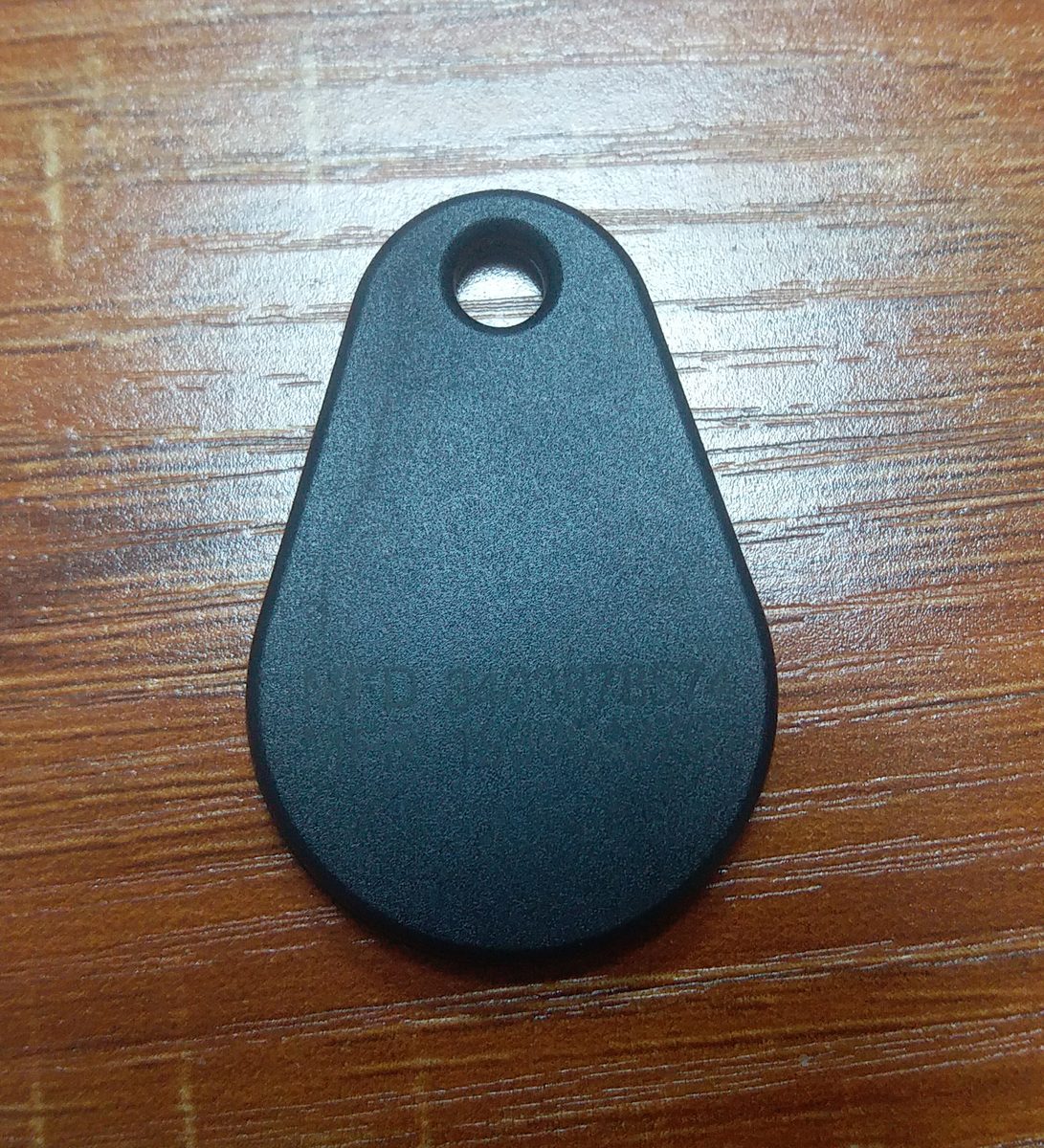
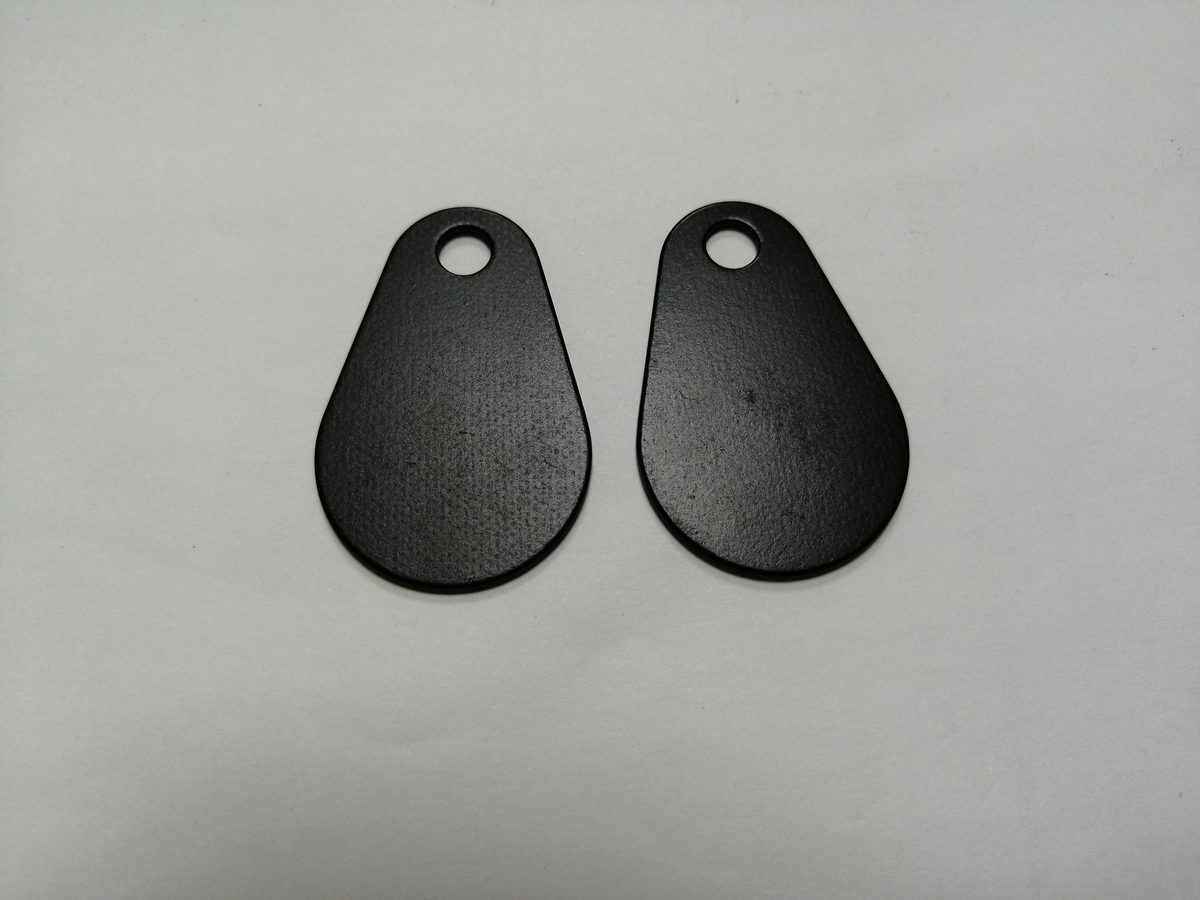
PPS keyfobs ship with a matte micro-textured surface on the front face that scatters light and hides fingerprints critical for industrial environments where operators handle the fob with oily or dusty gloves. The back surface is smooth to accept laser-engraved UID marking without ink bleed or texture interference. The injection gate is positioned at the keyring-hole edge so the gate mark is hidden by the attached split ring, keeping both faces of the fob visually clean. Post-mold annealing at 100 deg C for 2 hours relieves internal stress and dimensional stability for the high thermal cycling expected in hospital sterilization and industrial wash environments.

Color Options Black, Red, Gray, Industrial Yellow - RFID PPS Keyfob detail

11 Color Options Black, Red, Gray, Industrial Yellow

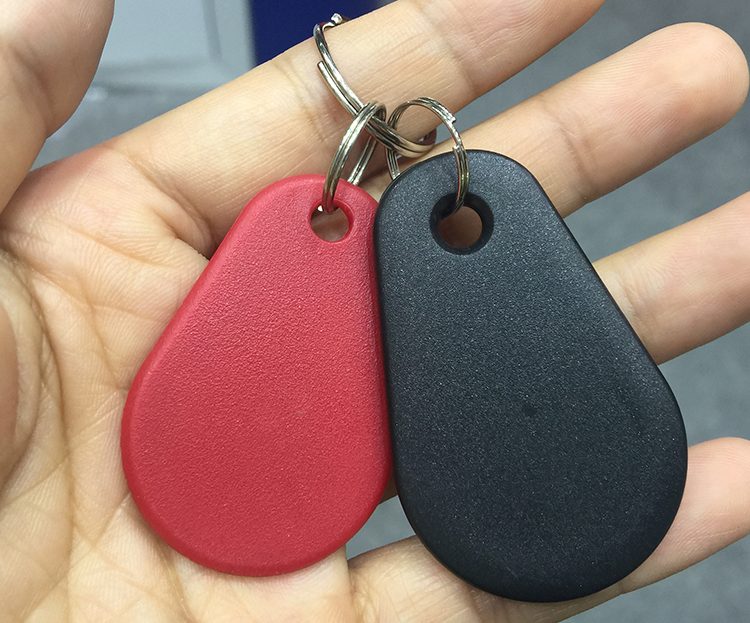
Black is the default PPS keyfob color the carbon black pigment doubles as a UV stabilizer, extending outdoor service life without additional additives. Red (cadmium-free industrial pigment) is the second most common, preferred for hazard-zone credentials at chemical plants and refineries where red visually signals restricted-access areas. Gray, white, and industrial yellow are available for color-coded shift or department categorization. All pigments are compliant with REACH SVHC regulation and RoHS directive, important for European industrial and medical customers with strict chemical compliance requirements.

Silkscreen Logo on Industrial PPS - RFID PPS Keyfob detail

12 Silkscreen Logo on Industrial PPS

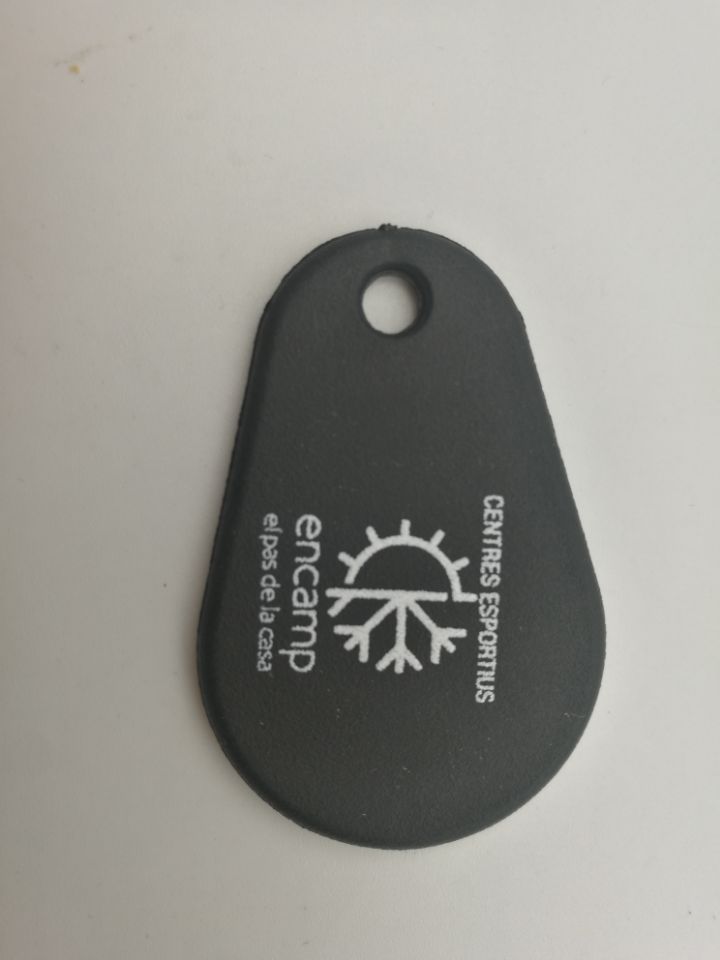
Silkscreen printing on PPS requires special ink chemistry that bonds to the high-temperature polymer surface. The uses two-component epoxy-based ink cured at 80 deg C for 2 hours, producing a logo that survives 300+ autoclave cycles at 121 deg C without fading, peeling, or ink migration. Standard print colors are white (shown), silver, and gold for high-contrast display on dark PPS bodies. Maximum 2-color printing is available in a single pass; multi-color photographic artwork requires laser engraving instead. Every printed fob is QC-tested by post-print autoclave simulation before shipment to industrial and medical customers.

Supplier Fit

Why buyers source RFID PPS Keyfob from RFIDAK

Once the format is right, most teams still need confidence in manufacturing control, sample support, and repeat-order reliability.

ISO 9001

Quality-focused manufacturing and sample support for custom RFID projects.

Since 2008

RFID manufacturing experience across cards, tags, labels, wristbands and readers.

Free Samples

Test product compatibility before bulk purchasing and customization decisions.

Commercial Fit

How buyers usually move this product from shortlist to sample

Most inquiry-ready visitors want to know whether this product matches their workflow, region and approval stage. These cues help them move faster without leaving the product page.

Residential and facility operators

Usually replacing or expanding apartment, office and parking credentials that must match installed readers.

Access-control distributors

Often need broad shell options, dependable repeat supply and clear compatibility checkpoints.

Gym and loyalty program teams

Typically care about portability, branding and compact credentials that are easy for end users to keep.

Quote Checklist

What to send us for a faster recommendation

  • Existing reader frequency, protocol or a photo of the working credential.
  • Preferred shell style, color, logo treatment and whether numbering is required.
  • Encoding, UID print or packaging expectations for the finished keyfob.
  • Sample quantity, bulk quantity and target market or shipping destination.

Market Notes

Regional conversations often tied to this category

North America

Apartment access, gyms and parking systems often start with compatibility matching and sample verification.

Europe

Corporate and residential upgrades often compare stronger chip options alongside shell durability and print quality.

Middle East and Africa

Hotels, residential compounds and visitor systems often want branded credentials with dependable daily-use performance.

Before You Order

Procurement guides every RFID Keyfob buyer reads first

Five short reads on the procurement-side topics every B2B RFID buyer wants answered before signing a quote — MOQ thresholds, lead time reality, pricing transparency, sample policy, and how to audit a Chinese factory before your first order.

Buyer Questions

Questions buyers usually ask before sample approval

These FAQs cover the points that usually come up between a first shortlist and a real sample or quote request.

What is the minimum order quantity (MOQ) for RFID PPS Keyfob? +

For RFID PPS Keyfob, the standard MOQ starts at 500 pieces on stock SKUs. Custom shapes, molds or non-standard materials typically move MOQ to 2,000–5,000 pieces to cover tooling setup. Exact MOQ and unit pricing are quoted per project once chip, customization and packaging are confirmed.

Does RFIDAK provide free samples of RFID PPS Keyfob? +

Yes. Stock rfid keyfob samples of RFID PPS Keyfob are typically free; we only ask buyers to cover DHL/FedEx express shipping. Samples ship in 1–3 business days after your order is confirmed and arrive in 2–5 days to most countries. Custom samples (new chip, new size, printed artwork) usually take 3–7 additional days.

What is the production lead time for RFID PPS Keyfob? +

Standard RFID PPS Keyfob orders ship in 7–15 business days after PO confirmation and artwork approval. Large runs (>100k units) or orders with complex encoding / custom molds may take 15–25 business days. Rush production is available on request for time-sensitive launches; confirm MOQ and artwork early to protect the timeline.

Can RFID PPS Keyfob be customized for my brand or project? +

Yes. RFID PPS Keyfob supports end-to-end customization: full-color CMYK / silk-screen / UV printing, laser engraving, serial numbering, custom chip encoding (UID write, NDEF, sector locking), custom shape / size (subject to tooling MOQ), and packaging. Share your artwork, chip requirement and quantity and we will return a spec sheet + price within 24 hours.

Is RFID PPS Keyfob compatible with my existing reader or system? +

Compatibility depends on the frequency band (LF 125 kHz / HF 13.56 MHz / UHF 860–960 MHz) and chip family used by your reader or installed system. Send a photo of your current card / reader model and we will recommend the matching chip + test a sample before bulk order.

What certifications and quality control does RFIDAK apply to RFID PPS Keyfob? +

RFIDAK operates under ISO 9001:2015 (Quality Management) and ISO 14001 (Environmental Management), audited by SGS. RFID PPS Keyfob is subject to incoming material inspection, in-process QC at every lamination / bonding / encoding step, and 100% electrical performance testing before shipment. Products meet CE, FCC, RoHS and REACH as applicable by market. Full test reports are available on request for buyer audits.

Can RFID PPS Keyfob be pre-encoded or printed with my artwork before shipment? +

Yes. RFID PPS Keyfob can ship with UID range assignment, NDEF URL encoding (for NFC), sector-locked user data, serial numbering, and CMYK / silk-screen / UV printing of your artwork. Provide an AI/PDF artwork file at 300 dpi with 3 mm bleed and a chip-encoding spec; we return a digital proof for approval before production.

How does RFIDAK ship RFID PPS Keyfob internationally? +

RFIDAK ships RFID PPS Keyfob via DHL / FedEx / UPS (door-to-door, 3–5 days to most countries), air cargo (5–7 days for heavier orders), or sea freight (20–35 days for bulk over 500 kg). Standard Incoterms are EXW, FOB Shenzhen and DDP; choose based on customs clearance preferences. Commercial invoice, packing list and CoC / MSDS are included automatically.

How does RFIDAK handle repeat orders of RFID PPS Keyfob? +

For repeat buyers, RFIDAK locks tooling, artwork and chip encoding on file so subsequent POs ship faster — typically 5–10 business days for stock chip types at previously-run quantities. Price is adjusted transparently per chip market rate and FX movement; we flag any chip shortage (e.g., DESFire EV3) before quotation so the project plan stays realistic.

What are the technical specifications of RFID PPS Keyfob? +

Key RFID PPS Keyfob specs: frequency 125 kHz (LF), 13.56 MHz (HF), 860-960 MHz (UHF); dimensions 40 x 32 x 6 mm (teardrop), custom sizes available; substrate PPS (polyphenylene sulfide). A full technical datasheet including read range, chip memory map, IP / temperature rating and compliance certificates is available on request; attach your reader model and target environment so we can confirm suitability before quoting.

Get Free RFID Samples

Try before you buy. Request free samples of any RFID product from our 50+ SKU catalog. Samples shipped via DHL/FedEx within 1-3 business days worldwide.

Not ready to chat? Just drop your email and we'll send the RFIDAK product catalog (PDF).

We'll only use your email to send the catalog and reply to your inquiry.

WhatsApp Get a Quote