Walmart RFID Requirements: ARC Inlay and GS1 Supplier Checklist
Check Walmart-bound RFID items against the current category-specific ARC inlay list, GS1 serialized encoding and finished-package approval process.
Quick answer
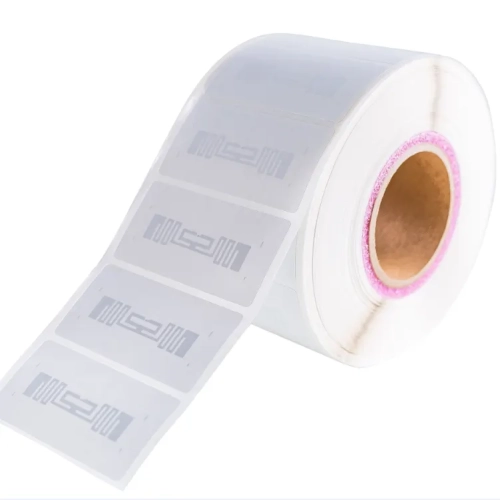
For a Walmart-bound RFID item, check the current category and packaging specification before selecting a tag. Walmart's public supply-chain packaging guide points to GS1 serialized RFID encoding, GS1 tag-placement standards and Auburn ARC inlay standards. Auburn publishes the Walmart specification assigned to listed product and packaging categories, along with approved inlay lists. The public guide does not establish one mandatory chip family, one dogbone shape, a universal read-rate allowance or a standard carton chargeback percentage.
What the public requirements actually establish
Walmart's Supply Chain Packaging Guide describes RFID standards for its U.S. store supply chain. It directs suppliers to GS1 serialized encoding and placement standards and Auburn University RFID Lab ARC inlay standards. Its packaging instructions distinguish national, proprietary and supplier brands from Walmart private brands; the route for inlay sourcing and finished-sample approval depends on the program.
The Auburn Walmart specification page maps departments and product or packaging types to an ARC specification and an approved inlay list. Some entries direct suppliers to contact the RFID Lab. Do not choose an inlay only because its chip is Impinj Monza or NXP UCODE, or because its antenna resembles a familiar apparel hangtag.
Supplier checklist for a specific item
- Confirm scope. Obtain the current Walmart requirement for the exact item, department, packaging type and brand program. A public category table is a starting point, not a substitute for the current supplier instruction.
- Match the approved inlay. Find the applicable ARC specification and check the proposed manufacturer's exact inlay model against its approved list. Record the model and revision in the purchase specification.
- Validate finished packaging. Follow the program's sample-submission instructions. Test the tag after printing, attachment and packing on the real item; metal, liquid and placement can change reads.
- Control serialized encoding. Agree on the GS1 identifier and serial rules with the product owner. Test EPC uniqueness and its association with the printed GTIN and item records before releasing production.
- Retain evidence. Keep the current requirement, inlay approval reference, sample results, encoding records and quality checks for each production revision.
What cannot be inferred from a chip or catalog listing
ARC approval is tied to an inlay model and specification. It is not a blanket approval of every product using the same chip, every placement, or every finished package. A supplier should not promise that a generic Monza R6 dogbone sticker is Walmart-approved for an unreviewed item. Ask for the exact inlay model and compare it with the current Auburn list.
Likewise, the public sources cited here do not substantiate a universal 99% dock-door pass mark, a 0.5–1% failure allowance, a 1–3% carton chargeback, a fixed supplier onboarding time or a single mandatory SGTIN-96 encoding format. Confirm commercial consequences and technical acceptance criteria in your current Walmart supplier terms and item instructions.
Questions to send with a sample request
- What is the Walmart department, item type and packaging format?
- Which current ARC specification and approved inlay model apply?
- Where will the tag be attached, and what material sits behind it?
- Who owns the GS1 identifier, serial allocation and encoding validation?
- What finished-package approval or read-test procedure does this program require?
Send RFIDAK your item specification for a sample review. We can discuss candidate UHF labels and the test plan; approval for a Walmart program must be verified against the exact item and current requirements.
Primary sources
Need help turning this guidance into a product shortlist?
Use this next step when the article has narrowed the direction and you now need help choosing chips, formats, samples or the closest product family.
Quick FAQ
Questions buyers often ask after reading this guide
What EPC encoding scheme does Walmart require?
Walmart's public supply-chain packaging guide points suppliers to GS1 serialized RFID encoding standards. Confirm the exact EPC scheme, GTIN and serial-number rules in the current requirements for your item; do not assume SGTIN-96 is the only accepted encoding. Test uniqueness and association between the encoded tag and the item before production.
What read performance do Walmart-bound tags need?
Auburn University lists Walmart ARC inlay specifications by department, product and packaging type. Select an inlay from the approved list for the applicable specification, then test the finished packaging on the real item. Approval of an inlay design does not by itself establish read performance after application.
Are RFIDAK Monza R6 dogbone tags ARC approved for my item?
That cannot be determined from the chip name or tag shape. Compare the exact inlay model with Auburn's current approved list for your Walmart category and submit finished samples for any required approval. Ask RFIDAK for the inlay maker, model and documentation for the specific proposed SKU.
Do I need an Impinj Monza chip, or can I use another chip?
Walmart's public guide points to the approved inlay and its assigned ARC specification, not one mandatory chip family. Check the exact inlay model against Auburn's current approved list and verify the finished item. A Monza or UCODE chip name alone does not establish approval.
Who handles EPC encoding for a Walmart-bound item?
Agree in writing which party will encode and verify the EPC before the tagged product ships. Use the product owner's assigned GS1 identification data and the current Walmart item requirements; validate serial uniqueness and the tag-to-item match. Do not assume Walmart assigns a separate UPC range or fixes the encoding location for every supplier.
What is the chargeback risk if tags fail to read?
No public Walmart RFID source establishes a universal 0.5–1% read-failure allowance or a 1–3% carton chargeback. Ask your Walmart contact for the current item-specific supplier terms and acceptance procedure. Reduce avoidable failures by testing the approved inlay on finished products and retaining encoding and QC records.
How long does onboarding a Walmart RFID item take?
It depends on the category specification, approved inlay availability, finished-package testing, artwork, encoding setup and production schedule. Request the current requirements and build a project timeline from actual sample approval and purchase-order milestones; a universal six-to-ten-week promise is not reliable.
What if my factory is not listed by Auburn ARC?
Auburn publishes approved inlay models for the applicable specification; Walmart's public packaging guide distinguishes requirements for national and private brands and may require finished samples for approval. Confirm the exact inlay manufacturer and model, its approved-list status and the packaging submission route for your program. Do not infer approval from a chip brand or a supplier's claim.
Author
RFIDAK RFID Editorial Team
RFID supply editorial team
RFIDAK publishes practical RFID guides to help buyers compare chips, product formats, sampling plans and sourcing options before production.