Skip to content
RFID Labels

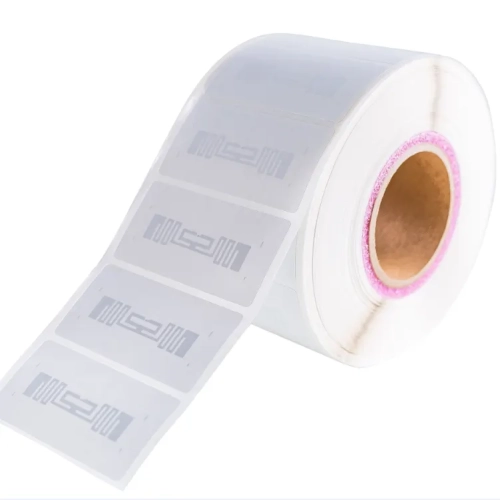
UHF sticker

Need a thin RFID format for print, packaging, or item-level tracking?

MOQ
1,000 pcs

Stock SKU. Custom tooling from 2,000 pcs.

Lead time
7–15 days

Standard; rush possible on request.

Free sample
Ships in 1–3 days

Stock samples via DHL / FedEx.

Use this label or sticker when print flow, packaging fit, or item-level handling matters as much as RF performance. Confirm reading mode, adhesive, label stock, and printer path before rollout.

What buyers usually confirm first

swipe →

Read Mode

Is this for NFC phone tap or UHF inventory reading?

That one choice usually narrows frequency, inlay type, and read behavior right away.

Print Flow

Will the label run through your printer or packaging line?

Roll direction, label stock, adhesive, and visible print all matter when labels are applied at scale.

Packaging Risk

Do you need tamper evidence, thin stock, or metal-safe construction?

Authentication, retail, and smart packaging programs often need more than a basic sticker format.

Spec Check

What to confirm before label rollout

Frequency, label stock, printer flow, adhesive, and visible print requirements should be aligned before you lock the inlay.

Product Name UHF RFID Sticker (Adhesive Label / Wet Inlay)
Surface Material Paper (standard retail), PET (durable general), PVC (outdoor industrial), PP (chemical-resistant), nylon (specialty / high-temp)
Antenna Etched aluminum (standard); copper-etched (premium / long-range variant)
Dimensions 6 stock SKUs: 45 x 20, 35 x 55, 20 x 75, 25 x 100, 12 x 100, 50 x 50 mm; custom die-cut NRE $350-800
Thickness 0.12-0.25 mm (substrate dependent)
Weight 0.05-0.15 g per sticker
Compliance ISO/IEC 18000-63 (EPC Gen2v2), ISO/IEC 18000-6B (legacy), EPC Tag Data Standard 1.13, GS1 SGTIN-96 / SGTIN-198 / GIAI-96 / GRAI-96
Operating Frequency 860-960MHz (global UHF); FCC 902-928, ETSI 865-868, Japan 916-921, China 920-925, Brazil 902-928, India 865-867
Chip Options Impinj Monza R6 / R6-P / M730 / M750 / M770 / M800 (2024 gen); NXP UCODE 8 / 9 / 9xm / DNA; Alien Higgs-3 / 4 / 9 / H10
EPC Memory 96-bit (default), 128-bit, 448-bit, 800-bit (chip dependent); 32-bit factory-unique TID
User Memory 0-512 bit (chip dependent)
Tag Sensitivity -18 dBm (Higgs-3) to -22.5 dBm (Higgs-9, UCODE 9, Monza R6-P)
Read Range 4-12 m (reader + antenna + environment dependent); 1-3 m on paper product near-metal content
Read/Write Cycles 100,000 (chip EEPROM endurance)
Data Retention 20 years (chip specification)
Adhesive Permanent acrylic (standard), removable (releasable), high-tack industrial, freezer-grade (cold chain)
Personalization Factory EPC encoding (sequential or CSV), thermal-transfer print (variable serial / barcode / QR), full-color offset (branded retail)
Operating Temperature -25 deg C to +70 deg C
Storage Temperature -40 deg C to +80 deg C
Humidity 20-95% RH non-condensing
Packaging Single piece, reel (500 / 1,000 / 2,000 / 5,000 pcs per roll); inner core 76 mm (3”) or 40 mm
MOQ 10,000 pieces (stock SKU, standard chip); 100,000 pieces (custom size + chip + EPC encoding); 500,000+ for per-unit pricing floor
Lead Time 7-14 business days stock; 15-25 days custom encoding; 25-35 days custom tooling

Shortlist Logic

Why this label format stays in consideration

Buyers usually keep label options in play when they support the right reading mode, print flow, and packaging constraints.

4-12 meter read range - enables walk-through portal scanning and forklift-mounted inventory reads per ISO/IEC 18000-6C (EPC Gen2)
Bulk reading of 200+ tags simultaneously - complete pallet-level or rack-level inventory counts in seconds versus minutes with barcodes
Impinj Monza R6-P (-22 dBm), NXP UCODE 8/9, Alien Higgs-3/4 chip options for retail, logistics, and healthcare applications
100,000 read/write cycles - supports multi-year tag lifecycle through receiving, stocking, selling, and return workflows
5 surface material options: paper, PET, PVC, PP, nylon - matches substrate to application environment and printer compatibility
GS1-compatible EPC encoding - supports SGTIN-96 and SGTIN-198 serialization for item-level retail and pharmaceutical tracking

Use Cases

Where buyers usually deploy this label format

These are the packaging, inventory, and item-level workflows where a thin RFID format typically makes the most sense.

Retail inventory management

achieve 95-99% stock accuracy and reduce out-of-stock rates by 50-80% with item-level RFID (GS1 US data)

Apparel source-to-store tracking

meet Walmart, Macy's, and major retailer RFID mandates for item-level UHF tagging

Warehouse shipment verification

automated dock-door reads verify 100% of carton contents versus 5-10% manual sampling

Manufacturing WIP tracking

tag parts through production stages for real-time throughput visibility and bottleneck detection

Healthcare supply chain

track medical devices, implants, and pharmaceuticals per FDA UDI and DSCSA serialization requirements

Logistics package sorting

automated conveyor reads enable 3,000+ package sorts per hour at distribution hubs

UHF Sticker vs NFC Sticker — How To Choose

Long-range warehouse scan or smartphone tap? Frequency decides everything

UHF stickers (860-960 MHz) and NFC stickers (13.56 MHz) look similar and cost similar but serve completely different use cases. UHF reads at 3-10 meters on a gate / portal / forklift antenna and scans hundreds of tags per second. NFC reads at 2-5 cm on a specific smartphone tap and handles one tag at a time. Picking the wrong frequency means the sticker will not work in the buyer's environment.

RFIDAK UHF RFID sticker — 860-960 MHz EPC Gen2 passive sticker for pallet, carton, and asset tracking at 3-10 meter read range through warehouse gates and forklift antennas Option A

UHF Sticker (this product — long-range warehouse)

3-10 m range, bulk scan, warehouse / supply chain

Frequency
860 – 960 MHz (UHF EPC Gen2)
Read range
3 – 10 m (with gate antenna)
Tags / second
200 – 600 in bulk read
Smartphone read
No (needs UHF reader)
Chip options
Impinj Monza / NXP UCODE / Alien H3
Unit price (MOQ 10K)
$0.08 – 0.18

Best for

  • Warehouse pallet / carton / tote tracking through RFID gates
  • Retail item-level inventory — thousand-item floor sweeps in minutes
  • Laundry / linen portal reads — garment-level lot identification
  • Vehicle / fleet identification at toll booths and parking entries
RFIDAK NFC sticker — 13.56 MHz NTAG213/215/216 passive sticker for smartphone tap actions, product authentication, business cards, and smart home automation triggers Option B

NFC Sticker (sibling product — smartphone tap)

2-5 cm tap, smartphone read, consumer-facing

Frequency
13.56 MHz (NFC Forum)
Read range
2 – 5 cm (smartphone tap)
Tags / second
1 (tap one, then next)
Smartphone read
Yes — all iPhone 7+ and Android NFC
Chip options
NTAG213 / 215 / 216 / 424 DNA
Unit price (MOQ 10K)
$0.06 – 0.22

Best for

  • Consumer-facing product authentication (luxury, wine, pharma)
  • Smart business cards — tap to share contact or social profiles
  • Smart home triggers — tap sticker to run iOS Shortcut or Android Tasker
  • Museum / retail interactive campaigns — tap to get product info / AR

Quick decision tip — If you need to scan many items from a distance (warehouse gate, forklift antenna, conveyor, retail sweep), go UHF (Option A). If the tag interacts with a consumer's smartphone (product tap, smart card, home automation), go NFC (Option B). They are not interchangeable — a UHF sticker will not respond to a smartphone tap, and an NFC sticker will not read at 3 meters. When in doubt, state your reader type first and pick the sticker family that matches.

UHF sticker Types

1 Should I choose the UHF RFID sticker for my inventory program?

Yes — if you need to tag 10,000+ items for retail inventory, warehouse management, supply chain tracking, apparel source-to-store (Walmart / Macy’s / Target RFID mandate), manufacturing WIP, healthcare supply chain (DSCSA / UDI), or logistics package sorting. The The UHF sticker delivers 4-12 m read range, bulk-reading (200+ tags/sec at portal), ISO/IEC 18000-6C (EPC Gen2) compliance, and GS1 SGTIN-96 / SGTIN-198 serialization. Retailers using item-level UHF consistently report inventory accuracy far above what barcode-only cycle counts achieve.

Pick a different tag if the surface is metal (use on-metal printable metal tag), the workflow needs smartphone tap (use NFC sticker), sub-second proximity tap matters (use HF MIFARE), or the tag will be submerged (use hard-shell UHF). Pick the UHF sticker when: cost must stay $0.04-0.10/unit at 100K+ MOQ; bulk portal read is required; integration with WMS / ERP (SAP / Oracle / Manhattan) is already in place; in-house printer encoding is planned.

2 Spec decision matrix — UHF label form-factor alternatives

Comparison across the 5 UHF passive label / tag classes supply chain and retail operators typically evaluate. Prices indicative at MOQ 100,000 pieces.

ClassSubstrateRead rangeSurface restrictionBest fitUnit price
The UHF sticker (wet inlay)Paper / PET / PVC / PP / nylon4-12 mNon-metal, non-liquidRetail item-level, apparel, cartons, pharma DSCSA$0.04 – 0.10
UHF on-metal printable tagPET + foam spacer2-7 m on metalMetal-friendlyIT asset, industrial, returnable containers$0.40 – 1.80
UHF hard-shell tagABS / PPS / ceramic4-10 mOutdoor / chemicalIndustrial, outdoor, sterilization$1.50 – 8.00
UHF textile laundry tagWoven fabricUp to 6 mGarments, bed linenHotel linen, hospital scrubs, uniform rental$0.55 – 1.10
UHF tyre / rubber tagRubber-encapsulated3-5 mTyre sidewall, rubber productsTyre traceability, rubber goods$0.85 – 2.20

Verdict: wet-inlay sticker wins on unit economics for non-metal, non-liquid item-level programs (retail, apparel, cartons, pharma). Switch to on-metal only when tagging metal surfaces; switch to hard-shell only when outdoor / chemical / sterilization applies.

3 Typical deployment pattern - retail apparel mandate compliance

Apparel brands under retailer RFID mandates typically source UHF stickers pre-converted for their factory applicators, encode SGTIN-96 EPCs at print time, and verify cartons at DC dock-door portals. First-pass encode success at the factory applicator and read accuracy under store overhead arrays are the two acceptance metrics buyers test during sampling.

Inlay choice (Impinj Monza R6 class and similar) is usually locked only after store-environment testing, because cheaper inlays that bench-test fine can underperform on dense apparel racks. Sampling with your actual garments and fixtures before the bulk order is the step that prevents that surprise.

4 Compatibility reference — chips, applicators, readers, WMS / ERP

Verified compatibility across UHF chips, label printer / applicator equipment, reader brands, and WMS / ERP integration platforms.

CategorySupportedNotes
UHF chipsImpinj Monza R6 (-20 dBm) / R6-P (-22 dBm) / M730 / M750 / M770 / M800; NXP UCODE 8 (-21.5 dBm) / UCODE 9 (-22 dBm) / 9xm; Alien Higgs-3 (-18 dBm) / Higgs-4 (-20 dBm) / Higgs-9 (-22.5 dBm)Monza M730 / M750 and UCODE 9 are the 2024 retail apparel defaults; R6-P / Higgs-9 remain common in legacy deployments
EPC encoding standardsGS1 SGTIN-96, SGTIN-198, GIAI-96, GRAI-96, EPC Gen2 v2.1SGTIN-96 is the Walmart mandate format; SGTIN-198 for extended serial length
Factory applicatorsAvery Dennison Monarch 9906 / 9985, Novexx ALX 735, Checkpoint Alpha 8000 / 9000, Brother TD-4 seriesHigh-speed inline 150-300 tags/min typical; off-line bulk encoder 3,000-5,000 tags/hour
Desktop encoder printersZebra ZT410 / ZT421 / ZT610, Sato CL4NX, Toshiba B-EX4T, Honeywell PX45A, Printronix T6000eAll support resin ribbon for permanent print + on-the-fly EPC encoding via LLRP / SDK
Fixed portal readersImpinj Speedway R420 / R700, Zebra FX7500 / FX9600, Alien ALR-F800 / F8800, Keonn AdvanReader 150 / 160 / 170, SICK RFU6x0 / RFU6x1Circular-polarized 6-9 dBi antennas for dock door; linear-polarized for conveyor
Handheld readersZebra RFD40 / RFD8500 / MC3390R, Impinj R2000 handheld, Alien ALR-H450, Honeywell IH45, CSL CS108, Bluebird RFR900Handheld cycle-count 600-1,000 tags/min; mobile computer integrations via Android / iOS
Reader middlewareImpinj ItemSense, Zebra MotionWorks Warehouse, Keonn AdvanNetics, SATO Vicinity, Reliant Network (Loc-RFID), AxerveLLRP-to-REST bridge; event dedup; tag-to-location mapping
WMS / ERP integrationSAP EWM / MM, Oracle NetSuite, Manhattan Associates Active WM, Körber (HighJump), Softeon, Microsoft Dynamics 365, Blue Yonder, Infor CloudSuiteDirect adapters for top 5; generic middleware for others
Retail POSNCR, Oracle Retail (Xstore), Aptos, Manhattan Omni, Toshiba TCxFlightPoint-of-sale UHF read at bagger lane (Walmart / Target style)
Mandates & standardsWalmart RFID (apparel / home / footwear), Macy’s, Target, Kohl’s, Nordstrom, DSCSA (pharma), FDA UDI (medical device)SGTIN-96 with GTIN + serial is the common pattern across all listed mandates

5 Cost at volume — FAQ

How much does the The UHF sticker cost at 100K pcs? Stock 45 x 20 mm wet inlay + UCODE 9 + paper substrate + uncoded (customer encodes at receiving): $0.06-0.08 per unit at MOQ 100,000. Volume brackets: MOQ 10,000 = $0.14-0.22; MOQ 100,000 = $0.06-0.08 (base); MOQ 500,000 = $0.045-0.060; MOQ 5,000,000+ = $0.038-0.048.

Pre-encoding at The factory? Sequential EPC encoding: +$0.003-0.008 per unit. Custom SGTIN-96 encoding with customer GTIN prefix: +$0.005-0.012. Customer-supplied CSV of EPCs: +$0.002-0.005. Encoding reduces factory / DC receiving labor ~$0.03-0.08 per unit — net savings at volume.

Substrate selection? Paper (indoor, retail apparel): base price. PET (durable, general logistics): +$0.005-0.015. PVC (outdoor, industrial): +$0.015-0.030. PP (chemical-resistant): +$0.018-0.035. Nylon (specialty, high-temp): +$0.025-0.050.

Custom size / die-cut? Stock sizes (45x20, 35x55, 20x75, 25x100, 12x100, 50x50): no up-charge. Custom die: one-time NRE $350-800 + per-unit premium $0.005-0.015 until volume amortizes tooling.

How should I think about cost vs barcode-only? Weigh per-tag cost against what inventory inaccuracy costs you today: stockout gross-margin, over-receiving, and shrinkage. For suppliers under retailer mandates, item-level tagging is a listing prerequisite in many categories regardless of the internal business case.

What drives chip tier up-charge? UCODE 9 and Monza M730 / M750 / M770 / M800 (2024 gen): +$0.01-0.02 over legacy R6 / Higgs-4. Premium on-metal variants (UCODE 9xm): +$0.08-0.15 but switch to dedicated on-metal tag for true metal surfaces.

6 Market context - UHF labels as the retail volume standard

Item-level UHF tagging has become the default for large-scale retail inventory programs because counts that took store teams hours happen in minutes with handhelds or overhead arrays, and accuracy improves enough to change replenishment behavior. Retailer mandates keep expanding the tagged-category list, and EU Digital Product Passport preparation is adding a second adoption driver.

Wet-inlay stickers dominate UHF volume because of unit economics at scale and compatibility with existing label printers and applicators.

For the broader frequency-level decision see the RFID frequency guide; for chip family specifics see the Chip Comparison pillar.

Supplier Fit

Why buyers source UHF sticker from RFIDAK

Once the format is right, most teams still need confidence in manufacturing control, sample support, and repeat-order reliability.

ISO 9001

Quality-focused manufacturing and sample support for custom RFID projects.

Since 2008

RFID manufacturing experience across cards, tags, labels, wristbands and readers.

Free Samples

Test product compatibility before bulk purchasing and customization decisions.

Commercial Fit

How buyers usually move this product from shortlist to sample

Most inquiry-ready visitors want to know whether this product matches their workflow, region and approval stage. These cues help them move faster without leaving the product page.

Retail and inventory teams

Usually comparing label size, inlay type and read speed for large SKU volumes or carton tracking.

Packaging and NFC campaign teams

Often need smartphone-readable labels that also support custom print and brand storytelling.

Library and document managers

Typically focused on thin label construction, steady supply and workflow compatibility.

Quote Checklist

What to send us for a faster recommendation

  • Surface material, adhesive requirement and whether the label will be applied by hand or machine.
  • Whether the workflow is smartphone tap, desktop reading, bulk inventory or mixed use.
  • Label size, roll orientation, printer type and visible print requirements.
  • Chip preference, serialization plan, quantity and target delivery schedule.

Market Notes

Regional conversations often tied to this category

North America

Warehouse labels, carton tracking and serialized retail rollouts often prioritize print compatibility and rapid scaling.

Europe

NFC packaging, authentication labels and premium brand presentation often matter alongside technical fit.

Southeast Asia and Oceania

Common requests include promotional NFC stickers, logistics labels and library or campus deployments at scale.

More Ways To Source This

Order this by chip, format or region

These sourcing pages cover the chip-specific and market-specific buying details that often decide the final spec for this product.

Before You Order

Procurement guides every RFID Labels buyer reads first

Five short reads on the procurement-side topics every B2B RFID buyer wants answered before signing a quote — MOQ thresholds, lead time reality, pricing transparency, sample policy, and how to audit a Chinese factory before your first order.

Buyer Questions

Questions buyers usually ask before sample approval

These FAQs cover the points that usually come up between a first shortlist and a real sample or quote request.

What is the minimum order quantity (MOQ) for UHF sticker? +

For UHF sticker, the standard MOQ starts at 1,000 pieces on stock SKUs. Custom shape, material or antenna tooling typically requires 3,000–5,000 pieces to cover one-time mold / die-cut setup cost. Exact MOQ and unit pricing are quoted per project once chip, customization and packaging are confirmed.

Does RFIDAK provide free samples of UHF sticker? +

Yes. Stock rfid labels samples of UHF sticker are typically free; we only ask buyers to cover DHL/FedEx express shipping. Samples ship in 1–3 business days after your order is confirmed and arrive in 2–5 days to most countries. Custom samples (new chip, new size, printed artwork) usually take 3–7 additional days.

What is the production lead time for UHF sticker? +

Standard UHF sticker orders ship in 7–15 business days after PO confirmation and artwork approval. Large runs (>100k units) or orders with complex encoding / custom molds may take 15–25 business days. Rush production is available on request for time-sensitive launches; confirm MOQ and artwork early to protect the timeline.

Can UHF sticker be customized for my brand or project? +

Yes. UHF sticker supports end-to-end customization: full-color CMYK / silk-screen / UV printing, laser engraving, serial numbering, custom chip encoding (UID write, NDEF, sector locking), custom shape / size (subject to tooling MOQ), and packaging. Share your artwork, chip requirement and quantity and we will return a spec sheet + price within 24 hours.

Which RFID chips are supported for UHF sticker? +

UHF sticker supports Impinj Monza R6 / R6-P / M730 / M750 / M770 / M800 (2024 gen); NXP UCODE 8 / 9 / 9xm / DNA; Alien Higgs-3 / 4 / 9 / H10. Before ordering, share your reader model or current credential so we can confirm the exact chip variant (e.g., MIFARE Classic 1K vs DESFire EV3, NTAG213 vs 215) and avoid compatibility issues after lamination.

What certifications and quality control does RFIDAK apply to UHF sticker? +

RFIDAK operates under ISO 9001:2015 (Quality Management) and ISO 14001 (Environmental Management), audited by SGS. UHF sticker is subject to incoming material inspection, in-process QC at every lamination / bonding / encoding step, and 100% electrical performance testing before shipment. Products meet CE, FCC, RoHS and REACH as applicable by market. Full test reports are available on request for buyer audits.

Can UHF sticker be pre-encoded or printed with my artwork before shipment? +

Yes. UHF sticker can ship with UID range assignment, NDEF URL encoding (for NFC), sector-locked user data, serial numbering, and CMYK / silk-screen / UV printing of your artwork. Provide an AI/PDF artwork file at 300 dpi with 3 mm bleed and a chip-encoding spec; we return a digital proof for approval before production.

How does RFIDAK ship UHF sticker internationally? +

RFIDAK ships UHF sticker via DHL / FedEx / UPS (door-to-door, 3–5 days to most countries), air cargo (5–7 days for heavier orders), or sea freight (20–35 days for bulk over 500 kg). Standard Incoterms are EXW, FOB Shenzhen and DDP; choose based on customs clearance preferences. Commercial invoice, packing list and CoC / MSDS are included automatically.

How does RFIDAK handle repeat orders of UHF sticker? +

For repeat buyers, RFIDAK locks tooling, artwork and chip encoding on file so subsequent POs ship faster — typically 5–10 business days for stock chip types at previously-run quantities. Price is adjusted transparently per chip market rate and FX movement; we flag any chip shortage (e.g., DESFire EV3) before quotation so the project plan stays realistic.

What are the technical specifications of UHF sticker? +

Key UHF sticker specs: frequency 860-960 MHz (global UHF); FCC 902-928, ETSI 865-868, Japan 916-921, China 920-925, Brazil 902-928, India 865-867; dimensions 6 stock SKUs: 45x20, 35x55, 20x75, 25x100, 12x100, 50x50 mm; custom die-cut NRE $350-800. A full technical datasheet including read range, chip memory map, IP / temperature rating and compliance certificates is available on request; attach your reader model and target environment so we can confirm suitability before quoting.

Get Free RFID Samples

Try before you buy. Request free samples of any RFID product from our 50+ SKU catalog. Samples shipped via DHL/FedEx within 1-3 business days worldwide.

Not ready to chat? Just drop your email and we'll send the RFIDAK product catalog (PDF).

We'll only use your email to send the catalog and reply to your inquiry.

WhatsApp Get a Quote