Custom RFID Keyfobs by Reader & Housing
Updated 2026-09-10
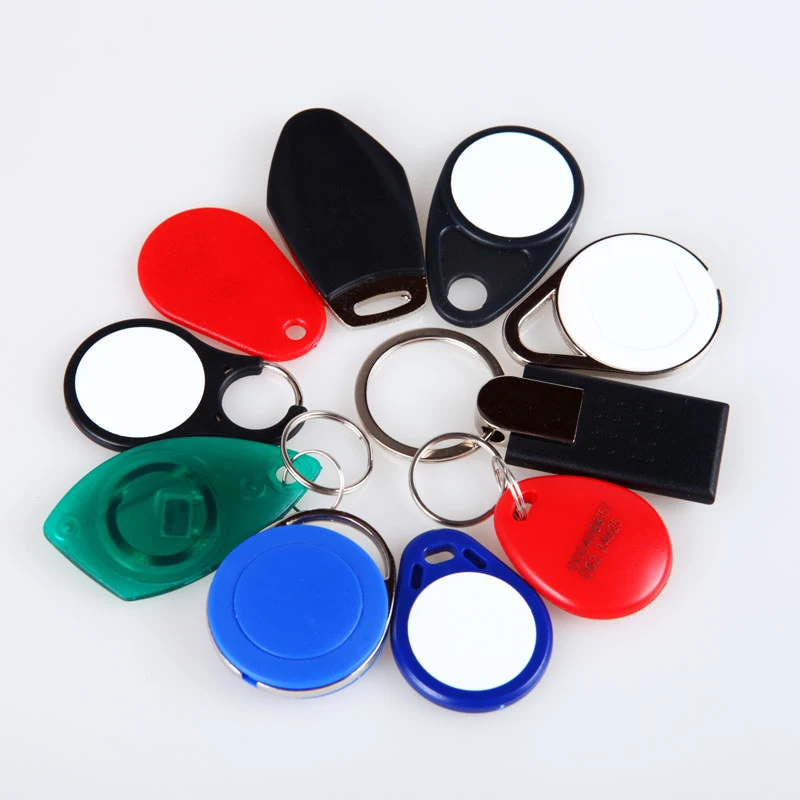
An RFID keyfob is a compact credential attached to a keyring or strap. This family page helps buyers choose a housing after identifying the installed reader and credential requirements. ABS, silicone, leather, epoxy, PPS and FR4 address different handling and presentation needs; none of these materials establishes compatibility, security or environmental performance for every chip and mold.
- MOQ
- Confirm configuration
- Lead time
- Confirm availability
- Samples
- Stock or custom
Confirm the selected construction, chip and customization.
Preparation and transport are scheduled separately.
Confirm availability, fees, freight and applicable credits.
- Project quote after chip, construction, encoding and quantity review
- Approve the configuration and applicable artwork or data before production
- Stock and custom sample terms are confirmed before shipment
Selection & sample approval
Choose the credential, then the housing
Include with your request
- Record reader/controller models and the current credential technology, protocol and non-secret data format.
- Compare the housing for pocket carry, flexible handling, printed promotion or a defined industrial exposure.
- Specify the selected mold, ring or cord, marking and quantities per design for repeatable reorders.
Check on the sample
- Have the site administrator issue a new authorized test credential and check allowed and denied access.
- Test deactivation, replacement and propagation to each relevant door or site.
- Check attachment, marking and the intended exposure on the finished housing.
Spec Check
What to confirm before keyfob sampling
Reader compatibility, shell style, numbering, and branding choices usually decide the right keyfob build.
| Product family | Keyring and strap-carried RFID credentials |
| Housing selection | ABS, silicone, leather or PU, epoxy, PPS, FR4 and custom promotional formats |
| Dimensions | Defined by the selected mold and attachment |
| Compatibility inputs | Reader/controller, credential technology, protocol and enrollment data format |
| Frequency | LF, HF or specialized UHF configuration selected for the system; not interchangeable |
| Personalization | Decoration, visible numbering and electronic data mapping selected by housing |
| Environmental requirements | State the actual exposure and required evidence for the finished configuration |
| Commercial terms | Quantity per design, tooling, chip availability and schedule confirmed in the quote |
Shortlist Logic
Why buyers shortlist this keyfob style
These points usually matter when convenience, system match, and everyday durability all matter at once.
Use Cases
Where buyers usually deploy this keyfob
These are the access and membership workflows where a compact credential often beats a full-size card.
Residential access credentials
Gym and workplace membership systems
Branded keyring credentials
RFID Keyfob Types
1Should I choose an RFID keyfob for my access program?
Choose a keyfob when users need a compact credential attached to a key ring for residential, fitness, office, parking or locker access. The correct build starts with the installed reader and current credential, not the housing material alone. Match the frequency, chip family, protocol and required credential data, then select a mold and housing suited to daily handling and the use environment.
Pick a different form factor if the credential must display a photo, be worn on the wrist, or mount to an asset. Before bulk ordering, validate a production-representative keyfob at the actual reader positions and confirm enrollment, numbering or encoding workflow with the system administrator.
2Spec decision matrix — keyfob housing materials
Use housing material as a buyer-guidance filter, then verify the chosen mold, chip and construction. Environmental ratings must be confirmed on the selected mold or sample datasheet; they are not interchangeable across the whole material family.
| Housing material | Buyer guidance | What to confirm |
|---|---|---|
| ABS | General-purpose access programs and standard molded shapes | Reader match, mold, attachment and expected handling |
| Silicone | Flexible housing and a candidate for wet-use programs | Exact construction, ingress target, cleaning exposure and sample test |
| Leather | Premium hospitality, membership or corporate presentation | Chip fit, hardware, leather grade and decoration method |
| Epoxy | Promotional, printed or transparent designs | Artwork, surface finish, attachment and expected exposure |
| PPS / FR4 | Specialized industrial projects | Material datasheet, environmental requirement, antenna performance and validation plan |
| Wood / coconut shell | Natural aesthetic for hospitality, events or branded programs | Finish variation, artwork method, moisture exposure and sample appearance |
3Typical deployment pattern - multifamily resident credentials
For multifamily programs, document the reader and controller model at each property, the current credential chip and protocol, and the enrollment data used by the access platform. A property portfolio may contain different reader generations, so a credential that works at one site should not be assumed to work at another.
Use samples to test enrollment, door reads and deactivation or replacement workflow at representative properties before standardizing the bulk specification.
4Compatibility decision table — frequency, chip and credential data
Compatibility must be established from the installed reader and credential specification. The same frequency does not guarantee matching protocol, security keys or credential format.
| Decision input | What to provide | Why it matters |
|---|---|---|
| Reader / controller | Installed reader and controller manufacturer and model | Defines the supported credential technologies and enrollment path |
| Current credential | Chip family, protocol and a sample or verified specification | Separates look-alike credentials that operate differently |
| Frequency | LF 125 kHz, HF / NFC 13.56 MHz, or UHF 860-960 MHz | Narrows the RF family but does not prove compatibility |
| Credential data | Facility code, card number, UID use, memory layout or encoding format as applicable | Ensures the supplied credential can follow the system's issuance workflow |
| UHF requirement | UHF reader model, regional band and intended read setup | UHF keyfobs are specialized and should not be assumed compatible with proximity readers |
| Validation | Test quantity and representative reader locations | Confirms enrollment and reads before bulk production |
5RFQ checklist — what to send for an accurate quote
Send the following details so the quote and sample plan reflect the actual installation:
- Installed reader and controller manufacturer and model
- Current credential, chip and protocol
- Required frequency: LF 125 kHz, HF / NFC 13.56 MHz, or specialized UHF 860-960 MHz
- Preferred housing material and catalog mold, or a drawing for a custom mold
- Use environment and target IP or other environmental requirement
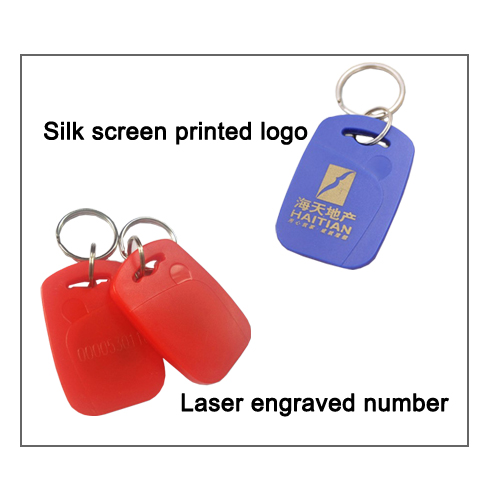
- Logo artwork, decoration method and colors
- UID, encoding, facility code, card number or visible numbering data as applicable
- Keyring, clip, loop or other attachment
- Sample and production quantities
- Ship-to country and requested Incoterm
Review stock-sample, custom-sample, freight and refundable-term guidance in the sample policy. For an installed-system review, use the keyfob compatibility inquiry form.
6Market context - keyfobs in access control
Existing access systems may use legacy LF credentials, MIFARE Classic, or newer chip families. Do not select a replacement from the housing shape or frequency alone. Document the installed reader, protocol, security requirements and credential data first; where stronger security is required, evaluate an appropriate authenticated chip family with the system integrator and validate it on the installed readers.

7ABS Keyfob — General-Purpose Default
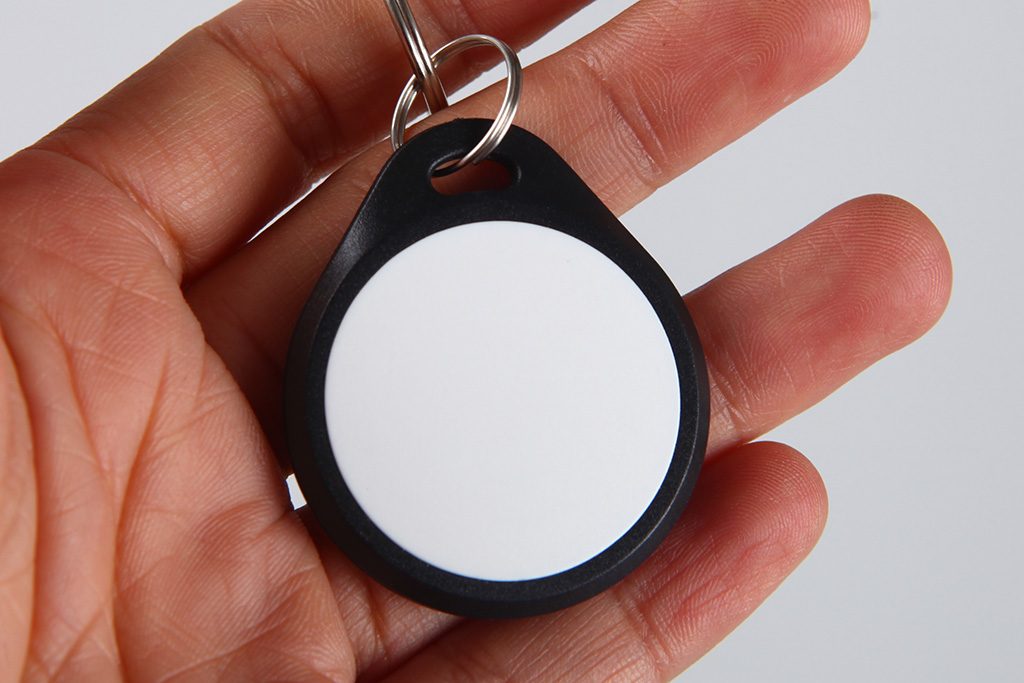
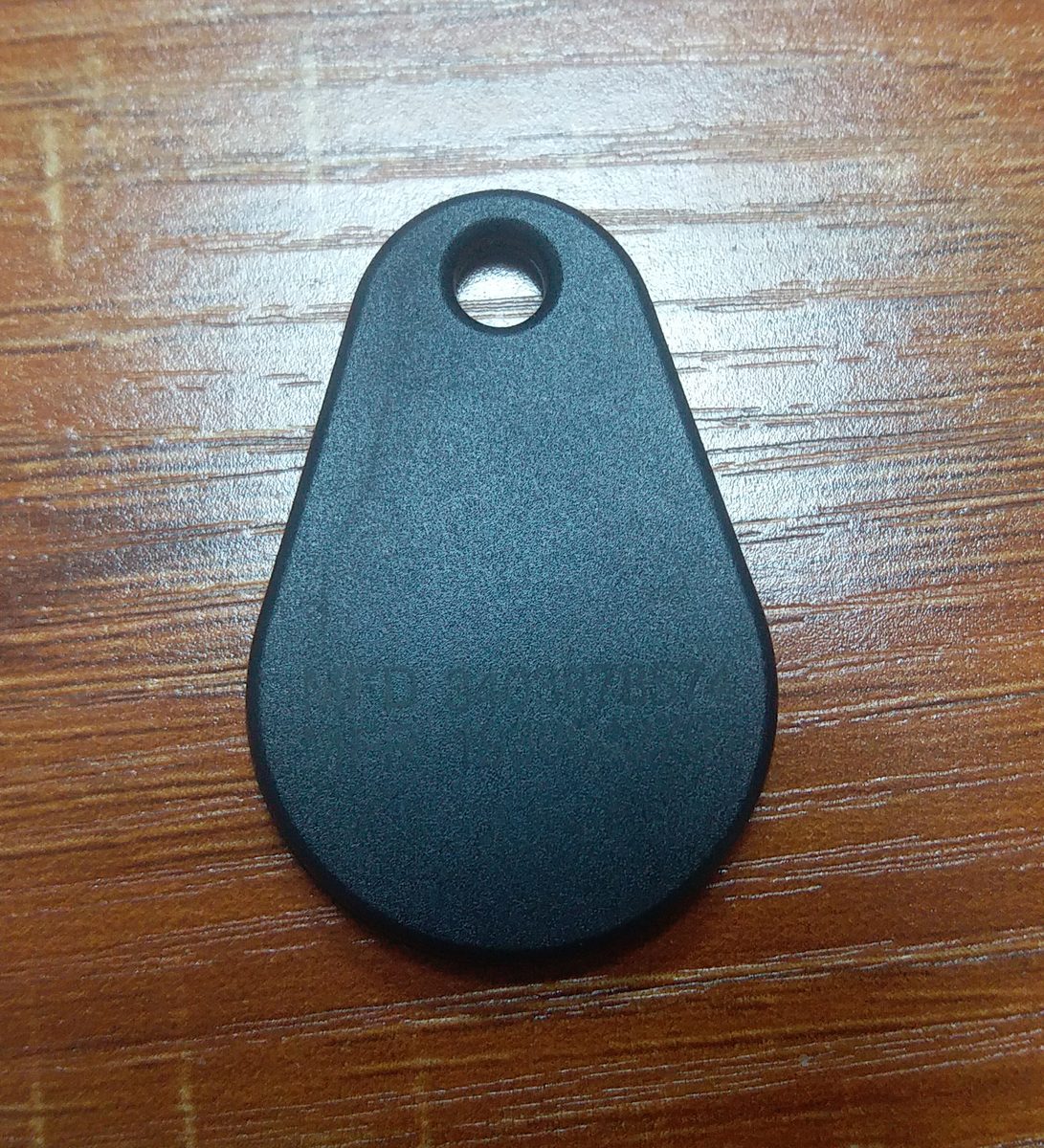
ABS is the general-purpose rigid housing choice for apartment access, fitness clubs, self-storage, offices and other everyday credential programs. Select a catalog mold, attachment and decoration method, then confirm the required chip, protocol and encoding against the installed system. Environmental performance and dimensions vary by mold and must be checked on the selected sample or datasheet.

8Silicone Keyfob — Flexible Wet-Use Candidate
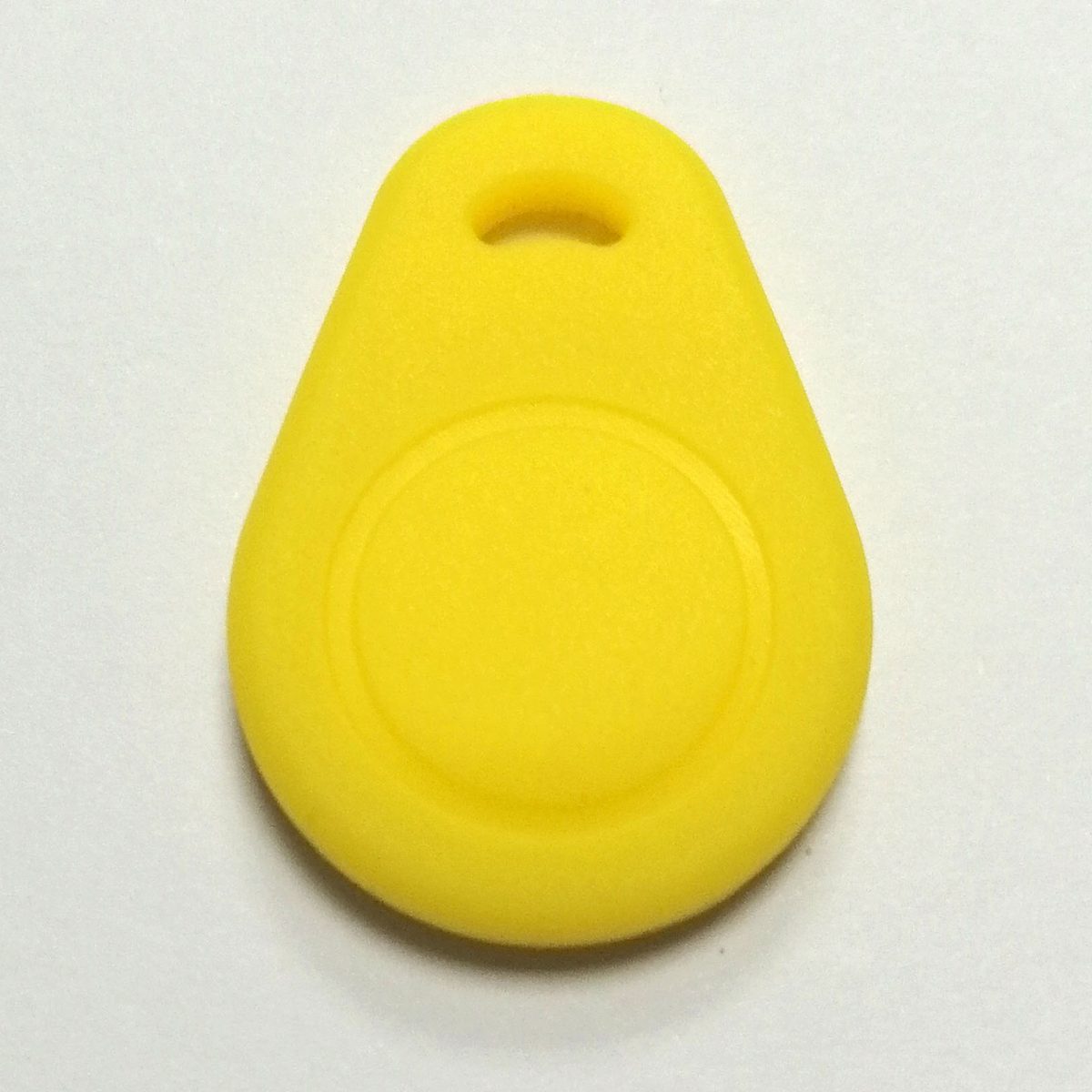
Silicone provides a soft, flexible housing and is a candidate for pools, resorts, fitness facilities and other wet-use programs. Confirm the exact mold construction, chip availability, ingress target, cleaning exposure and environmental test data for the selected SKU. Decoration options can include molded or printed branding subject to artwork and sample approval.

9Leather Keyfob — Premium & Hotel-Grade
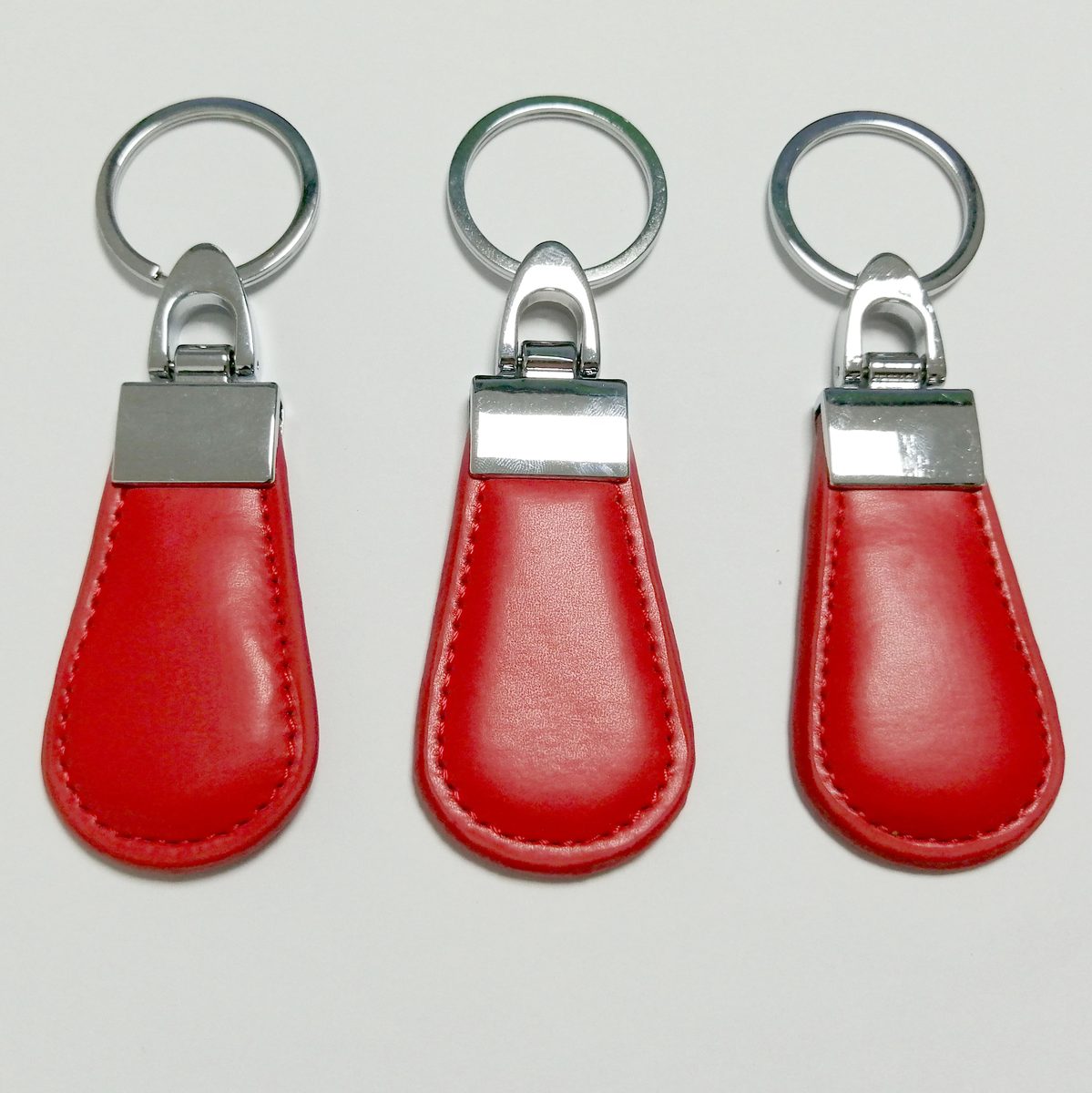
Leather or PU housings pair a premium presentation with metal attachment hardware for hospitality, membership and corporate programs. Available shapes and decoration methods can include teardrop or strap forms, laser engraving, debossing, hot stamping and printing. Confirm the installed reader, chip, protocol and credential data before selecting the inlay.

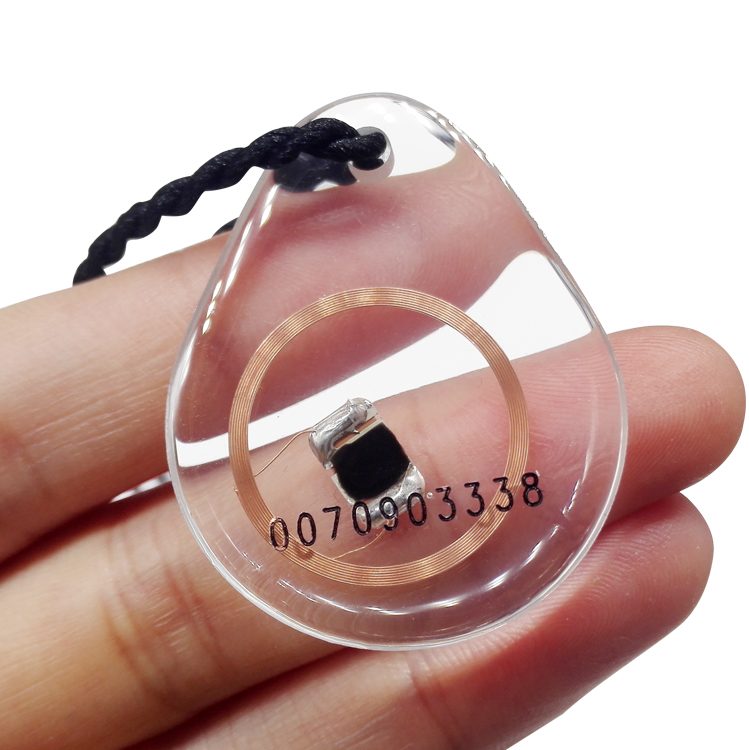
10Epoxy Keyfob — Transparent & Promotional
Clear, colored or printed epoxy keyfobs suit promotional, event and branded programs where the graphic treatment or visible inlay is part of the design. Artwork, numbering, surface finish, attachment and expected exposure should be reviewed on a sample. Chip and protocol selection still begins with the intended reader or NFC interaction.

11PPS Keyfob — Specialized Industrial Candidate
PPS is a candidate for specialized industrial programs where the buyer has defined thermal, chemical or cleaning requirements. Review the selected material and construction datasheet, chip and antenna constraints, exposure conditions and validation method before approval. Do not transfer a rating from one PPS mold or build to another without confirmation.

12FR4 Glassfiber Keyfob — Slim Industrial Candidate
FR4 construction can support a slim keyfob format for specialized industrial or space-constrained programs. Confirm the exact laminate, dimensions, edge finish, antenna design, chip, attachment and any required environmental or flammability rating on the selected SKU datasheet and sample.
How Ordering Works
From inquiry to delivered rfid keyfob in four steps
Agree the configuration, evaluation and release conditions for this order before planning a rollout.
- 1After spec review
Send your inquiry
Provide non-secret reader and credential specifications, housing preference, attachment and quantities by design.
- 2Terms confirmed
Agree the sample plan
An authorized test credential should cover enrollment, rejection, revocation and physical carry.
- 3You control the clock
Approve the configuration
Approve credential behavior, housing, marking and reorder identifiers; issuer keys remain within the controlled issuer process.
- 4Schedule confirmed
Production & delivery
Confirm production or supply readiness, inspection, packing and payment release separately from freight and destination clearance. The quotation identifies the named delivery place and responsibilities.
Details in writing:sample policy ·shipping & Incoterms ·quality control process
Supplier Fit
Why buyers source RFID Keyfob from RFIDAK
Once the format is right, most teams still need confidence in manufacturing control, sample support, and repeat-order reliability.
Company management-system scope and finished-product evidence are different. Review the certification scope.
RFID sourcing, specification review and production coordination with partner lines.
Test compatibility before bulk approval; stock and custom sample terms follow the published sample policy.
Next Reading
What to read before matching access credentials
These guides help teams compare shell styles, chip fit, and installed reader compatibility before they request keyfob samples.
Comparison Pages
Useful if you are still choosing between two directions
These head-to-head pages help buyers compare chip, frequency, material or format decisions before they lock a sample plan for this product.
Commercial Fit
How buyers usually move this product from shortlist to sample
Most inquiry-ready visitors want to know whether this product matches their workflow, region and approval stage. These cues help them move faster without leaving the product page.
Quote Checklist
What to send us for a faster recommendation
- Reader and controller or platform models, supported credential specification and the administrator's issuance process.
- Preferred housing, key-ring attachment, dimensions, colour and artwork; quantities per design and colour.
- Required printed serial, writable project data and identifier mapping; do not send live keys, passwords or membership records.
- Sample and production quantities, destination, required arrival date and the authorized sample acceptance workflow.
Market Notes
Regional conversations often tied to this category
More Ways To Source This
Order this by chip, format or region
These sourcing pages cover the chip-specific and market-specific buying details that often decide the final spec for this product.
Order this by chip & format
Buy by industry & region
Before You Order
Procurement guides every RFID Keyfob buyer reads first
Five short reads on the procurement-side topics every B2B RFID buyer wants answered before signing a quote — MOQ thresholds, lead time reality, pricing transparency, sample policy, and how to audit a Chinese factory before your first order.
Buyer Questions
Questions buyers usually ask before sample approval
These FAQs cover the points that usually come up between a first shortlist and a real sample or quote request.
Should I begin with an ABS, silicone or leather keyfob?+
Begin with the installed credential system. Once the exact electronic requirements are known, compare ABS for a rigid housing, silicone for a flexible body and leather or PU for a stitched presentation. Evaluate the chosen construction for your handling and exposure requirements.
What quantity and specifications are needed to quote RFID Keyfob?+
The minimum order is confirmed for the selected configuration. Specify the chip, dimensions, construction, customization and quantity per design. Include the destination and required date so the offer can identify setup, packing and freight separately.
Can I evaluate RFID Keyfob before a bulk order?+
Request the available configuration and agree the sample test. The standard policy allows up to 5 free stock pieces; buyer-paid express freight is $25–60, credited against the first production order over $500. Custom samples and qualified evaluation kits have separate terms; confirm which path applies to this product.
How is the lead time for RFID Keyfob confirmed?+
Request the schedule for the exact configuration and quantity. The schedule depends on approved specifications, materials, artwork or data where required, and the agreed payment conditions. Preparation, carrier transit and destination clearance are separate; confirm the requested arrival date in the quotation.
How do I check RFID Keyfob compatibility?+
Match the chip protocol, memory and data format to the production reader and software. A shared frequency or similar product shape does not establish compatibility. Validate a representative sample in the intended installation.
What customization and evidence should I request for RFID Keyfob?+
Agree printing, numbering, attachment and encoding only where supported by the selected construction and chip. Factory identifiers, writable user memory and application keys are different fields. Specify the required inspection and environment tests, and request evidence covering the actual finished product and destination.
How is international delivery of RFID Keyfob quoted?+
Provide the destination, quantity and packing requirement. Agree the transport mode, named place or port, Incoterms version, importer, insurance and required documents before shipment. Freight cost and risk transfer can occur at different points. Refer to the shipping and Incoterms page for the quotation checklist; no single transit time applies to every destination.