NXP I-CODE SLIX2 Library Label Supplier
RFIDAK can source NXP I-CODE SLIX2 library labels for a specified reader and application. MOQ guidance for this format: 1,000 pieces category baseline; confirm the label. Confirm the exact chip, finished construction, applicable standards, sample terms and production schedule in a written quote.
Quick spec — NXP I-CODE SLIX2 Library Label
- Chip
- NXP I-CODE SLIX2
- Frequency
- 13.56 MHz
- Standards
- ISO/IEC 15693 / ISO/IEC 18000-3M1
- Memory
- 160 bytes user memory
- Security
- 32-bit privacy mode, EAS, AFI
- Form Factor
- Library Label (Book or media label dimensions chosen for the item and placement)
- Materials
- Paper face material / Film face material / Adhesive and liner chosen for the item
- MOQ
- 1,000 pieces category baseline; confirm the label
- Lead Time
- Confirm production and transit dates in the quote
Chip technical brief
I-CODE SLIX2 (NXP SL2S2602) is an ISO/IEC 15693 HF chip designed for library books, document tracking and asset management. Unlike ISO 14443A chips that read at ~5-10 cm, ISO 15693 supports reads at 0.5-1.5 m, enabling self-checkout kiosks and book-return chutes that scan items in bulk. The EAS (Electronic Article Surveillance) feature lets libraries set a tag bit that triggers exit alarms — a single tag handles both inventory and theft prevention. Standard chip in 3M / Bibliotheca / D-Tech library systems.
Buyer one-liner
Library + document tracking HF chip; ISO 15693 with 1.5 m bulk read and built-in anti-theft.
Typical use cases
- ▸Library books
- ▸Document tracking in offices
- ▸Hospital file management
- ▸Sample-tracking in clinical labs
Reader requirements to validate
Confirm the exact reader model, firmware, antenna, supported protocol and application or credential data with the system owner. Test the finished sample on the installed setup; a chip datasheet or shared frequency does not establish compatibility.
Library Label construction and approval
A library label combines a selected chip and antenna with a face material, adhesive and supply format suited to books or media. Confirm the library system protocol, data model and any AFI or EAS workflow with its integrator; a chip feature does not certify compatibility with security gates or circulation software. Choose dimensions and placement for the actual item and test issue, return, shelf reading and gate behavior on mounted samples. Read distance and multi-item performance depend on the finished label and installed reader setup. Agree print, encoding, supply format, MOQ and delivery in the quote.
Typical sizes
- • Book or media label dimensions chosen for the item and placement
- • Roll, sheet or individual supply to approve
Materials
- • Paper face material
- • Film face material
- • Adhesive and liner chosen for the item
Document scope to verify
Request current documents for the exact finished article, materials and destination. A form-factor name does not establish a certification or IP rating.
Why source NXP I-CODE SLIX2 library labels from RFIDAK
ICODE SLIX2 supports an ISO/IEC 15693 RF interface and chip-level functions including AFI and EAS. The finished library label must still be tested with the installed circulation system, security gates, placement method and item materials. Chip-level EAS capability does not prove that a given gate or software workflow supports it. Read distance depends on the finished antenna, item, orientation and reader setup; request a mounted-sample test rather than a fixed distance claim.
Buyer snapshot
Library and document-management teams defining an approved HF label for circulation, return or inventory workflows. The system integrator should confirm data format, security function and label placement.
Planning examples
Illustrative evaluation plans, not reported customer results.
Example 1
Illustrative library pilot (not a customer case): select representative books and media, document label placement, then test issue, return, self-service and gate behavior with the installed software. Record failures by item type before approving a bulk roll format.
Example 2
Illustrative records trial (not a customer case): a records team labels a small authorized sample set, tests known counts on the actual cart and reader setup, and checks whether reads map to the correct database records. It approves a read zone from measured results, not a chip-level range.
Compare with other library labels
Compare chip-level differences for the same form factor. Check the exact reader, credential format, finished construction and available samples before selecting a configuration.
| Chip | Memory | Security | Typical Use | Quote basis |
|---|---|---|---|---|
| NXP I-CODE SLIX2 (this page) | 160 bytes user memory | 32-bit privacy mode, EAS, AFI | Library books | Confirm chip availability, construction and quantity in the quote |
Recommended RFIDAK SKUs
These catalog formats are candidates for a NXP I-CODE SLIX2 build. Confirm chip availability and the finished configuration in the quote.
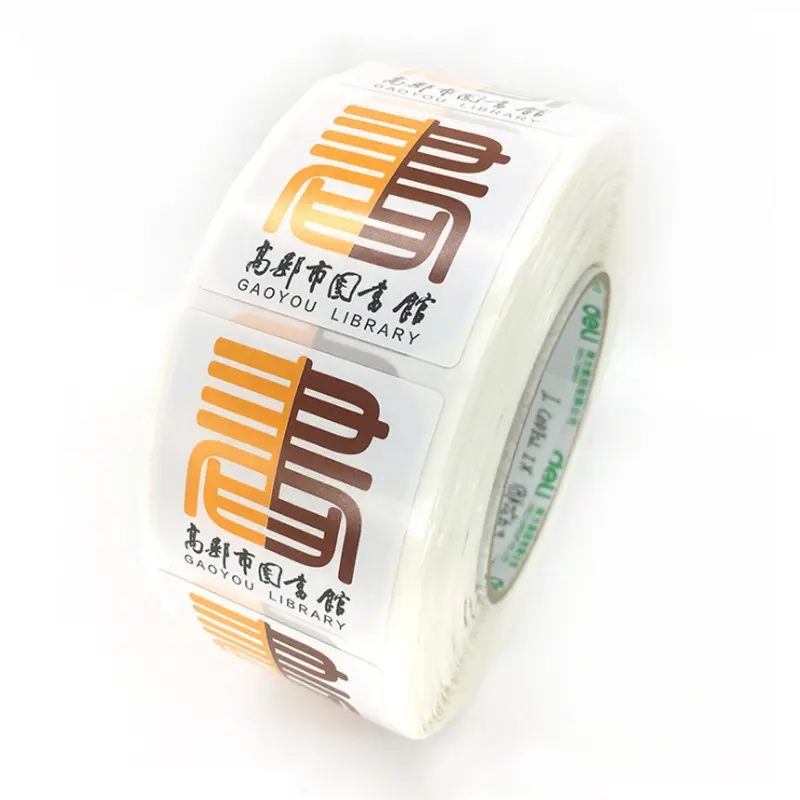
RFID Labels
Library RFID Tags
A library RFID label can support circulation, inventory or security workflows when its chip, data format and antenna match the installed equ…
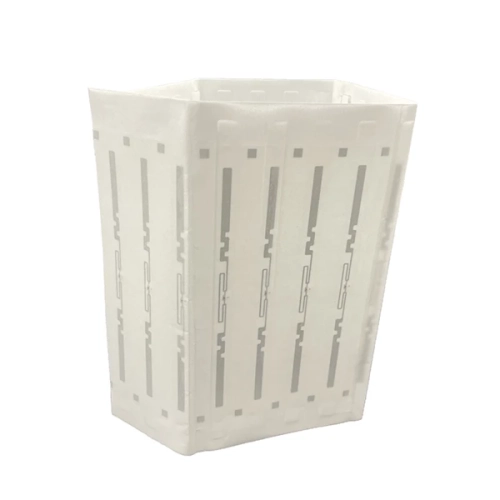
RFID Labels
UHF Library Label
A UHF library label is a slim contactless identifier for files, folders or collection items where the institution has a UHF reader workflow.…
Frequently asked — NXP I-CODE SLIX2 library labels
What is the minimum order quantity for NXP I-CODE SLIX2 library labels?▾
MOQ guidance for this format: 1,000 pieces category baseline; confirm the label. Pilot size and unit price depend on chip availability, format, encoding, artwork and quantity; request a written quote for the exact specification.
How should I check reader compatibility with NXP I-CODE SLIX2 library labels?▾
Check the exact installed reader and controller model, firmware, credential profile and application data requirements. A frequency or protocol match alone does not prove compatibility. Have the system owner test a representative finished sample before authorizing production.
Can RFIDAK pre-encode NXP I-CODE SLIX2 library labels to our specification?▾
Writable EPC, NDEF or user-memory content may be encoded to an approved specification, depending on the chip and access rights. Factory-programmed UIDs normally cannot be changed. Secure credential provisioning needs an agreed key-custody process; never submit secret keys in a public inquiry form. Confirm feasibility and price for the exact data format.
What lead time should I plan for NXP I-CODE SLIX2 library labels to major export markets?▾
Confirm a production-ready date after the specification and sample are approved, then obtain a separate freight and import timeline for the destination. Ask for dated milestones in the project quote rather than relying on a form-factor average.
Which documents apply to NXP I-CODE SLIX2 library labels?▾
Document scope depends on the exact material, chip, reader and destination market. Ask RFIDAK to identify the applicable certificate or test report for the quoted SKU; a company certificate or another product's report does not automatically certify this configuration.
Ready to source NXP I-CODE SLIX2 library labels?
Send the chip preference, reader and application requirements, quantity, and destination. Confirm availability, sample terms, unit pricing and production schedule for the proposed configuration. Standard form-factor MOQ baseline: 1,000 pieces category baseline; confirm the label.
Request a Configuration QuoteTest RFID Samples Before You Order
Free stock samples (up to 5 pieces) — buyer covers DHL/FedEx freight ($25–60), refunded 1:1 against the first production order over $500. Custom samples may cost extra. Confirm the sample configuration, availability and dispatch date before shipment.
Request the RFIDAK product catalog (PDF). Our team will reply by email.
We'll only use your email to send the catalog and reply to your inquiry.