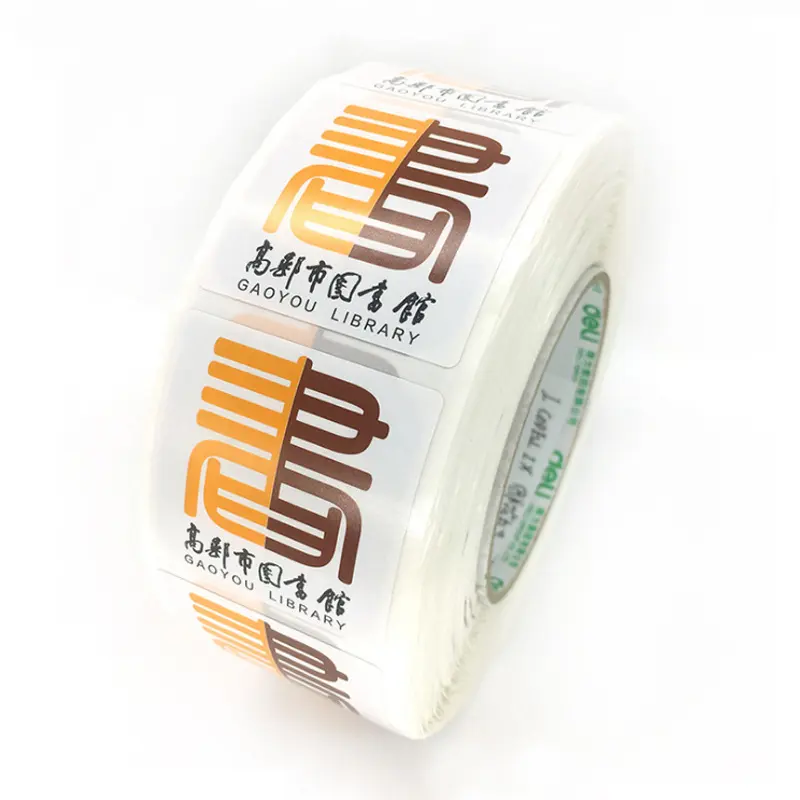
What is the minimum order quantity (MOQ) for Library RFID Tags? +
For Library RFID Tags, the standard MOQ starts at 1,000 pieces on stock SKUs. Custom shape, material or antenna tooling typically requires 3,000–5,000 pieces to cover one-time mold / die-cut setup cost. Exact MOQ and unit pricing are quoted per project once chip, customization and packaging are confirmed.
Does RFIDAK provide free samples of Library RFID Tags? +
Yes. Stock rfid labels samples of Library RFID Tags are typically free; we only ask buyers to cover DHL/FedEx express shipping. Samples ship in 1–3 business days after your order is confirmed and arrive in 2–5 days to most countries. Custom samples (new chip, new size, printed artwork) usually take 3–7 additional days.
What is the production lead time for Library RFID Tags? +
Standard Library RFID Tags orders ship in 7–15 business days after PO confirmation and artwork approval. Large runs (>100k units) or orders with complex encoding / custom molds may take 15–25 business days. Rush production is available on request for time-sensitive launches; confirm MOQ and artwork early to protect the timeline.
Can Library RFID Tags be customized for my brand or project? +
Yes. Library RFID Tags supports end-to-end customization: full-color CMYK / silk-screen / UV printing, laser engraving, serial numbering, custom chip encoding (UID write, NDEF, sector locking), custom shape / size (subject to tooling MOQ), and packaging. Share your artwork, chip requirement and quantity and we will return a spec sheet + price within 24 hours.
Which RFID chips are supported for Library RFID Tags? +
Library RFID Tags supports NXP ICODE SLIX, MIFARE Classic 1K/4K, FM11RF08, NTAG213/215/216. Before ordering, share your reader model or current credential so we can confirm the exact chip variant (e.g., MIFARE Classic 1K vs DESFire EV3, NTAG213 vs 215) and avoid compatibility issues after lamination.
What certifications and quality control does RFIDAK apply to Library RFID Tags? +
RFIDAK operates under ISO 9001:2015 (Quality Management) and ISO 14001 (Environmental Management), audited by SGS. Library RFID Tags is subject to incoming material inspection, in-process QC at every lamination / bonding / encoding step, and 100% electrical performance testing before shipment. Products meet CE, FCC, RoHS and REACH as applicable by market. Full test reports are available on request for buyer audits.
Can Library RFID Tags be pre-encoded or printed with my artwork before shipment? +
Yes. Library RFID Tags can ship with UID range assignment, NDEF URL encoding (for NFC), sector-locked user data, serial numbering, and CMYK / silk-screen / UV printing of your artwork. Provide an AI/PDF artwork file at 300 dpi with 3 mm bleed and a chip-encoding spec; we return a digital proof for approval before production.
How does RFIDAK ship Library RFID Tags internationally? +
RFIDAK ships Library RFID Tags via DHL / FedEx / UPS (door-to-door, 3–5 days to most countries), air cargo (5–7 days for heavier orders), or sea freight (20–35 days for bulk over 500 kg). Standard Incoterms are EXW, FOB Shenzhen and DDP; choose based on customs clearance preferences. Commercial invoice, packing list and CoC / MSDS are included automatically.
How does RFIDAK handle repeat orders of Library RFID Tags? +
For repeat buyers, RFIDAK locks tooling, artwork and chip encoding on file so subsequent POs ship faster — typically 5–10 business days for stock chip types at previously-run quantities. Price is adjusted transparently per chip market rate and FX movement; we flag any chip shortage (e.g., DESFire EV3) before quotation so the project plan stays realistic.
What are the technical specifications of Library RFID Tags? +
Key Library RFID Tags specs: frequency 13.56 MHz (HF); dimensions 50x50, 45x45, 50x80, 75x45 mm (custom available); substrate Coated paper, PET. A full technical datasheet including read range, chip memory map, IP / temperature rating and compliance certificates is available on request; attach your reader model and target environment so we can confirm suitability before quoting.