Credential procurement / Existing Classic systems
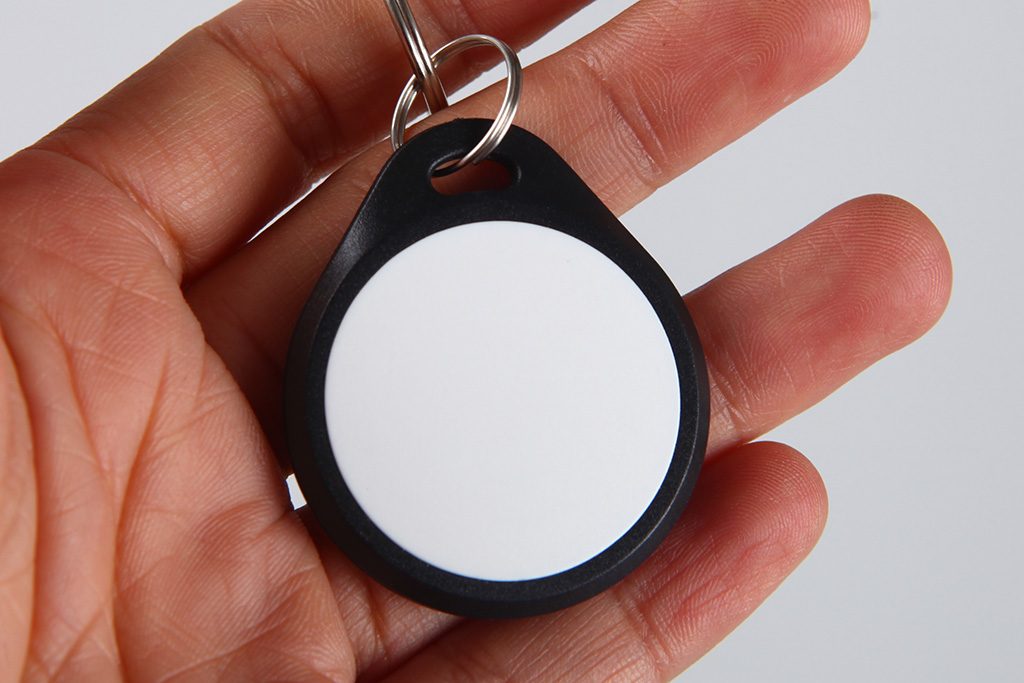
MIFARE Classic 1K RFID Keyfobs
RFIDAK supplies configurable MIFARE Classic 1K keyfobs for existing, system-approved credential requirements. Confirm the exact NXP chip variant, identifier handling, application data and authorized enrollment before selecting a housing. Test samples on the installed reader and controller. NXP does not recommend MIFARE Classic EV1 for new designs; review the system architecture before specifying it for a new project.
What to specify before ordering
- Chip requirement
- MIFARE Classic 1K; confirm the exact NXP variant and supply
- Radio interface
- 13.56 MHz / ISO/IEC 14443 Type A; application support still required
- EV1 1K memory
- 1,024 bytes total EEPROM; includes reserved and access-control blocks
- EV1 identifier options
- 4-byte NUID or 7-byte UID variants; agree identifier handling
- Project fit
- Existing approved profiles; NXP does not recommend EV1 for new designs
- Order terms
- Confirm housing, personalization, quantity, sample costs and delivery
01 / Define the credential
“Classic 1K” needs a chip variant and an application profile
RFIDAK quotes MIFARE Classic 1K keyfobs for buyers maintaining an approved legacy credential program. The technical reference here is NXP MIFARE Classic EV1 1K; confirm the exact chip and identifier variant required by the installed reader, controller and issuing software. NXP does not recommend this product for new designs, so an existing-system reorder and a new credential project need separate decisions. Approve the authorized data and enrollment process on representative samples, including allowed access, denied access and lost-fob replacement. Then select the housing, attachment, artwork and visible numbering, with the finished configuration, quantity and delivery confirmed in the quote.
1,024 bytes describes total EEPROM
NXP’s MIFARE Classic EV1 1K data sheet describes 16 sectors, each with four 16-byte blocks: 1,024 bytes in total. Each sector includes a trailer for access conditions and keys, and sector 0 includes the manufacturer block. The full total is not freely available application storage. Have the system provider approve the actual block layout and permitted operations.
A 4-byte NUID is not a guaranteed unique application number
The EV1 1K data sheet distinguishes a 4-byte non-unique identifier (NUID) version from a 7-byte UID version. Specify the required variant and how the reader and software represent the identifier, including length, byte order and formatting. Agree duplicate detection and allocation of any separate application number. Do not treat every printed serial or reader output as the chip UID.
The manufacturer block is programmed during production and then write-protected. Do not plan to rewrite the manufacturer identifier of the specified NXP chip as ordinary personalization. Define any writable application data separately.
Technical basis: NXP MIFARE Classic EV1 1K data sheet, memory organization and UID/NUID sections. These specifications describe the cited EV1 variant; confirm the article quoted for your order.
02 / Match the installed system
A matching frequency is one check in the process
A reader operating at 13.56 MHz still needs to support the required Classic commands and application workflow. A readable UID does not prove access to application data or permission to open a door. Similarly, Wiegand and OSDP describe reader-to-controller communication; neither specifies a MIFARE keyfob profile.
See NXP’s MIFARE type identification procedure and SIA’s Wiegand and OSDP guidance.
Swipe the table to compare the checks.
| Requirement | Confirm before sampling | Acceptance evidence |
|---|---|---|
| Chip and identifier | Exact NXP part and variant; 4-byte NUID or 7-byte UID where specified; the identifier actually used by the access application. | Check identification, software representation and duplicate handling. A printed number is a separate field. |
| Application data | Approved data layout, application permissions and who performs authorized personalization. | Test the intended authenticated application or identifier workflow, not just whether a desktop tool detects a chip. |
| Installed equipment | Reader, controller, firmware, issuing software and any separate door or locker platform. | Enroll an approved sample and verify the expected grant or denial at every intended access point. |
| Credential lifecycle | Issuance, expiry, lost-fob revocation, replacement and synchronization policies. | Record the controller and software outcome, including update timing and any offline behavior. |
Keep authorization with the responsible issuer
Confirm who authorizes personalization, issues credentials and maintains access permissions. Share non-secret configuration requirements in the quotation. Keep master keys, application keys, credential dumps and member personal records within the administrator’s approved provisioning process.
03 / Approve a representative sample
Test the credential through its full lifecycle
Use samples that represent the agreed chip, antenna, housing and data profile. A generic sample of a similar shape or the same frequency cannot establish acceptance of the ordered configuration.
Have the administrator approve the credential specification and who may issue it. Use test records managed by the system owner.
Confirm the exact chip, identifier variant, data profile, finished housing and numbering plan in the sample order.
Use the approved issuing process. Verify identifier representation and the relationship between any printed reference and the application record.
Test both allowed and denied access on the installed readers, controllers and any separate locker system. Record the permission and actual decision.
Test expiry, lost-fob revocation and replacement without granting unintended permissions. Agree multi-site update timing and offline policies.
Approve physical handling, artwork and the test record. Retain the configuration revision and review any substitution before a repeat order.
Two ways to define an acceptance plan
Planning examples only; these are not customer case studies or measured outcomes.
Scenario 1
Illustrative authorized pilot (not a customer case): a gym administrator requests new sample fobs matching the documented Classic 1K chip and identifier configuration. Enroll designated test accounts, verify the reader-to-controller value and check allowed and denied access at the in-scope entrances and lockers. Test lost-fob revocation and replacement, then retain the approved construction and enrollment mapping for repeat orders.
Scenario 2
Illustrative procurement plan (not a customer case): a property operator needs a phased reorder while reviewing a future credential migration. Confirm the current chip variant, memory map and approved issuing process with the integrator. Evaluate the proposed keyfob housing on existing readers, and keep migration testing and approval separate from the replenishment specification. Do not substitute a different chip or identifier mode without authorization.
04 / Confirm supply and costs
Quote the approved chip, housing and personalization together
Choose dimensions, attachment hardware, color and artwork for the actual mold. Confirm the chip-and-antenna assembly fits the housing and works in the intended carrying position. Define water, cleaning, abrasion or impact exposure where relevant; a material name or a chip data sheet does not establish the finished keyfob’s rating.
- Credential specification: exact NXP chip and variant, approved application profile, identifier handling and responsible issuing process.
- Finished keyfob: mold or drawing, dimensions, keyring, material, decoration, printed references and quantities per design.
- Samples and setup: availability, representative configuration, sample charges, tooling, artwork, data preparation and freight.
- Commercial terms: configuration-specific MOQ, unit price, inspection, production readiness, delivery destination and Incoterm. Agree import responsibilities and the required arrival date.
- Repeat orders: preserve the chip, identifier variant, housing and approved data/artwork revisions. Review changed parts or substitutions before release.
Readers, membership software, credential authorization and site integration require their own agreed scope. Confirm the sample policy, quality-control process and delivery terms with the quotation.
Compare keyfob materials and mold optionsReview the product family before selecting your finished construction. →Bring your existing Classic requirement into the inquiry
Open an editable draft for equipment, credential specifications, sample acceptance, quantities and delivery.
Prepare a Classic 1K Keyfob InquiryBuyer questions
Classic memory, compatibility and ordering
Will any 13.56 MHz reader accept a MIFARE Classic 1K keyfob?
No. NXP Classic EV1 1K operates at 13.56 MHz using ISO/IEC 14443 Type A, with the Classic command and authentication behavior. The installed reader must support the required chip and configured credential mode, and the controller and software must interpret the result correctly. A shared frequency does not establish DESFire application compatibility. Wiegand or OSDP describes reader-to-controller communication rather than the keyfob chip. Confirm the approved specification and validate enrollment and actual access with the system administrator.
Does 1K mean 1,024 bytes are freely available for application data?
No. The NXP Classic EV1 1K reference has 1,024 bytes of total EEPROM, arranged as 16 sectors with four 16-byte blocks each. Each sector includes a trailer for keys and access-control information, and sector 0 also contains a manufacturer-programmed, write-protected block. Application space depends on the approved memory map and access conditions. Agree the required data fields and usable blocks with the issuer; do not size an application from the 1K label alone or overwrite security settings as ordinary data.
Should we order a 4-byte or 7-byte identifier version?
The NXP Classic EV1 1K data sheet describes 4-byte NUID and 7-byte UID delivery variants. NUID means Non-Unique ID, so it must not be advertised as globally unique. Confirm the exact variant and identifier handling expected by the reader, controller and enrollment software. The manufacturer block is programmed and write protected during chip production; visible serial printing and system credential-number allocation are separate specifications. Reading an identifier is not the same as authenticating protected data, and changing identifier length can require system changes.
Is MIFARE Classic 1K suitable for a new security project?
NXP states that Classic EV1 1K - 4K is not recommended for new designs and points to DESFire Light on that product page. Its Classic family guidance directs security-relevant applications to the DESFire and Plus families. Classic uses the legacy CRYPTO1 mechanism; a tougher housing or custom logo does not improve that cryptography. Have the system owner review the required security architecture and migration path. A different chip family requires its own reader, application, key-management and enrollment validation; it is not an automatic replacement for the installed credential.
How should authorized encoding and sample acceptance be handled?
Have the system owner define whether the application uses identifier enrollment or protected sector data, and assign personalization to an authorized issuer. Supply non-secret reader, chip, memory-map and data-format requirements for quotation. Keep master keys, sector keys, credential dumps and personal member records within the approved issuing process. Use newly issued test credentials, validate the intended controller decision and event log, and check expiry, revocation and replacement at the relevant sites. Agree the sample record and any allowed configuration changes before production.
What details are needed for a Classic 1K keyfob quotation?
Send the approved chip and identifier variant, reader and controller models, issuing-software requirements, authorized personalization scope and sample acceptance plan. Confirm the housing or mold, dimensions, keyring attachment, print or engraving, visible numbering and relevant handling or cleaning exposure. Request MOQ for the exact configuration and quantity per design, and separate sample, setup, unit price and freight charges. Confirm availability, production readiness, delivery destination and import responsibilities in the quote. No fixed housing dimension, read distance, ingress rating or delivery time applies to every keyfob construction.