RFID Keyfob Buying Guide: Compatibility, Materials & Samples
Choose an RFID keyfob by its approved credential profile, housing and enrollment workflow. Use the compatibility table, sample acceptance checklist and quotation brief before placing a bulk order.
Check Compatibility & Samples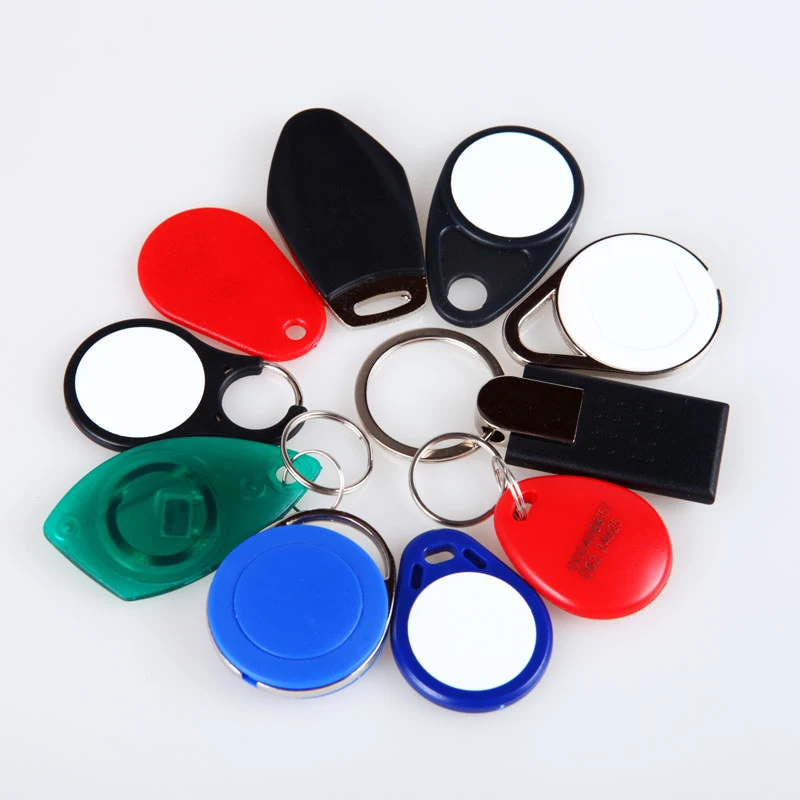
On this page
Choose an RFID keyfob by the credential your system accepts, then select its housing. Confirm the reader, controller, chip profile, identifier or authenticated application, and enrollment process before ordering. LF or HF alone does not establish compatibility. Use newly issued samples in an administrator-approved trial, including access denial and lost-fob replacement. Once that configuration passes, compare quotations for the same housing, printing, personalization and quantity per design.
Start with the system brief
For an existing apartment, workplace or membership installation, ask the system provider for the approved credential specification. A photograph can help identify a housing, but similar shells can contain different chips. A desktop reader can identify some technical properties without proving that the door controller will accept the credential.
For a new installation, agree the security and operating requirements before selecting a chip. Identify who will supply the readers, configure the access application, issue credentials, manage permissions and replace lost keyfobs. A credential supply order does not itself include those services.
- Installation: reader and controller models, relevant firmware or enabled profiles, management software and country of use.
- Credential: exact technology and chip variant, identifier format or application specification, and any issuer restrictions.
- Operation: doors, lockers or gates involved; user groups; multiple sites; and any offline readers.
- Approval: the administrator or system provider responsible for sample enrollment and acceptance.
Separate frequency, credential and reader interface
A frequency is one part of the specification. For example, HID lists HID Prox and EM Prox as separate low-frequency technologies in its Signo reader documentation. That is a reason to request the enabled credential profile, not to assume any 125 kHz keyfob will work.
Swipe the table to compare compatibility requirements.
| Specification | What to confirm | What it does not establish |
|---|---|---|
| LF, commonly 125 kHz | The exact credential technology, transmitted identifier and controller format. | Compatibility with every HID, EM or other LF installation. |
| HF, 13.56 MHz | The chip family and variant, supported protocol, and enabled credential application. | Interchangeability between Classic, DESFire or other HF credentials. |
| UID / CSN reading | The identifier the reader outputs and how the system represents and enrolls it. | Successful authentication to a protected credential application. |
| Authenticated application | The application profile, issuer-approved personalization and reader configuration. | Permission to enter a door merely because the chip supports that application. |
| Wiegand / OSDP | The reader-to-controller connection and configured data exchange. | The radio technology or credential profile accepted by the reader. |
The Security Industry Association documents 26-bit Wiegand as a reader interface and OSDP as communication between access-control devices. Treat those as a separate layer from the fob-to-reader transaction.
A phone tap is also a separate requirement. If the job is opening a web link, define the phone and encoded-content workflow. If the job is mobile door access, ask the access-system provider about its supported mobile credentials. An NFC-capable phone is not a universal access-keyfob compatibility test.
Review Classic replenishment and new designs differently
NXP currently lists MIFARE Classic EV1 as active while advising against new designs and recommending DESFire Light on that page. This is a design recommendation, not a statement that Classic has been discontinued.
For an established Classic installation, confirm the approved variant, identifier handling and application requirements with its provider. The Classic 1K keyfob procurement page provides a focused specification checklist. For a new or security-sensitive project, ask the provider to evaluate an appropriate authenticated credential, including AES-based options, across the readers, application, personalization and issuance process. A different chip in the same shell is not a complete migration plan.
Security also depends on system operation. NXP's MIFARE system-security guidance covers measures such as key management and credential rejection. Buying a chip with security features does not ensure those features are configured or that lost credentials can be disabled at every relevant reader.
Choose the housing for the way it will be carried
Choose the finished RFID keyfob configuration after the credential requirements are clear. Ask for its drawing, dimensions, weight, attachment details and printable area. Approve the same chip-and-housing combination that will be supplied; a sample in a different shell does not settle handling or presentation at the reader.
Swipe the table to compare housing checks.
| Housing option | Buyer check | Sample evidence to request |
|---|---|---|
| Molded plastic | Size in the hand, keyring attachment, seams, color and usable print area. | The exact assembled model, approved artwork and handling assessment. |
| Printed or epoxy face | Logo legibility, edge finish and the location of an individual reference number. | A finished print proof and abrasion or exposure evidence relevant to the intended use. |
| Flexible or alternative finishes | Material identification, assembly, available chip fit and attachment construction. | A configuration-specific sample; confirm availability before specifying a finish. |
A material name is not a waterproof rating. If a keyfob will be immersed, cleaned with chemicals or carried outdoors, state those conditions and request applicable evidence for the finished model. Assess keyring pull, repeated handling and print wear separately from the electronic function. Do not infer a universal temperature, immersion or chemical-resistance guarantee from a housing photograph.
Also check the identification task: a small keyfob may suit a keychain, while a card format provides more room for a photograph or readable staff details. Neither shape establishes access security.
Agree numbering and issuance before personalization
Specify which value links the physical fob to the management record. A printed reference, a chip identifier called a UID or CSN, and an application credential number can be different. NXP's UID handling note describes different identifier types; do not assume a universal fixed format.
Have the system provider approve an example showing the expected byte order, decimal or hexadecimal representation, leading zeros and any print-to-record mapping. If a sequential number is printed, confirm it remains linked to the correct credential record. It is not a promise that the chip identifiers will be sequential.
Separate blank supply, visible numbering and application personalization in the quotation. Describe the required profile and responsible issuer using non-secret specifications. Master keys and production credentials belong in the issuer's controlled process, not in an ordinary inquiry form or emailed sample spreadsheet.
For one fob across a door, locker and another site, identify the required profile and administrator for each system. A multi-application chip or two technologies in one housing does not create shared permissions or synchronize revocation. Include all intended systems in the approval trial.
Run an authorized sample acceptance test
Ask the administrator to issue and enroll new test credentials through the approved process. Agree the expected results and acceptance owner before testing. Avoid using a copied production credential as proof that a new supply configuration is suitable.
- Record the sample. Capture its chip/profile, housing, print reference and configuration revision, with the reader and controller used.
- Verify enrollment. Confirm the intended identifier or application appears in the correct test-user record without an unintended duplicate assignment.
- Test access and denial. Check an allowed door or locker and a deliberately excluded permission or time period; inspect the corresponding system events.
- Test loss and replacement. Revoke the test fob, verify rejection, issue a replacement and confirm its intended permissions.
- Check every relevant system. Repeat across reader families and sites; where offline operation is in scope, verify how permission changes and revocation reach those readers.
- Approve the physical configuration. Assess normal presentation, keyring handling and specified exposure conditions, then retain the accepted specification for production comparison.
Swipe the table to use the sample acceptance record.
| Test | Agreed expected result | Record during the trial |
|---|---|---|
| Authorized access | Named test user is admitted at the specified access point. | Sample reference, access point, time and controller event. |
| Restricted access | The specified excluded permission is denied. | Rule tested, observed result and event record. |
| Revoked fob and replacement | Old credential is rejected; replacement receives only the intended permissions. | Revocation propagation, affected sites and both credential references. |
| Physical use | Finished housing and marking meet the agreed use conditions. | Method, exposure where relevant, observed condition and approval owner. |
This is a test-record template, not a report of a customer installation. Any failed enrollment, unexpected access or incomplete revocation needs resolution before production approval. Passing on one reader model should not be recorded as approval for an untested reader family.
Build a quotation that can be compared
Send the same approved specification to each prospective supplier. List quantity per design and separate the cost of credentials from tooling, artwork, numbering, application personalization, sample work, packaging and freight. Ask the system provider to identify any separate issuance, software or integration charges. A low fob unit price does not describe the complete project cost.
- Credential and housing: approved chip/profile, selected model, dimensions, color and attachment.
- Artwork and data: print area, finish, number format and a non-secret mapping example where required.
- Supply scope: blank, numbered or personalized; quantity per design; packaging and approval samples.
- Acceptance: the responsible administrator, agreed trial and signed-off configuration.
- Commercial terms: sample and tooling charges, MOQ for this configuration, availability, payment, delivery terms and destination.
Confirm which sample-policy terms apply to the proposed keyfob, including sample quantities, customization charges and freight. Request a production schedule tied to the actual specification, material availability, artwork approval and any issuer-controlled personalization. This guide does not establish a fixed MOQ, free-sample entitlement or guaranteed lead time.
For an American fitness installation, the US gym keyfob procurement page adds a project-focused checklist. For other destinations, state the installation country and delivery requirements in the inquiry so the proposed scope matches the project.
Ready to review a keyfob requirement? Share the non-secret system specification, intended housing, quantity per design and sample acceptance needs. RFIDAK can review the proposed credential supply; the system administrator retains responsibility for enrollment, permissions and operational approval.
Buyer questions
Keyfob compatibility, materials and ordering
How do I choose RFID keyfobs for an existing access system?
Ask the system provider to confirm the reader and controller models, enabled credential technology, expected identifier or application format, and authorized enrollment process. Then test newly issued sample keyfobs in the actual installation. A matching frequency, familiar shell or successful desktop scan is insufficient to establish door-access compatibility.
Does a 125 kHz keyfob work with HID Prox readers?
Not necessarily. The 125 kHz frequency covers different credential technologies; HID Prox and EM Prox are separate profiles. Confirm the specific profile enabled in the installed reader and the controller's expected data format. Wiegand or OSDP describes the reader-to-controller interface and does not establish compatibility between a keyfob and the reader.
Should I specify MIFARE Classic for a new keyfob project?
NXP currently lists Classic EV1 as active but advises against using it in new designs and recommends DESFire Light on that product page. For a new project, have the system provider assess a suitable authenticated credential and migration requirements. Existing Classic replenishment still requires the approved chip, application and identifier format; another MIFARE product is not an automatic replacement.
Are RFID keyfobs more secure or waterproof than cards?
The housing shape establishes neither property. Access security depends on the credential, authentication, key management, reader configuration and system administration. Water resistance depends on the finished construction and its documented test conditions. Request evidence for the selected keyfob model and assess the actual exposure, including immersion, cleaning chemicals and attachment wear where relevant.
Can one keyfob operate doors, lockers and multiple sites?
It can be considered only when every system accepts the required credential profile and its administrator authorizes the application and permissions. A dual-technology housing or multi-application chip does not create that integration. Validate each reader family, enrollment route, access rule and lost-credential revocation process before approving a shared keyfob.
Is the printed keyfob number the same as the UID or CSN?
It may be a separate reference. A printed number, a chip identifier reported as UID or CSN, and an application credential number serve different roles. Agree which value the management software uses and confirm its byte order, decimal or hexadecimal representation, leading zeros and print-to-record mapping. A sequential printed series does not imply sequential chip identifiers.
What should an RFID keyfob sample test include?
An authorized administrator should issue and enroll new test credentials, verify expected access and expected denial, and inspect the resulting system records. Also test lost-keyfob revocation, replacement issuance and synchronization across relevant sites or offline readers. Record the exact sample configuration and assess handling and environmental requirements separately before production approval.
What determines the MOQ, price and delivery time for custom keyfobs?
Request confirmation for the selected chip and credential profile, housing, quantity per design, printing, numbering, personalization, packaging and destination. Ask for sample and tooling charges, freight, any issuer or integration work, and the production schedule after approvals. MOQ, availability, sample terms and delivery commitments should be stated in the configuration-specific quotation rather than inferred from a general guide.
Author
RFIDAK RFID Editorial Team
RFID supply editorial team
RFIDAK publishes practical RFID guides to help buyers compare chips, product formats, sampling plans and sourcing options before production.