- Face dimensions
- 85.6 × 54 mm
- Published thickness
- 0.84–1 mm
Published as a separate thin format. Face size alone does not establish compatibility with a card printer, encoder slot or holder.
Material, thickness & credential options
Natural grain. A card built around your reader.
Wood and bamboo RFID cards combine a natural-grain card body with an embedded chip and antenna for hotel keys, membership credentials or NFC links. Published formats include 85.6 × 54 mm at 0.84–1 mm thick and 86 × 54 mm at 1.2–2 mm thick. Choose the material and artwork finish separately from the chip, then match the finished card to the reader and any encoder or holder clearance.
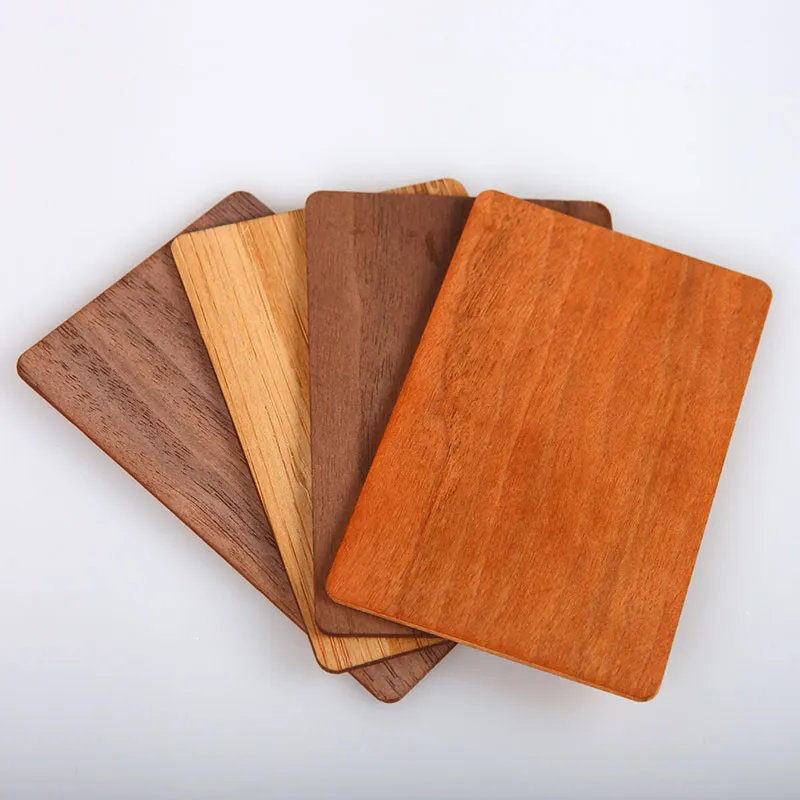
Product specifications
A wood card can carry a hotel key, an access identifier or an NFC link. Its outside appearance does not tell you which chip, data or application is inside.
Start with the physical format below, then compare the reader and memory options.
Published card formats
Two published wood-card formats use different face dimensions and thickness ranges. Select the format with your required material and artwork; the production drawing fixes tolerances, layer construction and electronic configuration.
Published as a separate thin format. Face size alone does not establish compatibility with a card printer, encoder slot or holder.
Published hotel-card format. Check the finished thickness and flatness against any physical feed path; contactless reading does not require insertion.
Check the feed path as well as the reader. A tap reader works without inserting the card. A slot encoder, printer or holder has its own clearance and flatness limits. A familiar card outline does not establish a mechanical fit.
Labelled material samples
The supplier’s sample sheet identifies cherry, sapele, bamboo, black walnut, beech and birch. It provides a useful starting point for comparing the background of your logo or text.
Natural variation affects color, grain and engraving contrast. Choose an acceptable sample range for the order, rather than matching every card to a single photograph.
Ask for a material sample set →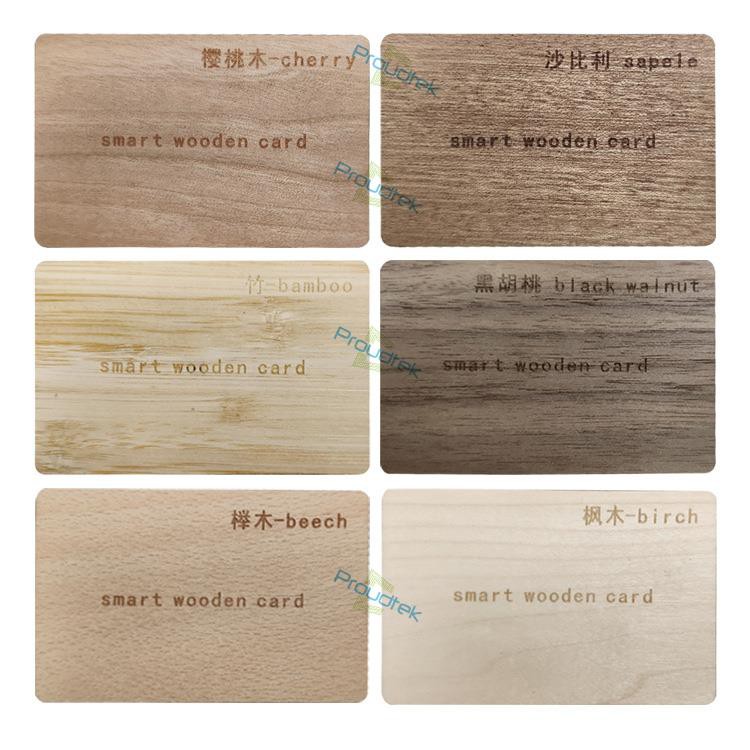
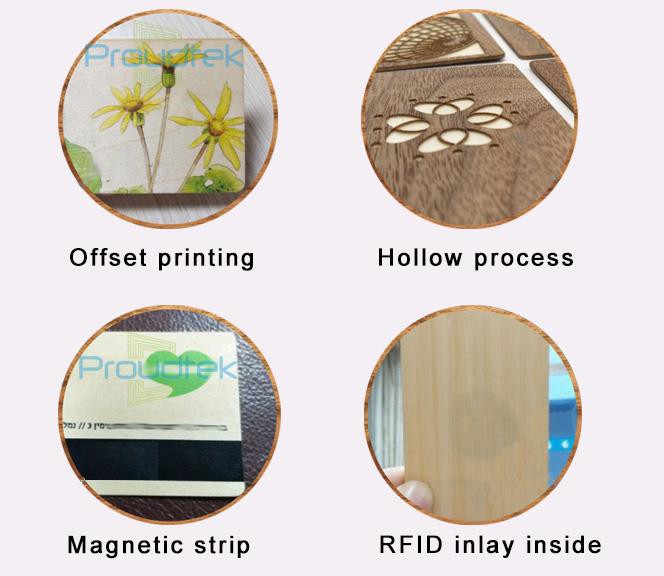
Artwork & optional features
LF & HF chip comparison
These manufacturer references explain the chip families mentioned in the supplier listings. The quotation identifies the actual IC and the issuer data required for your system.
| Chip | Interface & memory | Use and configuration |
|---|---|---|
| EM4200Manufacturer datasheet ↗ | LF identification · 125 kHz system referenceFactory-programmed read-only identifier | Existing LF access readersMatch the encoding and ID format. This chip does not offer writable NFC user memory or store a phone-tap URL. |
| NTAG213 / NTAG215 / NTAG216Manufacturer datasheet ↗ | 13.56 MHz · NFC Forum Type 2 · ISO/IEC 14443 A144 / 504 / 888 bytes user memory | Phone-tap links and NDEF contentA short web link can point to a contact page or digital profile. NDEF formatting consumes part of the memory; the URL destination is managed separately. |
| MIFARE Classic EV1 1KManufacturer datasheet ↗ | 13.56 MHz · ISO/IEC 14443 A activation · Classic commands1 kB total EEPROM · 16 sectors | An installed Classic credential systemMatch sector layout, keys and issuer requirements. The total includes manufacturer data and sector trailers; identical chip family does not guarantee hotel-system acceptance. |
| MIFARE DESFire EV3 · IC referenceManufacturer datasheet ↗ | 13.56 MHz · ISO/IEC 14443 A / 14443-42 / 4 / 8 / 16 kB variants in the cited feature table | Application-based access projectsSpecify the generation, memory, applications and key management with the system integrator. The supplier lists the DESFire family; the quoted assembly defines the actual variant. |
Provide the lock model, encoder, current chip and authorized issuing workflow. Check a finished sample for successful issuance, the correct room permissions, expiry and replacement. A supplier’s list of lock brands is not a compatibility test for every model and software version.
Technical documents
Download the two format ranges, labelled material examples, personalization sheet and chip comparison in one document.
Download wood-card technical reference ↓PDF · version 16 September 2026
Sourcing or disposal requirements should be supported by documents covering the selected material, bonding layers, coating and electronic assembly.
Custom orders & samples
Choose a card size and thickness range, wood or bamboo, and a printed or engraved finish. Include the intended reader or hotel encoder with your artwork and quantity.
Include the preferred construction, thickness limit and artwork. Specify the quantity per design and any material documents your project needs.
Compare grain, color, edges and marking contrast across a small sample set. Agree the acceptable appearance range for the order.
Provide the hotel lock and encoder, access reader or intended phone use. Test the authorized finished sample before approving the final specification.
The thin supplier reference measures 85.6 × 54 mm with a 0.84–1 mm thickness range. A separate hotel-card reference measures 86 × 54 mm at 1.2–2 mm thick. These are published format ranges; the production drawing specifies the ordered thickness and tolerances. Neither face size guarantees that the card will pass through every printer, encoder or holder.
The supplier sample sheet labels cherry, sapele, bamboo, black walnut, beech and birch. It shows how grain and marking contrast can differ. The names come from the labelled supplier sheet, not an identification made from the blank-card hero photo. Review representative samples of the material selected for your order.
A wood card can be configured for a supported hotel credential system, but a matching chip family alone is insufficient. The issuer data, application or sector layout, keys and encoder workflow must match. Test authorized samples on the exact lock and encoder, including any physical card slot; a contactless reader and an insertion encoder impose different mechanical requirements.
The supplier references list laser engraving, UV color printing, offset and screen printing, plus an optional magnetic stripe and decorative cut-outs. A stripe needs its own encoding specification. Position cut-outs away from the antenna, and check fine text and QR contrast on the selected wood grain before approving the artwork.
Wood appearance alone does not establish those claims. A finished RFID card also contains a chip and antenna and may use bonding layers, coatings or a magnetic stripe. If sourcing certification, plastic content or disposal requirements are part of the project, request evidence covering the quoted construction and supply chain rather than treating the material name as certification.
May we use Google Analytics cookies to measure visits and inquiry actions? Your choice does not affect the contact form. Cookie details