On this page
Compare the requirements that change the choice
| Decision point | PVC RFID cards | Paper-based RFID cards / tickets |
|---|---|---|
| Candidate use | Repeated badge or wallet carry where the selected construction meets service needs | Ticket or temporary-card issuance where the media meets the required lifecycle |
| Physical specification | Substrate, thickness, flatness, finish and any protective layers | Paper stock, caliper, stiffness, coatings, laminates and inlay stack |
| Equipment fit | Check the approved printer, encoder and holder requirements | Check printer/dispenser path, separation, curl and jams |
| Handling validation | Bending, abrasion, print wear and relevant cleaning | Folds, edge wear, moisture, tear resistance and print legibility |
| Electronic behavior | Chip, antenna and credential application selected together | The same rule; paper is not inherently an insecure or disposable chip technology |
| Total supply cost | Include personalization, reuse, loss, collection and replacement | Include media waste, failed feeds, replacement tickets and any collection process |
| Material claims | Confirm exact composition and evidence for any recycled-content claim | Confirm whole-assembly composition; fiber claims do not establish disposal of chip, antenna or coatings |
- Specify the life of the credential: Describe how long it is carried, whether it is returned, and the bending, moisture and cleaning it will face.
- Check the equipment path: A card-sized outline does not prove printer, encoder or dispenser compatibility. Approve thickness, stiffness, surface and feeding on the actual equipment.
- Make environmental claims specific: Request evidence for the ordered materials and complete assembly. Paper appearance alone is not proof of compostability, recycling acceptance or a lower footprint.
Shortlist PVC cards when
- The credential is carried or reused repeatedly and the approved construction suits that lifecycle.
- The intended card printer, encoder and holder accept the specified dimensions and surface.
- A finished sample retains readable print and completes the credential workflow after the agreed handling trial.
Shortlist paper-based cards when
- The intended ticket or temporary-card lifecycle can be met by the selected media construction.
- The printer or dispenser can feed and encode that exact stock reliably.
- The approved sample meets both admission or credential rules and the expected moisture and handling exposure.
Use the same electronic acceptance rules for both materials
A venue may choose reusable staff cards and paper-based visitor tickets, with distinct issuance rules. Test encoded samples through the real printer or dispenser and reader. Verify the printed-to-electronic mapping, expiry, duplicate presentation and revocation where relevant. A successful radio read by itself is not a valid admission decision.
Common decisions
Questions buyers ask before choosing
Are paper RFID cards always cheaper than PVC cards?
No general price ratio applies. Compare the same chip, size, artwork, personalization and quantities, then include setup, media handling, rejected feeds and replacement. Request a quotation for each complete specification.
Can a paper RFID card support a secure application?
Yes, when its electronic configuration and the issuer’s system support that application. Material does not define authentication. Confirm chip, antenna, personalization and system authorization rather than assuming all paper tickets use a simple identifier.
Will paper RFID cards work in my existing card printer?
Only if that printer supports the exact stock, dimensions, thickness, coating and feed behavior. A printer designed for plastic cards may not accept paper media. Test the intended printing and encoding process using the supplier’s finished samples.
Are paper RFID cards recyclable or biodegradable?
Do not infer either claim from the paper face. The complete assembly may include a chip, metal antenna, adhesive, ink and coatings. Ask for composition and claim-specific evidence, then confirm acceptance by the intended local collection or recycling route.
Which card survives moisture or repeated use better?
Evaluate the selected constructions under the service conditions you need. Uncoated paper, coated tickets and laminated cards differ. Agree exposure duration, bending, print legibility and successful transactions after handling rather than using a blanket material guarantee.
What should be included in the sample request?
Specify the printer/dispenser, reader and credential application; media format; artwork; encoding responsibility; expected lifecycle; quantities and destination. Ask for printed and encoded samples that represent the proposed bulk construction, with any setup and freight charges separated.
Move from the guide to a sample
Product options to investigate
These pages describe product formats. Confirm the exact chip, construction and system compatibility for your selected configuration.
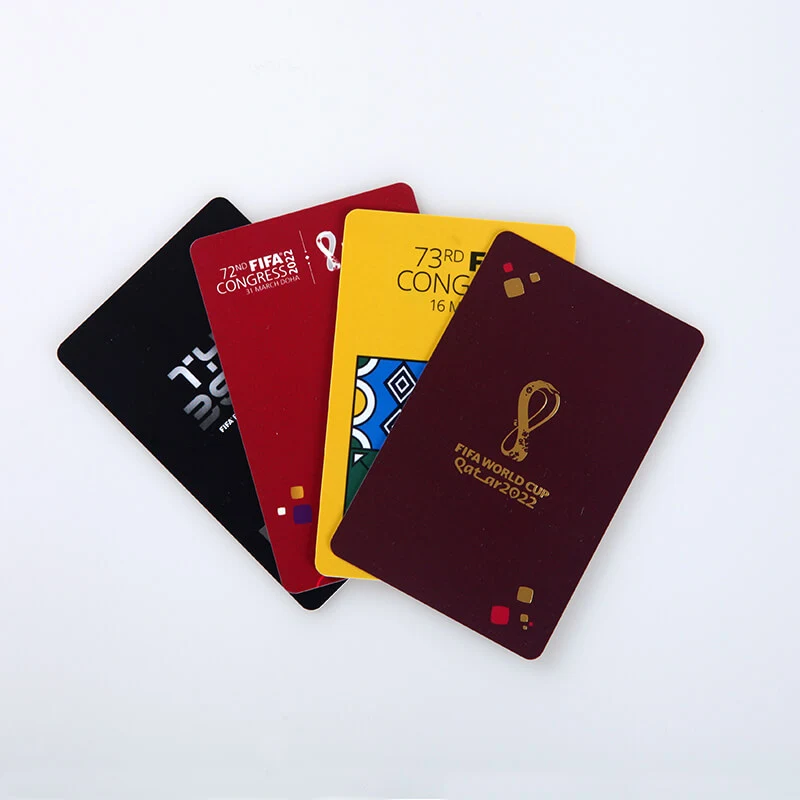
Custom PVC RFID Card
Compare blank, printed and encoded PVC RFID cards by chip, artwork, dimensions and issuer workflow. Review a representative sample before bulk ordering.
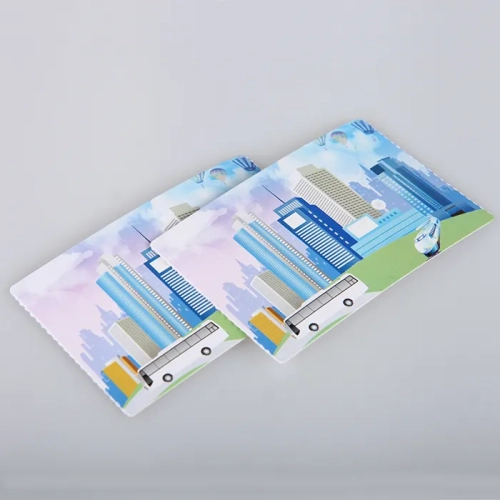
RFID Paper Card
Compare C0PA RFID paper tickets in 86 × 54 mm with 0.38, 0.50 or 0.60 mm thickness, coated-paper construction, HF/UHF chips and individual or roll supply.
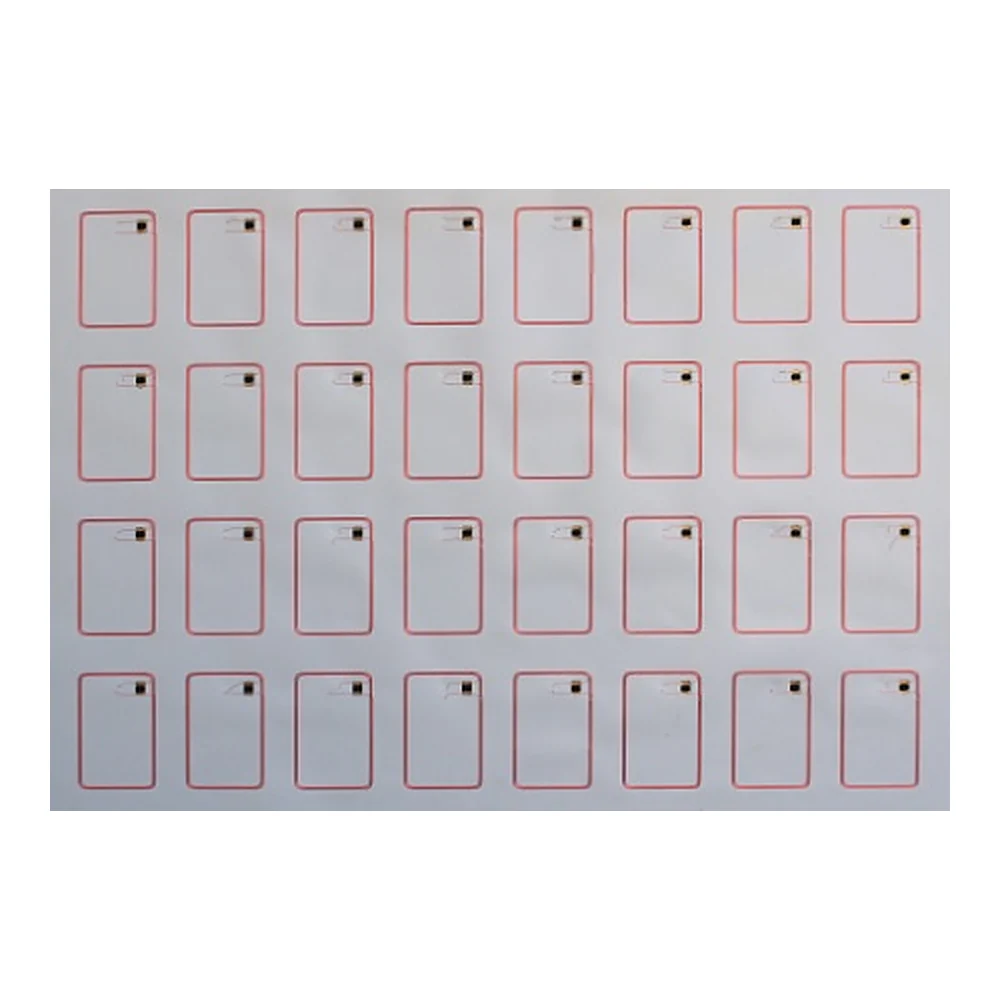
HF Card Inlay (13.56 MHz)
Compare 13.56 MHz HF card inlay chip specifications, 4 × 8 and 5 × 5 sheet examples, and a dimensioned COB stack. Download the technical reference and request samples.
Check the basis for your decision
Sources and technical references
Chip and standards references describe their own scope. They do not establish a finished product’s read distance, durability or compatibility.
- HID: Card-printing technologies
Material and print-process context; confirm the actual equipment’s media specification.
- HID: A paper-based secure credential example
Shows that paper is not inherently limited to simple credentials. Its proprietary technology and certifications do not apply to RFIDAK cards.