Warehouse label procurement / Germany
UHF RFID Labels for Warehouses in Germany
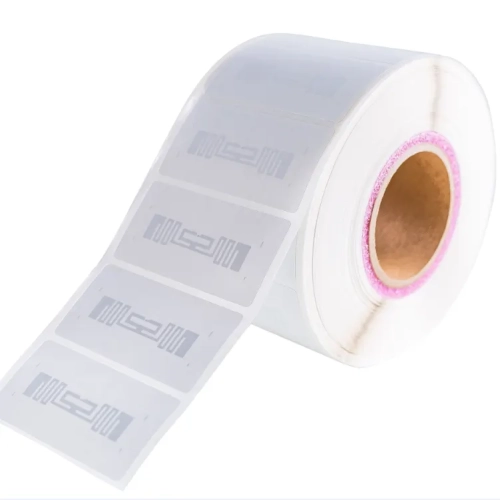
RFIDAK supplies UHF RFID labels for warehouse receiving, dispatch and inventory projects in Germany. Define the item, carton, pallet or asset you need to identify, then approve the label, EPC data and mounted-reader test. Confirm the finished-product documents, sample terms, pricing and delivery for your actual configuration.
Your procurement brief, at a glance
- Reading task
- Receiving, dispatch, inventory or reusable-asset tracking
- Identifier level
- Agree the item, logistics unit or asset and its EPC scheme
- Installation
- Germany; confirm local settings and equipment documentation
- Label format
- Approve inlay, attachment, print, encoding and roll drawing
- MOQ baseline
- 1,000 pieces; confirm configuration and quantities per design
- Delivery
- Quote production, transit, destination and import responsibilities separately
01 / Define the record
Are you identifying an item, a logistics unit or an asset?
RFIDAK supplies UHF labels for receiving, dispatch and stock-movement projects in German warehouses. Start by defining the object to identify: a carton or pallet load, an individual trade item, or a reusable asset whose identity persists across loads. Agree the EPC scheme and the relationship between each tag, the physical object and its WMS record before choosing chip capacity. Approve the finished inlay, label material, adhesive and placement on the actual packaging, with loaded and empty configurations where relevant. Assign label production and encoding, installed-system validation and German import responsibilities to named teams in the purchasing brief.
Swipe the table to compare identification levels.
| What is tracked? | Identity to agree | Data check |
|---|---|---|
| Individual item | An identifier for the specific unit, such as a serialized GTIN (SGTIN) where the agreed system uses it. | Confirm the item-to-EPC mapping, unique serial allocation and handling of replacement labels. |
| Carton or pallet as a logistics unit | An SSCC identifies a logistics unit. Information about its contents comes from the associated data. | Agree aggregation, packing changes and how the WMS updates the contents. A pallet read alone does not prove every item was read. |
| Reusable crate, pallet or other asset | Define the persistent asset identity separately from each load. A GRAI can identify a returnable asset; individual tracking uses a serial. | Keep the asset-to-load relationship current. Repacking or an empty return must not retain an obsolete contents record. |
Reference: GS1 logistics units and SSCC, GS1 returnable-asset identification and the EPC Tag Data Standard.
Match the label to the installed equipment
Record the exact UHF reader, antenna, firmware and site settings, and have the equipment provider or integrator check the current German frequency-use conditions published by Bundesnetzagentur. Test the selected label on real cartons, pallets or returnable assets, including metal, liquid, wrapping, orientation, adjacent lanes and operating movement speeds. Confirm the printer-encoder, roll format and encoding readback, then trace accepted and rejected events through the WMS. Repeated observations and multiple tags associated with one object must not inflate the reported object count.
Provide the chip and complete inlay article, mounting surface, available space, curvature, contents and packaging layers. Test metal, liquid-filled containers, shrink wrap, adjacent loads and actual stack orientation. Approve the adhesive and exposure requirements for the intended use. A familiar chip or a successful desk read does not establish dock-door performance.
If printing or encoding locally, confirm the printer model and installed UHF RFID option, firmware, supported inlay position and media settings. Agree label pitch, liner width, core, outside roll diameter and winding. A sample roll should pass print, EPC write and read-back checks on your own configuration.
02 / Germany & product documents
Confirm the finished article and the responsible parties
Keep label selection, radio installation and market-placement obligations in the procurement record. “Passive”, “B2B” or a CE logo alone does not settle which requirements apply to the supplied article.
Radio settings and the actual installation
Ask the equipment provider or site integrator to confirm the reader’s Germany configuration, permitted channels, power, antennas and operating conditions against the current German allocation. Do not copy a generic Europe-versus-US power comparison into the installation specification. Keep the equipment and settings used in the pilot with the approved test record.
Bundesnetzagentur: current general frequency assignments →RED / CE and finished-product evidence
Confirm the requirements for both the supplied label article and installed radio equipment. Request the applicable EU Declaration of Conformity, product identification and supporting documentation from the responsible manufacturer or importer. Chip-only documentation does not establish the compliance of every finished label construction.
European Commission: Radio Equipment Directive →Importer and distributor responsibilities →
ElektroG / WEEE product scope
Establish whether the actual article is in scope as electrical or electronic equipment or supplied as a component. Where obligations apply, identify the responsible producer or authorised representative, registration and end-of-life arrangements. B2B use alone is not an exemption. Do not assume a label family is registered from the application name.
stiftung ear: which products fall within ElektroG? →Registration guidance for B2C and B2B equipment →
03 / From sample to acceptance
Test the complete warehouse event
Agree the task, physical population, reading window and acceptance criteria before the pilot. An EPC observation must become the correct receipt, dispatch, count or asset event in your warehouse management system (WMS).
Define one warehouse task, the physical boundary and the item population. Record whether each identity represents an item, logistics unit or reusable asset.
Approve the exact chip and finished inlay, label size, material, adhesive and mounting position on representative packaging, including metal, liquid, wrap and stacks.
Agree EPC scheme, serial allocation, printed-data mapping and any parent–child aggregation. Validate capacity, read-back, duplicate prevention and replacement labels.
Document the installed German-region reader, antennas, settings, read window and movement. For printing or encoding, validate the exact printer, media settings and roll format.
Use an independently verified expected-identifier list. Log missed identities, unintended nearby reads, duplicate-encoded labels and failed WMS events separately. Define acceptance criteria before testing.
Approve the sample record and applicable product documents. Confirm the quantity, sample and setup charges, production milestones, freight, delivery place and import responsibilities in the quote.
Keep reading failures and system failures separate
Count expected unique identifiers detected, expected identifiers missed and unexpected identifiers observed separately. Log duplicate-encoded physical labels independently of normal repeated observations. Include both directions of travel, pauses, adjacent lanes and representative loaded or empty carriers when they are part of the planned task.
Have the WMS owner verify the item or load, location, event type and acknowledgement. Test rejected updates and retries so one movement is not booked twice. Confirm the aggregation record after repacking or partial picking. Retain manual corrections and failed trials alongside the accepted result.
Illustrative pilot plans
These scenarios illustrate test planning; they are not customer projects or performance results.
Scenario 1
Illustrative pilot plan (not a customer case): a dock-door team defines a known set of pallet loads and their linked carton records. Test loaded pallets at agreed speeds and orientations, with a tagged load moving through the adjacent lane. Record expected units seen, missed units, stray reads, incorrect direction assignments and accepted WMS movements separately. Agree acceptance thresholds before testing.
Scenario 2
Illustrative pilot plan (not a customer case): a returnable-crate team assigns each asset a persistent identity and records the changing load separately. Compare label placements on the actual crate surface in empty, loaded and stacked conditions. Include label adhesion, abrasion and any specified cleaning process in the sample plan. Test replacement-tag mapping and WMS reconciliation without treating two tags on one crate as two assets.
04 / A comparable quote
Send the label drawing, data brief and delivery plan
Include your warehouse task, identifier level, chip or inlay requirement, item and packaging photos, label placement, EPC scheme and sample data, reader and printer details, roll drawing, quantity per design and delivery destination. Share difficult pilot cases as well as the best result.
- Labels: exact construction, printing, encoding, read-back checks and quantities per design.
- One-time work: sample preparation, tooling, artwork, data setup and any required testing.
- Project services: clarify who supplies readers, printer-encoders, installation and WMS integration; do not assume they are included in a label quote.
- Delivery: separate production readiness, inspection, transit, the named delivery place, Incoterm and applicable landed charges.
Confirm the importer and customs representative, who provides the goods description, origin and applicable EORI information, and who handles clearance and charges. Have the importer or broker classify the actual finished article. Quote against the destination and arrival target rather than assuming a fixed tariff code, tax rate or transit time.
For classification certainty, review German Customs guidance on binding tariff information. For sampling and commercial terms, see the sample policy and shipping guide.
Compare UHF label construction and chip optionsReview EPC capacity, inlay selection, mounting surfaces and sample checks.Opens an editable draft with the German warehouse context included.
Buyer questions
Warehouse labels, equipment and German delivery
Should a warehouse encode SSCC, SGTIN or an asset identifier?
Choose the identifier for the physical unit and business event. An SSCC identifies a logistics unit such as a pallet load, carton or parcel; its linked records describe the contents. Reading that SSCC does not prove that every contained item was read or is present. An SGTIN combines a GTIN with a serial to identify an individual trade-item instance. A serialized GRAI can identify a reusable asset separately from its current load. Agree the scheme, memory capacity, allocation and WMS relationships before encoding. Count validated physical units, not raw tag observations.
How should labels be tested at warehouse portals and conveyors?
Use the finished label on the actual item, with the planned packaging, contents and attachment position. Test the relevant load patterns, orientation, metal or liquid exposure, adjacent tagged stock, nearby lanes and movement speeds within the intended read window. Compare observations with a physically verified set of expected identities. Log missed units, stray reads, wrong-lane or direction assignments, encoding failures and attachment failures separately. Trace the result into the correct WMS movement record, and agree measurable acceptance criteria before approving bulk supply.
Which reader, printer-encoder and WMS details are needed in Germany?
Provide the exact equipment models, UHF options, antenna setup, firmware and software interfaces. The integrator should confirm region, channel and power settings against the current Bundesnetzagentur conditions and equipment documentation; a chip name or an ETSI label is not an installation approval. For rolls, confirm liner width, label pitch, inlay position, core and winding. Validate the encoded sample by reading and decoding it in the receiving system, and test duplicate-event handling, retry behavior and replacement-tag mapping. EPC format and printed barcode mapping must match the agreed data file.
What RED, CE and WEEE evidence should a German buyer request?
Identify the responsible manufacturer and importer, and review the rules applicable to the actual finished label and supplied equipment. Request the applicable EU Declaration of Conformity, product identification and supporting technical documentation; a chip specification or CE image alone does not establish conformity of the supplied product. Passive operation does not make every label exempt from radio-equipment requirements. Check ElektroG scope, finished-equipment versus component status, and the applicable registration and take-back responsibilities with the responsible German party. Stiftung ear explains that B2B use itself is not a WEEE-registration exemption.
What are the MOQ, delivery and import responsibilities for Germany?
The standard tags-and-labels baseline is 1,000 pieces; confirm the inlay, construction, encoding and quantities per design in the quote. Agree sample and setup charges, unit price, production readiness, freight, the named delivery term and destination. Identify the importer, customs declarant or representative, and required EORI and document details. Have that team confirm classification and applicable duties and taxes for the actual article and origin, using Zoll guidance or binding tariff information where needed. Production, transit and clearance remain separate planning steps; confirm the arrival target for the agreed shipment.