MIFARE Classic 1K Card Supplier
RFIDAK can source MIFARE Classic 1K cards for a specified reader and application. MOQ guidance for this format: 500 pieces baseline; confirm the selected card. Confirm the exact chip, finished construction, applicable standards, sample terms and production schedule in a written quote.
Quick spec — MIFARE Classic 1K Card
- Chip
- MIFARE Classic 1K
- Frequency
- 13.56 MHz
- Standards
- ISO/IEC 14443A
- Memory
- 1,024 bytes EEPROM (16 sectors × 4 blocks × 16 bytes)
- Security
- Crypto-1 (deprecated since 2008; not recommended for new high-security deployments)
- Form Factor
- Card (ID-1 / CR-80 face size (85.6 × 54 mm); approve thickness)
- Materials
- PVC / PETG / ABS
- MOQ
- 500 pieces baseline; confirm the selected card
- Lead Time
- Confirm production and transit dates in the quote
Chip technical brief
MIFARE Classic 1K (NXP MF1ICS50) is a 13.56 MHz HF chip compliant with ISO/IEC 14443 Type A, providing 1,024 bytes EEPROM partitioned into 16 sectors of 4 blocks. Each sector is protected by a pair of 48-bit keys (Key A / Key B) using the proprietary Crypto-1 cipher. Crypto-1 has been considered cryptographically broken since 2008, so MIFARE Classic 1K is no longer recommended for high-security deployments — but it remains the dominant chip in legacy hotel locks, public transit (some Asian and LATAM systems), gym access and small-business membership cards because of its low cost and broad reader compatibility. RFIDAK supplies MIFARE Classic 1K cards and credentials with optional UID-only encoding, sector key personalization under NDA, or pre-encoded data block writing for system integrators replacing legacy stock.
Buyer one-liner
Lowest-cost 13.56 MHz HF chip, broadest reader compatibility, used for legacy access and hotel keys.
Typical use cases
- ▸Hotel key cards (Saflok / VingCard / Onity legacy)
- ▸Apartment access control
- ▸Gym & club membership
- ▸Public transit (legacy systems)
- ▸Loyalty cards
Reader requirements to validate
Confirm the exact reader model, firmware, antenna, supported protocol and application or credential data with the system owner. Test the finished sample on the installed setup; a chip datasheet or shared frequency does not establish compatibility.
Card construction and approval
A contactless card combines a selected chip and antenna with a card body. Start with the system-approved chip, data format and reader, then confirm face dimensions, finished thickness, material, print method and any magnetic-stripe or contact-chip option. Material names do not establish heat resistance, printer fit, recyclability or lock compatibility. For custom artwork and numbering, agree a proof and an encoded sample before production. The card MOQ in the company policy is a baseline; quantities, packing, chip availability and production timing belong in the configuration-specific quotation.
Typical sizes
- • ID-1 / CR-80 face size (85.6 × 54 mm); approve thickness
- • Other card sizes and shapes subject to drawing and tooling review
Materials
- • PVC
- • PETG
- • ABS
- • Wood or bamboo
- • Coated paper
Document scope to verify
Request current documents for the exact finished article, materials and destination. A form-factor name does not establish a certification or IP rating.
Why source MIFARE Classic 1K cards from RFIDAK
MIFARE Classic 1K remains a legacy credential choice for a system that explicitly approves that chip and its data format. A shared 13.56 MHz frequency does not prove that a hotel lock, gym reader or controller accepts it. Classic security has known limitations and NXP does not recommend Classic EV1 for new designs; the system owner should review migration options for new security projects. For a repeat order, confirm the exact chip and identifier variant, permitted personalization, card construction and sample acceptance in the installed system.
Buyer snapshot
Operators and authorized integrators maintaining an existing Classic 1K system. The owner should provide the approved credential specification and review any proposed change of chip or security architecture.
Planning examples
Illustrative evaluation plans, not reported customer results.
Example 1
Illustrative hotel reorder (not a customer case): the lock provider confirms the approved chip, application configuration and issuing workflow. The buyer validates newly issued test cards at the actual doors and documents the approved print and card construction before requesting bulk supply.
Example 2
Illustrative gym pilot (not a customer case): an administrator issues test credentials through the authorized system, then checks allowed and denied access, member replacement and lost-card revocation. The supplier quotes the approved card format only after the system owner signs off.
Compare with other cards
Compare chip-level differences for the same form factor. Check the exact reader, credential format, finished construction and available samples before selecting a configuration.
| Chip | Memory | Security | Typical Use | Quote basis |
|---|---|---|---|---|
| MIFARE Classic 1K (this page) | 1,024 bytes EEPROM | Crypto-1 (deprecated since 2008 | Hotel key cards (Saflok / VingCard / Onity legacy) | Confirm chip availability, construction and quantity in the quote |
| MIFARE Classic 4K | 4,096 bytes EEPROM | Crypto-1 (deprecated | Legacy multi-app cards | Confirm chip availability, construction and quantity in the quote |
| MIFARE Plus S 2K | 2,048 bytes EEPROM | AES-128 in Security Level 3 | Migration from MIFARE Classic 1K | Confirm chip availability, construction and quantity in the quote |
| MIFARE Plus X 4K | 4,096 bytes EEPROM | AES-128 with proximity-check, virtual-card support | Transit ticketing | Confirm chip availability, construction and quantity in the quote |
| MIFARE DESFire EV1 4K | 4,096 bytes EEPROM, up to 28 applications | AES-128, 3DES, DES | Transit ticketing | Confirm chip availability, construction and quantity in the quote |
Recommended RFIDAK SKUs
These catalog formats are candidates for a MIFARE Classic 1K build. Confirm chip availability and the finished configuration in the quote.
RFID Cards
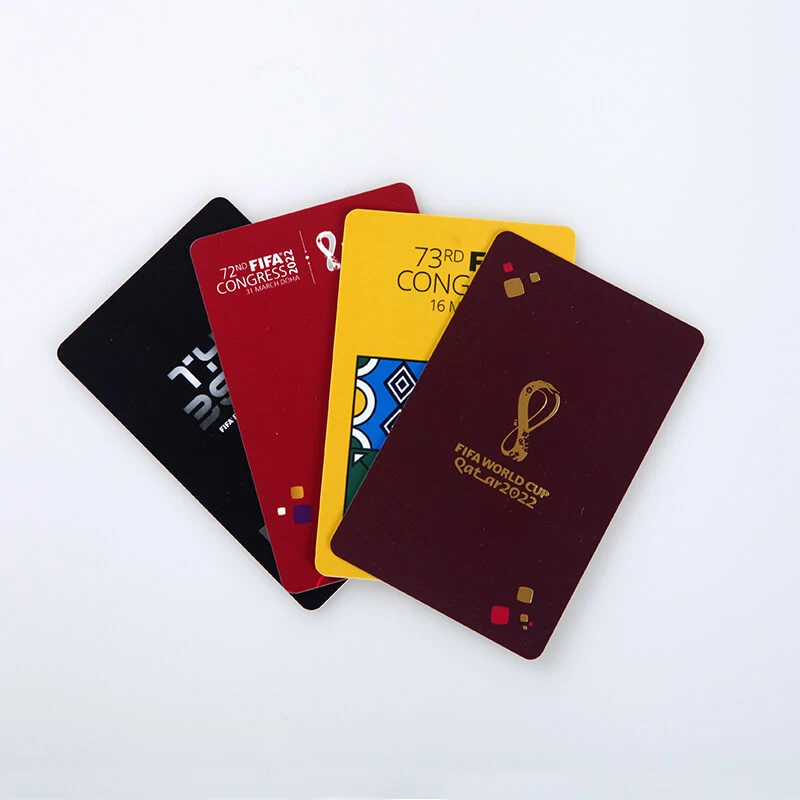
Custom PVC RFID Card
Custom PVC RFID cards combine a printable card body with a selected chip and antenna for access control, hotel credentials, membership or NF…
Card Inlay
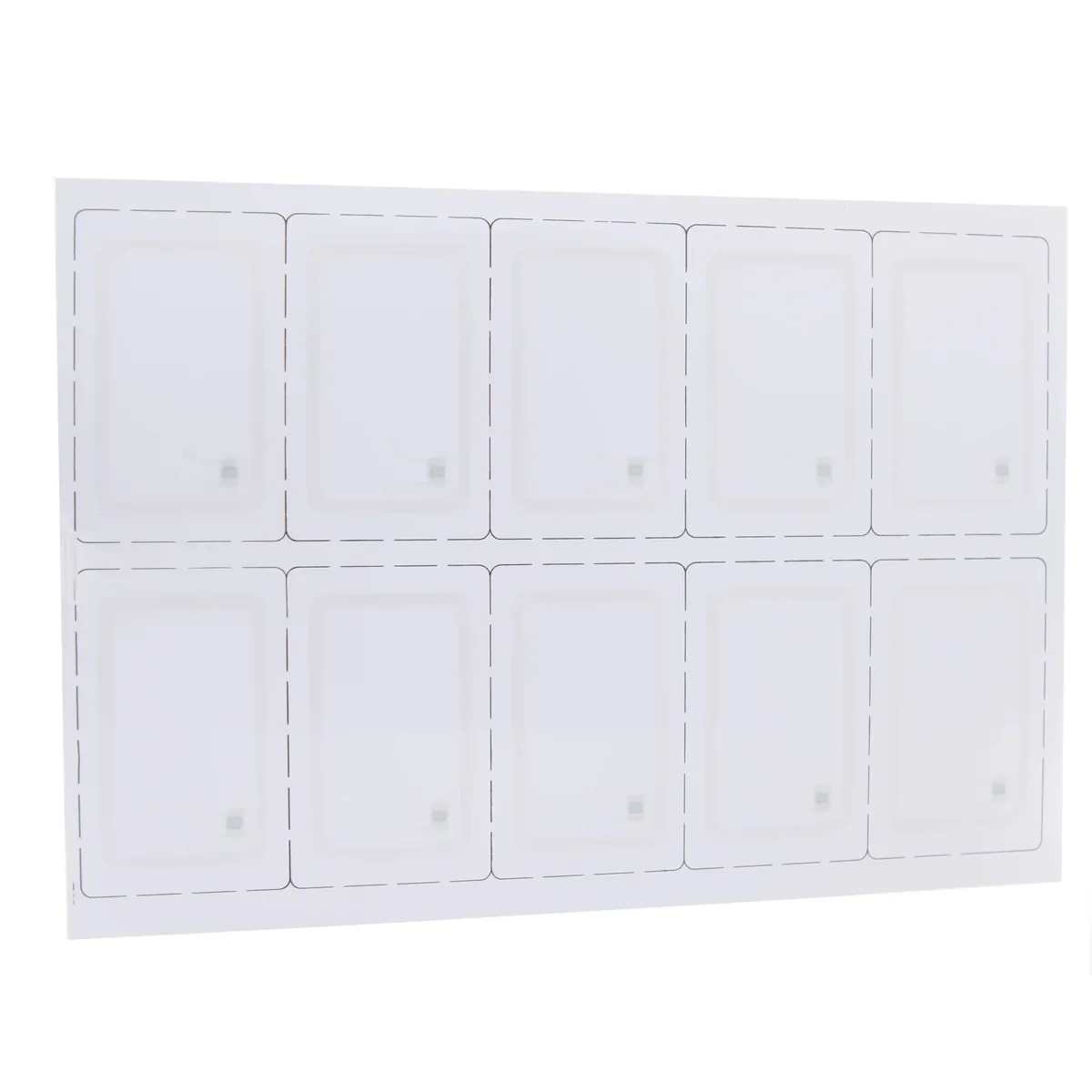
RFID Card Inlay
An RFID card inlay is a semi-finished chip-and-antenna component that a card converter laminates into a finished credential. LF and HF confi…
RFID Cards
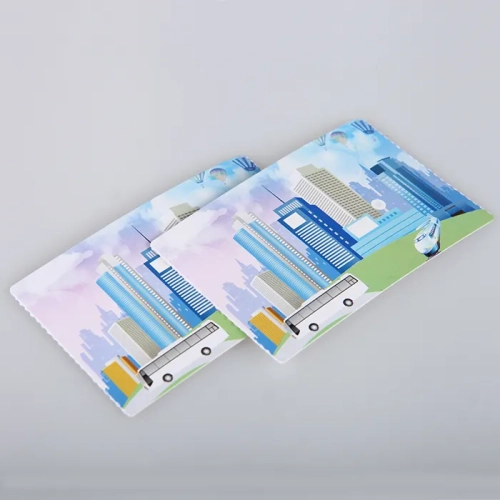
RFID Paper Card
An RFID paper card is a coated-paper ticket with an embedded contactless inlay for transit, event, venue or access programs. Choose substrat…
Frequently asked — MIFARE Classic 1K cards
What is the minimum order quantity for MIFARE Classic 1K cards?▾
MOQ guidance for this format: 500 pieces baseline; confirm the selected card. Pilot size and unit price depend on chip availability, format, encoding, artwork and quantity; request a written quote for the exact specification.
How should I check reader compatibility with MIFARE Classic 1K cards?▾
Check the exact installed reader and controller model, firmware, credential profile and application data requirements. A frequency or protocol match alone does not prove compatibility. Have the system owner test a representative finished sample before authorizing production.
Can RFIDAK pre-encode MIFARE Classic 1K cards to our specification?▾
Writable EPC, NDEF or user-memory content may be encoded to an approved specification, depending on the chip and access rights. Factory-programmed UIDs normally cannot be changed. Secure credential provisioning needs an agreed key-custody process; never submit secret keys in a public inquiry form. Confirm feasibility and price for the exact data format.
What lead time should I plan for MIFARE Classic 1K cards to major export markets?▾
Confirm a production-ready date after the specification and sample are approved, then obtain a separate freight and import timeline for the destination. Ask for dated milestones in the project quote rather than relying on a form-factor average.
Which documents apply to MIFARE Classic 1K cards?▾
Document scope depends on the exact material, chip, reader and destination market. Ask RFIDAK to identify the applicable certificate or test report for the quoted SKU; a company certificate or another product's report does not automatically certify this configuration.
Ready to source MIFARE Classic 1K cards?
Send the chip preference, reader and application requirements, quantity, and destination. Confirm availability, sample terms, unit pricing and production schedule for the proposed configuration. Standard form-factor MOQ baseline: 500 pieces baseline; confirm the selected card.
Request a Configuration QuoteTest RFID Samples Before You Order
Free stock samples (up to 5 pieces) — buyer covers DHL/FedEx freight ($25–60), refunded 1:1 against the first production order over $500. Custom samples may cost extra. Confirm the sample configuration, availability and dispatch date before shipment.
Request the RFIDAK product catalog (PDF). Our team will reply by email.
We'll only use your email to send the catalog and reply to your inquiry.