Skip to content
RFID Cards

RFID Card Inlay

Are you laminating, converting, or embedding RFID into your own final product?

MOQ
500 pcs

Stock SKU. Custom tooling from 2,000 pcs.

Lead time
7–15 days

Standard; rush possible on request.

Free sample
Ships in 1–3 days

Stock samples via DHL / FedEx.

Use this inlay or prelam when your team handles the lamination, die-cutting, or embedding step in-house. Confirm antenna geometry, chip family, pitch / roll format, and release-liner compatibility with your laminator before ordering sample rolls.

What buyers usually confirm first

swipe →

System Match

Will it work with the installed reader or lock?

Start from protocol and chip family, then confirm whether you need blank, printed, or pre-encoded supply.

Card Build

PVC, paper, wood, clamshell, or inlay-only?

Choose the card body around durability, branding, and whether you are embedding the inlay into your own format.

Approval Step

Do you need sample matching before a bulk order?

Most buyers validate reader behavior, print finish, and numbering logic before they lock a production run.

Spec Check

What to confirm in the card spec sheet

Protocol, chip family, card body, print finish, and encoding plan usually need to be locked before card samples are approved.

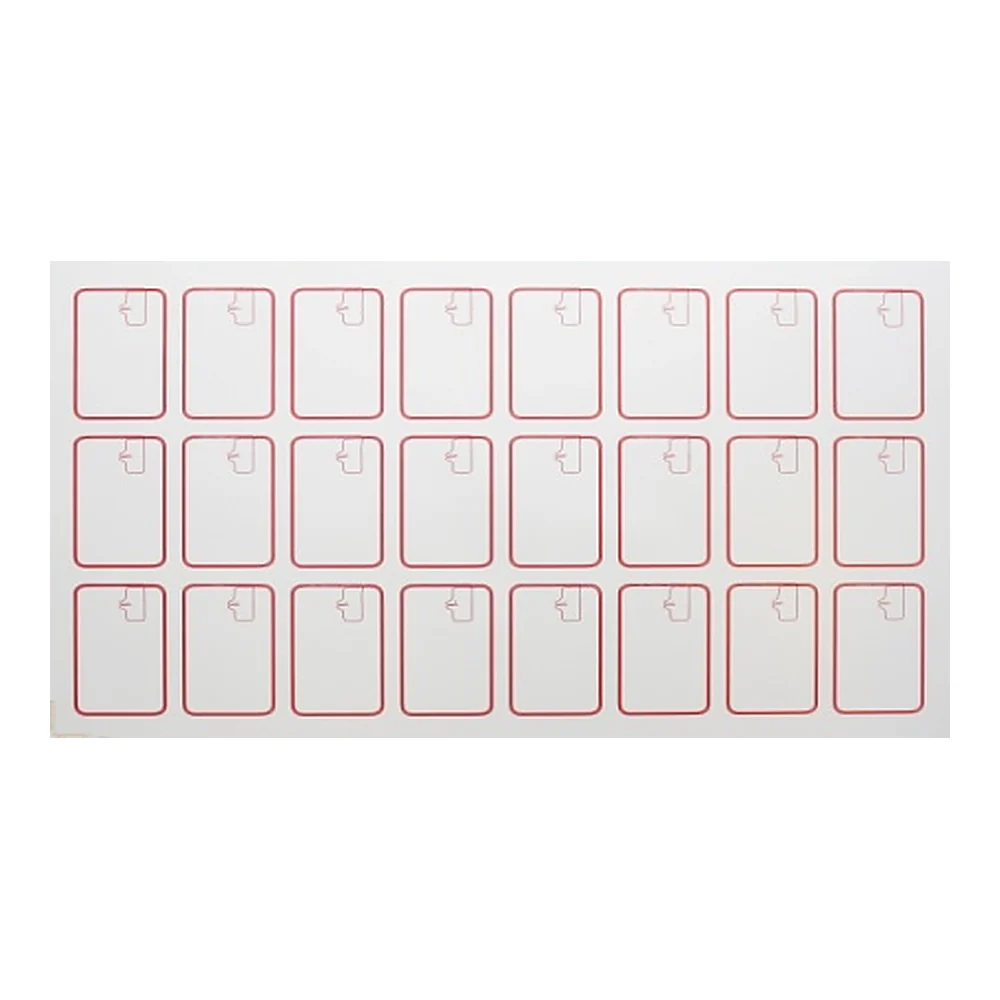
Product Name RFID Card Inlay (Smart Card Prelam)
Substrate Material PVC (standard), ABS (high-temperature lamination), PET (eco-compliance), PC (impact-resistant)
Inlay Thickness LF: 0.50-0.55 mm; HF: 0.40-0.50 mm; combi / dual-interface: 0.50-0.60 mm
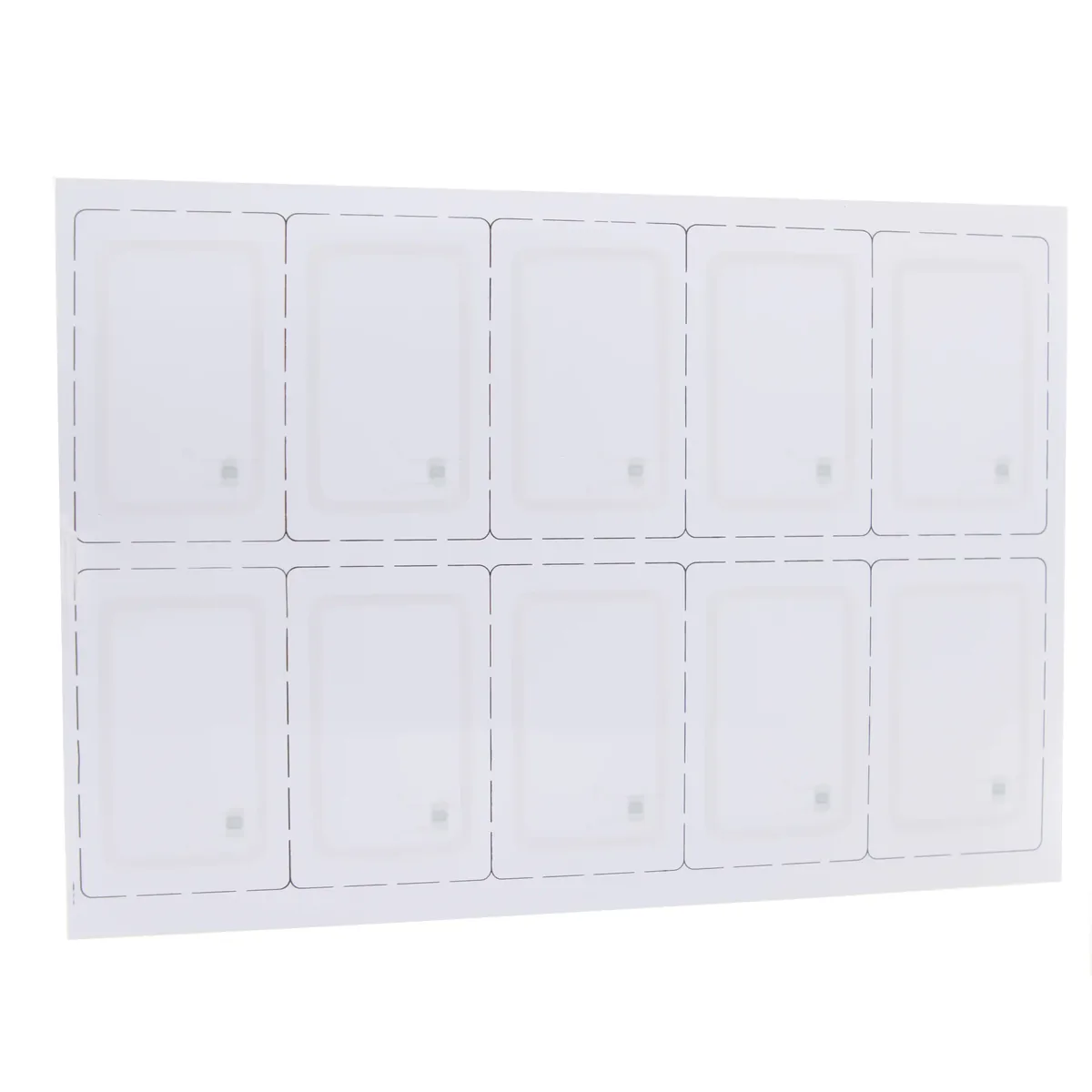
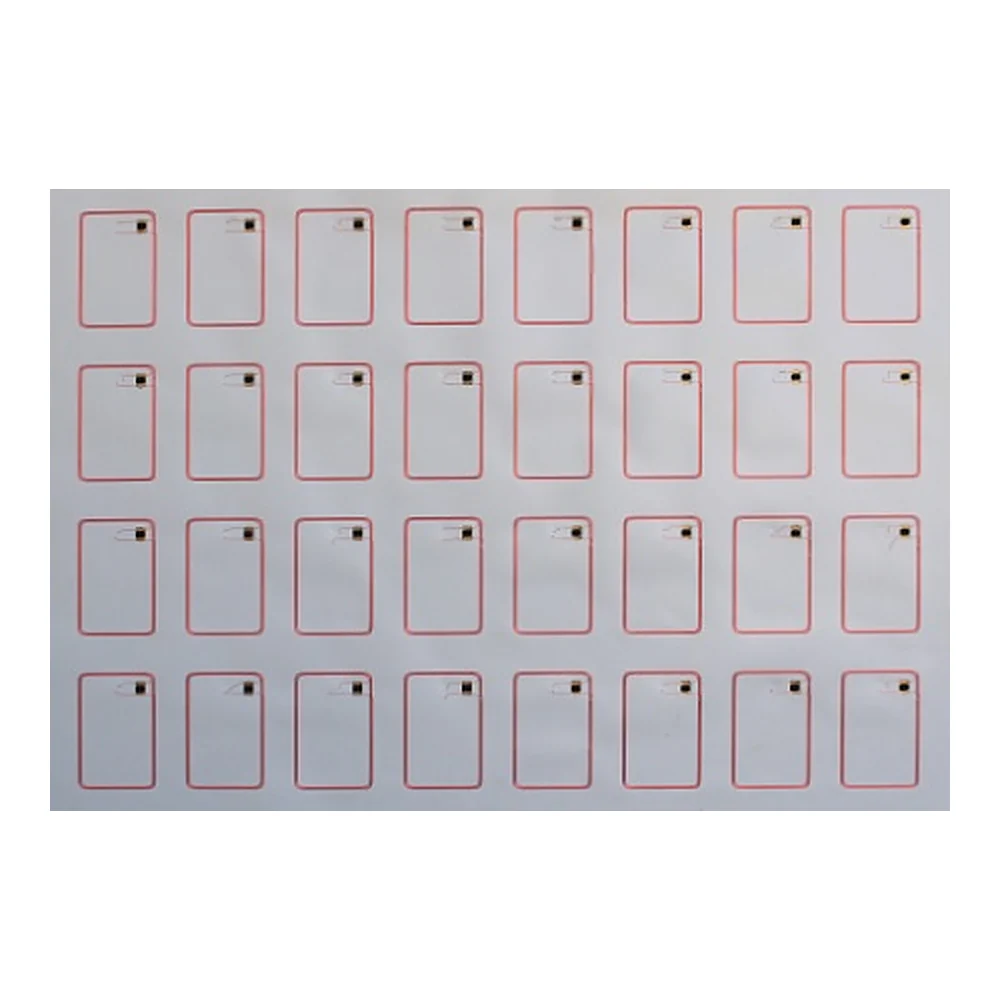
Layout Options 10+ stock formats: 2x5 (10 inlays/sheet), 3x6 (18), 3x7 (21), 3x8 (24), 4x5 (20), 4x6 (24), 4x7 (28), 4x8 (32), 4x10 (40), 6x8 (48); custom layouts on NRE
Sheet Dimensions Standard 320 x 460 mm; matched to BUSCH / KOMORI / Heidelberg / RUHLAMAT card press equipment
Operating Frequency 125KHz (LF, ISO 11784/11785); 13.56MHz (HF, ISO/IEC 14443A / 15693); combi and dual-frequency variants
Compliance ISO 7810 ID-1 (lamination compatibility), ISO/IEC 14443 Type A/B, ISO/IEC 15693, ISO 11784/11785, ISO/IEC 18092 (NFC Forum), ISO/IEC 7816 (contact interface for dual-interface variant)
HF Chip Options NXP MIFARE Classic 1K / 4K EV1 (S50 / S70), MIFARE Plus EV2 (2K / 4K), Ultralight EV1 / C / Nano, DESFire EV1 / EV2 / EV3 (2K / 4K / 8K), NTAG213 / 215 / 216, NTAG424 DNA, ICODE SLIX / SLIX2, Legic MIM256, Infineon SLE 66, Fudan FM11RF08
LF Chip Options TK4100, EM4200, EM4305, EM4450, ATA5577, Hitag 1 / 2 / S, Atmel T55x7
Combi Configurations TK4100 + MIFARE Classic 1K (LF + HF), EM4200 + Ultralight EV1, Ultralight C + UCODE 8 (HF + UHF combi), 3-chip combinations
Dual-Interface NXP SmartMX, G+D Sm@rtCafe, JCOP Java Card; combined ISO 14443 contactless + ISO 7816 contact module
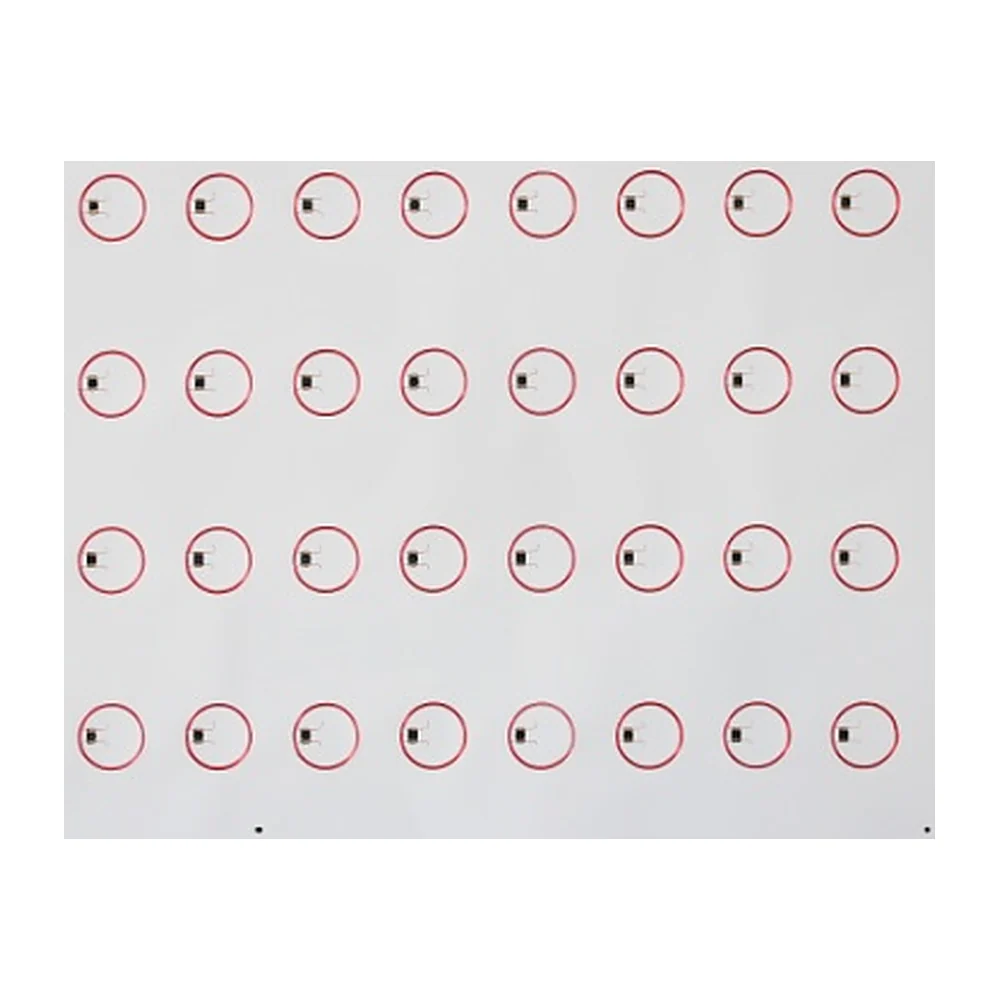
Antenna Construction Etched aluminum (standard); copper-etched (premium / high-Q); wire-wound (long-range LF / specialty)
Antenna Dimension 73 x 44 mm (HF standard); custom geometries available with antenna tuning
RF Resonance Frequency 14.3 ± 0.3MHz (HF default); custom tuning available for transit / specialty / dual-interface requirements
Quality Control 100% electrical performance testing per inlay (chip response + antenna resonance); batch traceability with chip lot codes; ISO 9001: 2015 documented production
Print Markings Crossline + blackmark printing for press alignment (standard); customer logo / batch ID on premium orders
Pre-Encoding Services Sequential UID encoding, customer CSV-driven UID assignment, MIFARE / DESFire AES key loading, NTAG NDEF URL pre-encoding
Operating Temperature 130 deg C to -160 deg C
Storage Conditions Sealed in PE bag inside cardboard sleeve; 12-month shelf life from manufacture date at 5-30°C / 30-70% RH
Packaging 200 sheets per carton standard (matches factory material handling); 100 / 500 sheets options on request
MOQ 100 sheets (evaluation); 1,000 sheets (production); 10,000+ sheets for per-sheet pricing floor
Lead Time 10-15 business days stock; 20-30 days custom layouts / chip combinations; 30-45 days dual-interface CPU inlays

Shortlist Logic

Why buyers keep this card format on the shortlist

These points usually matter when a project is balancing reader compatibility, print quality, and repeat-order consistency.

100% electrical performance tested before shipment - every inlay verified for chip response and antenna resonance to ensure zero-defect lamination (The QC protocol)
10+ layout formats from 2x5 to 6x8 compatible with all major lamination and punching machines used by card factories globally
Dual-frequency support: 125KHz (ISO 11784/11785) and 13.56MHz (ISO/IEC 14443A, ISO/IEC 15693) - covering LF access and HF smart card applications
30+ chip models supported - NXP MIFARE Classic/DESFire/NTAG, EM4200/4305, T5577, Fudan FM11RF08, ICODE SLIX, and Legic
Custom antenna tuning available - The adjusts resonance frequency to match non-standard reader specifications or dual-interface card requirements
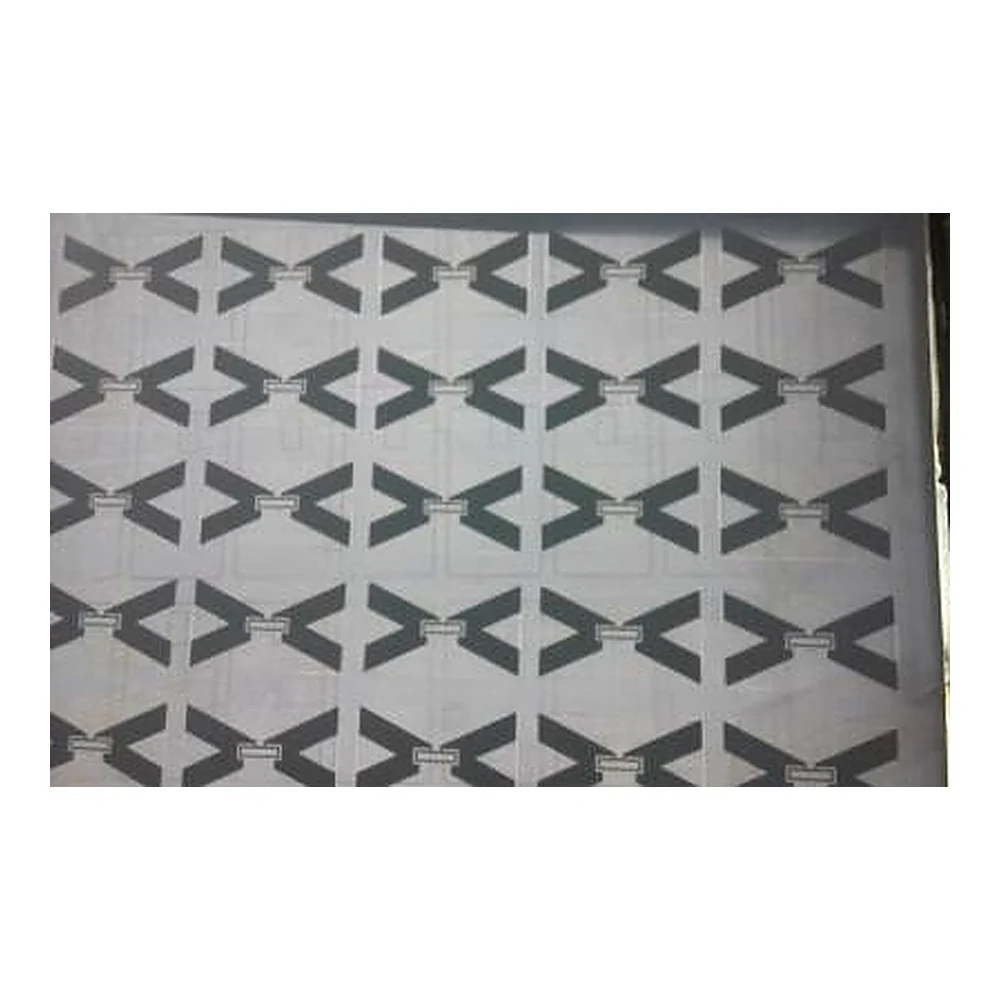
Combi and dual-interface inlays - supports 2-3 chips per card unit for multi-protocol applications (ISO/IEC 14443 + ISO/IEC 7816 contact interface)

Use Cases

Where teams usually deploy this card format

These are the workflows where buyers most often compare this card against other credential options before they request samples.

PVC card lamination

core inlay component for CR-80 card production lines, supporting 2x5 through 6x8 layouts per ISO 7810 dimensions

Transit and payment card production

HF 13.56MHz inlays for MIFARE-based contactless fare collection systems serving 50+ cities worldwide

Access control card manufacturing

LF 125KHz inlays with TK4100/EM4200 for building entry and time-attendance credentials

Hotel key card production

HF inlays compatible with Saflok, VingCard, SALTO, and Onity electronic lock systems

Dual-interface banking cards

CPU card inlays supporting both ISO/IEC 14443 contactless and ISO/IEC 7816 contact communication

Campus and hospital ID cards

multi-application inlays for identification, library access, and cashless payment in a single card

Raw Inlay vs Finished Card — How To Choose

Are you laminating and printing cards in-house, or buying finished cards?

An RFID card inlay is the raw antenna + chip subassembly BEFORE lamination, die-cut, and printing. A finished RFID card has all those steps done for you. Buyers who own card-printing equipment (ID card issuers, university campus services, card converters) buy inlays to feed into their own production line. Buyers who just need ready-to-use cards buy finished cards. They are complementary products, not alternatives for the same buyer.

RFIDAK RFID card inlay — 2×5 prelam sheet with embedded antennas and chips, ready for PVC-PVC lamination and die-cut by the buyer's own card production line Option A

RFID Card Inlay (this product — raw B2B material)

Raw input for card converters and OEM lamination

Format
2×5 or 3×8 prelam sheets; roll option
Chips available
All LF / HF / UHF families in stock
Buyer's workflow
Laminate + die-cut + print in-house
MOQ
10,000 pieces (custom chip + antenna)
Equipment required
Lamination press + die-cut tool
Unit price (MOQ 100K)
$0.08 – 0.22

Best for

  • University card services with in-house ID printing (thousands of cards / semester)
  • Government ID card issuers with secure personalization facility
  • Card convertors / trade printers expanding into RFID
  • Luxury-goods brands embedding inlays into their own product (books, packaging)
RFIDAK finished RFID smart card — fully laminated, die-cut, and CMYK-printed at the factory, ready for immediate use with no downstream processing needed Option B

Standard Finished RFID Card (0.76 mm PVC)

Ready-to-use, no downstream processing needed

Format
Finished ISO 7810 CR80 cards
Chips available
Customer specifies; pre-encoded optional
Buyer's workflow
Issue directly to end users
MOQ
500 pieces
Equipment required
None (plug-and-play)
Unit price (MOQ 5K)
$0.28 – 0.48

Best for

  • Hotel chains, offices, and gyms that just need working cards delivered
  • Transit authorities with small personalization staff
  • Event organizers with 2-week lead time to ship cards pre-printed + encoded
  • Any buyer without in-house card lamination or printing capability

Quick decision tip — If you have (or are building) your own card lamination + printing line, buy inlays. They unlock 3-5× better per-card economics at volume and let you control personalization in-house. If you don't have that equipment (or the volume doesn't justify it), buy finished cards — you save 6-12 weeks of setup and the CAPEX for press / die-cut tooling. Crossover breakeven is usually around 50,000+ cards / year on one chip family.

RFID Card Inlay Types

1 Should I choose The card inlays for my card factory?

Yes — if you operate or specify procurement for a PVC / ABS smart card lamination factory and need ISO 9001-certified RFID inlays with 100% electrical performance testing per unit, 10+ layout formats compatible with your existing lamination + punching equipment, and 30+ chip model coverage from EM4100 to MIFARE DESFire EV3. Card factories without reliable inlay supply lose lamination yield to antenna inconsistency and chip bonding failures — scrap that lands directly on the factory's margin. The inlays ship with crossline + blackmark printing for production alignment, custom antenna tuning, and 200 sheets per carton for efficient factory integration.

Pick a different supplier if you need finished cards (we manufacture finished cards too — see rfid-cards), printed-and-encoded credentials at end-customer scale, or non-card form factors (wristbands / keyfobs / coins). Pick The inlays when you are a B2B card factory or system integrator with your own lamination + printing + encoding lines and need a reliable upstream component supplier with strict quality control.

2 Spec decision matrix — inlay supply alternatives

Comparison across the 5 inlay-supply categories card factories typically evaluate. Prices indicative at MOQ 1,000 sheets (each sheet = 10-48 inlays).

ClassLayout flexibilityQC tierChip rangeBest fitSheet price
The ISO 9001 inlays10+ layouts (2x5 to 6x8)100% electrical test per unit30+ chips, LF / HF / dual / combi / dual-interfaceMid-volume PVC card factories needing reliable supply$8 – 28 / sheet
Generic Asian inlay supply3-5 standard layoutsSample-batch QC (5-10%)10-15 mainstream chipsHigh-volume cost-optimized factories accepting 3-5% yield loss$5 – 18 / sheet
NXP / G+D / IDEMIA branded inlayStandard layouts onlyPremium QC + traceabilityNXP / proprietary chipsBanking + government secure card programs$22 – 65 / sheet
Custom-tuned inlay (The)Custom antenna geometry + tuning100% electrical + RF resonance testCustom chip pairingSpecialty applications (transit, dual-interface CPU, combi)$15 – 45 / sheet
Pre-encoded inlayStock + custom layouts100% electrical + encoding verificationCustomer-specified chip + UID rangeCard factories that want pre-encoded inlays for direct lamination$12 – 38 / sheet + encoding NRE

Verdict: The ISO 9001 inlays win on the QC + layout flexibility + chip range combination for mid-to-large card factories. Generic Asian wins on raw unit cost only when factory accepts higher yield-loss rate. NXP / G+D / IDEMIA branded wins for highest-tier banking / government programs. Custom-tuned wins for specialty resonance / combi / dual-interface needs.

3 Typical deployment pattern - high-volume card factories

High-volume card factories typically consolidate inlay supply onto one or two qualified vendors after a dual-source evaluation, covering MIFARE Classic for transit and low-security access, DESFire EV3 for premium hotel and corporate programs, LF EM-family chips for legacy access, and dual-interface CPU inlays for banking sub-segments. Crossline and blackmark printing aligned to the factory's lamination and die-punch equipment is usually a hard requirement.

The supplier decision generally turns on three things: per-unit electrical testing (marginal chips caught before lamination instead of after), consistent antenna geometry and thickness (fewer press jams), and packaging that matches the factory's receiving workflow. Our inlays ship 100% electrically tested in 200-sheet cartons with batch traceability for exactly these reasons.

4 Compatibility reference — layouts, chips, lamination equipment

Verified compatibility across inlay layouts, chip families, factory lamination + punching equipment, and production-line integration.

CategorySupportedNotes
Standard layout formats2x5 (10 inlays/sheet), 3x6 (18), 3x7 (21), 3x8 (24), 4x5 (20), 4x6 (24), 4x7 (28), 4x8 (32), 4x10 (40), 6x8 (48)Crossline + blackmark printed for press alignment; custom layouts with NRE
HF chip optionsNXP MIFARE Classic 1K / 4K EV1, MIFARE Plus EV2, Ultralight EV1 / C / Nano, DESFire EV1 / EV2 / EV3 (2K / 4K / 8K), NTAG213 / 215 / 216, NTAG424 DNA, ICODE SLIX / SLIX2; Legic MIM256; Fudan FM11RF08; Infineon SLE 6630+ models supported; custom chip pairing on request
LF chip optionsTK4100, EM4200, EM4305, EM4450, ATA5577, Hitag 1 / 2 / S, Atmel T55x7For legacy access and animal-ID card programs
Combi / dual-chip configurationsTK4100 + MIFARE Classic (LF + HF), EM4200 + Ultralight EV1, Ultralight C + UCODE 8 (HF + UHF combi), 3-chip combinationsSpatial planning prevents inter-chip interference; tested per configuration
Dual-interface CPU inlaysNXP SmartMX, G+D Sm@rtCafe, JCOP Java Card, MIFARE Plus + ISO 7816 contact moduleFor EMV banking + government eID programs; antenna terminals positioned per ISO 7816 contact pad spec
Lamination press equipmentBUSCH / KOMORI / Heidelberg / RUHLAMAT card press equipment; Bohlke / Mecaplastic / RAPLEX automatic punchesLayout + thickness + alignment markings designed for these equipment families
Card body materials (downstream)PVC (standard), PET, ABS, PC, biodegradable substrates (FSC paper, bamboo for eco programs)Inlay must match downstream lamination temperature + pressure profile
Antenna geometry73 x 44 mm (HF standard); custom geometries for transit / dual-interface / specialtyRF resonance frequency 14.3 ± 0.3MHz (HF default); custom tuning available
QC certificationsISO 9001:2015 (production), 100% electrical performance test per inlay (chip response + antenna resonance), batch traceability with chip lot codesTest protocol documented in QC report shipped with each order
Pre-encoding servicesSequential UID encoding, customer CSV-driven UID assignment, MIFARE / DESFire AES key loading, NTAG NDEF URL pre-encodingSaves card factory’s downstream encoding labor; encoding NRE typically waived at 50,000+ inlay MOQ

5 Cost at volume — FAQ

How much does an The inlay sheet cost at 1K sheets? Stock 4x6 layout (24 inlays/sheet) + MIFARE Classic 1K + standard 73 x 44 mm antenna + standard QC: $12-18 per sheet at MOQ 1,000 sheets (= $0.50-0.75 per inlay). Volume brackets: MOQ 100 sheets = $20-32; MOQ 1,000 sheets = $12-18 (base); MOQ 10,000 sheets = $8-13; MOQ 50,000+ sheets = $6-10.

Chip tier up-charge? MIFARE Classic 1K (base): included. MIFARE Plus EV2: +$0.18-0.32 per inlay. DESFire EV3 2K: +$0.65-1.05. DESFire EV3 4K / 8K: +$0.95-1.85. NTAG213 / 215 / 216: -$0.05 to +$0.08. NTAG424 DNA: +$0.35-0.65. LF EM4200: -$0.10 to -$0.05 vs HF Classic baseline.

Layout customization? Stock layouts (2x5 to 6x8): no up-charge. Custom layout (non-standard inlay count or geometry): NRE $850-2,200 + $0.05-0.15 per inlay until volume amortizes.

Antenna tuning? Standard 14.3 ± 0.3MHz; HF: included. Custom resonance frequency (transit / specialty): NRE $1,200-3,500 (one-time RF design + tooling) + production unchanged.

Combi / dual-chip? Standard combi (LF + HF): +$0.45-0.95 per inlay. 3-chip combi: +$0.85-1.55. Dual-interface (HF + ISO 7816 contact): +$0.65-1.45 + customer-side contact module bonding step.

Pre-encoding? Sequential UID + CSV export: +$0.005-0.012 per inlay. AES key loading (DESFire / NTAG424 DNA): +$0.04-0.10 per inlay + NRE $450-1,200. Custom NDEF URL encoding: +$0.008-0.020.

How should I compare against cheaper generic inlay supply? Compare effective cost per usable card, not sheet price: a cheaper inlay that costs you lamination yield and press stoppages is usually more expensive once scrap and downtime are counted. Run both inlays through your own line on a sample batch and let your yield data decide.

6 Market context - smart card inlay economics

Lamination yield is one of the largest variable costs in PVC smart card production, and inlay quality drives much of the variance, which is why factories weight per-unit electrical testing and antenna consistency so heavily in supplier selection. Contactless has long since become the default for new card programs.

The industry-wide migration from MIFARE Classic toward MIFARE Plus and DESFire EV3 (driven by the well-documented Crypto-1 vulnerability and tightening audit expectations) is creating a multi-year window in which card factories increasingly need DESFire-capable inlays for new deployments and Plus for staged migrations. NTAG424 DNA inlays are growing on the brand-authentication side.

For the finished-card alternative see RFID Smart Card; for chip-level decisions see the RFID Chip Comparison pillar; for card form factors see the RFID Cards category.

125KHz RFID Prelam - RFID Card Inlay detail

7 125KHz RFID Prelam

125KHz RFID prelam operates at low frequency per ISO 11784/11785, using TK4100, EM4200, or T5577 chips. Standard 2x5 layout at 0.50-0.55 mm thickness accommodates most card lamination equipment. The thicker antenna required by 125KHz resonance compared to 0.40-0.50 mm for 13.56MHz inlays provides reliable read performance for access control and animal identification applications. T5577 prelam adds multi-protocol emulation for mixed-frequency environments.

8 13.56MHz Smart Card Inlay

13.56MHz smart card inlay is the core component for HF contactless card production per ISO/IEC 14443A. Popular layouts include 3x7 and 3x8, with thickness from 0.40 to 0.50 mm and antenna dimensions of 73x44 mm or customized. Default resonance frequency is 14.3 +/- 0.3MHz, optimized for standard reader field strength. The supports antenna tuning for non-standard frequencies required by specific transit or payment system deployments.

9 RFID Card Inlay Combi

Combi card inlays contain 2-3 RFID chips on a single substrate, requiring precise spatial planning to avoid inter-chip interference while maintaining read/write performance for each protocol. Card thickness ranges from 0.50 to 0.60 mm. Common configurations include TK4100 + MIFARE Classic 1K EV1 for dual LF/HF access systems, EM4200 + Ultralight EV1 for transit migration projects, and Ultralight C + UCODE 8 for combined NFC and UHF inventory applications.

10 Smart Card Inlay Dual Interface

Dual-interface card inlays support both ISO/IEC 14443 contactless and ISO/IEC 7816 contact communication, controlled by an on-card CPU that switches between modes. This format is standard for EMV banking cards and government eID credentials. The dual-interface inlays are validated for lamination compatibility with major card body manufacturers, ensuring reliable electrical connection between the contact pad module and the embedded antenna.

Supplier Fit

Why buyers source RFID Card Inlay from RFIDAK

Once the format is right, most teams still need confidence in manufacturing control, sample support, and repeat-order reliability.

ISO 9001

Quality-focused manufacturing and sample support for custom RFID projects.

Since 2008

RFID manufacturing experience across cards, tags, labels, wristbands and readers.

Free Samples

Test product compatibility before bulk purchasing and customization decisions.

Commercial Fit

How buyers usually move this product from shortlist to sample

Most inquiry-ready visitors want to know whether this product matches their workflow, region and approval stage. These cues help them move faster without leaving the product page.

Access-control integrators

Usually comparing reader compatibility, security level and print consistency for recurring issuance.

Hotel and hospitality suppliers

Often focused on lock-system matching, guest branding and quick repeat orders for card replenishment.

Campus and membership programs

Typically need numbering logic, artwork approval and cards that support more than one workflow.

Quote Checklist

What to send us for a faster recommendation

  • Current reader, lock or software system you need the card to match.
  • Preferred chip family, security level and whether NFC phone interaction matters.
  • Artwork, numbering, magnetic stripe, QR code or encoding requirements.
  • Order quantity, target country and delivery timing for sampling or bulk production.

Market Notes

Regional conversations often tied to this category

North America

Replacement access cards, office credentials and membership programs often start with a sample-first approval cycle.

Europe

Common requests include hotel key cards, premium finishes, eco-look materials and stronger chip security planning.

Middle East and Africa

Hospitality, residential compounds and visitor programs often prioritize durability, branding speed and dependable repeat supply.

Before You Order

Procurement guides every RFID Cards buyer reads first

Five short reads on the procurement-side topics every B2B RFID buyer wants answered before signing a quote — MOQ thresholds, lead time reality, pricing transparency, sample policy, and how to audit a Chinese factory before your first order.

Buyer Questions

Questions buyers usually ask before sample approval

These FAQs cover the points that usually come up between a first shortlist and a real sample or quote request.

What is the minimum order quantity (MOQ) for RFID Card Inlay? +

For RFID Card Inlay, the standard MOQ starts at 500 pieces on stock SKUs. Custom die-cut shapes, oversized inlays or specialty substrates (wood, metal) move MOQ to 2,000–5,000 pieces due to tooling. Exact MOQ and unit pricing are quoted per project once chip, customization and packaging are confirmed.

Does RFIDAK provide free samples of RFID Card Inlay? +

Yes. Stock rfid cards samples of RFID Card Inlay are typically free; we only ask buyers to cover DHL/FedEx express shipping. Samples ship in 1–3 business days after your order is confirmed and arrive in 2–5 days to most countries. Custom samples (new chip, new size, printed artwork) usually take 3–7 additional days.

What is the production lead time for RFID Card Inlay? +

Standard RFID Card Inlay orders ship in 7–15 business days after PO confirmation and artwork approval. Large runs (>100k units) or orders with complex encoding / custom molds may take 15–25 business days. Rush production is available on request for time-sensitive launches; confirm MOQ and artwork early to protect the timeline.

Can RFID Card Inlay be customized for my brand or project? +

Yes. RFID Card Inlay supports end-to-end customization: full-color CMYK / silk-screen / UV printing, laser engraving, serial numbering, custom chip encoding (UID write, NDEF, sector locking), custom shape / size (subject to tooling MOQ), and packaging. Share your artwork, chip requirement and quantity and we will return a spec sheet + price within 24 hours.

Is RFID Card Inlay compatible with my existing reader or system? +

Compatibility depends on the frequency band (LF 125 kHz / HF 13.56 MHz / UHF 860–960 MHz) and chip family used by your reader or installed system. Send a photo of your current card / reader model and we will recommend the matching chip + test a sample before bulk order.

What certifications and quality control does RFIDAK apply to RFID Card Inlay? +

RFIDAK operates under ISO 9001:2015 (Quality Management) and ISO 14001 (Environmental Management), audited by SGS. RFID Card Inlay is subject to incoming material inspection, in-process QC at every lamination / bonding / encoding step, and 100% electrical performance testing before shipment. Products meet CE, FCC, RoHS and REACH as applicable by market. Full test reports are available on request for buyer audits.

Can RFID Card Inlay be pre-encoded or printed with my artwork before shipment? +

Yes. RFID Card Inlay can ship with UID range assignment, NDEF URL encoding (for NFC), sector-locked user data, serial numbering, and CMYK / silk-screen / UV printing of your artwork. Provide an AI/PDF artwork file at 300 dpi with 3 mm bleed and a chip-encoding spec; we return a digital proof for approval before production.

How does RFIDAK ship RFID Card Inlay internationally? +

RFIDAK ships RFID Card Inlay via DHL / FedEx / UPS (door-to-door, 3–5 days to most countries), air cargo (5–7 days for heavier orders), or sea freight (20–35 days for bulk over 500 kg). Standard Incoterms are EXW, FOB Shenzhen and DDP; choose based on customs clearance preferences. Commercial invoice, packing list and CoC / MSDS are included automatically.

How does RFIDAK handle repeat orders of RFID Card Inlay? +

For repeat buyers, RFIDAK locks tooling, artwork and chip encoding on file so subsequent POs ship faster — typically 5–10 business days for stock chip types at previously-run quantities. Price is adjusted transparently per chip market rate and FX movement; we flag any chip shortage (e.g., DESFire EV3) before quotation so the project plan stays realistic.

What are the technical specifications of RFID Card Inlay? +

Key RFID Card Inlay specs: frequency 125 kHz (LF, ISO 11784/11785); 13.56 MHz (HF, ISO/IEC 14443A / 15693); combi and dual-frequency variants; substrate PVC (standard), ABS (high-temperature lamination), PET (eco-compliance), PC (impact-resistant). A full technical datasheet including read range, chip memory map, IP / temperature rating and compliance certificates is available on request; attach your reader model and target environment so we can confirm suitability before quoting.

Get Free RFID Samples

Try before you buy. Request free samples of any RFID product from our 50+ SKU catalog. Samples shipped via DHL/FedEx within 1-3 business days worldwide.

Not ready to chat? Just drop your email and we'll send the RFIDAK product catalog (PDF).

We'll only use your email to send the catalog and reply to your inquiry.

WhatsApp Get a Quote