On this page
Compare the requirements that change the choice
| Decision point | MIFARE Classic EV1 | MIFARE DESFire EV3 |
|---|---|---|
| RF interface | 13.56 MHz; ISO/IEC 14443-3 Type A | 13.56 MHz; ISO/IEC 14443 Type A with ISO-DEP |
| Memory structure | 1 kB or 4 kB variants; sector/block organization | 2, 4, 8 or 16 kB variants; applications and files |
| Authentication direction | Legacy Crypto1; not the recommended baseline for a new security-relevant design | Supports AES-128; system configuration and key management remain essential |
| Reader compatibility | Match the existing Classic commands, identifier handling and credential format | Requires DESFire transaction support; it is not a drop-in Classic replacement |
| Best purchase situation | Controlled replenishment while the owner maintains or plans to replace the legacy system | New or redesigned applications that can validate DESFire integration |
| Sample acceptance | Enrollment, permitted and denied access, identifier mapping and revocation | Authentication, required file transactions, permissions, revocation and interruption handling |
| Comparable quotation | Specify chip variant, card construction, print and encoding responsibility | Use the same physical specification; price application setup and integration separately |
- Start with the transaction: Confirm whether the controller only reads an identifier or authenticates an application. Detecting a chip and granting authorized access are different tests.
- Name the chip generation: This comparison uses Classic EV1 as the legacy baseline and DESFire EV3 as the upgrade candidate. A quotation that only says “MIFARE” is incomplete.
- Include the migration work: Compare reader firmware, credential enrollment, application changes and key management alongside the printed card price.
Keep Classic in the shortlist when
- The system owner confirms an existing Classic credential specification and authorizes a replacement or replenishment order.
- The operating risk and migration plan are understood; a lower card price is not being treated as a security assessment.
- A production-representative sample passes the installed controller’s full issue, use and revoke workflow.
Evaluate DESFire EV3 when
- The project needs authenticated applications and can validate the reader and backend implementation.
- Several services need defined application permissions or file layouts on one credential.
- The system provider can manage personalization, non-default keys and deployment changes before production.
Use a migration test, not a UID demonstration
Ask the integrator to issue authorized test credentials with non-production data. Demonstrate the required transaction on representative readers, then test denied access, revocation and replacement. Record chip generation, firmware, application configuration and the approved result. For a phased Classic-to-AES path, also compare MIFARE Plus EV2.
Common decisions
Questions buyers ask before choosing
Can DESFire replace a MIFARE Classic card without changing the system?
Not as a general rule. The commands, data structure and authentication differ. A reader that detects both chip families may still lack the application support required to issue or use a DESFire credential. Obtain system-vendor confirmation and test the intended transaction.
Is MIFARE Classic suitable for a new secure access-control system?
NXP directs security-relevant applications toward its DESFire and Plus families. For an existing Classic installation, evaluate the owner’s operating risk and migration plan. Do not treat a successful UID read or a lower card price as evidence of credential security.
Does DESFire automatically make an access system secure?
No. The system must use the intended authentication and permissions, protect its keys and handle issuance and revocation correctly. A deployment that only reads the public card identifier does not gain application authentication simply by buying a DESFire chip.
Can the printed card design stay the same during migration?
The artwork can often be retained, subject to approval of the new card construction and antenna. Keep a controlled way to distinguish credential generations during issuance, and validate the finished encoded card rather than only an unprinted chip sample.
What should a Classic-versus-DESFire sample test include?
Use authorized test accounts and non-production data. Check enrollment, the real application transaction, permitted and denied operations, revocation and replacement on representative readers. Have the integrator define any interruption or recovery tests relevant to the application.
What information is needed for a comparison quote?
Send the reader/controller model, current chip generation, required transaction, memory or data layout, card artwork and quantities. Identify who performs personalization. Ask for sample, setup, card supply and freight charges separately; do not send live keys or access credentials.
Move from the guide to a sample
Product options to investigate
These pages describe product formats. Confirm the exact chip, construction and system compatibility for your selected configuration.
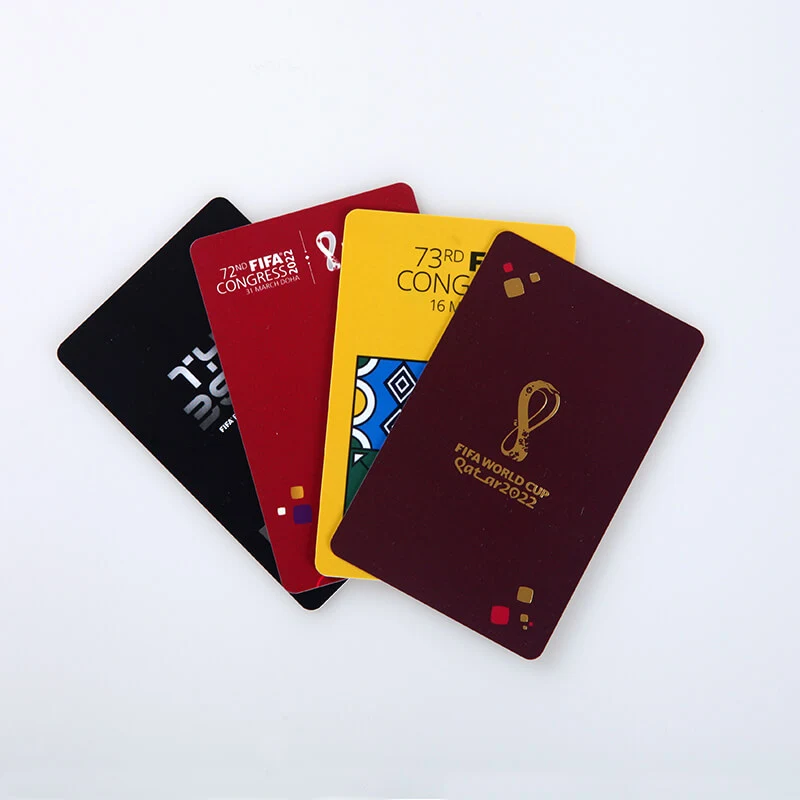
Custom PVC RFID Card
Compare blank, printed and encoded PVC RFID cards by chip, artwork, dimensions and issuer workflow. Review a representative sample before bulk ordering.
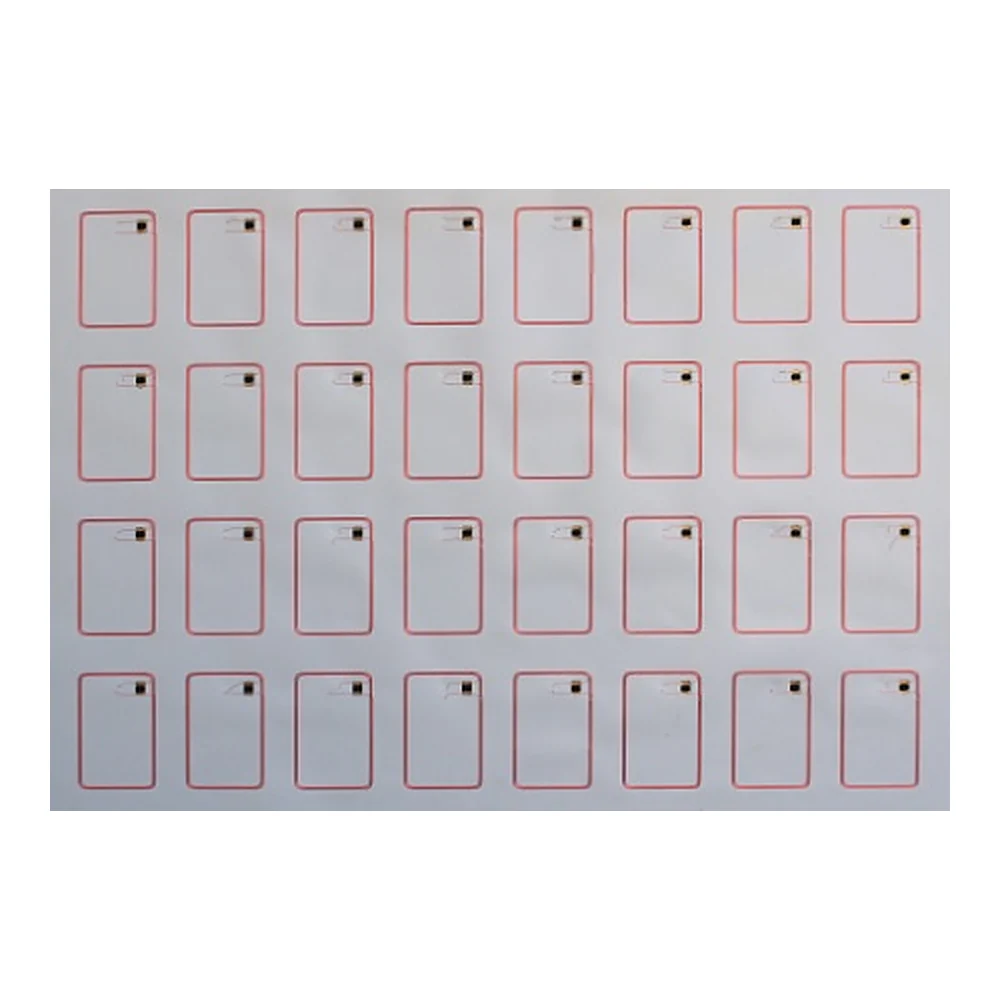
HF Card Inlay (13.56 MHz)
Compare 13.56 MHz HF card inlay chip specifications, 4 × 8 and 5 × 5 sheet examples, and a dimensioned COB stack. Download the technical reference and request samples.
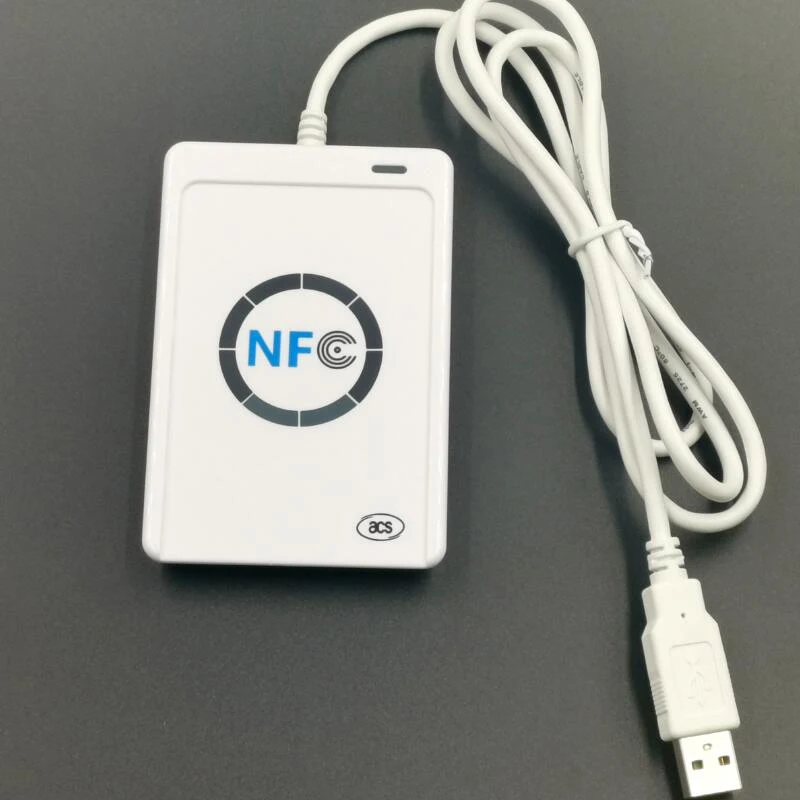
RFID Reader Writer
Choose an RFID reader writer by card protocol, read/write task and host software. Compare USB, network and OEM hardware before requesting an evaluation.
Check the basis for your decision
Sources and technical references
Chip and standards references describe their own scope. They do not establish a finished product’s read distance, durability or compatibility.
- NXP: MIFARE Classic family
Classic interface and Crypto1 baseline; NXP directs security-relevant applications toward Plus or DESFire.
- NXP: MIFARE DESFire EV3
Application/file structure, memory variants, cryptography and IC certification.
- NXP: Classic EV1 1K short data sheet
Classic 1K memory organization and interface details.
- NXP: System-level security measures
Security implementation guidance for MIFARE installations; an IC feature is not a complete system design.