On this page
Compare the requirements that change the choice
| Decision point | MIFARE Plus EV2 | MIFARE DESFire EV3 |
|---|---|---|
| Frequency and interface | 13.56 MHz; ISO/IEC 14443 Type A; up to 848 kbit/s | 13.56 MHz; ISO/IEC 14443 Type A; up to 848 kbit/s |
| Available memory | 2 kB or 4 kB | 2 kB, 4 kB, 8 kB or 16 kB |
| Common Criteria certification | EAL5+ (hardware and software) | EAL5+ (hardware and software) |
| Security direction | AES-128 authentication and secure messaging, with security levels that support staged migration | AES-128 plus DES/2K3DES/3K3DES options, secure messaging and transaction-focused security features |
| Data organization | 2 kB: 32 sectors of 4 blocks; 4 kB adds 8 sectors of 16 blocks | Applications with up to 32 files per application; application count depends on available memory |
| MIFARE Classic migration | Provides Classic-compatible modes; exact identifier handling, security level and application still need testing | Own commands and file/application structure; no drop-in Classic compatibility |
| Additional application features | Transaction MAC, Proximity Check and Transaction Timer; validate the required mode | Secure Dynamic Messaging for SUN/NDEF workflows, plus transaction and proximity features; requires configuration and backend validation |
| Best fit | Phased upgrades where Classic continuity and infrastructure transition are priorities | New or redesigned high-security, multi-application credential programs |
| Reader impact | Can reduce migration friction, but reader firmware, keys and security level still require validation | Requires DESFire-capable readers and application software; ISO compliance alone is not enough |
| Sample and quote scope | Specify memory, security level, sector layout and personalization; price migration work separately | Specify memory, application/files, authentication and personalization; price integration work separately |
- Both use 13.56 MHz, but they are not drop-in equivalents: Both support ISO/IEC 14443 Type A and data rates up to 848 kbit/s. Reader RF compatibility alone does not guarantee that keys, commands and the application stack will work.
- Plus EV2 is designed around a staged Classic migration: Its security levels and mixed-mode options help teams move from legacy Crypto1 workflows toward AES-128 without replacing every credential and reader in one step.
- DESFire EV3 is built for richer credential applications: Its application-and-file architecture, broader memory range and security features suit campus, transit, enterprise access, hospitality and multi-service credentials.
Choose MIFARE Plus EV2 if
- You are replacing MIFARE Classic credentials and need a phased reader, key and card migration instead of a single cutover.
- The application still fits a sector-based card structure and does not require a complex multi-application file system.
- Budget and installed-infrastructure continuity matter, but the program still needs a defined path to AES-128 security.
Choose MIFARE DESFire EV3 if
- You are building a new credential platform for enterprise access, campus, transit, hospitality, loyalty or multiple services on one card.
- You need flexible applications and files, more memory options or transaction-oriented security features.
- The project can validate or update readers and backend software now instead of preserving Classic-oriented application logic.
Do not choose from the chip name alone
Ask the reader or system vendor which chip generation, security mode, keys and commands the installed application supports. Then test encoded samples on the real readers before ordering production cards. A reader that detects both chips may still fail the actual application transaction.
Common decisions
Questions buyers ask before choosing
Is MIFARE Plus EV2 simply a lower-cost DESFire EV3?
No. Plus EV2 focuses on sector-oriented applications and a staged Classic migration, while DESFire EV3 uses applications and files. Compare the required integration, personalization and supply configuration instead of assuming a fixed chip-price hierarchy.
Can a MIFARE Classic reader use MIFARE Plus EV2?
A compatible mode can support migration, but the installed reader, identifier handling, application and chosen security level must be checked. Legacy operation does not mean the full application is already protected by AES. Validate the transition with authorized encoded samples.
Does the 4 kB Plus EV2 have the same sector layout as the 2 kB version?
No. NXP specifies 32 sectors of 4 blocks for the 2 kB variant. The 4 kB variant adds 8 sectors of 16 blocks. Approve the exact variant and sector access plan rather than copying a 2 kB memory map into a 4 kB purchase specification.
Does EAL5+ mean the finished access system is certified?
No. NXP lists Common Criteria EAL5+ for the hardware and software of these ICs. That does not certify an RFIDAK finished card, the reader installation or the backend application. Those require their own appropriate evidence and validation.
Is DESFire EV3 backward compatible with MIFARE Plus?
It is not a drop-in Plus or Classic replacement. NXP describes backward compatibility within the DESFire family, including EV2, EV1 and D40. Using EV3-specific functions can require new commands and configuration; test the actual application even within that family.
What must a comparison sample prove?
Have the integrator issue test credentials with non-production data. Verify authentication, required sector or file operations, permissions, interrupted-transaction handling where relevant, and revocation. Record reader firmware, memory variant and application configuration. Agree secure personalization responsibilities without sending live keys in an inquiry.
Move from the guide to a sample
Product options to investigate
These pages describe product formats. Confirm the exact chip, construction and system compatibility for your selected configuration.
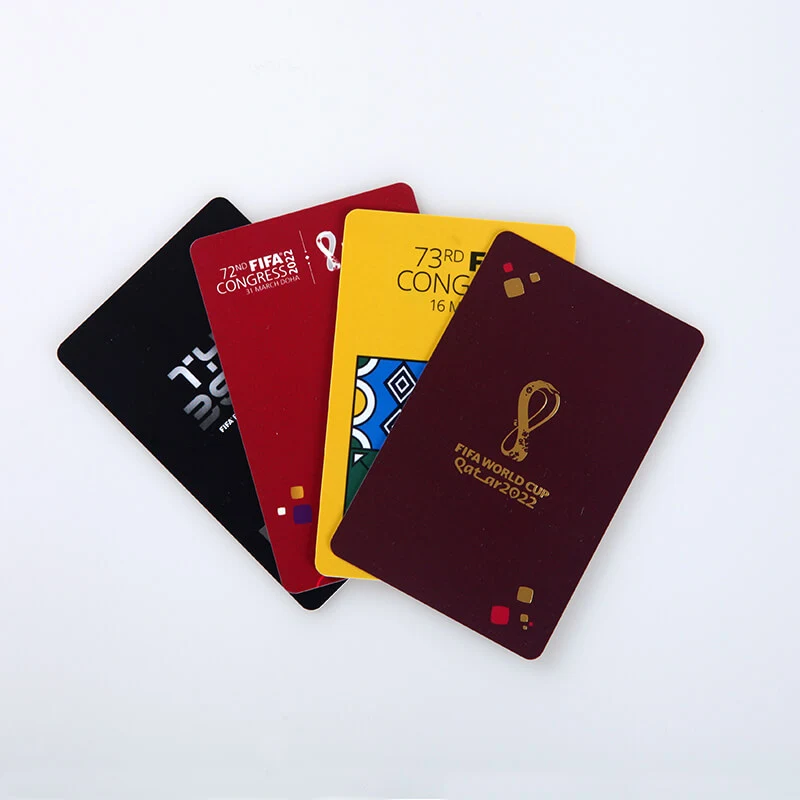
Custom PVC RFID Card
Compare blank, printed and encoded PVC RFID cards by chip, artwork, dimensions and issuer workflow. Review a representative sample before bulk ordering.
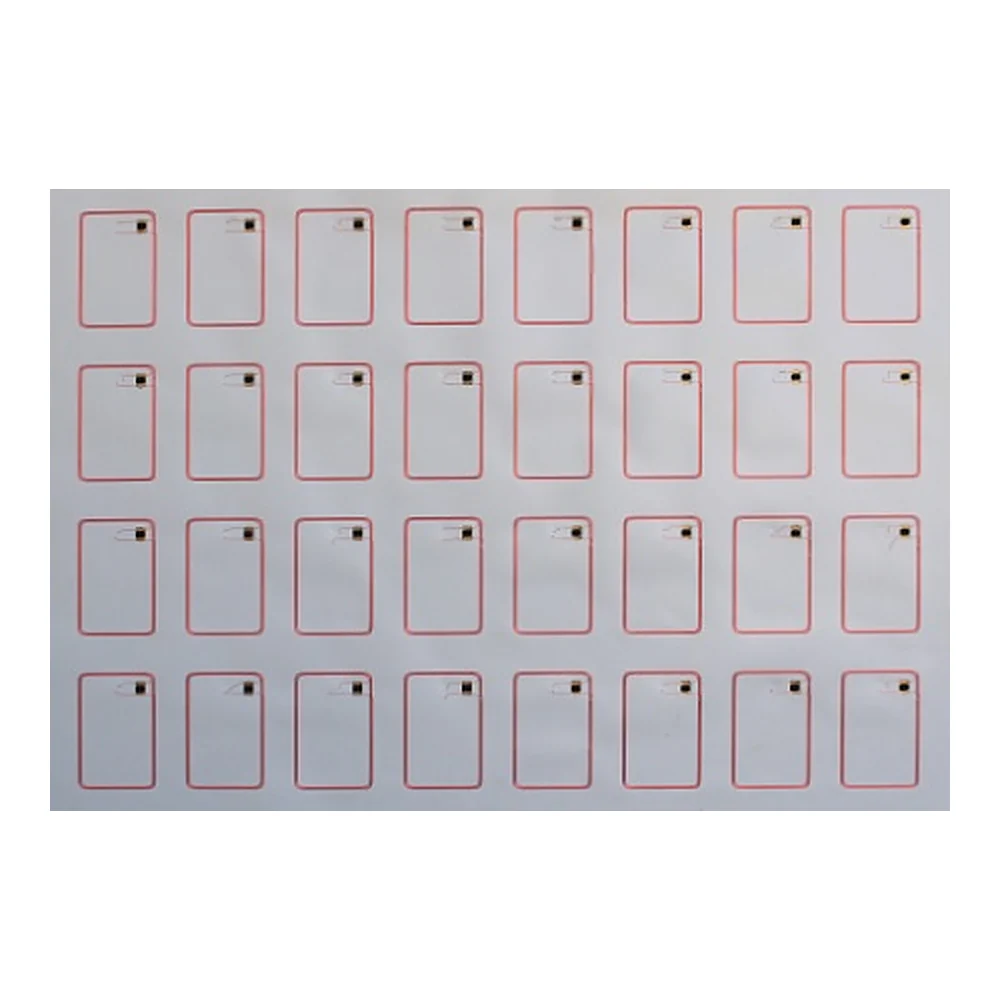
HF Card Inlay (13.56 MHz)
Compare 13.56 MHz HF card inlay chip specifications, 4 × 8 and 5 × 5 sheet examples, and a dimensioned COB stack. Download the technical reference and request samples.
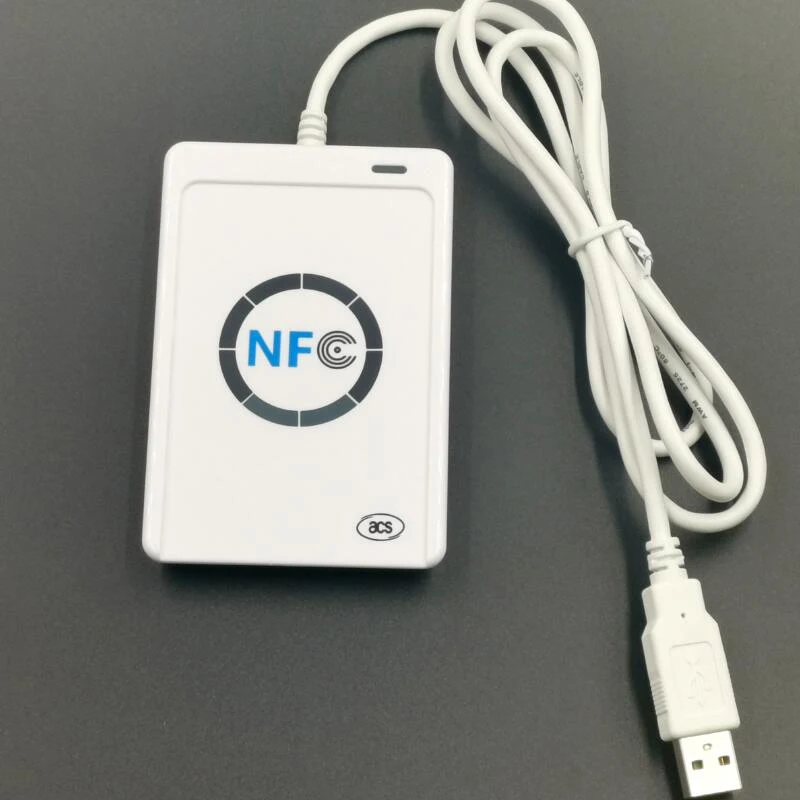
RFID Reader Writer
Choose an RFID reader writer by card protocol, read/write task and host software. Compare USB, network and OEM hardware before requesting an evaluation.
Check the basis for your decision
Sources and technical references
Chip and standards references describe their own scope. They do not establish a finished product’s read distance, durability or compatibility.
- NXP: MIFARE Plus EV2
Memory variants, security levels, sector layout and certification for the IC.
- NXP: MIFARE DESFire EV3
Application/file structure, memory variants, cryptography and IC certification.
- NXP: MIFARE Plus EV2 short data sheet
Variant-specific memory organization and migration functions.
- NXP: MIFARE DESFire EV3 short data sheet
Application architecture and backward compatibility within the DESFire family.
- NXP: System-level security measures
Security implementation guidance for MIFARE installations; an IC feature is not a complete system design.