RFID Fresh Food Retail 2026: Bakery, Meat, Deli & FSMA 204 Ready
Why fresh food has become one of RFID's hottest retail topics. Covers what grocers should compare when tagging bakery, meat and deli items in cold, high-moisture environments — chips, labels and read-rate expectations included.
Topic Cluster
Continue this topic with the next closest guides
These are the articles buyers usually need next when they are moving from basic research into a real shortlist, pilot or compliance discussion.
FSMA 204 & RFID: Food Traceability Pilot Guide for 2028 Deadline
A practical FSMA 204 guide with the FDA timeline, CTE/KDE record planning and an optional RFID-versus-barcode pilot...
Read this nextRFID APPLICATIONSRFID for Returns & Reverse Logistics 2026: $200B Recovery Playbook
Why reverse logistics has become one of retail’s hottest topics, and how RFID can improve returns visibility, item...
Read this nextRFID APPLICATIONSRetail RFID Inventory: Labels, Encoding & Pilot Checks
Plan retail UHF inventory from the item label to the stock record. Check retailer requirements, EPC capacity, reader...
Read this next
Quick Answer
Fresh food retail RFID uses UHF on-shelf inlays or near-field HF tags applied at the wrap/pack stage to track expiry dates, batch traceability, and shelf rotation. The 2024 FSMA 204 rule and EU/UK retailer mandates push fresh meat, deli, prepared meals, and bakery toward per-pack traceability with real-time inventory visibility.
Why fresh food is suddenly a major RFID discussion
For years, item-level retail RFID lived comfortably among apparel, footwear and general merchandise — dry goods, polite packaging, no surprises. That changed when fresh food pilots began proving that RFID can now work in harder grocery conditions, including cold, moisture-heavy environments where traditional label performance has been a barrier. Walmart and Avery Dennison pushed this conversation forward in late 2025, and Avery Dennison expanded the topic again in February 2026 with its IdentiFresh inlay launch for fresh departments.
As a result, grocery operators, food brands and packaging teams are now asking a different question: not whether RFID belongs in retail, but whether it can finally move beyond shelf-stable goods into bakery, meat, deli and produce workflows — the aisles where labels get cold, wet and outnumbered.
Why fresh categories were hard before
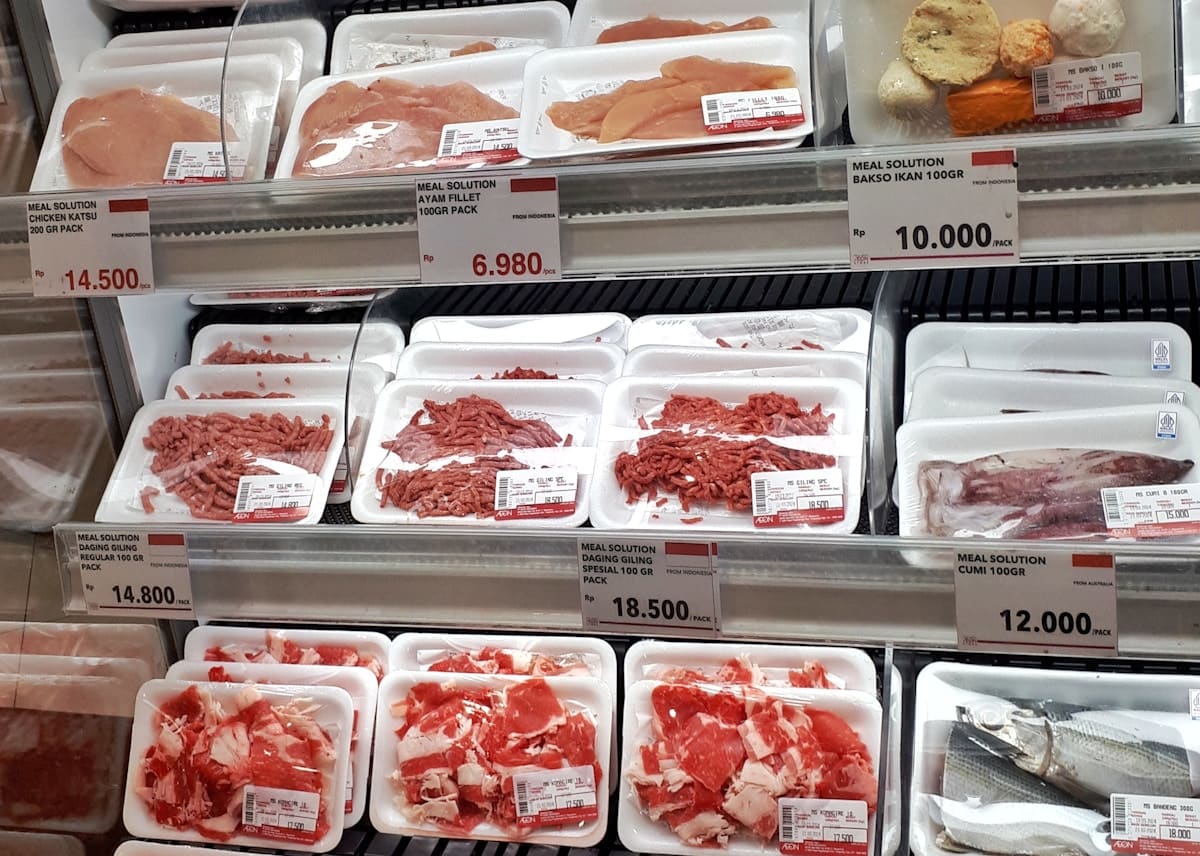
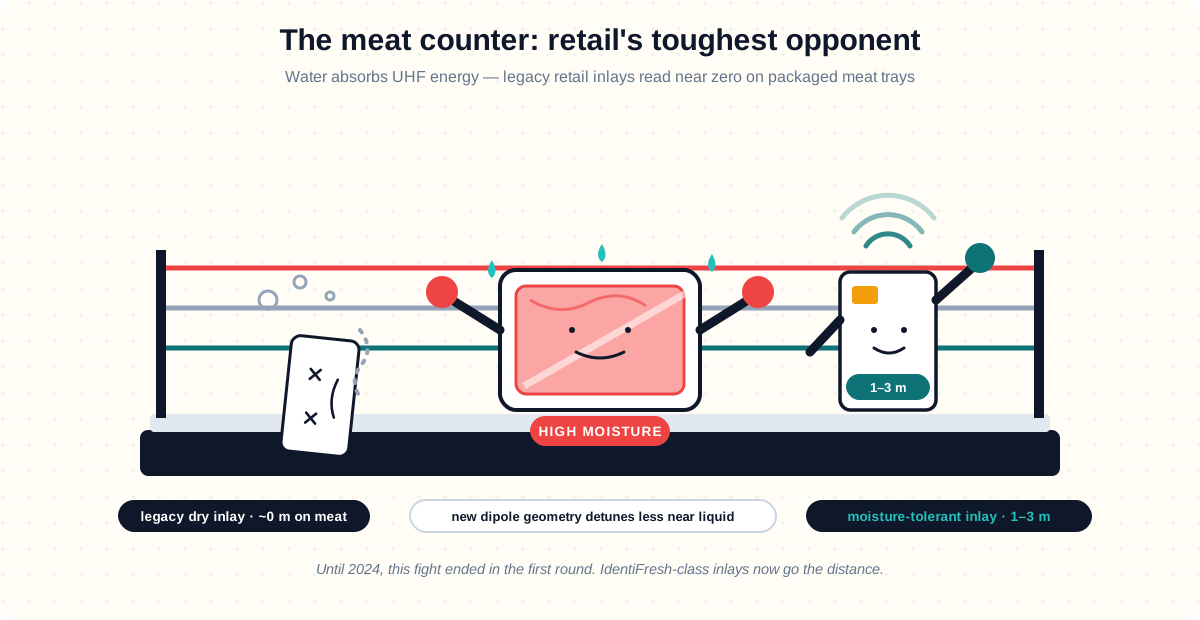
Fresh food is where identification technology goes to get humbled. Moisture, cold temperatures, dense packaging and short shelf life all work against conventional tag behavior and conventional inventory routines — water drinks UHF signal for breakfast. In meat and deli especially, the combination of cold-chain handling and high-moisture packaging has historically limited RFID expansion.
That is why this topic matters now. When new label constructions begin to work in these environments, the operational upside is significant — the hardest aisle in retail is also the one with the most waste to save.
What retailers want from fresh-food RFID
- Faster inventory visibility without manual item-by-item checks
- Better replenishment timing for short-shelf-life items
- Cleaner stock rotation and markdown timing
- Less waste from misplaced or aging inventory
- Stronger cold-chain and backroom visibility
In other words, the value case is broader than counting. It touches freshness, labor, shrink and customer availability at the same time — inventory accuracy is merely the ticket in; the show is everything it unlocks.
What changed in tag design
The new wave of grocery RFID is not a standard retail label wearing a raincoat. It is the inlay, face stock and adhesive all re-engineered for a more demanding environment. Buyers evaluating fresh-food RFID should compare:
- Cold-environment adhesion
- Performance near moisture-rich contents
- Label fit on trays, packs, clamshells or wrapped bakery goods
- Read behavior in crates, cooler racks and backroom staging
- Compatibility with existing print-and-apply workflows
The IdentiFresh & On-Meat RFID Breakthrough (2024-2026)
The pivotal change for fresh food RFID was Avery Dennison’s IdentiFresh inlay family, announced in late 2025 and expanded in February 2026. Rather than politely avoiding the historical fail modes, IdentiFresh walks up to each one and picks a fight, through three engineering choices:
- Moisture-tolerant antenna geometry — new dipole shape detunes less near liquid (meat juice, dairy) than legacy retail inlays. Read range on packaged meat trays improves from near-zero (legacy) to 1–3 m at production volume.
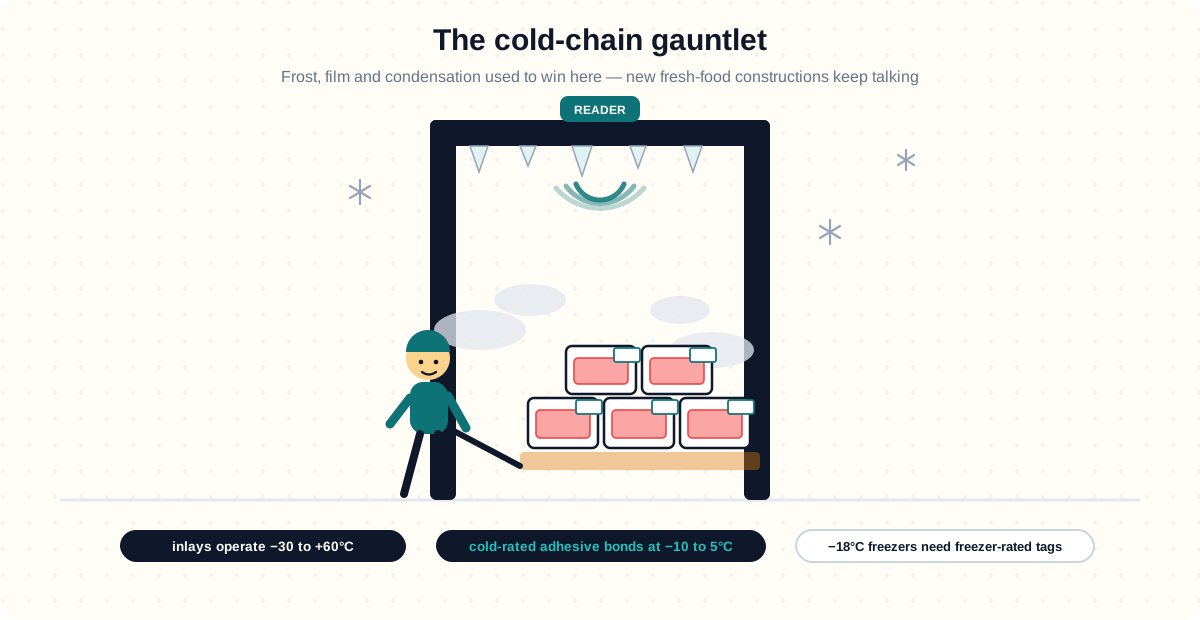
- Cold-rated adhesive — food-grade adhesive bonds at -10 to 5°C without re-warming the package. Critical for fast-moving deli operations where time on the cooler line is short.
- FDA-compliant face stock — printable label material that meets indirect food contact requirements for FSIS inspection in US markets.
Walmart and Avery Dennison announced fresh-food RFID work in October 2025 for meat, bakery and deli. Their announcement describes the intended inventory and rotation workflow; it does not publish a storewide deployment count, guaranteed read range or measured waste reduction. A buyer should validate those outcomes on its own products and read points.
Fresh Food Use Cases: Where RFID Pays Off
Fresh-food RFID delivers value across five distinct workflows, each with its own personality on the P&L. The ROI math differs by use case — some pay back before the next truck arrives, some take a full season to measure:
| Use Case | Mechanism | Reported Impact |
|---|---|---|
| Replenishment timing | Real-time shelf gap detection | 3–7% sales lift on tagged categories |
| Waste reduction | FIFO enforcement + shelf-life tracking | 15–30% reduction in fresh waste |
| FSMA 204 compliance | Per-pack KDE/CTE record at every step | Recall response < 24 hours (vs days) |
| Dynamic markdown | Auto-flag near-expiry items at POS | 5–15% recovery on near-spoil items |
| Backroom visibility | Cooler / receiving / staging area scans | 2–4 hours/store/day labor savings |
FSMA 204 (effective January 2026, FDA enforcement aligned to July 2028) is the regulatory floor for high-risk fresh foods on the FDA’s Food Traceability List — but the operational drivers (waste reduction + sales lift) usually justify deployment ahead of the legal deadline. See our FSMA 204 RFID guide for compliance specifics.
Where fresh-food pilots often begin
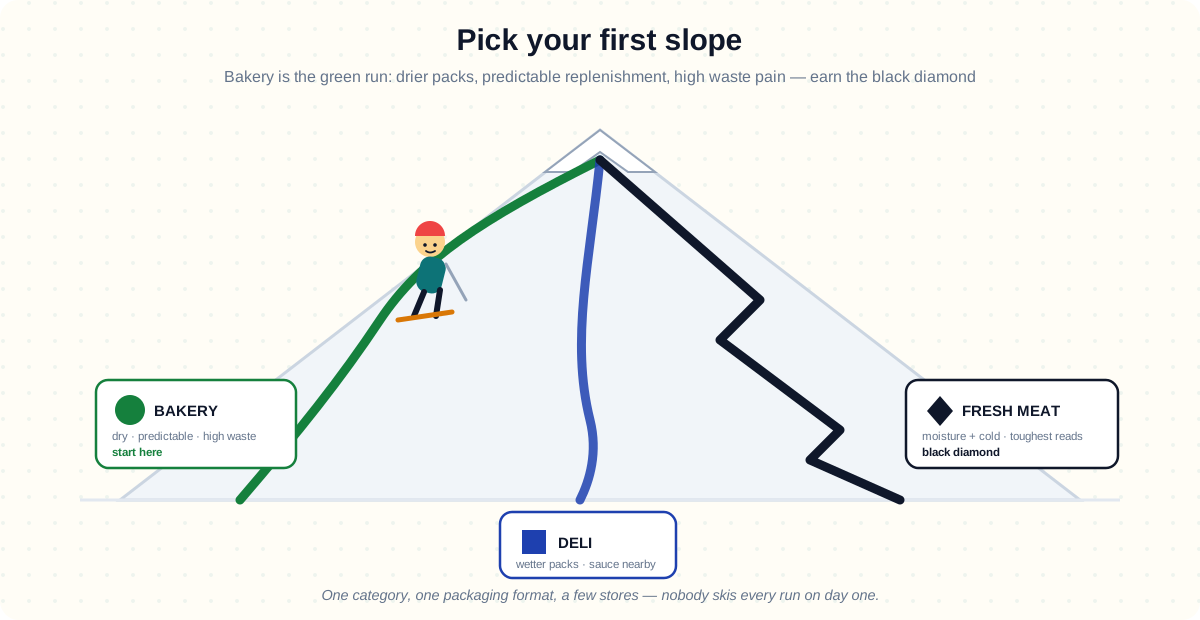
Bakery, deli and selected meat workflows are common pilot targets because they have measurable replenishment and waste pain. A good first pilot is usually category-specific and store-specific — one slope at a time. Teams learn more from one realistic category than from trying to prove every fresh department at once, the retail equivalent of skiing every run on day one.
If your project is still at the label-selection stage, our RFID labels category and retail inventory guide are useful next steps.
Questions grocery teams should answer before sampling
- Is the main goal replenishment, waste reduction, stock accuracy or all three?
- Which packaging formats are in scope first?
- Will labels be applied by supplier, DC or store team?
- What read points matter most: receiving, backroom, shelf, or markdown workflow?
- Do cooler conditions or wet surfaces create adhesion risk?
Hardware and process decisions still matter
Fresh-food RFID is not solved by the inlay alone. Readers, antenna placement, pack density and employee workflow all matter. Store teams also need a process that turns RFID visibility into action — replenishment tasks, shelf-gap alerts, markdown timing — because without that layer, the tag data exists the way a gym membership exists: technically present, changing nothing.
How to structure a useful pilot
Keep the first test narrow enough to measure clearly: one category, one packaging format, a small number of stores. Measure read reliability, labor time, shelf availability and waste before expanding. And if the label must survive cold rooms or wet handling, include those conditions on day one — a pilot that avoids the freezer is a pilot that avoids the truth.
Fresh-food pilot measurements
A named retailer's fresh-food RFID rollout or waste-reduction percentage needs a dated, direct source before it can be used as evidence. For a buyer-run pilot, record baseline shrink and waste, known-count read rate on wet or chilled packaging, labor minutes per count, shelf availability and markdown execution. Compare the same store and product category under similar conditions, and keep POS barcode work separate from any RFID workflow.
Final takeaway
Tags for cold & moisture environments
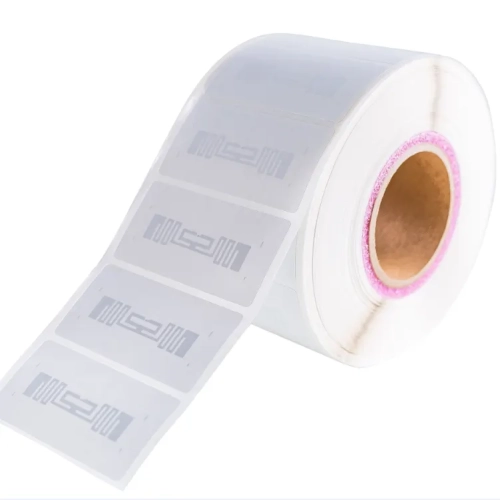
UHF sticker labels — standard item-level tagging
Clear RFID tags — transparent, blends with packaging
See also: Retail inventory guide • FSMA 204 food traceability
Key Takeaways
- Operational driver: test inventory visibility, expiry rotation and waste reduction; FSMA 204 requires records for covered foods, not RFID.
- UHF 860–960 MHz at item-pack level: meat trays, deli sandwiches, sushi, ready meals.
- Tag construction: wet inlay laminated under product label OR on-pack adhesive sticker.
- Use cases: expiry tracking, FIFO rotation enforcement, recall traceability, dynamic markdown.
- Cost: $0.05–$0.10/tag — ROI from a meaningful drop in perishable waste plus compliance.
⚠️ Common pitfall
UHF tags near liquids (meat juice, deli sauce) lose 30–50% read range. Wet-inlay specifications from Avery Dennison quantify the recovery for moisture-adjacent placements. Always use wet-inlay-rated tags with moisture-resistant adhesive for fresh food applications, never a generic dry-inlay UHF sticker.
Fresh Food RFID FAQ
Does RFID work directly on fresh meat or wet packaging?
As of 2024–2026, yes — with moisture-tolerant inlay constructions (Avery Dennison IdentiFresh, similar Smartrac / Identiv designs). Standard retail UHF inlays still fail in wet environments due to signal absorption. The new fresh-food inlays maintain 1–3 m read range on packaged meat trays, vs near-zero with legacy inlays.
Can RFID tags survive cold storage and freezer conditions?
Yes — cold-rated UHF inlays operate from -30 to +60°C with no chip degradation. The challenge is adhesive: standard pressure-sensitive adhesive fails to bond at sub-zero temperatures. Fresh-food inlays use cold-rated adhesive that bonds reliably at -10 to 5°C, the typical fresh / chilled product range. Freezer storage (-18°C) requires specialized freezer-rated tags.
Are RFID tags food-safe for direct contact?
Modern fresh-food inlays use FDA-compliant materials meeting indirect food contact requirements (21 CFR 175). Most are designed for application to packaging exterior, not direct food contact. For applications requiring direct food contact (some seafood / produce), specify food-grade silicone or polyurethane over-mold — this adds cost but meets stricter FSIS / EU food contact regulations.
What is the recall response time improvement with RFID?
FDA requires covered firms to maintain the applicable CTE/KDE records and, when requested, make records available within 24 hours or another time agreed by FDA. That is a record-retrieval requirement, not evidence that RFID reduces recall time to 24 hours. An RFID pilot should compare the time to identify affected lots, retrieve the required records and isolate impacted stock against the current process. The identifier must be linked accurately to the traceability lot and event data. See the FDA Food Traceability Rule FAQ.
How much does fresh-food RFID add to per-pack cost?
Moisture-tolerant UHF inlays at fresh-food MOQ (typically 1M+ pieces) run $0.05–$0.10 per pack, slightly higher than dry retail UHF inlays due to specialized antenna design and adhesive. For premium fresh categories (organic, AOP-certified meat, sustainable seafood), the per-pack RFID cost is well under 1% of retail value.
Sources
- FDA — FSMA 204 Final Rule (Food Traceability). fda.gov/food/fsma
- Avery Dennison — IdentiFresh inlay launch announcement (Feb 2026). rfid.averydennison.com
- Walmart and Avery Dennison — fresh-food RFID collaboration, October 2025. Walmart announcement
- USDA — Food Safety Inspection Service traceability programs. fsis.usda.gov
- ISO/IEC 18000-63:2015 — UHF RFID air interface. iso.org/standard/63675.html
- Auburn University RFID Lab — Fresh food RFID research. rfid.auburn.edu
- IDTechEx — "RFID Forecasts, Players and Opportunities 2024-2034" (food segment). idtechex.com
Grocery operators that test the right category, label and read workflow early will learn faster — and cheaper — than those who wait for the mandate letter. Contact RFIDAK for help shortlisting label constructions for cold or high-moisture environments.
Build a practical food-traceability pilot
Send your packaging material, cold-chain conditions and read points and we can narrow the right label path for a first pilot.
Comparison Pages
Compare the closest alternatives before you request samples
Open one of these if the article clarified the topic but the team still needs a cleaner format, chip or frequency decision.
Quick FAQ
Questions buyers often ask after reading this guide
Is fresh food RFID mainly about compliance or operations?
Evaluate the operational case first: receiving, shelf availability, waste and replenishment labor can be measured against the current barcode or manual process. FSMA 204 concerns required traceability records for covered foods; it does not mandate RFID. A pilot should verify which critical tracking events and key data elements the complete system records, then calculate any savings from observed results rather than importing another retailer's percentage.
Why is fresh-food RFID harder than dry-goods tagging?
Water-rich products, dense packs, cold surfaces and condensation can reduce UHF read reliability or label adhesion. Walmart and Avery Dennison publicly announced tests of RFID labels for fresh meat, bakery and deli in October 2025; the announcement did not publish a universal read-rate result or mandate one chip. Avery Dennison launched its IdentiFresh inlay series in February 2026. Test candidate inlays on the actual packaging and in the intended read environment.
Which fresh food categories are easiest to pilot first?
Choose a category where the current receiving, rotation or waste problem can be measured and the label can be tested on production-representative packaging. Moisture, condensation, chilled application and freezer storage each affect RF performance and adhesion differently. Specify an adhesive for the actual application and storage temperatures, and verify food-contact requirements where relevant; no category or fixed cold rating is universally easiest.
What inlay construction works for moist or cold fresh food packaging?
Compare finished inlays and adhesives on the actual wet or cold packaging, at the intended temperature and read point. Request food-contact and substrate documentation where applicable. No chip family alone compensates for water or proves a universal read-rate result.
How much does RFID tagging fresh food cost?
Budget the complete workflow: tags, readers and antennas, installation, data integration, software, training, maintenance and exceptions. Get configuration-specific quotes and measure the current process against a limited pilot before estimating payback. No universal hardware price or payback period applies across sites.
What ROI does fresh food RFID deliver?
There is no transferable ROI percentage for fresh-food RFID. Compare matched products and periods before and after a pilot: receiving time, unread or misidentified items, expiry-related waste, out-of-stocks, labor, tags, readers, integration and ongoing support. Use the same definition and observation window for both methods, then calculate net benefit and payback from that operation's own baseline.
How does RFID support FSMA 204 food traceability?
For foods covered by the FDA Food Traceability Rule, the operator must capture the applicable critical tracking events and key data elements. RFID is optional and may help collect item, case or asset identifiers at defined read points, but the software must still link them to the required lot, location, date and transaction records. FDA currently says it will not enforce the rule before July 20, 2028; verify the latest FDA notice and your product’s coverage.
What is the minimum order for fresh food RFID inlays?
RFIDAK's published standard tags-and-labels MOQ baseline is 1,000 pieces. Confirm the exact chip, antenna, construction, print, encoding and quantity per design in a written quote. Free stock samples (up to 5 pieces) — buyer covers DHL/FedEx freight ($25–60), refunded 1:1 against the first production order over $500. Larger evaluation lots, custom samples, production timing and delivery are agreed separately for the selected configuration. For medical, food, pharmaceutical or battery applications, define the applicable product and process requirements before testing. A tag sample or chip specification does not establish regulatory compliance, sterilization performance or safety of the finished assembly.
Author
RFIDAK RFID Editorial Team
RFID supply editorial team
RFIDAK publishes practical RFID guides to help buyers compare chips, product formats, sampling plans and sourcing options before production.