On this page
Compare the requirements that change the choice
| Decision point | RFID labels | Rigid / hard tags |
|---|---|---|
| Supply and marking | Roll or sheet media; approve printer, pitch, liner, barcode and encoded-data mapping | Individual bodies; approve marking space, legibility and data mapping |
| Attachment | Adhesive, surface preparation, application temperature and cure/settling conditions | Screws, rivets, ties or adhesive according to the selected drawing |
| Metal and liquids | Use a construction designed for the intended surface; printable on-metal labels are a distinct option | A rigid body alone does not make a tag on-metal or suitable beside liquids |
| Handling | Check peeling, abrasion, bending and cleaning exposure on the finished media | Check fastener retention, impact, enclosure condition and cleaning exposure |
| Reuse | Depends on media, adhesive and removal requirements; do not assume repositionability | May remain with a reusable asset; define recovery and reassignment rules |
| Read acceptance | Known-count reads after application and after agreed handling | Known-count reads after installation and after agreed handling |
| Commercial comparison | Include printing, encoding, application labor, rejected media and replacement | Include fixtures, installation labor, marking, recovery and replacement |
- Separate format from radio technology: Labels and rigid tags can use different frequencies and chips. For a fair physical-format comparison, first confirm the reader, protocol and data requirements.
- Include the surface and fixing: Metal geometry, liquid contents, curvature, coatings and available attachment space belong in the sample specification.
- Compare cost per completed job: Use comparable quotes and your own installation, failure, replacement and recovery costs. A lower unit price does not by itself establish the cheaper deployment.
Shortlist labels when
- The object offers an approved adhesive area and the planned label construction suits the surface.
- Barcodes, QR codes or other variable data must be printed in an established media workflow.
- Application and handling trials retain the label and deliver the required reads.
Shortlist hard tags when
- The asset has a defined mounting point and the proposed rigid body can be installed without impairing its use.
- The selected construction has evidence for the mechanical or environmental exposure you need.
- A mounted sample passes the read-zone and handling checks, including nearby tagged assets.
Keep reusable asset IDs separate from shipment IDs
A pallet tag can identify the reusable pallet while carton labels identify a particular shipment or its items. The software must create and retire those associations as loads change. Test an empty asset, representative loads, missed reads and unwanted adjacent reads; reading a pallet identifier does not count the items carried on it.
Common decisions
Questions buyers ask before choosing
Are hard tags always better for metal assets?
No. Select an antenna construction designed for the mounting surface. A standard rigid tag is not automatically on-metal, and a purpose-designed printable on-metal label may be a candidate. Test the actual surface geometry and fixing method.
Can an RFID label be reused?
It depends on the complete media and adhesive construction and how it is removed. A label that stays attached to a reusable item is different from a label that must be peeled off and reattached. Define the reuse operation before choosing samples.
Does a hard tag always last longer?
No category-wide lifetime is established here. Require model-specific evidence for the expected impact, temperature, chemicals and cleaning, then validate the installed sample. An enclosure or an IP rating alone does not prove every service condition.
Can the same reader compare both formats?
Only if it supports the exact chips, protocol and regional configuration of both candidates. Keep the reader, antenna setup, object loading, movement and reading window controlled for a meaningful comparison.
What is a useful sample acceptance test?
Agree attachment retention and a known-count reading target at the required points. Include representative loaded objects, orientations, movement, adjacent tags and the agreed cleaning or handling cycle. Record physical failures and incorrect or missed reads separately.
How should labels and hard tags be priced fairly?
Request each selected configuration at the same project quantities, with print, encoding, accessories, setup and freight identified. Add your own installation and replacement costs. Do not use a generic label-versus-hard-tag price ratio as a quotation.
Move from the guide to a sample
Product options to investigate
These pages describe product formats. Confirm the exact chip, construction and system compatibility for your selected configuration.
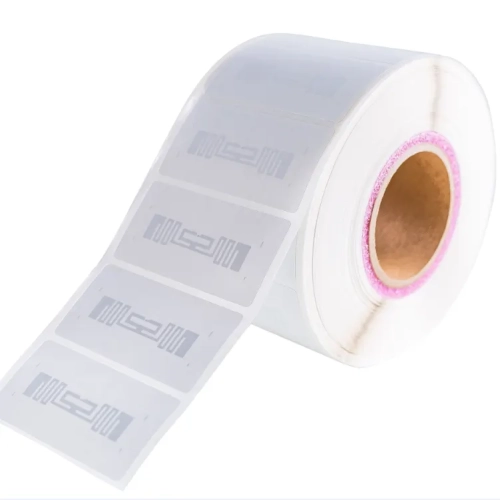
Custom UHF RFID Sticker
Select UHF RFID stickers by item, finished inlay and reader setup. Confirm EPC data, printing and roll format, then validate mounted samples.
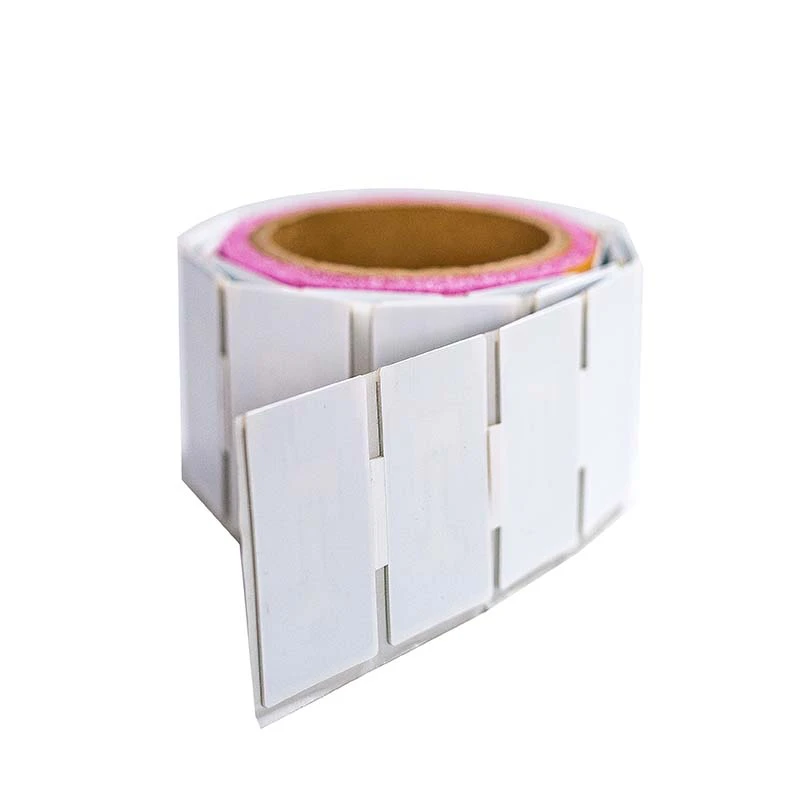
Printable UHF On-Metal RFID Labels
PR3110 is a 31 × 10 × 1.0 mm printable on-metal UHF label using Impinj M730. The white PET face supports thermal-transfer printing, with a 3-inch roll core…
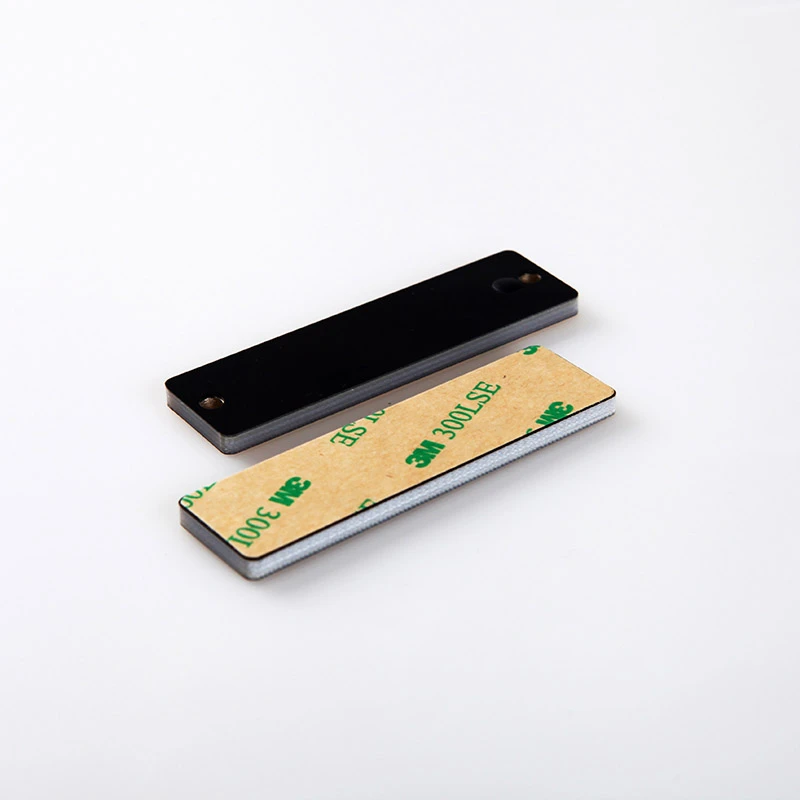
UHF On-Metal PCB RFID Tags
Compare 31 published PCB RFID footprints for metal assets, from miniature 3 × 7 × 2 mm parts to 95 × 25 × 2.5 mm tags. These rigid UHF components are…
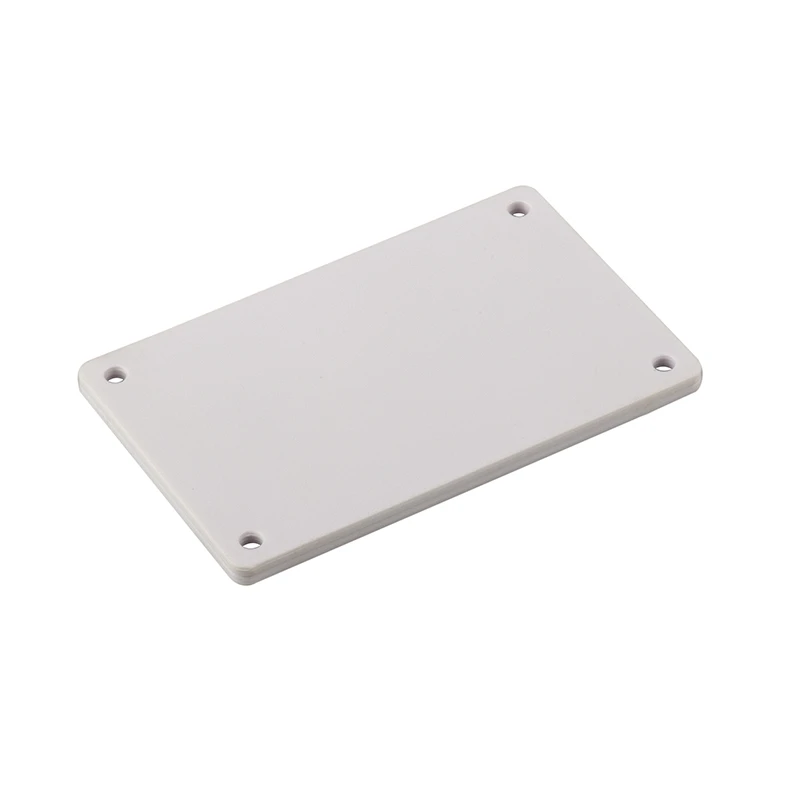
RFID Pallet Tags — TTP8654
TTP8654 is an 85.6 × 54 × 4 mm rigid ABS UHF tag for pallet and returnable-asset identification. Its published configuration uses Alien Higgs-3 and is…
Check the basis for your decision
Sources and technical references
Chip and standards references describe their own scope. They do not establish a finished product’s read distance, durability or compatibility.
- GS1: EPC Gen2 air-interface standard
UHF reader/tag communication; separate the protocol from local radio rules and an installation acceptance test.
- Impinj: Tagging liquids, metals and small items
Explains why packaging and placement require testing; it does not qualify an RFIDAK model.
- GS1: What is an EPC?
EPC connects a tag’s encoded identifier with the identification system.