On this page
Compare the requirements that change the choice
| Decision point | HF / supported NFC | UHF EPC Gen2 / RAIN |
|---|---|---|
| Radio and protocol | 13.56 MHz; specify ISO/IEC 14443, ISO/IEC 15693 or the required NFC tag type | Specify EPC Gen2 / ISO/IEC 18000-63 plus permitted country-specific reader settings |
| Interaction | Credential presentation, phone taps and supported library/item workflows | Inventory, portals, handheld stock checks and moving assets; read zones can be engineered for different sizes |
| Phone use | Requires supported tag technology, payload and phone/application behavior | Requires an appropriate UHF reader accessory or dedicated terminal |
| Multiple tags | Some HF systems support multi-item reading; protocol and reader implementation matter | Gen2 inventory supports multiple tags; actual capture performance needs a loaded trial |
| Read distance | Depends on tag, antenna, reader and installation; HF is not synonymous with NFC tap distance | Depends on power, antenna, tag sensitivity, orientation and tagged object; no universal meter figure |
| Security | Defined by chip and application authentication, permissions and keys | Defined by selected chip features, commands and application design; band alone is not an assurance |
| Sample approval | Actual credential, phone or item transaction on the selected device | Known-count capture, missed/unwanted reads and software events under the intended loading and movement |
- Define success at the read point: State which objects should be detected, from where, within what time window, and which nearby objects must be excluded.
- Separate radio read and business result: A tag ID capture is different from opening an authorized door, checking out a book or posting an inventory event.
- Use readers for the selected technology: A standard phone NFC radio does not read UHF EPC Gen2. A phone-based UHF workflow needs compatible external hardware and software.
Evaluate HF when
- The installed system specifies an HF credential or item protocol and the intended transaction is known.
- A phone interaction requires a supported NFC tag and an agreed NDEF payload or application.
- The intended presentation and multi-item requirements can be demonstrated on the selected HF device.
Evaluate UHF when
- The project uses or plans a compatible UHF reader for inventory, portals or asset movement.
- The tag position and regional antenna/reader configuration can be tested with representative objects and loads.
- The integration can handle inventory identities, duplicates, missed reads and unwanted reads outside the target zone.
A dual-technology workflow still needs two acceptance tests
A product can use NFC for a buyer’s phone interaction and UHF for warehouse operations. Define how the two identifiers map to the same record, confirm whether one combined construction or two separate tags is appropriate, and test each radio and application independently. A single successful tap does not validate the UHF workflow.
Common decisions
Questions buyers ask before choosing
Is HF RFID the same thing as NFC?
NFC operates at 13.56 MHz and specifies supported communication modes and tag types, but HF also describes a broader set of RFID applications. For a phone project, specify the NFC technology, NDEF payload or required app and test the target devices.
Can my phone read a UHF RFID label?
Its standard NFC radio cannot read an EPC Gen2 UHF label. A smartphone can participate in a UHF workflow through a compatible external reader and software, which must be included in the system specification.
Is HF more secure because it reads at a shorter distance?
No. Distance and frequency are not authentication. Evaluate the selected chip’s security functions, the application’s use of them, key management and backend permissions. A short-range public identifier is still an identifier, not proof of authorization.
Does UHF always read farther or faster than HF?
Avoid a universal ranking. Protocol, reader, antenna, tag, object, load and read-window design determine the usable result. State the required distance, capture window and unwanted-read limits, then test candidate systems against the same job.
Can HF read several tags at once?
Some HF protocols and reader implementations support multi-tag identification. The required item spacing, quantity and transaction must be checked with the actual system. Do not rule out an installed library or item-tracking system solely because it uses HF.
What must be approved before ordering UHF samples?
Define the installation country and permitted reader setup, exact tag chip/protocol, mounting object and EPC data. Agree how many items, which orientations and movement will be tested. Samples should use the intended reader system, not an unrelated HF/NFC desktop reader.
Move from the guide to a sample
Product options to investigate
These pages describe product formats. Confirm the exact chip, construction and system compatibility for your selected configuration.
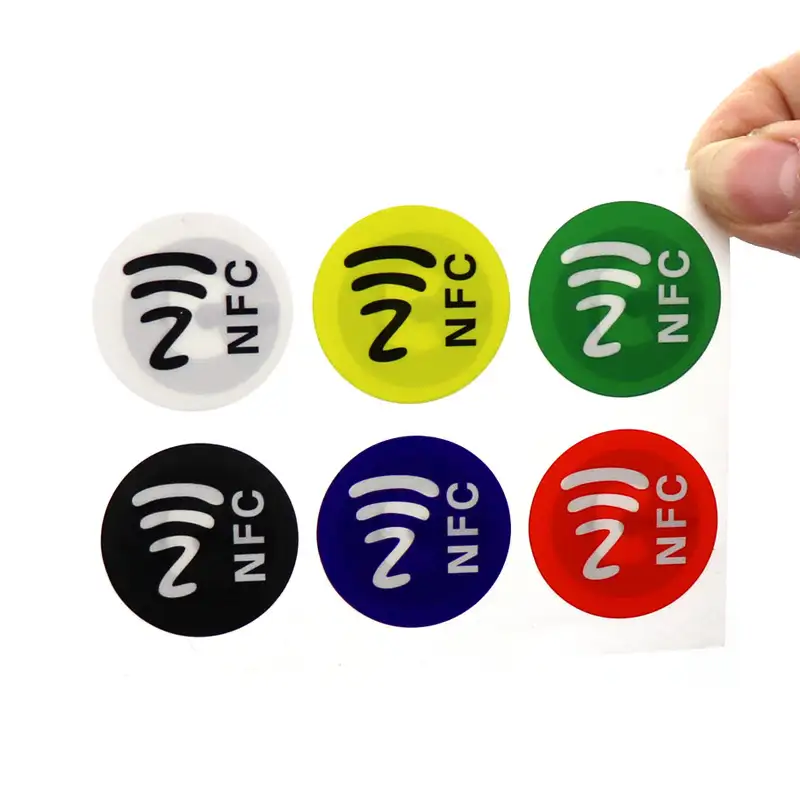
Custom NFC Sticker
Choose custom NFC stickers by NDEF content, chip memory and mounting surface. Approve artwork and encoded samples on the target phones before production.
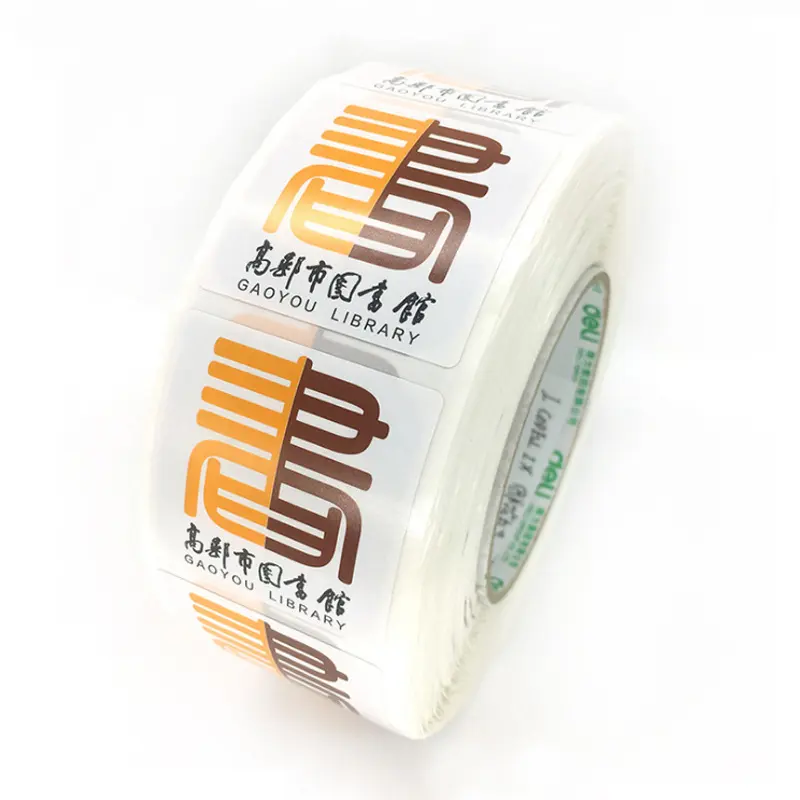
HF Library RFID Labels
The published HF library label uses ICODE SLIX at 13.56 MHz with ISO 15693 and a 50 × 50 mm coated-paper format. It is intended for compatible library…
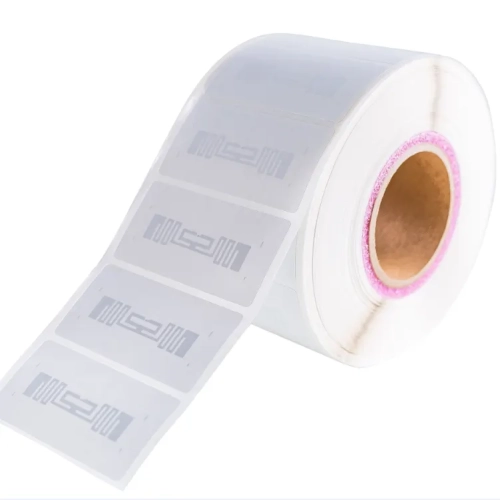
Custom UHF RFID Sticker
Select UHF RFID stickers by item, finished inlay and reader setup. Confirm EPC data, printing and roll format, then validate mounted samples.
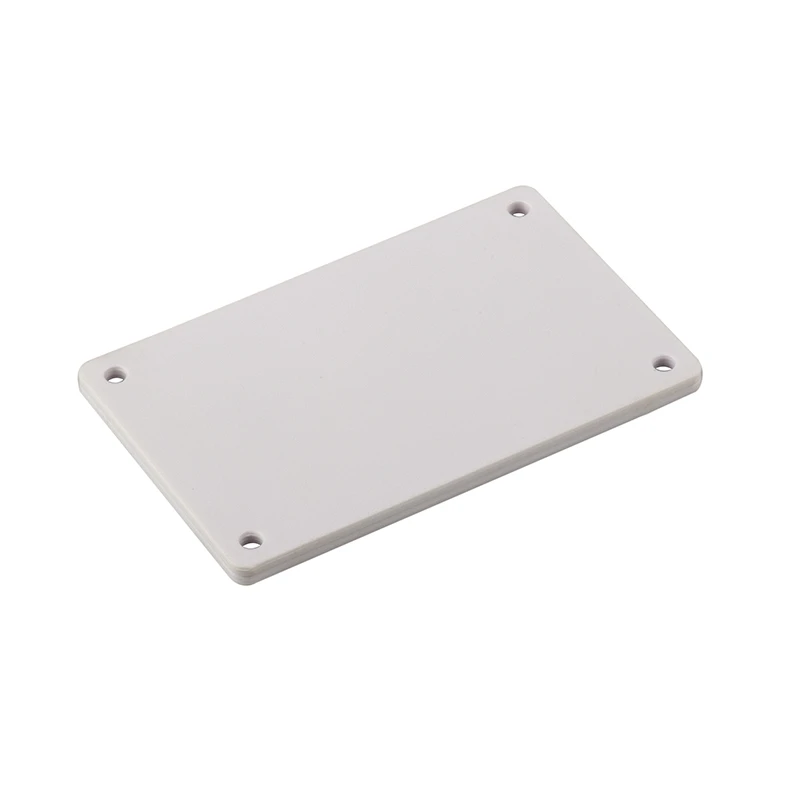
RFID Pallet Tags — TTP8654
TTP8654 is an 85.6 × 54 × 4 mm rigid ABS UHF tag for pallet and returnable-asset identification. Its published configuration uses Alien Higgs-3 and is…
Check the basis for your decision
Sources and technical references
Chip and standards references describe their own scope. They do not establish a finished product’s read distance, durability or compatibility.
- NFC Forum: NFC technology
13.56 MHz NFC operation, tag types, NDEF and supported communication standards.
- GS1: EPC Gen2 air-interface standard
UHF reader/tag communication; separate the protocol from local radio rules and an installation acceptance test.
- NXP: ICODE SLIX2
An ISO/IEC 15693 HF example; HF includes more than a phone-tap interaction.
- Impinj: How RAIN RFID systems work
System components and operating context; final read performance is installation-specific.