RFID for Returns & Reverse Logistics 2026: $200B Recovery Playbook
Why reverse logistics has become one of retail’s hottest topics, and how RFID can improve returns visibility, item grading, resale routing and recoverable value. Covers source tagging, intake automation and grading workflows.
Topic Cluster
Continue this topic with the next closest guides
These are the articles buyers usually need next when they are moving from basic research into a real shortlist, pilot or compliance discussion.
RFID Fresh Food Retail 2026: Bakery, Meat, Deli & FSMA 204 Ready
Why fresh food has become one of RFID's hottest retail topics. Covers what grocers should compare when tagging bakery,...
Read this nextRFID APPLICATIONSFSMA 204 & RFID: Food Traceability Pilot Guide for 2028 Deadline
A practical FSMA 204 guide with the FDA timeline, CTE/KDE record planning and an optional RFID-versus-barcode pilot...
Read this nextRFID APPLICATIONSRetail RFID Inventory: Labels, Encoding & Pilot Checks
Plan retail UHF inventory from the item label to the stock record. Check retailer requirements, EPC capacity, reader...
Read this nextRFID APPLICATIONSRFID Baggage Tracking: IATA 753 Tags & Airport Pilot Guide
A practical guide to IATA Resolution 753, the four baggage tracking points, RFID bag-tag choices, reader planning, RFQ...
Read this next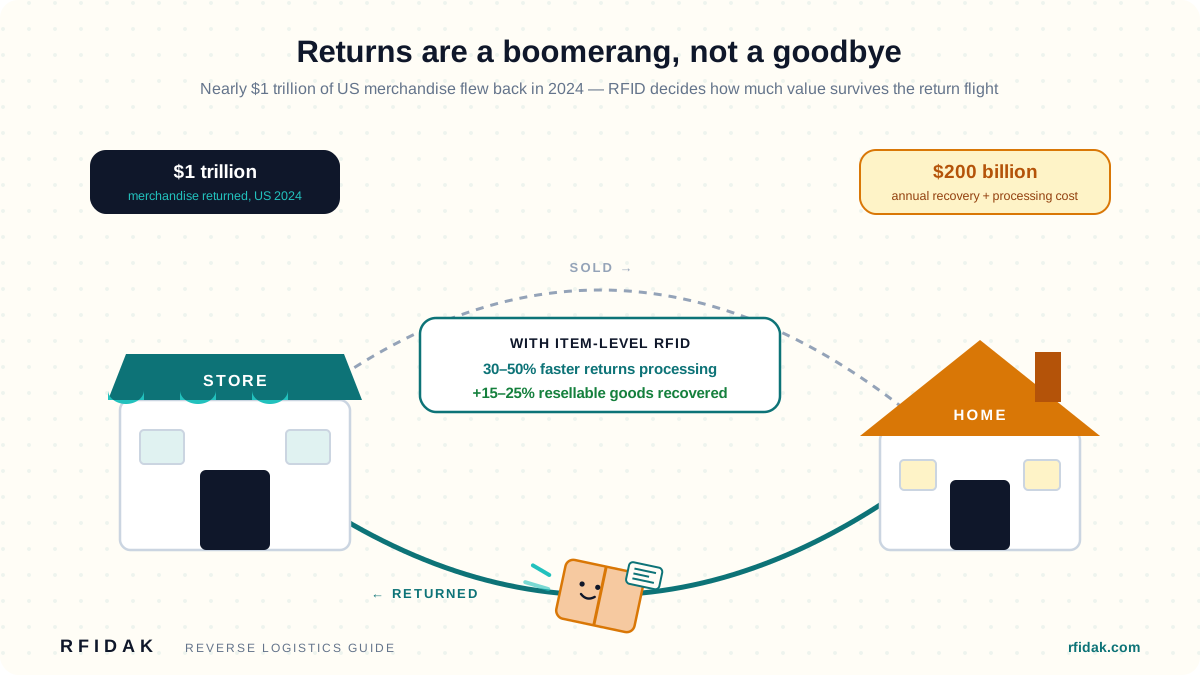
Quick Answer
RFID can identify tagged returned items at receiving and connect that identity to grading, resale, refurbishment or recycling records. Whether it saves time or raises recovery value depends on the existing process, tag survival, reader placement and system integration; measure those outcomes in a controlled pilot.
Why reverse logistics is suddenly a front-burner RFID topic
Returns used to be the back office’s problem child. Now they have their own conference. McKinsey estimated that U.S. consumers returned nearly $1 trillion in merchandise in 2024, creating roughly $200 billion in annual recovery and processing costs for retailers. At the same time, NRF elevated the topic further in 2026 through NRF Rev, a dedicated event focused on reverse logistics as a revenue strategy rather than a simple cost center. When a cost center gets its own trade show, the money has already voted.
That shift is exactly why RFID is relevant here. Every box that comes back is a small identification quiz, and the harder the quiz gets, the more it pays to answer instantly — faster, more accurate item identification and routing is the entire game.
Where reverse logistics breaks down
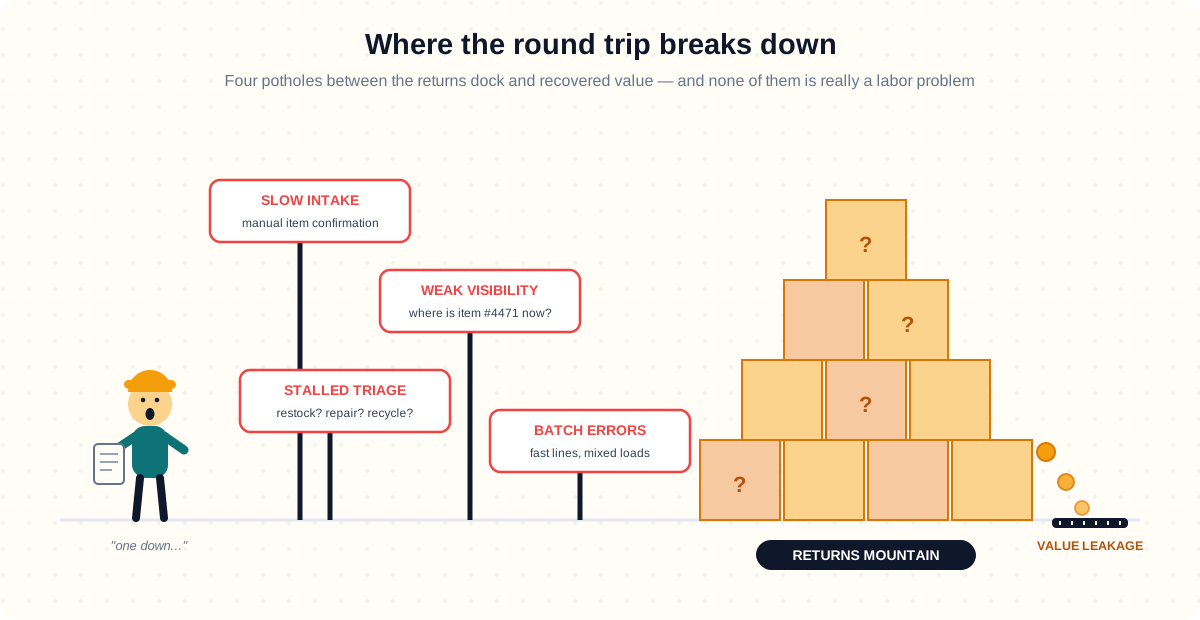
Most returns networks do not fail creatively. They trip over the same four potholes, usually in the same order:
- Slow intake and manual item confirmation
- Weak visibility into where a returned item is in the network
- Delays deciding whether the item should be restocked, repaired, liquidated or recycled
- Limited accuracy when large mixed batches are processed quickly
Read that list again and notice that none of it is really a staffing complaint. These are not just labor issues — they directly affect value recovery, deciding whether a returned item comes back as money or as landfill.
The Reverse Logistics Stack: 5 Decision Points Where RFID Wins
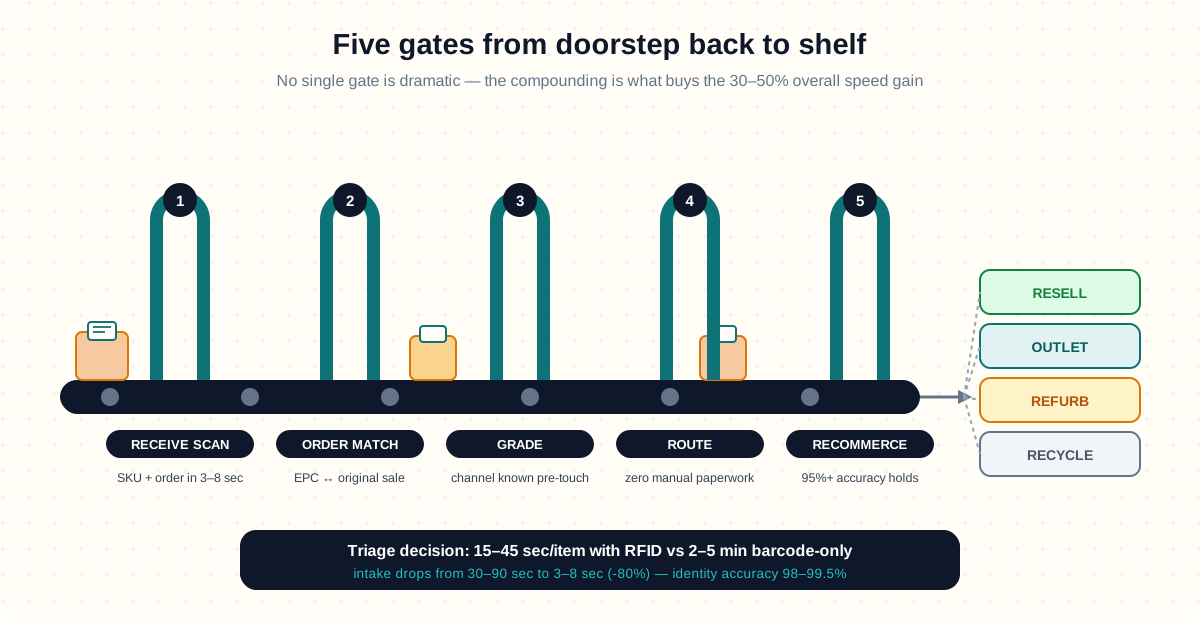
Returns processing isn’t one task — it’s a chain of five decision points, each where RFID-grade item identity reduces processing time and increases recovery value:
- Receive scan — UHF gate read at the receiving dock identifies the returned item’s SKU, original order, and price tier in seconds. Eliminates manual barcode lookup or visual SKU matching.
- Customer-order match — the returned tag’s EPC links to the original sale record automatically, validating receiptless returns and flagging fraud (item never sold here, multiple returns of same SKU).
- Grade decision — condition assessment workflow knows the item’s SKU + season + recommended channel (front-of-store / outlet / liquidation / recycle) before the operator even touches it.
- Route to next destination — RFID + WMS combination dispatches the item to grade-and-resell, refurb partner, recycle, or destruction with no manual paperwork.
- Recommerce / outlet preparation — items going to outlet channels carry the original RFID tag, which keeps inventory accuracy in the resale flow at the same 95%+ level as new inventory.
The cumulative effect across 5 decision points is what produces the substantial processing-speed gain reported by major retailers — no single step is dramatic, but the chain of small wins compounds.
Why RFID fits post-sale flows
Forward logistics is tidy: items march out in cartons, faces forward, barcodes aligned. Returns arrive as chaos in a polybag. That is why RFID fits post-sale flows so naturally — it identifies items fast, with far less dependence on the perfect line-of-sight handling that whatever came out of the customer’s trunk will not provide. If the item was already tagged upstream for retail inventory, the reverse-logistics side can benefit immediately. If it was not, some categories can still justify a targeted RFID layer for reusable packaging, warranty-sensitive items, premium goods or high-return products.
The payoff is sharpest when returned items need to clear multiple decision points in a short time — which, in returns, is essentially always.
Where retailers gain the most value
- Receipt confirmation: faster matching between returned item and order record
- Triage: quicker separation between resale, refurbishment, repair and recycle paths
- Network routing: better decisions about where the item should go next
- Resale readiness: cleaner visibility into item identity before recommerce or outlet channels
Returns Workflow Comparison: Barcode vs RFID
The cumulative impact of RFID on returns processing shows up most clearly in side-by-side workflow comparisons. Five operational metrics where item-level RFID measurably outperforms barcode-only returns flows:
| Metric | Barcode-only | Item-level RFID |
|---|---|---|
| Intake speed (per item) | 30–90 sec | 3–8 sec (-80%) |
| Item identity accuracy | 85–92% | 98–99.5% |
| Receiptless return validation | Manual judgment | Auto vs original sale record |
| Triage decision time | 2–5 min/item | 15–45 sec/item |
| Saleable recovery rate | Baseline | +15–25% lift |
The break-even for adding RFID to reverse logistics typically occurs at 5,000–10,000 returns per year per processing center. Below that volume, manual barcode workflows are still cheaper end-to-end. Above that, RFID’s labor savings + recovery uplift compound rapidly.
When RFID is easier to justify
RFID is easiest to justify where the returns pain is already expensive: high return volume, high unit value, or item-level RFID already bought and paid for at the point of sale. Apparel is the obvious first example — it ticks all three boxes without trying — but returns-heavy electronics accessories, premium goods, reusable transport items and branded packaging programs can also benefit.
The more expensive the uncertainty is, the easier the RFID case becomes.
Questions to answer before a pilot
- Is the item already tagged upstream, or would reverse logistics need its own tagging step?
- Which return decisions create the most delay or value leakage?
- Is the main goal speed, accuracy, loss reduction or resale recovery?
- Will the same item move across stores, DCs, repair centers and resale channels?
- Does the process need item identity only, or also packaging and container tracking?
Do not separate returns from retail inventory strategy
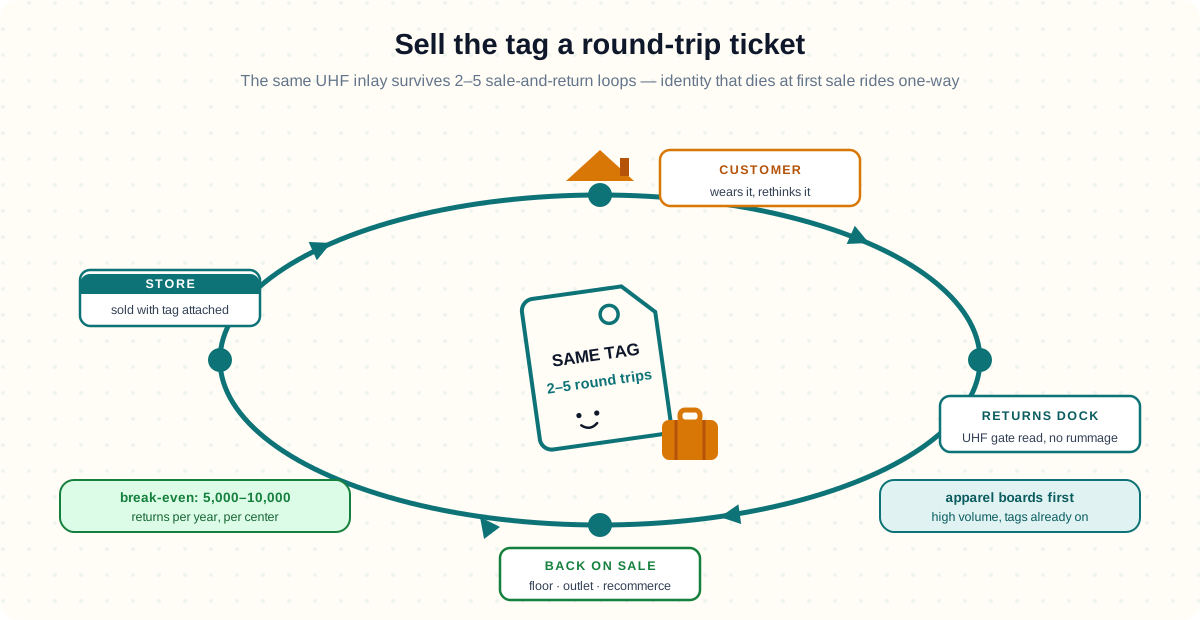
The biggest unforced error in this space is treating reverse logistics as a standalone RFID use case disconnected from the rest of the item journey. The best returns programs build on upstream retail tagging and downstream resale or circularity goals — one identity, the whole round trip. If the item identity dies after the first sale, every return arrives as a stranger, and the reverse network becomes slower and more manual than it needs to be.
A practical starting point
Start with one category where returns are both frequent and valuable enough to matter — a pilot in a category nobody returns proves nothing. Measure intake speed, location accuracy, routing time and recovery outcome before scaling. If you already run item-level RFID in stores, reverse logistics may be one of the fastest next places to extend ROI: the tags are bought, the readers exist, and the boxes are coming back whether you are ready or not.
Returns workflows to validate
An item-level tag can support a return only when it remains attached, readable and connected to order and disposition records. Treat retailer examples as hypotheses unless a direct published source confirms the complete return workflow.
Walmart Returns (US apparel + home)
Walmart's public RFID supplier guidance establishes category-specific tagging and packaging requirements. It does not substantiate a 30–50% returns-processing gain or prove the same tag is read through every returns channel. For a return-flow pilot, test whether the original tag remains attached and readable after sale, then measure time from intake to disposition.
Best Buy (US electronics returns)
Best Buy applies UHF RFID to high-value electronics including laptops, tablets, cameras, and gaming consoles. Returns processing combines RFID identity + serial number + order lookup for receiptless return validation, fraud detection, and routing to refurb (Geek Squad) or liquidation channels.
Return-flow pilot
Test whether the item-level tag remains attached and readable after sale, and whether its EPC can be linked to the order, SKU and disposition record. Compare intake time, fraud exceptions and resale routing with the current barcode process before projecting any labor or recovery benefit.
Apparel returns workflow
A serialized tag can support receipt matching, duplicate-return checks and resale routing when the retailer retains the item-level EPC in its order and inventory systems. Confirm the data link and exception process in a pilot; the tag alone does not detect fraud or decide disposition.
Final takeaway
Related retail RFID guides
Retail inventory guide • Labels vs hard tags • Supply chain RFID
Key Takeaways
- Workflow: customer return → receive scan (UHF gate) → grade decision (resell/refurb/recycle) → routing.
- Tag persistence: original UHF item tag must survive the return loop (typical 2–5 returns).
- ROI driver: faster return-to-resale cycle (30–50% reduction) + recovery lift (15–25% more saleable).
- Evidence: confirm a named retailer's returns workflow with a direct published source before using it as a benchmark.
- Integration: WMS + ERP need return-routing logic tied to EPC (resell SKU vs refurb SKU).
⚠️ Common pitfall
Removing or destroying the UHF tag at first sale defeats reverse-logistics RFID. Train sales associates to leave the tag intact (or ensure it is hidden inside the product) so returns can flow back through the same RFID infrastructure.
Returns & Reverse Logistics RFID FAQ
How does RFID handle receiptless returns?
RFID transforms receiptless returns from a manual fraud-risk decision into an automated lookup: the returned tag’s EPC links directly to the original sale record, validating that the item was sold at this retailer, when, and at what price. Eliminates the “guess price” problem that plagues receiptless returns and cuts fraud-driven loss by an estimated 20–40% per industry reports.
Will the original RFID tag still work after the customer’s use?
Yes for typical apparel, home goods, and electronics — the chip’s EEPROM is rated for 100,000+ cycles, so a single sale-and-return cycle is trivial. Hangtag and inlay survive 2–5 sale-return cycles in normal use. The failure modes are mechanical: hangtags torn off, inlays peeled and discarded, items washed before return.
What’s the best chip for returnable transport packaging?
For returnable plastic totes (RPCs), pallets, and IBC containers, use on-metal UHF hard tags with NXP UCODE 9 or Impinj M730 chips encoded with GS1 GIAI-96 (Global Individual Asset Identifier, distinct from product SGTIN). These survive 5–10+ years of outdoor + wash cycles. See our anti-metal RFID guide.
What’s the cost per return processed with RFID vs barcode?
Industry estimates (Auburn RFID Lab) put manual barcode returns processing at $5–$15 per item in labor + sorting + routing. RFID-equipped returns drops to $2–$6 per item through automated identity, faster triage, and reduced fraud loss. The 60–75% per-item reduction is what underwrites the RFID infrastructure investment.
How does RFID help reduce returns fraud?
Three fraud patterns RFID flags automatically: (1) wardrobing (item worn then returned) — tag history shows the item left store, was sold, and now returns within wear-window; (2) cross-store fraud — tag was sold at Store A but being returned at Store B without authorization; (3) multiple returns of same SKU by same customer — the EPC log triggers fraud-detection alerts. Without RFID, all three require manual review.
Sources
- McKinsey & Company — "Returns at retail" research (2024). mckinsey.com/retail
- National Retail Federation (NRF) — Annual Returns Report. nrf.com/research
- NRF Rev — Reverse Logistics conference. nrfrev.com
- Auburn University RFID Lab — Returns workflow case studies. rfid.auburn.edu
- ISO/IEC 18000-63:2015 — UHF RFID air interface (Class 1 Gen 2). iso.org/standard/63675.html
- GS1 EPC Tag Data Standard 2.1 (2023). ref.gs1.org/standards/tds
- IDTechEx — "RFID Forecasts, Players and Opportunities 2024-2034" (returns segment). idtechex.com
RFID will not solve returns alone, but it makes item identity far more usable where value is won or lost. RFIDAK supports RFID labels and sampling for post-sale tracking programs. Contact us for reverse-logistics tag guidance.
Map the right operational tracking setup
Best for airports, retailers and operations teams that already understand the use case and now need the right labels, readers and checkpoint flow.
Comparison Pages
Compare the closest alternatives before you request samples
Open one of these if the article clarified the topic but the team still needs a cleaner format, chip or frequency decision.
Quick FAQ
Questions buyers often ask after reading this guide
Does RFID only help when the product was tagged before the sale?
Source-tagged items are the easiest starting point because the same UHF Gen2v2 inlay that powered forward logistics (apparel hangtag, carton label, pallet tag) carries into returns at near-zero incremental cost. But RFID also justifies tagging at the returns dock for reusable packaging, high-value items, or liquidation lots where quick grading and routing decisions drive margin recovery. Most mature retail returns operations run hybrid: source-tagged items plus additional returns-only tagging for specific categories.
How much can RFID improve returns processing speed?
There is no transferable speed or accuracy percentage for returns. Test whether the original item tag is still present and readable, whether its identifier is linked to an order and SKU, and how exceptions are handled. Compare matched return types before and after the pilot, including manual review time and disposition accuracy.
What are the biggest returns-driven costs retailers face?
Returns can add inbound transport, receiving labor, identity checks, inspection, restocking, markdown, resale-routing and disposal costs. The mix varies by product category and return policy. Record cost per return and recovery value in the existing process before testing whether serialized RFID reduces any of those steps.
Which retailers have deployed RFID in returns?
Do not infer a retailer’s returns workflow from an item-level inventory tagging announcement. Request a dated primary case study that describes where the original tag is read after sale, which order or item record it resolves to, and what outcome was measured. For your own program, test that linkage on actual returned items before using any named retailer as a benchmark.
What metrics should retailers measure in an RFID returns pilot?
Track identification rate, time from receipt to disposition, manual-review rate, mismatched-order exceptions, routing accuracy, recovery value and full system cost. Compare the same product mix and observation window against the existing process; agree acceptable error and exception thresholds before the pilot.
How does RFID handle returns for items with multiple components?
A component-level RFID plan needs a defined parent-item relationship and an expected component list in the returns system. Read each tagged part at intake, compare the result with the manifest, and route missing or unreadable items to manual review. Not every component needs its own tag; decide from item value, packaging and the verification task.
Can RFID help with resale routing decisions?
RFID can retrieve an item identifier for a returns system that already holds order, condition and policy data. The system still needs inspection and explicit rules before routing an item to resale, refurbishment, liquidation or disposal. Measure decision accuracy and recovered value in a pilot instead of assuming a fixed uplift.
What is the minimum order for returns-oriented RFID tags?
RFIDAK's published standard tags-and-labels MOQ baseline is 1,000 pieces. Confirm the exact chip, antenna, construction, print, encoding and quantity per design in a written quote. Free stock samples (up to 5 pieces) — buyer covers DHL/FedEx freight ($25–60), refunded 1:1 against the first production order over $500. Larger evaluation lots, custom samples, production timing and delivery are agreed separately for the selected configuration.
Author
RFIDAK RFID Editorial Team
RFID supply editorial team
RFIDAK publishes practical RFID guides to help buyers compare chips, product formats, sampling plans and sourcing options before production.