RFID Inventory Pilot 2026: 90-Day Setup Guide for SMEs
Use a 90-day planning framework to test RFID tags, readers and system integration in a representative inventory workflow, then judge results against measured baseline KPIs.
A 90-day RFID pilot is a planning framework, not a guaranteed deployment time or payback period. Start with a measured baseline, validate the tag and reader on representative goods, integrate only the required events, then compare the completed workflow with the current process.
Phase 1: scope and physical testing
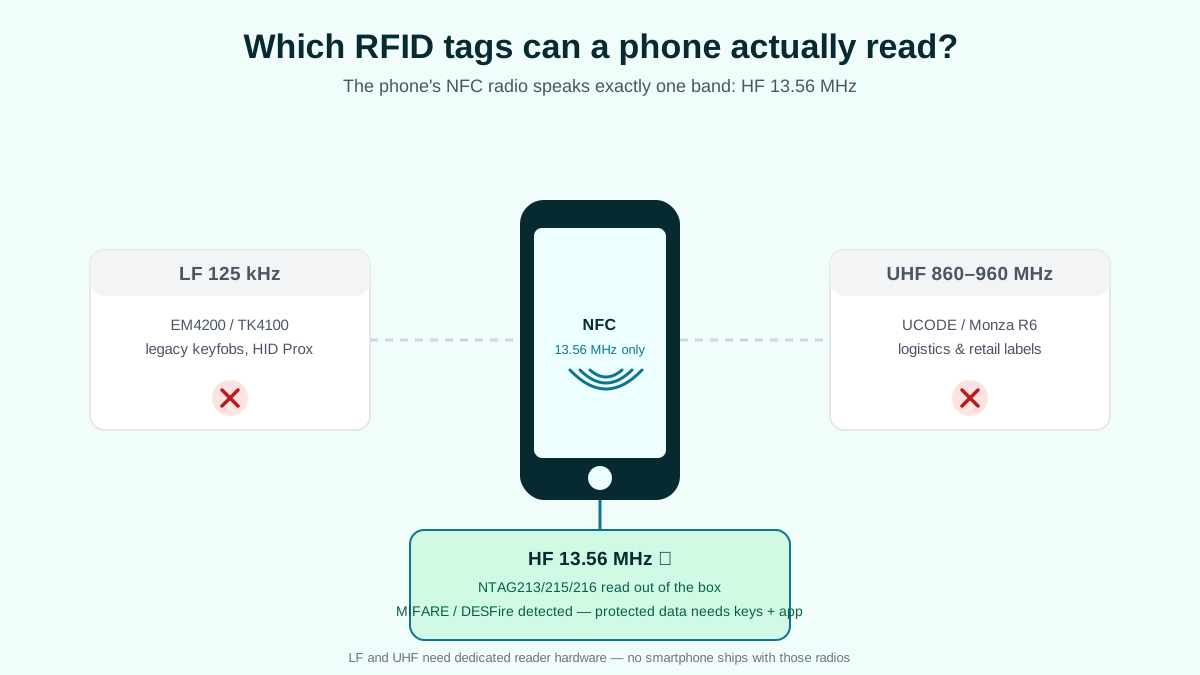
Pick one site and a product or asset group that includes the difficult cases: metal, liquid, dense packing, fast movement or damaged labels. Document today's count time, accuracy, unresolved exceptions and labor steps. Choose a UHF or HF approach only after confirming the required read point and software identifiers.
Obtain current quotes for the proposed tag, reader, antenna and software work. A handheld count and a dock portal have different infrastructure and costs. Test finished tags on actual products before ordering the pilot lot.
Phase 2: encoding and integration
Agree the item identifier and source of truth. For EPC workflows, use the applicable GS1 Tag Data Standard where required by the trading partner. Map accepted reads to the inventory system, and define duplicate, no-read and reassignment handling. Test commissioning, returns and damaged-tag replacement.
Phase 3: controlled live run
Run the same sample inventory through the current barcode or manual workflow and the proposed RFID workflow. Use a blind physical count to evaluate both. Record each missed tag, false association, manual exception, reader outage and rework task. Expand only after the planned read points and software events meet agreed acceptance criteria.
Pilot success criteria
- Capture: proportion of expected tagged items identified at each read point, with missed-read causes.
- Inventory accuracy: reconciled count compared with the blind physical count, not just raw reader events.
- Process time: staff time for tagging, scanning, exception resolution and system updates.
- Full cost: tag, reader, integration, training and maintenance costs against measured operational changes.
Build a site-specific budget
Do not use a generic hardware price or ROI percentage as the approval case. Request current quotes for the chosen reader configuration and finished tags, plus integration and installation effort. State the pilot quantity, success threshold and rollout decision before purchasing equipment.
Four pilot scopes to consider
- Retail: reconcile shelf and backroom counts and item exceptions.
- Warehouse: test case or pallet capture at one door and one handheld cycle count.
- Returnable assets: track issue, return and missing-asset exceptions.
- Laundry: test the selected textile tag against the actual wash process and count points.
RFID pilot FAQ
Will the pilot always finish in 90 days?
No. Reader installation, software access, procurement and approvals vary. Use the phases as checkpoints and set dates with the site team.
What proves ROI?
Calculate payback from observed time and loss changes at the site and the quoted complete-system cost. If capture or exception handling is weak, adjust the design before extrapolating.
Ask RFIDAK for test tags after sharing the asset, mounting material, reader location, quantity and data requirements.
Need help turning this guidance into a product shortlist?
Use this next step when the article has narrowed the direction and you now need help choosing chips, formats, samples or the closest product family.
Quick FAQ
Questions buyers often ask after reading this guide
What metrics prove an RFID pilot succeeded?
Decide them before day one, or the pilot proves whatever the loudest stakeholder wants. The dependable set: read rate at each defined point versus the barcode baseline, cycle-count time delta, inventory-accuracy delta on the pilot SKUs, exception rate (tags unreadable, mis-applied, damaged), and labor minutes per process step. Ninety days is enough to move all five if the baseline was measured in week zero.
How many tags should I order for a pilot?
Size the pilot from the number of real items, read points, conditions and repeat trials needed to meet agreed acceptance criteria. Compare more than one production-representative inlay where packaging or region varies. Request a quote for evaluation quantities, stock-sample terms and delivery under the published sample policy; do not assume a universal free bulk-sample allowance.
How do I scale from a successful pilot to rollout?
Convert the pilot learnings into a locked specification - chip, tag placement, encoding scheme, application method - before negotiating volume. Then move to a framework agreement with staged releases so pricing reflects annual volume while deliveries match site-by-site rollout, and phase deployment so each new site inherits the pilot playbook instead of re-learning it.
What's the typical ROI horizon for an RFID inventory pilot?
There is no transferable ROI percentage. Record the existing task time, error rate, inventory or asset accuracy, waste or loss, and recovery work. Run a representative pilot, measure the same outcomes, and calculate net benefit after tag, reader, software, integration and ongoing costs.
Can I run a pilot without enterprise IT integration?
A limited pilot can measure read performance and workflow time with a temporary data capture method. Before rollout, plan how valid reads, duplicates, exceptions and item identifiers will enter the production system; confirm the capabilities of any chosen software rather than assuming a vendor bundle.
How many SKUs should the pilot cover?
Select a representative set that spans materials, packaging, read points and operating conditions. Agree the sample size and pass criteria with the operations team before testing; no universal SKU count is statistically sufficient for every site.
What's the most common pilot failure mode?
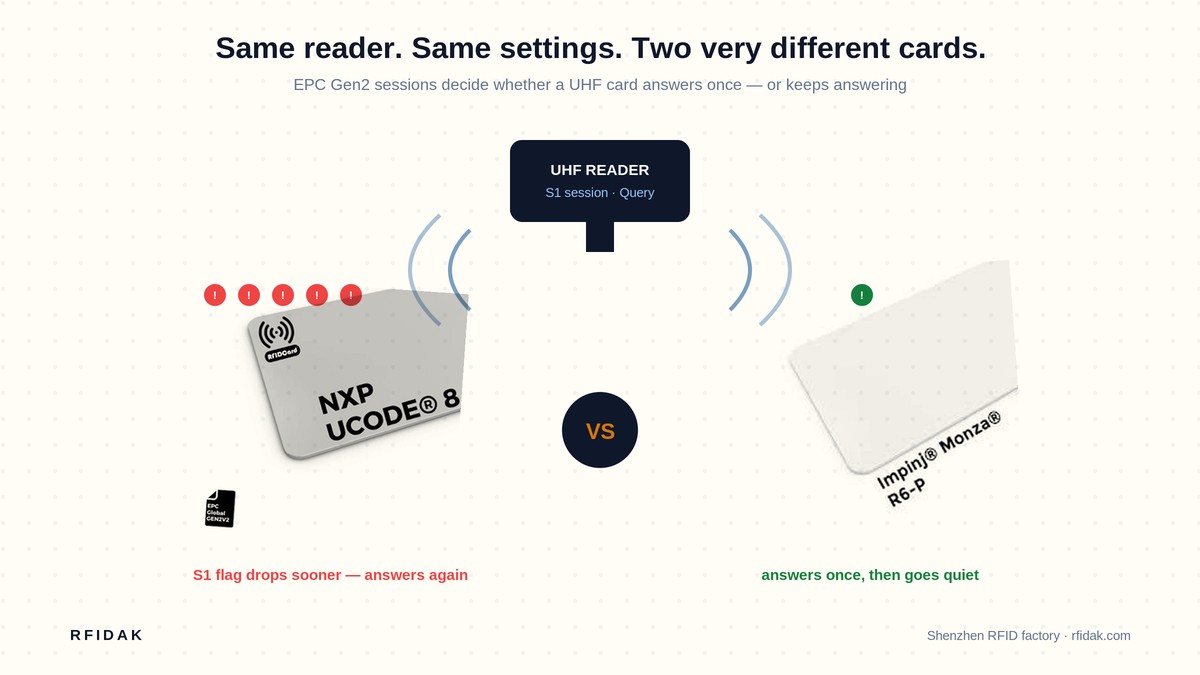
Common failures include poor inlay placement, nearby metal or liquid, reader tuning, inconsistent encoding and missing exception handling. Test candidate tags on the actual items and readers, then document which condition caused each miss before revising the design.
How do I get C-suite buy-in for the pilot budget?
Present the baseline process cost, a scoped pilot quote and measurable acceptance criteria. Report observed read rate, labor time, inventory accuracy, exceptions and full rollout cost so the decision rests on the site’s own evidence.
Author
RFIDAK RFID Editorial Team
RFID supply editorial team
RFIDAK publishes practical RFID guides to help buyers compare chips, product formats, sampling plans and sourcing options before production.