Anti-Metal RFID Tags 2026: On-Metal Construction, Use Cases & Selection
Learn why standard RFID tags struggle on metal and how buyers can choose anti-metal tags, high-temperature tags and compact on-metal designs for real-world asset tracking. Covers ceramic, PCB and foam-spacer options with read-range recovery expectations.
Quick Answer
Standard UHF inlays can detune when mounted directly on metal. Compare purpose-built on-metal labels or hard tags on the actual asset with the intended reader, distance, orientation and attachment method. Price and environmental ratings depend on the finished model.
Why standard RFID tags fail on metal
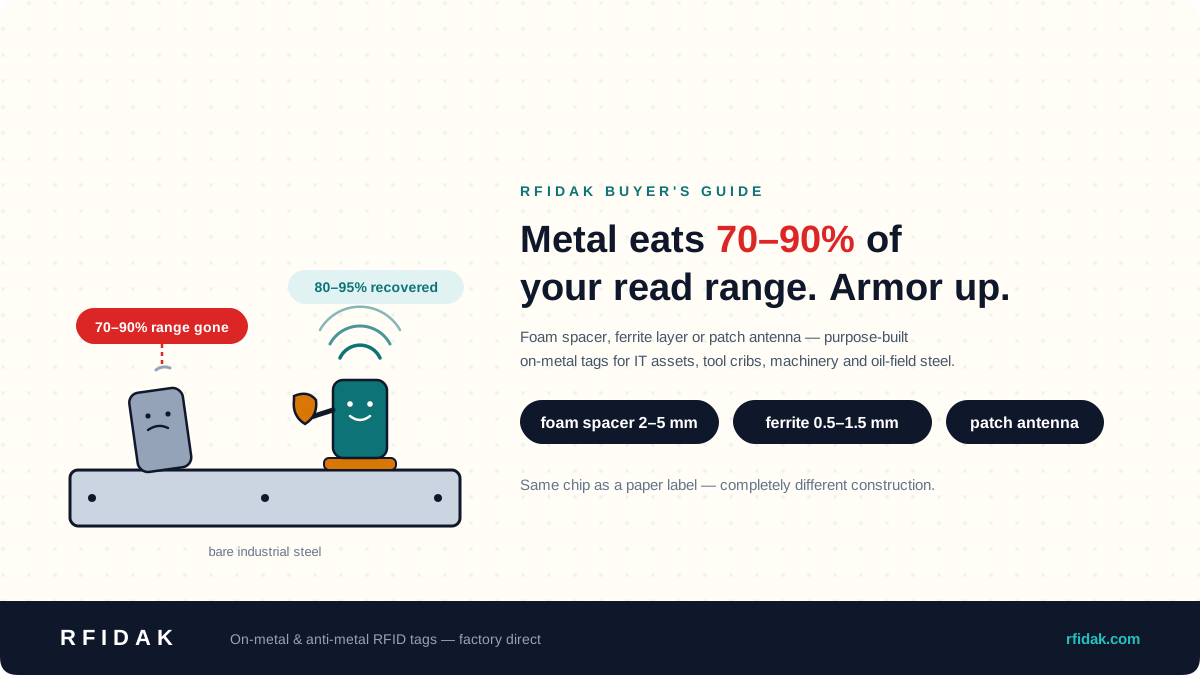
Metal does not negotiate with RFID antennas — it repossesses them. A standard tag that reads happily on cardboard, plastic or paper may lose range or fail outright the moment it is mounted on a metal surface. That is exactly why on-metal and anti-metal tag designs exist: they use spacing, shielding or specialized construction to keep the antenna breathing next to conductive material.
For buyers, the useful question is therefore not 'which chip do I need?' but 'which construction works on this asset, in this environment, at this read distance?' The chip is a passenger; the construction does the driving.

The Physics: Why Metal Detunes a Standard UHF Antenna
Metal changes the antenna environment and can reduce useful read distance. The result is not a universal percentage: inlay geometry, spacer, asset size, reader and orientation all matter. Test the proposed construction on production-representative assets.
- Ground-plane effect (the mirror trap) — metal acts as an electrical ground plane that fundamentally changes the antenna’s radiation pattern. A standard half-wave dipole tuned for free-space gets compressed against its mirror image, resulting in destructive interference at the chip feed point.
- Antenna detuning (the station drifter) — the proximity of conductive metal shifts the antenna’s resonance frequency away from 915 MHz (US) / 868 MHz (EU). The chip and antenna are now mismatched; energy that should reach the chip is reflected back as standing waves.
- Eddy-current absorption (the heat tax) — the RF field induces eddy currents in the metal surface that absorb energy as heat. Even if the antenna stays tuned, available power at the chip drops sharply.
Anti-metal tag designs answer with three engineering arrests — one per thief:
- Foam spacer (the polite distance) — physically separate the antenna from metal by 2–5 mm. Cheap, easy, slight thickness penalty. Used in printable on-metal labels.
- Ferrite layer (the bodyguard in between) — magnetic ferrite material between antenna and metal absorbs the eddy currents and decouples the antenna from the metal surface. Thinner than foam but more expensive.
- Folded / patch antenna (the judo move) — antenna designed from scratch to USE the metal surface as part of its radiating structure (similar to PCB antennas in mobile phones). Most efficient, hardest to manufacture, used in premium hard tags.
Common anti-metal RFID formats
Printable on-metal labels
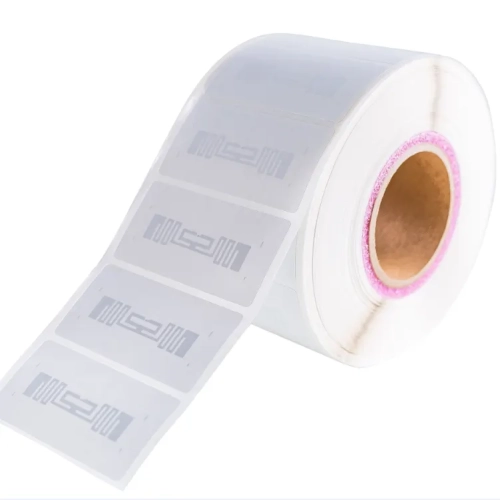
The all-rounder. Printable on-metal labels deliver visible print plus RFID in a relatively thin format — the go-to for IT assets, electronics, tool cribs and serialized equipment where barcode plus RFID on the same label saves everyone a second sticker.
Hard anti-metal tags
The linebacker. Rigid hard tags take machinery, containers, returnable assets and outdoor duty in stride, and they mount however the asset demands — screws, rivets, industrial adhesive or cable ties.
High-temperature or industrial tags
The fireproof one. When the asset sees painting, autoclave-style heat, curing lines or aggressive industrial processes, standard printable labels politely resign. High-temperature anti-metal tags are designed for exactly these harsher workflows.
PCB and ceramic mini tags
The pocket-sized specialists. Compact on-metal tags earn their keep where mounting real estate is scarce — tools, weapon racks, medical trays, laptops, cabinets and smaller metal assemblies.
Anti-Metal Tag Construction Comparison Table
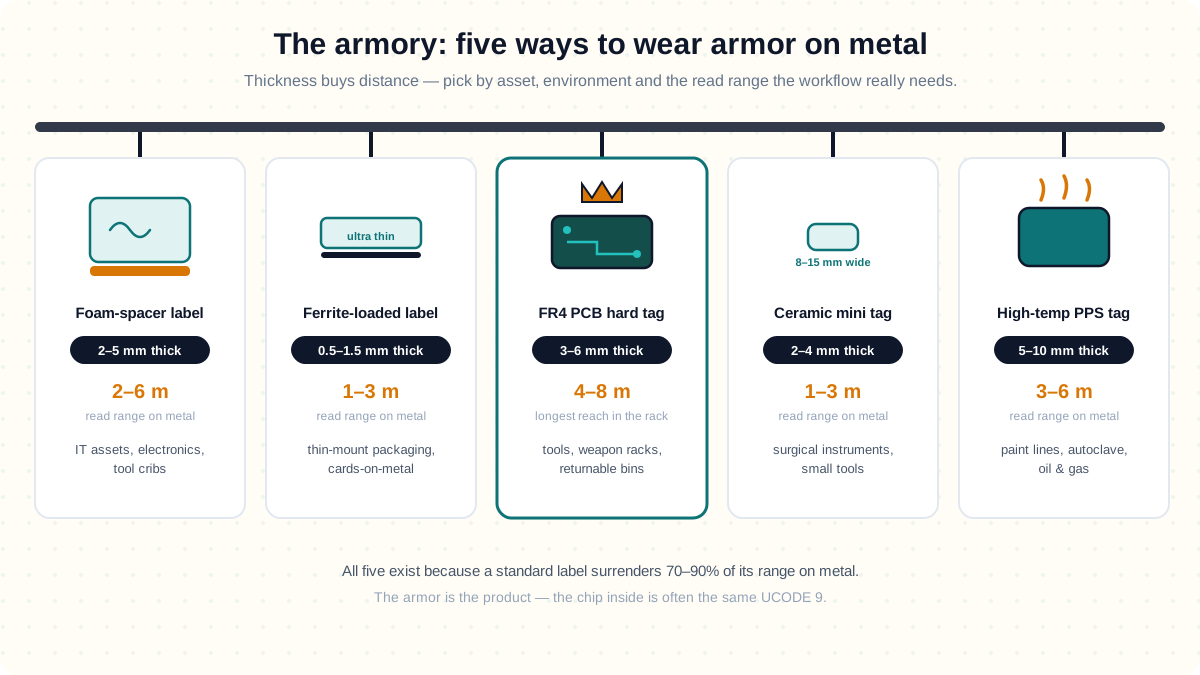
Here is the armory inventory sheet — five constructions trading off thickness, performance, mounting flexibility, and cost:
| Construction | Thickness | Read Range on Metal | Best For |
|---|---|---|---|
| Foam-spacer label | 2–5 mm | 2–6 m | IT assets, electronics, tool cribs |
| Ferrite-loaded label | 0.5–1.5 mm | 1–3 m | Thin-mount packaging, cards-on-metal |
| FR4 PCB hard tag | 3–6 mm | 4–8 m | Tools, weapon racks, returnable bins |
| Ceramic mini tag | 2–4 mm (8-15 mm width) | 1–3 m | Surgical instruments, small tools |
| High-temp PPS hard tag | 5–10 mm | 3–6 m | Paint lines, autoclave, oil & gas |
The right questions to ask before quoting
- What is the asset made of, and is the mounting surface flat or curved?
- How much space is available for the tag?
- What read distance is required in the real workflow?
- Will the asset be used indoors, outdoors or in a high-temperature process?
- Is the tag permanent, removable or reusable?
Send those five answers with the inquiry and the shortlist comes back sharper on the first pass — nobody quotes well against a mystery asset.
Do you need UHF, HF or NFC on metal?
UHF is usually the first choice for industrial asset tracking, inventory audits and bulk reads — the long-range workhorse. HF or NFC earn their place when the interaction is close range, intentional or smartphone-assisted. But metal treats every frequency differently, so do not assume the same tag style will work across protocols; physics does not honor brand loyalty.
Mounting method changes performance
Adhesive, screw, rivet, bracket and embedded mounting can all change the final read result — the tag notices exactly how it is being held. A hard anti-metal tag mounted with a spacer or standoff may behave differently than the same tag pressed directly onto a curved steel tool body. Field test with the final mounting method, not a lookalike.
How to evaluate anti-metal samples
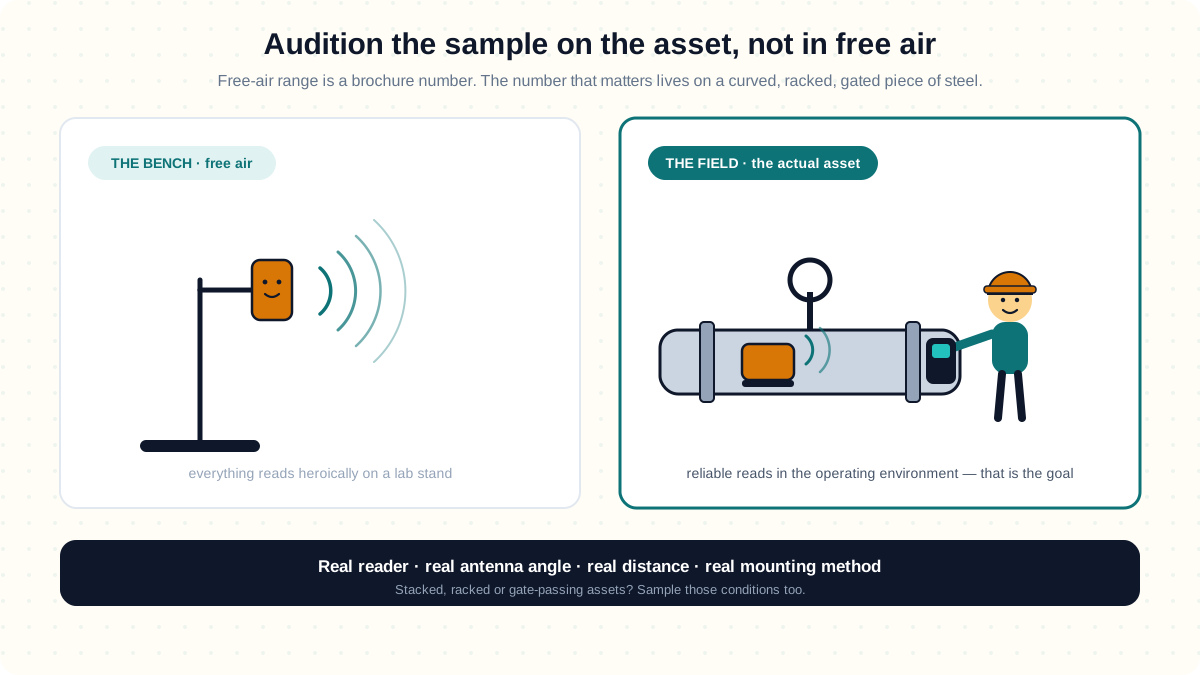
Read the tag on the actual asset, not only in free air — the bench is where tags audition, the asset is where they hold the job. Test the real reader, antenna angle and expected read distance. If assets are stacked, stored in racks or moved through a gate, sample those conditions as well. The goal is to confirm reliable reads in the operating environment, not best-case bench heroics.
When a label is not enough
Thin printable labels are attractive for cost and appearance, but attraction is not endurance. If the asset is handled roughly, exposed to weather or cleaned aggressively, a rigid hard tag may last longer and shrink the line item called replacement work.
Illustrative on-metal evaluations
For tools, test a mechanically attached tag and the real check-in and loss-control process. For valves or outdoor equipment, review the exact tag's temperature, chemical and ingress ratings, mounting method and safety requirements. For hospital instruments, use a facility-approved, validated sterilization and attachment protocol. For server racks, measure read reliability on the installed metal asset. These are pilot scenarios rather than claims about named operators, universal tag lifetimes or guaranteed savings.
Final takeaway
RFIDAK anti-metal tag options
Printable on-metal tags • Ceramic tags • PCB tags • High-temperature tags
Key Takeaways
- Read range: a standard inlay may detune on metal; measure a purpose-built on-metal candidate at the actual read point.
- Printable on-metal labels: evaluate barcode plus RFID print, adhesive and read performance on IT assets or tools; request a model-specific quote.
- Hard on-metal tags: choose attachment and enclosure for machinery or returnable assets, then test durability and read range.
- High-temperature on-metal tags: ask for the finished model's rated exposure and test the actual heating, cleaning and cooling cycle.
- Compact PCB or ceramic tags: confirm available footprint, attachment and read distance on the target asset before ordering.
⚠️ Common pitfall
Specifying “RFID label” for a metal-asset project without on-metal construction is the #1 procurement mistake. Always declare the mounting surface (metal, plastic, fabric, glass) in the RFQ — on-metal is a separate construction, not just a different chip.
Anti-Metal RFID FAQ
Can I just add a foam piece behind a regular RFID tag?
A spacer may improve a standard inlay on metal, but the useful distance depends on antenna geometry, metal size, spacer material and reader position. Compare a purpose-built on-metal sample and any spaced inlay on the real asset before approving either construction.
How thick does the spacer need to be?
There is no universal foam thickness for UHF tags on metal. Follow the selected inlay or finished-tag maker's mounting guidance, then test candidate spacers with the actual metal, reader, antenna and required read distance.
Will the same tag work on stainless steel and aluminum equally?
Mostly yes, with caveats. Stainless steel and aluminum behave similarly in the UHF band — both highly conductive. Differences appear with: (a) thinner aluminum sheet (slightly worse coupling), (b) brass or copper alloys (similar to mild steel), (c) magnetic stainless grades (slightly better with ferrite-loaded designs). Test on the specific alloy if read range is marginal.
What about outdoor weatherproof requirements?
For outdoor use, request the exact finished model's ingress, UV, temperature and attachment evidence. For marine or chemical exposure, specify the actual materials and cleaning conditions; a generic enclosure material does not establish service life.
What is the smallest on-metal RFID tag size?
Small on-metal tags are available, but read distance falls with antenna area and depends on mounting and reader setup. Specify the available footprint and required read point, then test the smallest candidate on the real asset.
Sources
- ISO/IEC 18000-63:2015 — UHF RFID air interface (Class 1 Gen 2). iso.org/standard/63675.html
- Confidex — On-metal tag technical whitepaper. confidex.com
- HID Global — IronTag (anti-metal) product datasheet. hidglobal.com
- IEC 60068 — Environmental testing standards. iec.ch
- NXP UCODE 9 — UHF chip datasheet (typical anti-metal chip). nxp.com/UCODE-9
- 3M — Industrial-grade adhesive technical data. 3m.com
- IDTechEx — "RFID Forecasts" (asset tracking + on-metal segment). idtechex.com
Anti-metal RFID projects work best when buyers match the tag enclosure, mounting method and read workflow to the asset — armor chosen for the battle, not the brochure. See also our RFID labels vs hard tags guide. A good sample test on the real asset is still the fastest way to narrow the right choice. Contact RFIDAK for samples.
Need help turning this guidance into a product shortlist?
Use this next step when the article has narrowed the direction and you now need help choosing chips, formats, samples or the closest product family.
Comparison Pages
Compare the closest alternatives before you request samples
Open one of these if the article clarified the topic but the team still needs a cleaner format, chip or frequency decision.
Quick FAQ
Questions buyers often ask after reading this guide
Why does RFID not work well on metal?
Metal absorbs the near-field energy that a passive UHF antenna needs to power its chip. When a standard UHF Gen2v2 tag sits flush against steel, aluminum or copper, read range drops 60-90%: from 8 meters in free air to under 30 cm on metal, and sometimes to zero. Dedicated on-metal tag constructions solve this with a foam, ceramic or PCB offset of 3-10 mm plus specialized antenna geometry tuned for a conductive ground plane. Standard tags and on-metal tags use the same chip; the difference is the antenna and substrate.
What is the best anti-metal RFID tag for industrial assets?
Choose a finished on-metal label or hard tag based on the asset surface, size, mounting method, reader region, heat and chemical exposure, and required read point. Ask for model-specific test data and quote, then validate samples on the real asset. Do not infer an application fit or price from the chip alone.
How far can an on-metal UHF RFID tag read?
Measure the finished tag on the actual metal asset at the intended antenna and reader settings. Range varies with tag size, orientation, curvature, mounting method and regional power; free-air results and generic percentage reductions do not establish field performance.
What on-metal RFID tag is best for autoclave or sterilization?
Select only a finished tag whose manufacturer documents the exact temperature, pressure, cycle time, chemical exposure and mounting method required by the process. Validate repeated cycles and post-process reads on the actual assembly. A ceramic or PPS material name alone is not a sterilization rating or medical-device approval.
Can I use NFC on metal?
Yes, with a finished NFC construction designed for metal, often using ferrite or another isolation layer. Verify the chosen phone models, placement, metal surface and read reliability with samples; quote the complete label rather than a generic chip price.
How do I mount an anti-metal RFID tag?
Choose adhesive, fastener, tie, bracket or recessing for the asset and duty cycle. Confirm surface preparation, attachment strength, safety and any warranty implications, then measure the finished tag in the installed position.
Which chip should I specify for on-metal UHF RFID?
Select a finished on-metal inlay or hard tag rather than choosing by chip family alone. The antenna, spacer or substrate, mounting position and regional reader setup determine whether it works on a specific metal asset. Compare candidate constructions on the actual item and request chip, inlay model and test evidence in the quote.
What is the minimum order for anti-metal RFID tags?
RFIDAK's published standard tags-and-labels MOQ baseline is 1,000 pieces. Confirm the exact chip, antenna, construction, print, encoding and quantity per design in a written quote. Free stock samples (up to 5 pieces) — buyer covers DHL/FedEx freight ($25–60), refunded 1:1 against the first production order over $500. Larger evaluation lots, custom samples, production timing and delivery are agreed separately for the selected configuration.
Author
RFIDAK RFID Editorial Team
RFID supply editorial team
RFIDAK publishes practical RFID guides to help buyers compare chips, product formats, sampling plans and sourcing options before production.