RFID Pricing Guide 2026: Cost Breakdown by Chip, Volume & Form Factor
Compare RFID quotes using the exact chip, finished tag, encoding, quantity and delivery basis. This guide covers cost drivers, system costs and the checks needed before buying.
Quick Answer
Compare RFID quotes for the same finished specification. Chip and availability, antenna and form factor, printing, encoding, inspection, quantity and delivery terms all affect price. A current written quote is more useful than a generic per-tag range or a claimed volume discount.
The main pricing drivers
- Chip and protocol. Confirm the exact approved chip article, memory, security features and reader compatibility. A basic NDEF URL tag, a UHF inventory label and an authenticated access card are different products.
- Antenna, substrate and enclosure. Size, metal mounting, wash exposure, adhesives and ingress requirements change the finished construction. Test the selected format on the real asset.
- Services. Include artwork, print, UID or EPC capture, encoding, serialization, inspection, packaging and any tooling as separate quoted items.
- Volume and delivery. Ask for price breaks at realistic quantities, then compare lead time, freight, destination charges and the incoterm. A lower unit price can still produce a higher delivered cost.
Chip cost is not a fixed share of every RFID item. In a simple inlay it can be a prominent component; in a custom molded or printed product, materials and processing may dominate. Ask for the actual specification and quote rather than applying a universal percentage.
Confirm the chip before comparing prices
Provide the reader or system model, required memory and encoding scheme, security workflow and operating environment. For secure access, the system owner should approve the exact credential, keys and application. For retail UHF, check any retailer-specific inlay, packaging and serialization requirement. A cheaper substitute is useful only when it passes the same technical and procurement acceptance tests.
Chip availability and article status can change. Request the manufacturer part number and proposed alternative, if any, on the written quote; do not assume two chips with the same frequency are interchangeable.
Compare product families on the same basis
| Product | Specify before quoting | Pilot check |
|---|---|---|
| RFID card | Chip article, card material, print, encoding, security application | Installed reader, encoder and access software |
| UHF label | Inlay, dimensions, adhesive, printer, EPC scheme | Read capture on actual packaging and at the intended read point |
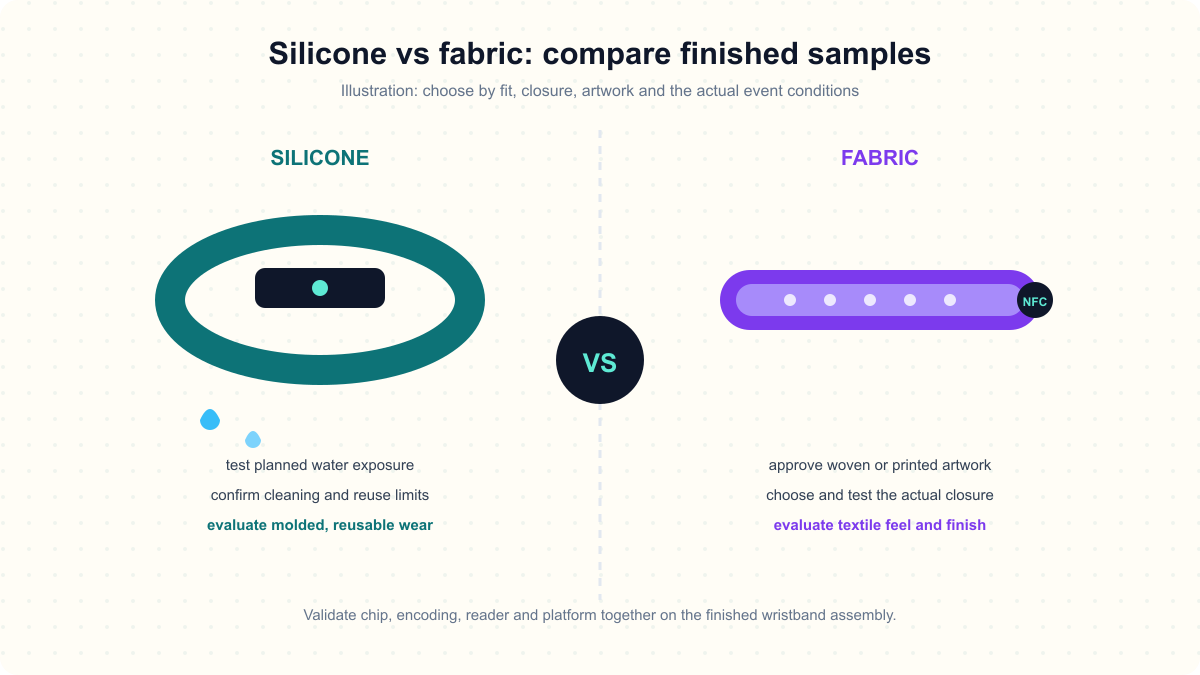
| Wristband | Chip, band material, closure, artwork, numbering | Finished-band fit, reader compatibility and exposure |
| Industrial hard tag | Mounting surface, enclosure, attachment, ingress and temperature evidence | Read range and durability on the actual asset |
Tag price versus total system cost
A tag quotation is only one line of the project. Include readers and antennas, software integration, data reconciliation, training, replacement tags and ongoing maintenance. The business case should compare the current workflow with a measured pilot of the proposed system; another site's savings or equipment budget will not predict yours.
Costs to request separately
- Sample units, artwork proofing and any new mold or die.
- Encoding, serialization, UID/EPC export, verification and packaging.
- Freight, insurance, duties, taxes and import handling under the named incoterm.
- Reader hardware, installation, software changes and training.
For cross-border orders, distinguish an ex-works or FOB quotation from a delivered quotation. The ICC Incoterms guidance explains how a named term allocates delivery tasks and risk; request the exact destination and term in the offer.
How to compare volume tiers
Request written prices for your expected order quantity and at least one plausible higher tier using the same chip, construction, inspection and delivery basis. Setup costs may spread over more units, but no fixed percentage discount applies across all products or volumes. Check any tooling ownership, chip allocation, minimum order and validity period before treating a tier as available.
Quality evidence to request
Agree an inspection plan before production: chip authenticity and article status, encoding verification, visual acceptance criteria, sample size, defective-unit handling and any application-specific read or exposure test. Ask what evidence the supplier can provide for the selected finished product. A low unit quote without a comparable acceptance plan is not a like-for-like offer.
Build a project budget
- Multiply the quoted finished-unit price by the planned quantity, including realistic spares.
- Add quoted one-time setup, sample, encoding and inspection charges.
- Add the reader, software and implementation proposal for the same pilot scope.
- Add freight and destination costs under the stated delivery term.
- Keep a clearly labeled contingency based on your own schedule and operational risk.
Record the quote date, currency, validity period, chip article and delivery term so later offers can be compared on equal terms.
RFID pricing FAQ
Why do RFID quotes differ?
Two offers may use different chip articles, antennas, construction, printing, encoding, inspection or delivery terms. Ask suppliers to list those details before comparing unit prices.
How do I check whether a quote is competitive?
Send the same brief and acceptance criteria to more than one supplier. Compare the full delivered cost, test evidence, lead time and any substitute-chip conditions, not only the tag price.
Are samples free or priced like a production order?
Sample availability, charges and freight depend on stock and customization. Ask for the current terms in writing; see our sample and validation guide.
How much does the unit price fall at high volume?
There is no reliable universal discount. Request current tier quotes for the same specification and check tooling, inspection and delivery terms at each tier.
How long does a quote take?
Timing depends on how complete the technical brief is and whether the chip, artwork, mold or sample needs confirmation. Include the required delivery date and ask the supplier for a written response schedule.
For a configuration-specific quote, contact RFIDAK with the chip or reader model, tag form, mounting or usage environment, artwork, encoding requirement, quantity, destination and required arrival date.
Need help turning this guidance into a product shortlist?
Use this next step when the article has narrowed the direction and you now need help choosing chips, formats, samples or the closest product family.
Quick FAQ
Questions buyers often ask after reading this guide
Why do quotes for the same RFID product differ so much between suppliers?
Quotes may include different chips, converted constructions, print, encoding, QC, packaging, freight and tax terms. Request the same specification and acceptance criteria from each supplier, then compare itemized landed cost and lead time.
Do RFID prices stay fixed after I lock in a supplier?
Price validity depends on the quoted chip, materials, volume, currency and agreed contract terms. Ask each supplier to state validity, release quantities and any adjustment formula in writing; do not assume a fixed market cycle.
What hidden costs should I budget beyond the unit price?
Budget artwork and tooling where needed, encoding and verification, packaging, freight, insurance, import duties, tax and any software or reader work. Use an itemized quote and the importer’s actual tariff classification to calculate landed cost rather than a universal percentage of FOB price.
Why won't suppliers give a public price list?
Custom RFID pricing changes with the approved chip, construction, quantity, printing, encoding and delivery terms. A configuration-specific quote lets buyers compare the finished item and included services on the same basis.
How do I know I'm getting fair pricing?
Send the same finished-product specification and quality criteria to more than one qualified supplier. Compare samples, included encoding and QC, lead time, freight and payment terms alongside unit price.
Are samples charged at production unit price?
RFIDAK's owner-confirmed stock-sample policy is: Free stock samples (up to 5 pieces) — buyer covers DHL/FedEx freight ($25–60), refunded 1:1 against the first production order over $500. Confirm the exact stock article and availability before dispatch. Custom samples, larger pilots and any fee credits require a separate written quote.
What's the realistic price drop from MOQ to 1M tier?
Volume discounts depend on the approved chip, construction, yield, personalization and committed release schedule. Ask for current comparable unit tiers and total landed cost; no catalogue-wide percentage applies.
How long does it take to receive an RFID quote?
Quote timing depends on the completeness of the drawing, chip article, artwork, encoding data, quantity and destination. Provide those details and ask for a dated response covering unit tiers, samples, setup, QC, freight, Incoterms and lead time.
Author
RFIDAK RFID Editorial Team
RFID supply editorial team
RFIDAK publishes practical RFID guides to help buyers compare chips, product formats, sampling plans and sourcing options before production.