RFID Sample Policy 2026: Free Samples, Costs & Validation Guide
Review RFIDAK's confirmed stock-sample, evaluation-kit and custom-sample terms, then use a reader and durability test plan before a bulk order.
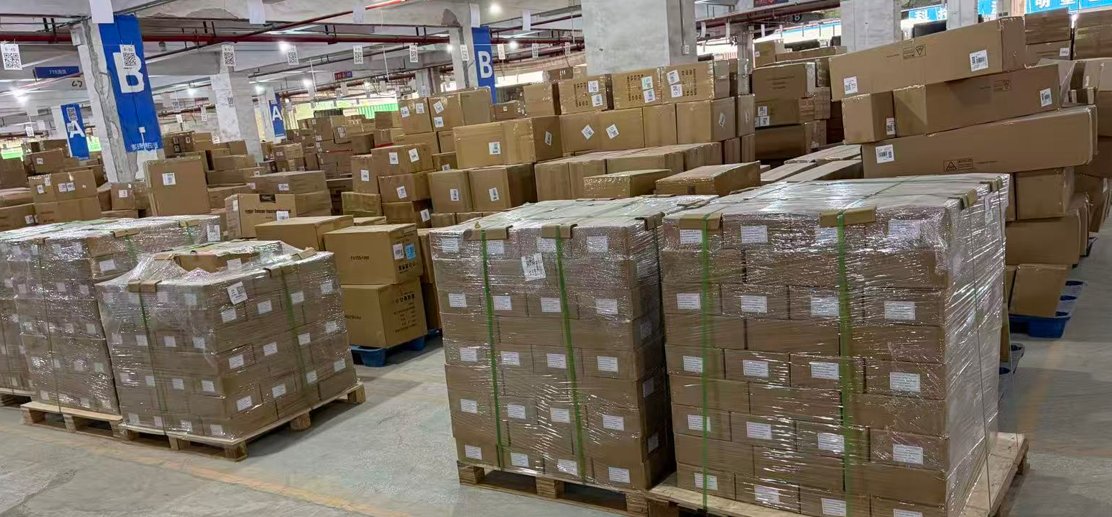
RFIDAK provides up to 5 stock samples without a unit charge. The buyer covers express freight ($25–60), credited against a qualifying first production order above $500. Custom samples are quoted at $20–80 per piece, with the sample fee credited to the bulk order. Confirm the exact article and terms in writing.
RFIDAK sample policy at a glance
- Stock samples: up to 5 units from an available stock article; sample preparation target 1 business day after confirmation.
- Freight: buyer-paid DHL/FedEx express, indicative $25–60; 2–5 days is the published dispatch-to-delivery estimate, subject to destination and carrier conditions. Freight is credited 1:1 against the first production order over $500.
- Custom samples: $20–80 per piece for the confirmed design; chip encoding or printing adds 3–5 business days. Confirm any mold or special-material charge separately. The sample fee is credited to the bulk purchase order.
- Pilot batches: the published planning window is pilot batches ship in 7–15 business days after specification and availability are confirmed.
The source of these company-specific terms is the current RFIDAK sample policy. The written offer for your exact chip, construction and destination controls the order.
B2B evaluation kits
Separate from the standard stock-sample tier, RFIDAK's owner-confirmed policy includes evaluation kits when the project brief justifies a broader test. Published planning quantities are 20–50 pieces for cards, 50–200 pieces for tags and labels, 100–500 pieces for UHF retail pilots and 50–200 pieces for laundry pilots. A laundry pilot can include a 50-cycle wash-test arrangement; agree the protocol and acceptance criteria. Confirm kit contents, availability, freight and test responsibilities before dispatch.
What to validate before bulk approval
- Identity and compatibility: record the chip article and read a finished sample on each installed reader, printer-encoder or phone workflow.
- RF performance: test on the actual package or asset, at the planned distance, orientation and movement speed. Record misses as well as successful reads.
- Data: verify encoding, printed ID, UID or EPC export, lock state and backend pairing with the real application.
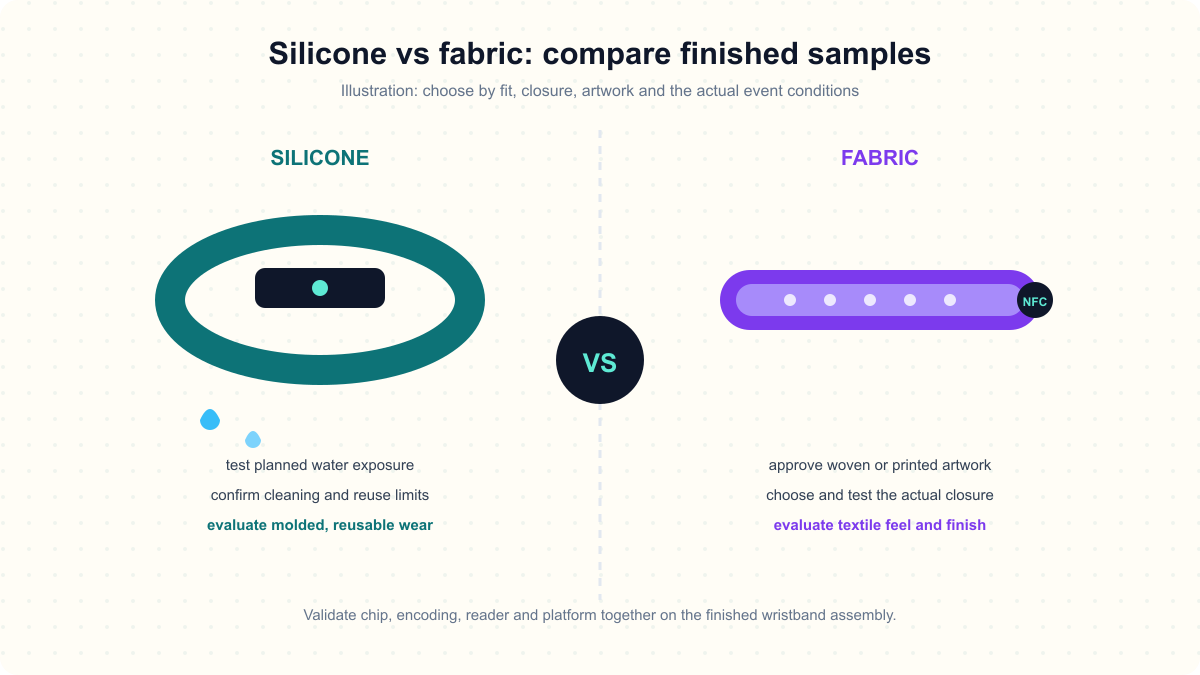
- Construction: inspect artwork, adhesive, closure or enclosure. Run any required water, temperature, wash or chemical exposure on the exact finished model.
- Acceptance: agree sample count, pass criteria, replacement process and who signs off before production.
From approved sample to production
Attach the approved sample specification and test record to the purchase order. Request a written quote showing the exact chip article, form, artwork and encoding, MOQ, unit price, any tooling, production window, freight basis and fee credits. If an article is substituted, retest it before releasing the bulk run.
RFID sample FAQ
Are stock samples free?
Up to 5 available stock units have no unit charge under the published policy. Buyer-paid freight and the qualifying freight credit are described above.
Can I test more than five units?
An evaluation kit may be available for a defined B2B pilot. Send the reader models, quantity and acceptance plan so the team can confirm an appropriate kit.
Does a sample result prove every batch will pass?
No. Keep the sample specification, production inspection and defect-handling terms in the purchase order. Test a production-representative lot before full rollout.
Request samples with the planned application, reader, chip, environment, destination and desired test date.
Need help turning this guidance into a product shortlist?
Use this next step when the article has narrowed the direction and you now need help choosing chips, formats, samples or the closest product family.
Quick FAQ
Questions buyers often ask after reading this guide
How should I test RFID samples against my existing readers?
Test at the real mounting point and reader position, never just on a desk - read range and reliability change with mounting surface, orientation and nearby metal or liquid. For access control, verify the credential format end-to-end (the door opens), not merely that the chip family matches. For harsh environments, run the actual stress: wash cycles for laundry tags, water immersion for wristbands, the real conveyor speed for logistics labels.
What happens to sample fees and freight if I proceed to production?
RFIDAK's owner-confirmed stock-sample policy is: Free stock samples (up to 5 pieces) — buyer covers DHL/FedEx freight ($25–60), refunded 1:1 against the first production order over $500. Confirm the exact stock article and availability before dispatch. Custom samples, larger pilots and any fee credits require a separate written quote.
Can I get free samples without committing to a production order?
RFIDAK's owner-confirmed stock-sample policy is: Free stock samples (up to 5 pieces) — buyer covers DHL/FedEx freight ($25–60), refunded 1:1 against the first production order over $500. Confirm the exact stock article and availability before dispatch. Custom samples, larger pilots and any fee credits require a separate written quote.
Why aren't custom-printed samples free?
Custom artwork, materials, encoding and setup can add work that stock samples do not require. Ask for a quote showing any custom-sample charge and whether it can be credited to a later production order.
Does the sample fee get credited if I don't place a production order?
Any fee credit depends on the written custom-sample quotation. Confirm the amount, expiry and qualifying production order before paying.
How many samples do I need for thorough qualification?
Choose quantities to cover each reader model, chip or inlay candidate, mounting position, environmental test and archive reference. Include repeat tests where reliability matters, then order the evaluation quantity under an agreed sample or pilot quotation.
Can I buy production-volume samples (say, 1,000 pieces) for an extended pilot?
Ask for a separate pilot-batch quote for the required configuration, quantity, QC and delivery date. A production-like pilot can reveal application and read issues before rollout; do not assume a fixed pilot price or lead time.
Can I request a competitor's sample for direct comparison?
You can compare lawful samples you provide with proposed alternatives using the same reader, substrate, encoding and test plan. A similar chip name does not establish equivalent performance or compatibility.
Author
RFIDAK RFID Editorial Team
RFID supply editorial team
RFIDAK publishes practical RFID guides to help buyers compare chips, product formats, sampling plans and sourcing options before production.