Skip to content
RFID Tags

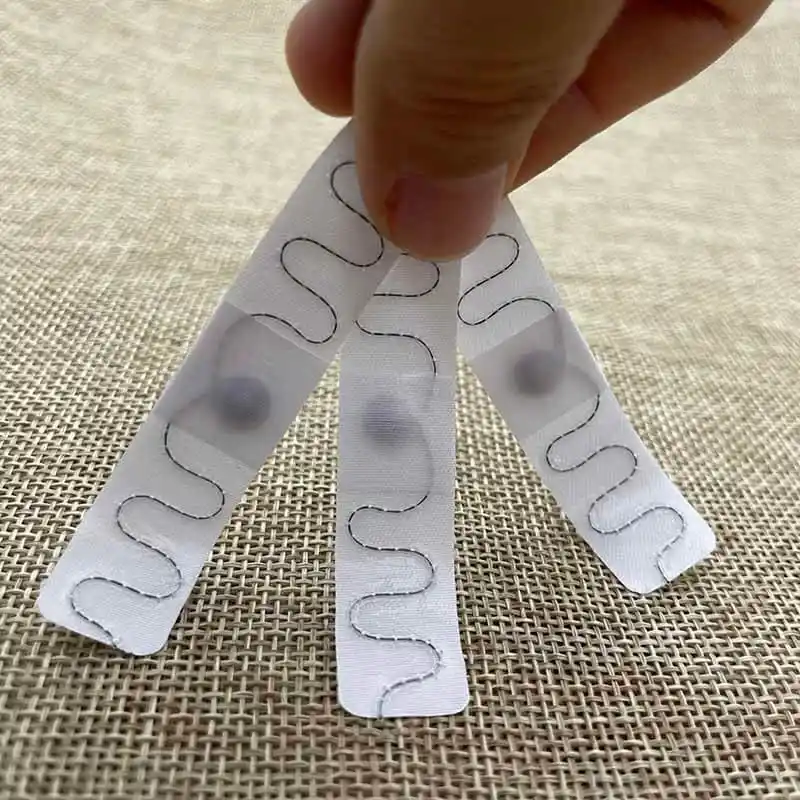
Textile RFID Laundry Tag

Will this tag survive washing, heat, pressure, and bulk linen handling?

MOQ
1,000 pcs

Stock SKU. Custom tooling from 2,000 pcs.

Lead time
7–15 days

Standard; rush possible on request.

Free sample
Ships in 1–3 days

Stock samples via DHL / FedEx.

Use this tag when wash cycles, heat, pressure, and attachment method matter more than a generic tag name. Confirm fabric match, mounting style, and read behavior before samples move forward.

What buyers usually confirm first

swipe →

Surface Match

Will it sit on metal, textile, wood, plastic, or rubber?

The mounting surface usually decides tag construction faster than chip selection does.

Environment

Does it need to survive washing, heat, UV, or rough handling?

Laundry, anti-metal, tire, and rugged asset workflows all need different enclosures and materials.

Installation

Adhesive, screw, sew-on, nail-in, or loop install?

Attachment method changes both field speed and real-world read consistency, so it should be confirmed early.

Spec Check

What to confirm before you sample this tag

Surface material, enclosure, attachment method, and environmental limits usually matter more than a broad tag name alone.

Product Name Textile RFID Laundry Tag (Fabric Linen Tag)
Housing Material Woven fabric (polyester-cotton blend, white standard)
Dimensions 70 x 15, 70 x 10, 58 x 15, 55 x 10, 36 x 15 mm (5 stock SKUs)
Weight 0.6 g (typical 70x15 SKU)
Color White (stock) custom Pantone printed option available
Operating Frequency 865-960MHz (UHF, global sub-band compatible)
Compliance ISO/IEC 18000-6C (EPC Class 1 Gen2v2), EPC Tag Data Standard 1.13
Chip Options NXP UCODE 8, UCODE 9, UCODE 9xm; Impinj Monza R6-P / M730 / M750 / M770
EPC Memory 96-bit (default) / 128-bit (custom) / 32-bit TID (unique per chip)
Read Range Up to 6 m (handheld UHF reader, free space); 2-4 m on garment in cart
Antenna Polarization Linear (circular polarization via reader antenna)
Data Retention 20 years (chip specification, EEPROM)
Write Endurance 100,000 cycles
Wash Cycle Life 200+ industrial cycles validated per ISO 6330
Wash Performance 90 deg C/15 min wash; 180 deg C/30 min dry; 180 deg C/15 sec iron; 60 bar/80 sec extraction; 135 deg C/20 min sterilization (autoclave)
Pressure Resistance 60 bar
Chemical Resistance Standard laundry detergents, peroxide bleach, perchloroethylene (PERC), trichloroethylene (TCE)
Operating Temperature -25 deg C to +110 deg C
Storage Temperature -40 deg C to +110 deg C
Attachment Methods Heat-sealing (0.6-0.8 MPa, 215 deg C, 18 sec); sewing (lock-stitch or zigzag); pin-through (via tag hole)
Flammability Self-extinguishing per EN 14683
Regulatory Compliance REACH, RoHS 3, OEKO-TEX Standard 100 class II
MOQ 5,000 pieces; standard lead time 3-4 weeks from PO

Shortlist Logic

Why buyers shortlist this tag format

These features help teams decide whether the tag suits the environment, installation method, and read expectations of the real workflow.

200+ industrial wash cycles - validated at 90 deg C/15 min wash, 180 deg C/30 min dry, 60 bar extraction, and 135 deg C/20 min sterilization per ISO 6330 protocols
Up to 6-meter UHF read range - NXP UCODE 8/9 chips enable bulk scanning of 200+ tagged garments per laundry cart in under 5 seconds
Ultra-lightweight 0.6 g fabric construction - undetectable by wearers, with no impact on garment drape, comfort, or appearance
Heat-sealable at 215 deg C / 0.6-0.8 MPa / 18 seconds - permanent attachment in 3 seconds per garment on industrial heat-press equipment
20-year data retention - supports multi-year garment lifecycle tracking and tag reuse across 3-5 garment replacement cycles
60 bar pressure resistance - withstands commercial water extractors and industrial pressing equipment without housing damage
5 standard sizes: 70x15, 70x10, 58x15, 55x10, 36x15 mm - accommodates uniforms, bed linens, towels, and delicate garments
Line polarization antenna - consistent read performance regardless of tag orientation in mixed laundry cart loads

Use Cases

Where this tag format usually works best

Use cases matter because the right tag depends on surface, environment, attachment, and read distance in the field.

Industrial laundry operations

automate garment counting and sorting, reducing manual labor by 70-80% across wash-dry-press-sort workflows

Hotel linen management

track bed sheets, towels, pillowcases, and uniforms through collection, washing, and distribution for 15-25% loss reduction

Hospital infection control

log sterilization cycles per garment for scrubs, gowns, and patient linens to meet hygiene compliance audit requirements

Uniform rental fleet management

automate per-item check-in/check-out and billing across 10,000+ garment rental pools

Airline and cruise ship linens

track blankets, headrest covers, and cabin textiles through high-volume onboard laundry operations

Textile rental industry

manage mats, linens, and costumes with per-item lifecycle data for replacement planning and customer invoicing

Textile Heat-Seal vs Silicone Button — How To Choose

Hidden textile tag or visible silicone button? Pick by wash chemistry and workflow

Both formats survive 200+ industrial wash cycles, both use the same UHF chip families, both integrate with the same reader fleet. The meaningful differences are visibility (hidden in seam vs visible on garment exterior), attachment method (heat-press equipment you own vs rivet / sew), and resistance to aggressive chemistry (standard laundry vs food-processing bleach-spray environments).

RFIDAK textile UHF laundry tag — woven polyester patch with encapsulated UHF inlay, heat-pressed into garment interior seam, invisible to end user, 200+ wash cycles at 85°C, designed for hospital and industrial laundry programs Option A

Textile Heat-Seal (this product — hidden in seam)

Hidden, flexible, heat-pressed in 15 seconds

Attachment
Heat-press 160 °C × 15 sec
Position
Hidden in garment interior seam
Wash cycles
200+ at 85 °C
Chemistry
Standard sodium hypochlorite 2.5 g/L
Visibility
Invisible to end user
Unit price (MOQ 10K)
$0.38 – 0.78

Best for

  • Hospital gowns and scrubs where patient-facing surface must remain plain
  • Hotel sheets, towels, bathrobes — tag hidden so guest experience is unchanged
  • Workwear uniforms where employee sees no tag (privacy / aesthetics)
  • High-volume programs with existing heat-press equipment (no new CAPEX)
RFIDAK silicone laundry button — visible external tag attached via rivet or sew to garment exterior, enhanced chemical resistance for food processing and autoclave-adjacent environments Option B

Silicone Button (sibling product — visible exterior)

Visible, chemical-resistant, rivet or sew

Attachment
Rivet / sew to garment exterior
Position
Visible on exterior surface
Wash cycles
250+ at 90 °C
Chemistry
Tolerates food-processing bleach spray
Visibility
Visible for lot verification
Unit price (MOQ 10K)
$0.58 – 1.15

Best for

  • Food-processing uniforms with daily bleach-spray surface sanitization
  • Chef whites and kitchen uniforms where tags need to survive grease and high-temp wash
  • Industrial workwear where supervisors do visible tag scan at shift start
  • Chemical-plant or cleanroom garments where aggressive solvents defeat woven formats

Quick decision tip — If garments go through standard laundry chemistry at 85 °C and the end user should not see the tag (hotel, hospital, corporate workwear), heat-seal textile (Option A) is the default and cheapest choice. If garments face aggressive chemistry (food processing, bleach spray, 90 °C+) or supervisors need to visually verify tag presence, silicone button (Option B) is worth the 40-60% premium. For hospital reprocessed linen where autoclave 134 °C is in scope, request the sibling PPS hard button (/product/pps-laundry-tag-rfid-button) instead — silicone does not survive autoclave.

Textile RFID Laundry Tag Types

1 Should I choose the textile UHF laundry tag for my linen program?

Yes if you run a commercial laundry, hospital central sterile supply, hotel linen pool, uniform rental, or industrial mat rental at 10,000+ garments and need per-item tracking through industrial wash, dry, iron, and sterilization cycles. The The textile UHF tag survives 200+ industrial wash cycles at 90 deg C with 60 bar extraction, 180 deg C tumble dry, 215 deg C heat-seal attachment, and 135 deg C autoclave sterilization the full commercial laundry envelope that silicone and PPS hard tags cannot match on comfort, weight (0.6 g), or sewing integration.

Pick a different tag if garments stay under 50 wash cycles (use a disposable UHF paper tag instead), if the workflow needs sub-1 second item tap (use an HF NFC tag), or if you need on-metal reads (use an on-metal UHF hard tag). Pick the textile UHF tag if the workflow is: counting 200+ sheets per cart in 5 seconds at the sort belt, automating rental invoicing, enforcing sterilization compliance per garment, or cutting 40-60% of the labor hours currently spent on manual linen counting.

2 Spec decision matrix laundry tag alternatives

Side-by-side comparison across the five laundry-tag classes commercial laundry operators evaluate. Prices indicative at MOQ 10,000 pieces.

Tag classWeightWash cyclesRead rangeAttachmentBest fitUnit price
The textile UHF (fabric)0.6 g200+ cyclesUp to 6 mSew-in or heat-sealHotel linen, hospital scrubs, uniform rental$0.55-1.10
Silicone button UHF2.2 g200+ cyclesUp to 4 mSew-in pouchGarment durability priority, shorter range OK$0.80-1.60
PPS hard laundry tag3.5 g300+ cyclesUp to 5 mSew-in pouchExtreme chemical environments$1.40-2.80
Textile HF (NFC) tag0.8 g100+ cycles 10 cm (tap)Heat-sealManual tap workflows, low-volume$0.85-1.50
Paper UHF disposable0.3 g5-10 cyclesUp to 6 mPin-throughOne-shot event linen, hotel VIP gifting$0.12-0.30

Verdict: The textile UHF wins on weight wash-cycle read-range cost combined. Silicone button wins where sew-in robustness beats comfort. PPS hard tag wins for chemical laundries. NFC textile tag wins only when workflow is single-tap identification at check-in/out, not bulk read.

3 Typical deployment pattern - industrial laundry tracking

Industrial laundries tag garments and linens with UHF laundry tags and read them in bulk at intake, sorting, and dispatch: entire carts read in seconds, so per-item counts stop being manual labor. Customer-facing benefits follow, including per-item billing accuracy and verifiable service-level reporting on rental textiles.

Tag selection follows the wash chemistry and process heat: textile tags for sew-in or heat-seal on linens, silicone or PPS buttons where pressing and sterilization are harsher. Our laundry tags are rated for 200+ industrial wash cycles.

4 Compatibility reference chips, readers, and attachment methods

Verified compatibility across UHF chips, reader brands, and garment attachment methods. Heat-seal, sewing, and pin-through all validated at The production line and customer sites.

CategorySupportedNotes
UHF chip optionsNXP UCODE 8, UCODE 9, UCODE 9xm, Impinj Monza R6-P / M730 / M750 / M770UCODE 9 recommended for liquid-adjacent laundry environments; Monza M730 preferred for dock-door portal readers
Reader brands handheldZebra RFD40 / RFD8500, Impinj R2000 handheld, Alien ALR-H450, Honeywell IH45All ISO 18000-63 / EPC Gen2v2 Gen2 handhelds read the tag without special tuning
Reader brands portalImpinj Speedway R420 / R700, Zebra FX7500 / FX9600, Alien ALR-F800, Keonn AdvanReaderPortal read tested with 400+ tagged items per cart at 4 second scan time
Reader antennasCircular polarized 6-12 dBi, linear polarized 4-9 dBiCircular polarized recommended for cart / portal reads; linear polarized for belt conveyor
Attachment heat seal215 deg C / 0.6-0.8 MPa / 18 sec on 5-second dwell heat-pressValidated on Kannegiesser / Jensen / Girbau heat-press equipment
Attachment sewingIndustrial lock-stitch or zigzag on tag periphery or dedicated sewn-in pouchPouch method preferred for scrub gowns and mats; direct sew-in for flat linens
Attachment pin-throughNylon or SS pin through tag hole, clipped endsUsed for rental mats and shop towels where sew-in is impractical
ERP / WMS integrationsSAP, Oracle NetSuite, Softeon, Manhattan Associates; LaundryTrack, TextileProVia middleware (Tyco / Impinj ItemSense, Keonn AdvanNetics) or direct LLRP feeds
SterilizationAutoclave 135 deg C / 20 min; chemical sterilization per EN 14065 RABCTag survives both; chip and antenna tested per customer certificate

5 Cost at volume FAQ

How much does the The textile UHF tag cost at 10K pcs? Stock tag (70x15 mm white woven, UCODE 9 chip) at MOQ 10,000 pieces: $0.68-0.78 per unit, USD EXW Shenzhen. Volume brackets: MOQ 5,000 = $0.88-1.05; MOQ 100,000 = $0.48-0.58; MOQ 500,000 = $0.38-0.44.

What drives the unit price up or down? Up: custom color or printed pattern (+$0.08-0.15), pre-encoded EPC with customer data (+$0.04-0.08), custom size outside 5 stock SKUs (tooling NRE $800-1,500 + per-unit premium), NTAG424 DNA or UCODE DNA secure chip (+$0.35-0.60). Down: larger volume, stock color white, stock SKUs 70x15 / 58x15, bulk roll packaging vs single-piece.

What's the ROI vs no-tag operations? A 10,000-garment pool at 3% monthly loss (typical industrial laundry pre-RFID) loses 3,600 garments / year. At $12 replacement cost per sheet + $0.75 tag cost, tagging the full pool costs $7,500 one-time and recovers $43,200 / year in loss reduction = 2-month payback. At 100,000-garment scale, payback shortens to 5-8 weeks because portal reader CAPEX is one-time and per-unit tag cost drops.

What about the heat-press equipment? Kannegiesser / Jensen / Girbau heat-press bundles at $8,000-18,000 per press (4,000+ garments/hour throughput). Most industrial laundries already own presses for label application; tag heat-seal adds no equipment cost. For sew-in workflow, existing industrial sewing lines work with zero modification.

Tag lifecycle vs replacement cost? 200+ cycles at 2 cycles/week = 2+ year tag life. Garments themselves last 1.5-3 years in industrial linen rotation, so tag life aligns with garment life; no mid-cycle tag replacement typically needed.

6 Market context - why industrial laundry adopted UHF

Industrial laundry is one of the fastest-adopting UHF verticals because the pain is structural: without per-item tracking, operators absorb continuous textile loss and burn labor hours on manual counting and sorting. Per-item RFID attacks both directly, and customer contracts increasingly expect verifiable per-item reporting on rental textiles and sterilization workflows.

Typical infrastructure pairs sew-in or heat-seal tags with fixed portals or tunnel readers at intake, sort, dispatch, and return points.

7 Attachment method family when to pick textile vs silicone vs PPS

The manufactures four distinct laundry tag formats, each optimized for a specific attachment method and environment. Pick the format that matches your existing garment-line workflow and wash-cycle severity.

  • Textile heat-seal (this product) UHF woven patch applied via 160 deg C heat-press at 15 seconds. Best for garment manufacturers with existing heat-transfer label equipment. 200+ wash cycles at 85 deg C. $0.38-0.78 per unit at 10K MOQ.
  • Textile sew-on same chip core but reinforced polyester border for needle-sewn attachment. Specified when garment substrate cannot tolerate heat-press (Gore-Tex, technical membranes, heat-sensitive finishes) or when the laundry line is sew-based. Slightly higher cost, same wash survival.
  • Silicone button see the sibling RFID Silicone Laundry Tag. Visible external attachment via rivet or sew, better chemical resistance, tolerates direct bleach spray at food-processing facilities.
  • PPS hard button see the sibling PPS Laundry Tag RFID Button. Rigid thermoplastic for extreme environments (abattoirs, cement plants, mining uniforms, firefighter turnout gear). Survives autoclave 134 deg C and chemical solvent exposure. 3-5 unit cost of textile heat-seal.

The decision is driven by (1) attachment workflow equipment the laundry or garment maker already owns, (2) wash-cycle chemistry and temperature, and (3) visible-versus-hidden tag placement preferences for infection-control or visual verification workflows.

8 Industrial laundry processor deployment (Berendsen / Elis / Cintas scale)

European and North American industrial laundry processors (Berendsen, Elis, Alsco, Cintas, Unifirst, G&K Services) process 200,000 to 2,000,000 garments per week per facility across uniform rental, linen rental, mats & mops, and specialty cleanroom programs. RFID tagging at the garment level enables automated sorting (sort accuracy improves from 78-82% manual to 96-99% at RFID portals), loss tracking (shrinkage reduces from 14-20% annual to 4-6% post-deployment), and per-garment service-life visibility that makes end-of-life retirement a data-driven rather than visual decision.

Procurement pattern: 500,000 to 5,000,000 tags per year per facility at $0.18-0.35 per tag for textile heat-seal formats. Equipment side: fixed overhead portals from Nedap, Impinj xArray, Zebra FX9600, or custom tunnel readers at $12K-40K per portal, with typical deployments using 3-8 portals per facility (incoming, outgoing, sort, return, and quality-hold zones). Payback period 6-14 months on labor savings + shrinkage reduction alone.

Operational KPI improvements documented in the TRSA 2024 benchmark: billing accuracy +18 percentage points (from 82% to 99.7%), labor efficiency +42% on counting / sorting tasks, customer retention +11 points, and disputed-garment rate down 76% because RFID scan logs settle most billing disputes within seconds rather than days.

9 Hotel housekeeping & linen rotation deployment

Hotel linen programs bed sheets, pillow cases, bath towels, hand towels, bathrobes, restaurant table linen use RFID to track per-item wash cycle count (retire at 75-90 cycles depending on item type and thread count), prevent inventory shrinkage (national average 12-18% annual unaccountable linen loss), and automate vendor reconciliation with third-party commercial laundry service providers where the hotel's linen circulates off-site.

Per-property tag inventory scales with room count: a 300-room branded hotel typically carries 12,000-18,000 linen items in active rotation (including spare inventory in laundry circulation and storage) all of which can be tagged during initial linen onboarding. Annual tag replacement runs 10-15% against wash-cycle retirement (tags retire with the linen) and damage.

Chain-level programs: Marriott's sustainability 2030 targets include per-item linen retirement tracking across 8,000+ properties, driving a chain-wide push toward RFID-tagged linen procurement. Hilton, IHG, and Accor run similar programs in pilot or rollout phase as of 2024. Direct integration with PMS (Opera, SynXis, OnQ) and third-party laundry billing systems allows the property operator to audit per-linen-cycle billing accuracy and resolve disputes with laundry vendors within hours rather than weeks.

10 Hospital & healthcare linen deployment (EN 14065 RABC)

Hospital-grade uniforms (scrubs, lab coats, isolation gowns) and hospital linens (sheets, pillowcases, bath towels, patient gowns) under the EN 14065 RABC (Risk Analysis and Biocontamination Control) standard require per-garment sterilization-cycle logging for infection-control audit purposes. RFID tags enable automated cycle counting average clinical use: 3-4 wash cycles per day 150 clinical days per year = 450-600 cycles per year per garment and deliver a permanent biocontamination audit trail that meets the documentation requirements now mandated for hospital linen suppliers in 14 EU member states as of 2024.

Hospital programs typically specify textile heat-seal (LT-01) at 200-cycle survival minimum for scrub and patient-gown turnover, textile sew-on (LT-02) for high-cost lab coats and isolation gowns where garment replacement cost exceeds $40, and PPS hard button (sibling product) for critical-environment garments in operating rooms and ICU wards where autoclave 134 deg C sterilization is part of the routine reprocessing cycle.

Regulatory tailwind: the FDA's UDI (Unique Device Identifier) rule progressively expanded to cover reusable medical textiles in 2024-2026 phases, making per-item tracking a compliance requirement rather than operational nice-to-have. Hospital laundry contracts now increasingly require vendor-side RFID tagging as a contract condition.

11 Workwear rental & uniform rotation deployment

Workwear rental programs industrial uniforms, flame-resistant coveralls, food-processing aprons, clean-room garments, healthcare scrubs are the fastest-growing segment of the commercial laundry industry through 2030, driven by employer liability, compliance, and cost-transparency trends. Programs typically run 5-15 garments per employee 500-20,000 employees per customer contract, creating tag volumes of 25,000 to 500,000 per end-customer deployment at the industrial laundry processor.

RFID in workwear rental delivers three distinct value layers. (1) Employee-level allocation: each garment is tied to a specific employee ID, so wash-cycle wear, replacement cost, and lost-item charge-back all roll up to HR and payroll reporting. (2) Customer-level billing transparency: the industrial laundry can show the corporate buyer exactly how many garments from their contract moved through the processing line each week, settling the perennial "you're charging me for garments I didn't send" dispute. (3) Regulatory traceability: flame-resistant coverall wash-cycle count drives the replacement trigger under OSHA / ASTM F1506 / NFPA 2112 compliance garments that exceed 100 wash cycles must be retired, and RFID is the only economical way to enforce this at fleet scale.

Market share note: Cintas (US), Elis (EU), and Alsco (global) together operate over 500 processing facilities globally, each processing 100K-2M garments per week. RFID penetration in this segment reached 58% of tier-1 processors in 2024, up from 31% in 2021.

12 Inside the The laundry tag production process

Every The textile laundry tag begins with pre-tested UHF inlay selection (Impinj Monza R6-P for 180-200 cycle durability spec, or NXP UCODE 9 for 220+ cycle spec with extended EPC memory). Each inlay is read-verified before encapsulation defective inlays are scrapped at $0.03 cost rather than causing full-tag rework at $0.45+ cost downstream. The verified inlay is encapsulated between two layers of high-temperature polyester mesh via ultrasonic welding at 20KHz for 0.8 seconds, creating a bond that cannot delaminate under industrial wash impact.

Quality assurance protocol: each production lot of 10,000 tags is sample-tested for wash-cycle survival 25 tags are subjected to accelerated wash-cycle simulation (ISO 6330 conditions: 85 deg C water, 2.5 g/L sodium hypochlorite NaClO, 60-minute cycle 200 iterations) before the lot is released. Lots that show >2 tag failures across the 25-tag sample are scrapped. Lots with 0-1 failures are released with full wash-cycle certification.

Full lot traceability from inlay batch to finished tag is maintained through the production run, so any quality issue observed in customer deployment can be traced back to the specific inlay lot, lamination shift, and QC checker. ISO 9001:2015 certified line; customer-side sample retention available on request. Typical production throughput: 120,000-180,000 tags per 8-hour shift per line, with two textile lines running at the The facility.

Supplier Fit

Why buyers source Textile RFID Laundry Tag from RFIDAK

Once the format is right, most teams still need confidence in manufacturing control, sample support, and repeat-order reliability.

ISO 9001

Quality-focused manufacturing and sample support for custom RFID projects.

Since 2008

RFID manufacturing experience across cards, tags, labels, wristbands and readers.

Free Samples

Test product compatibility before bulk purchasing and customization decisions.

Commercial Fit

How buyers usually move this product from shortlist to sample

Most inquiry-ready visitors want to know whether this product matches their workflow, region and approval stage. These cues help them move faster without leaving the product page.

System integrators

Often validating tag fit, reader behavior and installation method before including the product in a wider solution.

Laundry and textile operators

Usually focused on wash-cycle durability, attachment method and read consistency in bulk handling.

Industrial tracking teams

Typically comparing on-metal, pallet, tyre or rugged tags for repeat deployment in harsh environments.

Quote Checklist

What to send us for a faster recommendation

  • The exact surface or object the tag will be attached to, especially if metal, textile or plastic is involved.
  • Working environment such as heat, washing, chemicals, UV, outdoor exposure or repeated impact.
  • Required read distance, reader type and whether the tag is disposable or reusable.
  • Preferred attachment method, quantity and whether UID print or encoding is needed.

Market Notes

Regional conversations often tied to this category

North America

Frequent projects include warehouse visibility, IT asset management, returnable packaging and on-metal identification.

Europe

Industrial laundry, reusable transport items and traceability projects often require careful sample validation and repeatability.

Middle East, Africa and Oceania

Outdoor assets, utilities and long-service industrial tagging often put more weight on enclosure durability and field conditions.

More Ways To Source This

Order this by chip, format or region

These sourcing pages cover the chip-specific and market-specific buying details that often decide the final spec for this product.

Before You Order

Procurement guides every RFID Tags buyer reads first

Five short reads on the procurement-side topics every B2B RFID buyer wants answered before signing a quote — MOQ thresholds, lead time reality, pricing transparency, sample policy, and how to audit a Chinese factory before your first order.

Buyer Questions

Questions buyers usually ask before sample approval

These FAQs cover the points that usually come up between a first shortlist and a real sample or quote request.

What is the minimum order quantity (MOQ) for Textile RFID Laundry Tag? +

For Textile RFID Laundry Tag, the standard MOQ starts at 1,000 pieces on stock SKUs. Custom shape, material or antenna tooling typically requires 3,000–5,000 pieces to cover one-time mold / die-cut setup cost. Exact MOQ and unit pricing are quoted per project once chip, customization and packaging are confirmed.

Does RFIDAK provide free samples of Textile RFID Laundry Tag? +

Yes. Stock rfid tags samples of Textile RFID Laundry Tag are typically free; we only ask buyers to cover DHL/FedEx express shipping. Samples ship in 1–3 business days after your order is confirmed and arrive in 2–5 days to most countries. Custom samples (new chip, new size, printed artwork) usually take 3–7 additional days.

What is the production lead time for Textile RFID Laundry Tag? +

Standard Textile RFID Laundry Tag orders ship in 7–15 business days after PO confirmation and artwork approval. Large runs (>100k units) or orders with complex encoding / custom molds may take 15–25 business days. Rush production is available on request for time-sensitive launches; confirm MOQ and artwork early to protect the timeline.

Can Textile RFID Laundry Tag be customized for my brand or project? +

Yes. Textile RFID Laundry Tag supports end-to-end customization: full-color CMYK / silk-screen / UV printing, laser engraving, serial numbering, custom chip encoding (UID write, NDEF, sector locking), custom shape / size (subject to tooling MOQ), and packaging. Share your artwork, chip requirement and quantity and we will return a spec sheet + price within 24 hours.

Which RFID chips are supported for Textile RFID Laundry Tag? +

Textile RFID Laundry Tag supports NXP UCODE 8, UCODE 9, UCODE 9xm; Impinj Monza R6-P / M730 / M750 / M770. Before ordering, share your reader model or current credential so we can confirm the exact chip variant (e.g., MIFARE Classic 1K vs DESFire EV3, NTAG213 vs 215) and avoid compatibility issues after lamination.

What certifications and quality control does RFIDAK apply to Textile RFID Laundry Tag? +

RFIDAK operates under ISO 9001:2015 (Quality Management) and ISO 14001 (Environmental Management), audited by SGS. Textile RFID Laundry Tag is subject to incoming material inspection, in-process QC at every lamination / bonding / encoding step, and 100% electrical performance testing before shipment. Products meet CE, FCC, RoHS and REACH as applicable by market. Full test reports are available on request for buyer audits.

Can Textile RFID Laundry Tag be pre-encoded or printed with my artwork before shipment? +

Yes. Textile RFID Laundry Tag can ship with UID range assignment, NDEF URL encoding (for NFC), sector-locked user data, serial numbering, and CMYK / silk-screen / UV printing of your artwork. Provide an AI/PDF artwork file at 300 dpi with 3 mm bleed and a chip-encoding spec; we return a digital proof for approval before production.

How does RFIDAK ship Textile RFID Laundry Tag internationally? +

RFIDAK ships Textile RFID Laundry Tag via DHL / FedEx / UPS (door-to-door, 3–5 days to most countries), air cargo (5–7 days for heavier orders), or sea freight (20–35 days for bulk over 500 kg). Standard Incoterms are EXW, FOB Shenzhen and DDP; choose based on customs clearance preferences. Commercial invoice, packing list and CoC / MSDS are included automatically.

How does RFIDAK handle repeat orders of Textile RFID Laundry Tag? +

For repeat buyers, RFIDAK locks tooling, artwork and chip encoding on file so subsequent POs ship faster — typically 5–10 business days for stock chip types at previously-run quantities. Price is adjusted transparently per chip market rate and FX movement; we flag any chip shortage (e.g., DESFire EV3) before quotation so the project plan stays realistic.

What are the technical specifications of Textile RFID Laundry Tag? +

Key Textile RFID Laundry Tag specs: frequency 865-960 MHz (UHF, global sub-band compatible); dimensions 70x15, 70x10, 58x15, 55x10, 36x15 mm (5 stock SKUs); substrate Woven fabric (polyester-cotton blend, white standard). A full technical datasheet including read range, chip memory map, IP / temperature rating and compliance certificates is available on request; attach your reader model and target environment so we can confirm suitability before quoting.

Get Free RFID Samples

Try before you buy. Request free samples of any RFID product from our 50+ SKU catalog. Samples shipped via DHL/FedEx within 1-3 business days worldwide.

Not ready to chat? Just drop your email and we'll send the RFIDAK product catalog (PDF).

We'll only use your email to send the catalog and reply to your inquiry.

WhatsApp Get a Quote