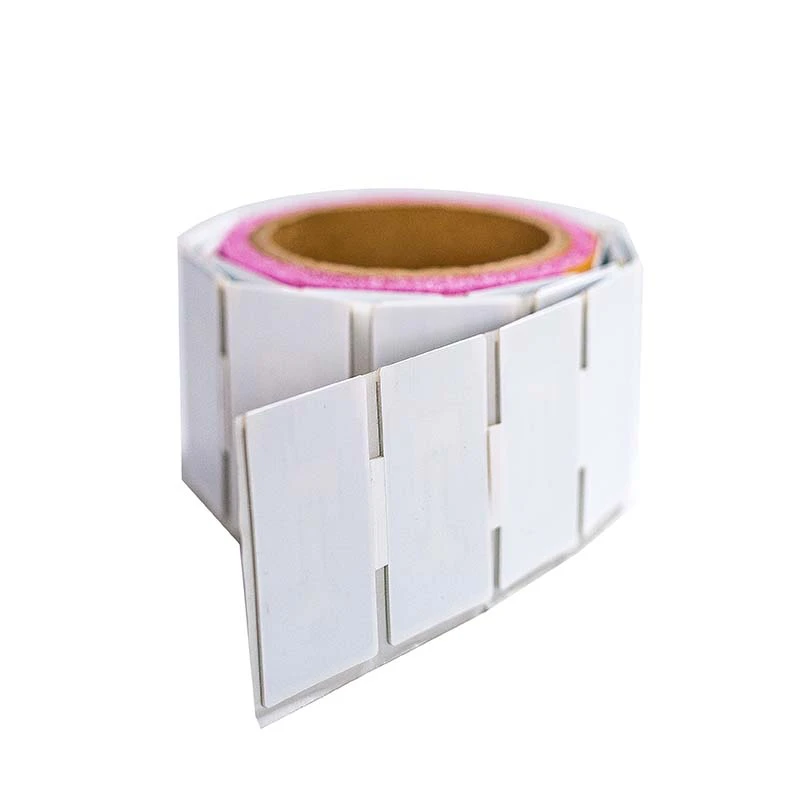
Printable UHF On-Metal RFID Labels
PR3110 is a 31 × 10 × 1.0 mm printable on-metal UHF label with an M730 reference. Check its regional version, printer media path, adhesive and mounted reads.
Industrial RFID · Asset and read-zone planning
An industrial RFID tag gives equipment, tools or returnable assets an identifier that compatible readers can capture at defined locations. Start with the mounting surface, usable space and intended read point: a PR3110 printable on-metal label, a rigid PCB tag, a pallet tag and a cable tie solve different installation problems. Verify the selected chip, regional reader setup, fitted tag and asset-data mapping together before bulk supply.
Start with the asset surface, mounting area and reader model; agree the trial details before ordering · Sample terms
Updated · Product selection and sample planning
Confirm the chip, construction and system fit for your configuration.
Before choosing a product
A permanent pallet or container ID identifies the carrier. The current shipment or contents need a separate record and a controlled association in your software.
Record the intended zone, object orientation, loading and movement. Include both missed assets and unwanted reads from nearby assets in the acceptance criteria.
Mounting area, coating, curvature, fasteners and exposure belong in the specification. A chip sensitivity figure or a rugged-looking housing does not qualify the complete assembly.
The named models below are published references, not approved configurations for every asset. Check the final drawing, exact chip and protocol, regional reader configuration, attachment and process exposure before choosing trial samples.
Scroll across the table to compare all columns.
| Candidate | When to investigate it | Installation inputs | What the sample must demonstrate |
|---|---|---|---|
| PR3110 M730 printable UHF label — 31 × 10 × 1.0 mm reference | A metal asset needs a printed number or barcode and has space for the label; published US and China RF versions are distinct, so confirm regional suitability | Metal alloy/coating, curvature, clean adhesive area, 1.0 mm media path and RFID printer/encoder | Printer feeding and encoding, visible-to-EPC mapping, adhesion after handling and reads while mounted |
| Rigid UHF on-metal PCB — 3 × 7 × 2 mm and larger catalog footprints | A recess or flat mounting position can hold a rigid board, including where a printable face is unnecessary | Exact footprint/chip, regional tuning, fixing or adhesive, clearance and nearby metal geometry | Board retention, identifier readback and installed reads in the required zone after agreed handling |
| TTP8654 rigid UHF pallet tag — 85.6 × 54 × 4 mm reference | A reusable wood or plastic pallet needs a persistent carrier ID rather than a new ID for each load | Protected fixing position, pallet material, final hole drawing and representative loads | Outbound and return reads with empty/loaded pallets, adjacent pallets and changing load associations |
| ZD006 UHF cable-tie reference; other HF or LF seal options are separate | A returnable container or equipment item has a usable strap route but no reliable flat label area | Loop route, 282 mm tail and 79 × 28 mm flag reference, lock/reuse rule, head clearance and selected reader | Closed-tie retention, reading beside the actual contents and visible opening evidence if required |
| TGW4631 UHF heat-process candidate | A metal fixture passes through a defined heat step and UHF read points are part of the process | Final housing/fixing drawing, temperature and dwell at each step, cycle count, chemicals, cooling and read stage | Complete mounted-model evidence and reads at the required stage; a peak exposure number is not a hot-read rating |
| PT805H miniature PPS — LF or HF, not a UHF substitute | An embedded close-read fixture uses a separately selected LF or HF reader and has space for the Ø8 × 5 mm housing reference plus fitting clearance | Exact LF/HF chip, cavity/retention, metal around the recess and full temperature-duration profile | Fit, retention and the required close read before/after process exposure; do not infer continuous hot operation |
A shortlist for your evaluation
Open the product page for its specification and evaluation requirements. These are hardware candidates; system integration and sample acceptance depend on your project.
PR3110 is a 31 × 10 × 1.0 mm printable on-metal UHF label with an M730 reference. Check its regional version, printer media path, adhesive and mounted reads.
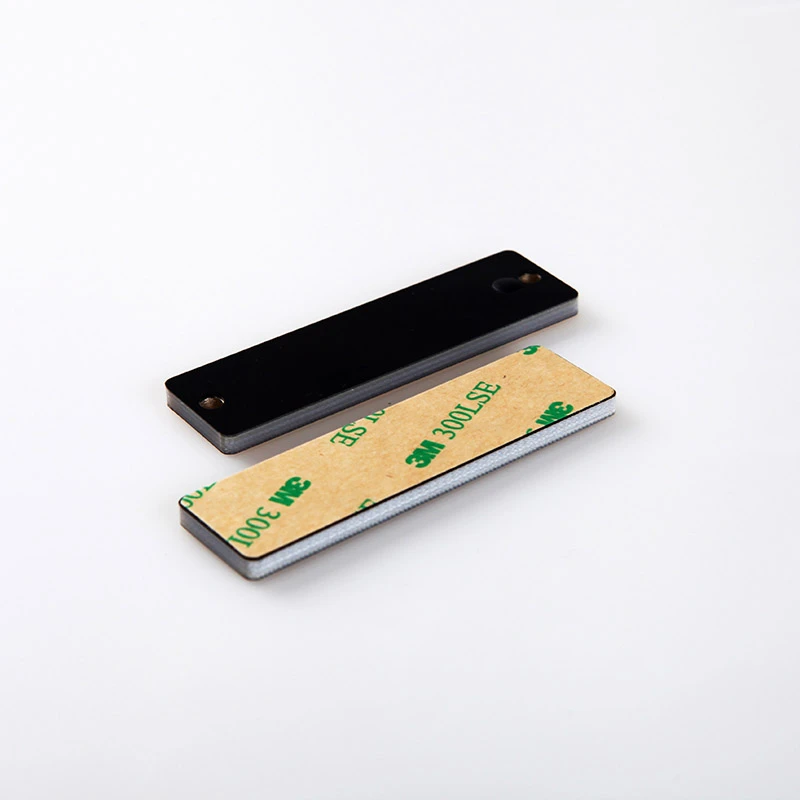
Rigid on-metal UHF PCB formats include compact catalog footprints. Select the exact board/chip and confirm fixing and reads in the installed geometry.
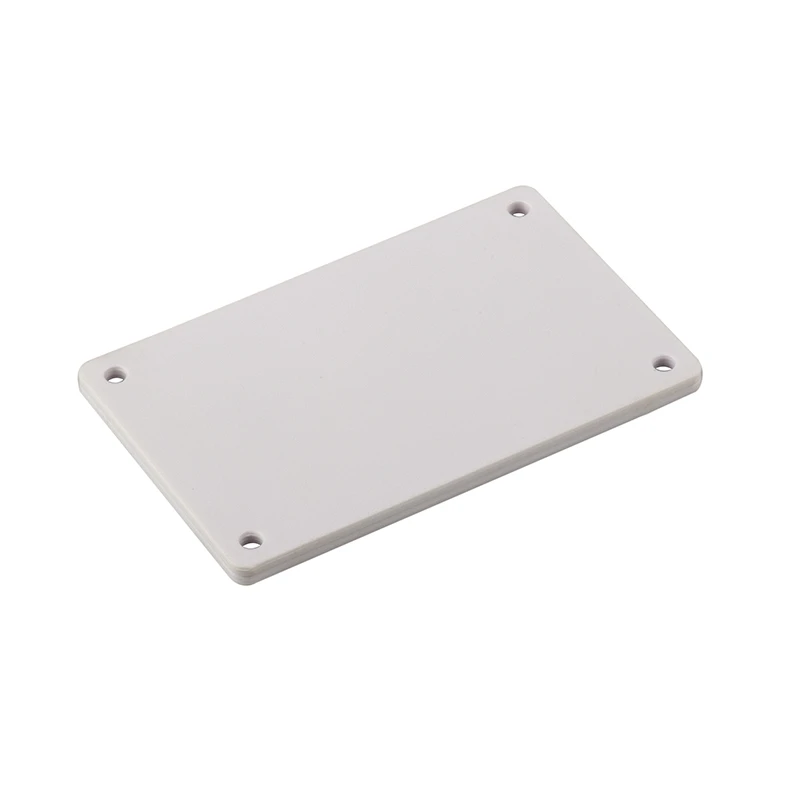
TTP8654 is a rigid UHF pallet reference for a persistent carrier ID. Check fixing and reads on empty, loaded and returning pallets.
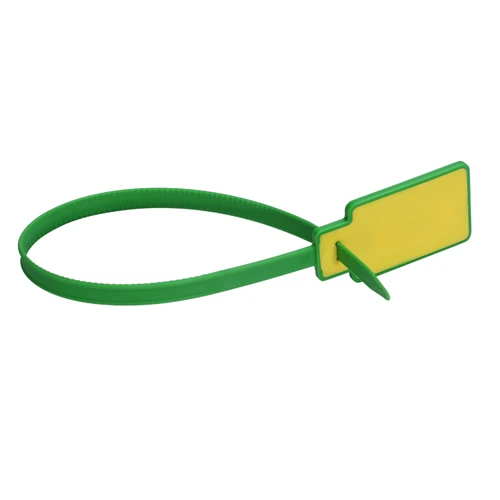
ZD006 is a UHF nylon-tie reference for a usable loop. Confirm tail/flag fit and lock rule; HF and LF versions are different selections.
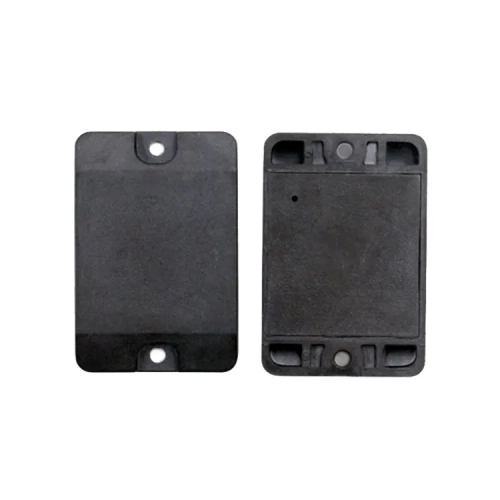
TGW4631 is a UHF heat-process candidate; PT805H follows a different LF/HF close-read path. Specify exposure and the required reading stage.
From shortlist to approval
Use the same installed configuration for RF, physical and software checks. Keep test results with the approved drawing and encoding specification.
Buyer questions
No. They require a construction suited to the actual metal surface and installation. A purpose-designed printable UHF on-metal label may be suitable, as may a rigid PCB or other on-metal tag. A rigid housing alone is not evidence of on-metal performance. Compare mounted samples on the real geometry and coating.
A passive tag responds when compatible reader equipment can communicate with it. The software can record detection at defined read points; the tag alone does not provide GPS or continuous location coverage. If the project needs location estimates between those points, specify and evaluate the separate reader infrastructure and software requirements.
Only if the representative installations all meet the agreed requirements. Different metal geometry, plastic housings, liquid contents, mounting spaces or hot processes may need different constructions. Group assets by these conditions and keep exceptions in the approved specification.
Treat the selected chip’s TID, the encoded EPC and any printed asset number as distinct fields. Agree their mapping to the software record and verify it by readback before rollout. If a tag is replaced, retain the asset’s history deliberately; do not create a new physical asset simply because its electronic tag changed.
No. The antenna, interconnects, housing and attachment experience the process too. Specify temperature with duration, repeated exposure, chemicals, mechanical loads and cooling conditions. Agree whether reads are required during the hot step or afterward, and request evidence for that complete model and process.
Use known asset counts and representative load states, orientations and movement. Measure capture within the required window, missed and unwanted reads, mounting failures and successful software events. Repeat the relevant checks after agreed exposure. Record the operator’s thresholds and approval responsibility before the trial.
Keep one persistent ID on each carrier and record the current shipment or contents in a separate software association. Read known carriers at outbound and return points, with empty and loaded states and adjacent carriers included. Record missing, unexpected and duplicate events, then check whether the load association was opened and closed at the right handoff. A tag read alone does not prove that the shipment moved correctly.
Quote the selected tags, marking, encoding, mounting accessories and quantities. Budget readers, antennas, installation, integration, software and replacements separately with the responsible suppliers. Review sample terms and freight under the sample policy; compare the pilot with your own counting and loss baseline instead of using a generic ROI promise.
Check the basis for the decision
These references describe published chips, standards, product examples or systems. Confirm the offered RFIDAK configuration and your installation separately.
Defines reader/tag communication. It does not specify the installed read zone, regional radio permission or business event.
A standard for exchanging event data when required by the integration; an RFID read alone is not a completed process event.
Explains tags, readers, software and installation effects. Its general performance examples are not RFIDAK model specifications.
Published M730 label dimensions, print media and US/China RF versions; its example read range is not a mounted-site guarantee.
Published rigid footprints and chip alternatives; its distance table uses an in-air reader test rather than this installation.
Published housing and UHF model details. Confirm the final drawing, loads, fixing and portal position in the sample trial.
Published strap, flag and UHF chip details for one candidate; choose locking behavior and other frequencies separately.
Separates operating, storage and peak exposure conditions. Validate hot reads only if the selected model and installed process require them.
Lists LF and HF chip alternatives for the miniature PPS housing; this is not the UHF TGW4631 configuration.
Make the next conversation useful
Send a non-sensitive surface photo or drawing, mounting space, reader and country, read point, process conditions and quantities. We can compare the relevant models and agree sample configuration, charges and trial criteria before a production order.
Send the information already available. The agreed quotation should identify the tag configuration, installation assumptions and sample acceptance conditions.
May we use Google Analytics cookies to measure visits and inquiry actions? Your choice does not affect the contact form. Cookie details