Skip to content
RFID Tags

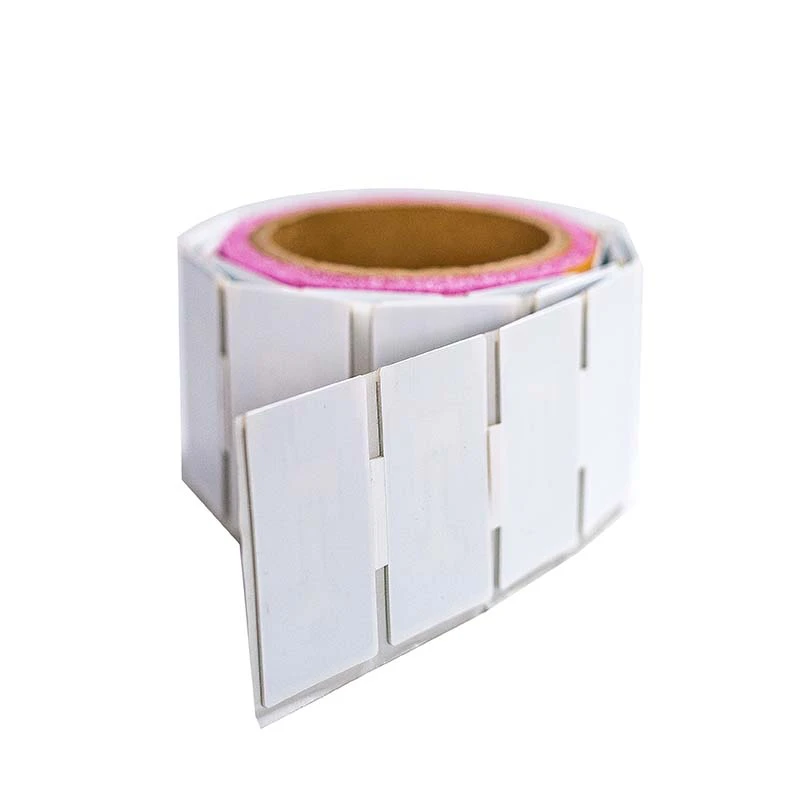
Printable RFID Metal Tag

Will it keep reading reliably when mounted on metal?

MOQ
1,000 pcs

Stock SKU. Custom tooling from 2,000 pcs.

Lead time
7–15 days

Standard; rush possible on request.

Free sample
Ships in 1–3 days

Stock samples via DHL / FedEx.

Use this tag when the asset sits on metal and a standard label or inlay would lose performance. Confirm surface type, mounting method, and required read distance before sample approval.

What buyers usually confirm first

swipe →

Surface Match

Will it sit on metal, textile, wood, plastic, or rubber?

The mounting surface usually decides tag construction faster than chip selection does.

Environment

Does it need to survive washing, heat, UV, or rough handling?

Laundry, anti-metal, tire, and rugged asset workflows all need different enclosures and materials.

Installation

Adhesive, screw, sew-on, nail-in, or loop install?

Attachment method changes both field speed and real-world read consistency, so it should be confirmed early.

Spec Check

What to confirm before you sample this tag

Surface material, enclosure, attachment method, and environmental limits usually matter more than a broad tag name alone.

Product Name UHF Printable On-Metal Tag
Surface Material PET (printable thermal-transfer compatible)
Spacer Wave-absorbing foam layer (3-5 mm thickness)
Chip Options Impinj Monza R6-P (-22 dBm), NXP UCODE 8 (-21.5 dBm), NXP UCODE 9, UCODE 9xm (on-metal optimized)
EPC Memory 96-bit (default), 128-bit (custom), 32-bit TID (factory unique)
Operating Frequency 860-960MHz (global UHF); FCC 902-928MHz, ETSI 865-868MHz, Japan 916-921MHz, China 920-925MHz
Compliance ISO/IEC 18000-63 (EPC Class 1 Gen2v2), EPC Tag Data Standard 1.13
Dimensions Standard SKUs: 40 x 25, 50 x 15, 60 x 25, 65 x 5, 65 x 35, 70 x 30, 80 x 25, 95 x 22 mm; Tamper-proof: 50 x 25, 70 x 25 mm
Weight 2-4 g per tag (size dependent)
Read Range (On Metal) 2-7 m (handheld); 4-9 m (fixed portal, 9 dBi antenna)
Read Range (Non-Metal) 6-12 m (validated for mixed-surface deployments)
Compatible Printers Zebra RZ400 / R110Xi4 / R110PAX4, Sato CL4NX, Toshiba SX-5 / SX-8, Postek iX200
Print Surface PET top layer accepts resin / wax-resin thermal-transfer ribbons (Zebra 5095, Armor APR, IIMAK SP470)
IP Rating IP68 per IEC 60529
Operating Temperature -40 deg C to +85 deg C
Storage Temperature -55 deg C to +85 deg C
Humidity 5-95% RH non-condensing
Mounting Method 3M 4910 VHB (outdoor), 3M 467 / 468 MP (indoor), Tesa 4970 pre-applied adhesive backing option
Chemical Resistance Isopropyl alcohol, mild detergents; degrades under concentrated acids / bases
Tamper-Evident Option Destructible PET face (50x25, 70x25 mm SKUs)
Packaging 300 / 400 / 500 pcs per roll; inner core 76 mm (3")
MOQ 1,000 pieces (stock SKU); 10,000 pieces (custom size or tamper-proof); 50,000 pieces (custom chip encoding)

Shortlist Logic

Why buyers shortlist this tag format

These features help teams decide whether the tag suits the environment, installation method, and read expectations of the real workflow.

Wave-absorbing foam spacer - restores 2-7 m UHF read range on metal surfaces where standard labels achieve under 0.5 m due to signal reflection
RFID printer compatible - works with Zebra RZ400/R11Xi4, Sato CL4NX, Toshiba SX-5, and Postek for in-house variable data encoding and printing
Impinj Monza R6-P or NXP UCODE 8 chips -22 dBm / -21.5 dBm tag sensitivity per ISO/IEC 18000-6C (EPC Gen2) for maximum on-metal range
Soft and flexible PET body - conforms to flat and curved metal surfaces including server chassis, pipe surfaces, and vehicle panels
IP68 waterproof per IEC 60529 rated for outdoor metal asset tracking through rain, condensation, and wash-down environments
60-70% lower cost than rigid on-metal tags - makes UHF metal asset tracking economically viable for 10,000+ unit deployments

Use Cases

Where this tag format usually works best

Use cases matter because the right tag depends on surface, environment, attachment, and read distance in the field.

IT asset management

tag servers, switches, and rack equipment with printable labels that maintain 3-5 m read range on metal chassis

Warehouse metal racking inventory

label shelving systems for automated zone mapping and slot assignment with overhead readers

Industrial machinery tracking

tag CNC machines, generators, and compressors for maintenance scheduling and location audits

Vehicle fleet labeling

apply to car doors, chassis VIN plates, or engine components for automated depot identification

Metal drum and container tracking

manage chemical drums, IBCs, and reusable metal totes across logistics networks

Metal furniture and cabinet management

track office desks, filing cabinets, and lockers across multi-floor corporate facilities

On-Metal Tag vs Standard UHF Sticker — How To Choose

Will the tag be stuck to metal? The frequency survives. The antenna doesn't.

A standard UHF sticker applied to a metal surface typically loses 90-99% of its read range — the metal detunes the antenna and absorbs RF energy. On-metal tags solve this by adding a ferrite or foam spacer between the antenna and the metal. Same UHF frequency, same chips, same reader — but only the on-metal variant actually works when the substrate is steel, aluminum, or copper.

RFIDAK printable RFID metal tag — UHF anti-metal construction with ferrite spacer layer, survives outdoor exposure, reads at 2-7 meters from metal surfaces where standard UHF stickers fail completely Option A

On-Metal Tag (this product — metal-compatible)

Ferrite spacer, reads on steel / aluminum / copper

Mount surface
Metal (steel, aluminum, copper)
Read range on metal
2 – 7 m (design dependent)
Antenna design
With ferrite / foam spacer
IP rating
IP65 – IP68 options
Typical thickness
3 – 6 mm (with spacer)
Unit price (MOQ 5K)
$0.48 – 1.45

Best for

  • IT asset tracking — laptops, servers, racks, network equipment
  • Tool crib management in workshops, factories, aerospace MRO
  • Steel pallet / cage / container tracking in logistics
  • Metal-bodied vehicle / heavy equipment identification
RFIDAK standard UHF RFID sticker — inlay-only label for plastic, cardboard, glass, wood surfaces; read range collapses to < 30 cm when applied directly to metal without an on-metal redesign Option B

Standard UHF Sticker (non-metal surfaces)

Thin label for plastic / cardboard / glass only

Mount surface
Plastic, cardboard, glass, wood
Read range on non-metal
3 – 10 m
Read range on METAL
< 0.3 m (severely detuned)
IP rating
IPX4 (typical)
Typical thickness
0.15 – 0.35 mm
Unit price (MOQ 10K)
$0.08 – 0.18

Best for

  • Retail item-level tagging on apparel, cartons, packaging
  • Book and library collection tagging (paper / cardboard)
  • Plastic tote / bin / crate tagging in supply chain
  • Any non-metal substrate where cost per tag is critical

Quick decision tip — Simple rule: if the object contains any substantial metal within 3 mm of where the tag sticks, use the on-metal tag (Option A). Even though it costs 4-8× more per unit. If the object is plastic, cardboard, wood, glass, or fabric, use the standard UHF sticker (Option B) — same read range at a fraction of the cost. Common buyer mistake: applying cheap standard stickers directly to steel shelving and then wondering why the warehouse read rate collapsed from 99% to 12%. Verify substrate before ordering.

Printable RFID Metal Tag Types

1 Should I choose the printable UHF metal tag for my asset program?

Yes if you need to tag 5,000+ metal assets (IT servers, industrial machinery, vehicle fleet, reusable containers, metal furniture) with in-house variable data printing and need 60-70% lower unit cost than rigid on-metal tags. The The printable UHF metal tag delivers a wave-absorbing foam spacer that restores 2-7 m read range on metal surfaces where standard UHF labels collapse to under 0.5 m, plus PET surface compatibility with Zebra / Sato / Toshiba / Postek thermal-transfer printers for on-site encoding of EPC, human-readable barcode, and QR.

Pick a different tag if the surface is non-metal (use a standard UHF wet inlay at $0.04-0.08), if you need extreme temperature survival above +85 deg C (use ceramic or PPS hard tag), or if you need HF / NFC proximity read instead of UHF bulk read. Pick the printable metal tag when: tagging 10K+ servers / generators / returnable containers; when in-house variable data print is required; when IP68 outdoor durability matters; and when unit cost must stay below $1.00-1.80 per tag at volume.

2 Spec decision matrix UHF on-metal tag alternatives

Comparison across the 5 UHF on-metal tag classes industrial asset managers typically evaluate. Prices indicative at MOQ 10,000 pieces.

ClassWeightRead range (on metal)Temp rangeBest fitUnit price
The printable UHF metal (PET foam)2-4 g2-7 m-40 to +85 deg CIT asset, warehouse, fleet variable print required$0.40-1.80
Rigid ABS / PPS hard tag12-40 g4-10 m-40 to +150 deg C (PPS)Outdoor industrial, chemical plant$2.50-8.00
Ceramic anti-metal tag6-18 g2-6 m-40 to +250 deg C (high-temp)Autoclave, kiln, paint booth, sterilization$3.00-12.00
PCB-embedded mini tag1-3 g1-3 m-40 to +125 deg CTool crib, weapon rack, small asset$1.50-5.00
Standard UHF wet inlay (not on-metal)0.05 g< 0.5 m on metal-25 to +85 deg CNon-metal assets only do not use on metal$0.04-0.15

Verdict: printable metal tag wins on variable print unit cost at high volumes. Hard tag wins where ruggedness matters more than cost. Ceramic wins for heat / autoclave. Standard inlay fails on metal include for contrast only.

3 Typical deployment pattern - data center IT asset tracking

Data center operators tag server chassis and rack ears with printable on-metal UHF labels so quarterly asset audits become aisle walks with a handheld instead of barcode-by-barcode scans. In-house variable printing on standard RFID thermal printers removes the outside-supplier dependency for label reorders, which matters when emergency replacements cannot wait a week.

Buyers should verify tag read range on their actual rack metal and confirm heat tolerance for hot-aisle placements during sampling.

4 Compatibility reference chips, printers, surfaces

Verified compatibility across UHF chip options, RFID thermal-transfer printer brands, metal surface types, and mounting methods.

CategorySupportedNotes
UHF chipsImpinj Monza R6-P (-22 dBm), NXP UCODE 8 (-21.5 dBm), UCODE 9 / 9xm (on-metal optimized)UCODE 9xm recommended for long-term outdoor deployment
RFID thermal-transfer printersZebra RZ400 / R110Xi4 / R110PAX4, Sato CL4NX, Toshiba SX-5 / SX-8, Postek iX200Validated on 300-mm-width print surface; smaller printers need custom ribbon path
Metal surface typesStainless steel, aluminum, galvanized steel, anodized aluminum, carbon steel, copper, brassRead range tested on all 7 surface types; stainless steel gives best results
Non-flat surfacesCurved chassis (15+ mm radius), embossed panels, wavy / corrugated metalUse 40 x 25 mm or 50 x 15 mm for curved; 95 x 22 mm long-range for flat only
Mounting adhesive3M 4910 VHB, 3M 467 / 468 MP, 3M 200MP, Tesa 4970VHB for long-term outdoor; 200MP for standard indoor; spec sheet includes full adhesion data
Reader brands fixedImpinj R420 / R700 / Speedway, Zebra FX7500 / FX9600, Alien ALR-F800, Keonn, SICKTested at 2-7 m range with 6-9 dBi circular polarized antenna
Reader brands handheldZebra RFD40 / RFD8500, Impinj R2000, Alien ALR-H450, Honeywell IH45, CSL CS108Handheld accuracy 100% within 3 m; degrades to 85-90% at 7 m
Asset / CMDB systemsServiceNow CMDB, BMC Helix, Ivanti Asset Manager, ManageEngine AssetExplorer, Atlassian Insight, FreshserviceIntegration via REST or LLRP middleware (Impinj ItemSense, Keonn AdvanNetics)
Label editing softwareZebraDesigner, Sato CLP Editor, BarTender, NiceLabel, CodesoftAll support UHF encoding + printable variable data in same print job

5 Cost at volume FAQ

How much does the The printable UHF metal tag cost at 10K pcs? Stock 65 x 35 mm tag with UCODE 8 chip: $0.72-0.95 per unit at MOQ 10,000. Larger tags (95 x 22 mm long-range): $0.85-1.15. Compact tags (40 x 25 mm): $0.55-0.75.

Volume brackets: MOQ 1,000 = $1.40-1.95; MOQ 10,000 = $0.72-0.95 (base); MOQ 50,000 = $0.48-0.65; MOQ 100,000+ = $0.38-0.52. Bulk roll packaging (500 pcs/roll) saves $0.02-0.04 per tag vs individual packaging.

Tamper-proof variant? Destructible tamper-evident versions (50 x 25 mm, 70 x 25 mm): +$0.15-0.28 per unit at MOQ 10K. Used for IT asset chain-of-custody, high-value inventory, and any workflow where removing / relocating the tag must leave a visible forensic mark.

Printer ribbon and label supply? Zebra 5095 resin ribbon (recommended): ~$0.03-0.05 per tag printed. UCODE 8 encoding: no marginal cost (reader-side firmware). Total printed-tag cost = tag price + $0.04-0.06 ribbon = $0.76-1.00 per finished tag at 10K volume.

ROI vs barcode-only asset tracking? A 10,000-asset data center at 14% annual tag replacement (barcode baseline) wastes $11,200 / year on re-printing labels alone not counting the 80% longer audit cycle time. RFID metal tag at 2% annual replacement saves $9,600 / year on tag churn + cuts audit labor by 60-70%. Typical payback: 8-14 months on combined tag + reader portal CAPEX.

High-temperature or chemical variants? Extended temp (-40 to +150 deg C) PPS-based variant: +$0.45-0.75 per tag. For > +150 deg C use ceramic (separate product see on-metal tag hard variant).

6 Market context - on-metal UHF tag adoption

Printable on-metal labels emerged as the practical middle ground between standard inlays (which fail on metal) and rigid hard tags (which cannot run through printers): they restore most of the read range at a fraction of the rigid-tag cost while keeping in-house variable-data printing. IT asset tracking, returnable container pools, and equipment maintenance are the workflows driving adoption.

For tag-on-metal physics and spacer design, see the anti-metal RFID tags guide; for chip-level decisions see the RFID Chip Comparison pillar.

Supplier Fit

Why buyers source Printable RFID Metal Tag from RFIDAK

Once the format is right, most teams still need confidence in manufacturing control, sample support, and repeat-order reliability.

ISO 9001

Quality-focused manufacturing and sample support for custom RFID projects.

Since 2008

RFID manufacturing experience across cards, tags, labels, wristbands and readers.

Free Samples

Test product compatibility before bulk purchasing and customization decisions.

Commercial Fit

How buyers usually move this product from shortlist to sample

Most inquiry-ready visitors want to know whether this product matches their workflow, region and approval stage. These cues help them move faster without leaving the product page.

System integrators

Often validating tag fit, reader behavior and installation method before including the product in a wider solution.

Laundry and textile operators

Usually focused on wash-cycle durability, attachment method and read consistency in bulk handling.

Industrial tracking teams

Typically comparing on-metal, pallet, tyre or rugged tags for repeat deployment in harsh environments.

Quote Checklist

What to send us for a faster recommendation

  • The exact surface or object the tag will be attached to, especially if metal, textile or plastic is involved.
  • Working environment such as heat, washing, chemicals, UV, outdoor exposure or repeated impact.
  • Required read distance, reader type and whether the tag is disposable or reusable.
  • Preferred attachment method, quantity and whether UID print or encoding is needed.

Market Notes

Regional conversations often tied to this category

North America

Frequent projects include warehouse visibility, IT asset management, returnable packaging and on-metal identification.

Europe

Industrial laundry, reusable transport items and traceability projects often require careful sample validation and repeatability.

Middle East, Africa and Oceania

Outdoor assets, utilities and long-service industrial tagging often put more weight on enclosure durability and field conditions.

More Ways To Source This

Order this by chip, format or region

These sourcing pages cover the chip-specific and market-specific buying details that often decide the final spec for this product.

Before You Order

Procurement guides every RFID Tags buyer reads first

Five short reads on the procurement-side topics every B2B RFID buyer wants answered before signing a quote — MOQ thresholds, lead time reality, pricing transparency, sample policy, and how to audit a Chinese factory before your first order.

Buyer Questions

Questions buyers usually ask before sample approval

These FAQs cover the points that usually come up between a first shortlist and a real sample or quote request.

What is the minimum order quantity (MOQ) for Printable RFID Metal Tag? +

For Printable RFID Metal Tag, the standard MOQ starts at 1,000 pieces on stock SKUs. Custom shape, material or antenna tooling typically requires 3,000–5,000 pieces to cover one-time mold / die-cut setup cost. Exact MOQ and unit pricing are quoted per project once chip, customization and packaging are confirmed.

Does RFIDAK provide free samples of Printable RFID Metal Tag? +

Yes. Stock rfid tags samples of Printable RFID Metal Tag are typically free; we only ask buyers to cover DHL/FedEx express shipping. Samples ship in 1–3 business days after your order is confirmed and arrive in 2–5 days to most countries. Custom samples (new chip, new size, printed artwork) usually take 3–7 additional days.

What is the production lead time for Printable RFID Metal Tag? +

Standard Printable RFID Metal Tag orders ship in 7–15 business days after PO confirmation and artwork approval. Large runs (>100k units) or orders with complex encoding / custom molds may take 15–25 business days. Rush production is available on request for time-sensitive launches; confirm MOQ and artwork early to protect the timeline.

Can Printable RFID Metal Tag be customized for my brand or project? +

Yes. Printable RFID Metal Tag supports end-to-end customization: full-color CMYK / silk-screen / UV printing, laser engraving, serial numbering, custom chip encoding (UID write, NDEF, sector locking), custom shape / size (subject to tooling MOQ), and packaging. Share your artwork, chip requirement and quantity and we will return a spec sheet + price within 24 hours.

Which RFID chips are supported for Printable RFID Metal Tag? +

Printable RFID Metal Tag supports Impinj Monza R6-P (-22 dBm), NXP UCODE 8 (-21.5 dBm), NXP UCODE 9, UCODE 9xm (on-metal optimized). Before ordering, share your reader model or current credential so we can confirm the exact chip variant (e.g., MIFARE Classic 1K vs DESFire EV3, NTAG213 vs 215) and avoid compatibility issues after lamination.

What certifications and quality control does RFIDAK apply to Printable RFID Metal Tag? +

RFIDAK operates under ISO 9001:2015 (Quality Management) and ISO 14001 (Environmental Management), audited by SGS. Printable RFID Metal Tag is subject to incoming material inspection, in-process QC at every lamination / bonding / encoding step, and 100% electrical performance testing before shipment. Products meet CE, FCC, RoHS and REACH as applicable by market. Full test reports are available on request for buyer audits.

Can Printable RFID Metal Tag be pre-encoded or printed with my artwork before shipment? +

Yes. Printable RFID Metal Tag can ship with UID range assignment, NDEF URL encoding (for NFC), sector-locked user data, serial numbering, and CMYK / silk-screen / UV printing of your artwork. Provide an AI/PDF artwork file at 300 dpi with 3 mm bleed and a chip-encoding spec; we return a digital proof for approval before production.

How does RFIDAK ship Printable RFID Metal Tag internationally? +

RFIDAK ships Printable RFID Metal Tag via DHL / FedEx / UPS (door-to-door, 3–5 days to most countries), air cargo (5–7 days for heavier orders), or sea freight (20–35 days for bulk over 500 kg). Standard Incoterms are EXW, FOB Shenzhen and DDP; choose based on customs clearance preferences. Commercial invoice, packing list and CoC / MSDS are included automatically.

How does RFIDAK handle repeat orders of Printable RFID Metal Tag? +

For repeat buyers, RFIDAK locks tooling, artwork and chip encoding on file so subsequent POs ship faster — typically 5–10 business days for stock chip types at previously-run quantities. Price is adjusted transparently per chip market rate and FX movement; we flag any chip shortage (e.g., DESFire EV3) before quotation so the project plan stays realistic.

What are the technical specifications of Printable RFID Metal Tag? +

Key Printable RFID Metal Tag specs: frequency 860-960 MHz (global UHF); FCC 902-928 MHz, ETSI 865-868 MHz, Japan 916-921 MHz, China 920-925 MHz; dimensions Standard SKUs: 40x25, 50x15, 60x25, 65x5, 65x35, 70x30, 80x25, 95x22 mm; Tamper-proof: 50x25, 70x25 mm. A full technical datasheet including read range, chip memory map, IP / temperature rating and compliance certificates is available on request; attach your reader model and target environment so we can confirm suitability before quoting.

Get Free RFID Samples

Try before you buy. Request free samples of any RFID product from our 50+ SKU catalog. Samples shipped via DHL/FedEx within 1-3 business days worldwide.

Not ready to chat? Just drop your email and we'll send the RFIDAK product catalog (PDF).

We'll only use your email to send the catalog and reply to your inquiry.

WhatsApp Get a Quote