RFID in Supply Chain 2026: Item-Level Tagging, EPCIS & Real ROI
RFID technology has transformed supply chain management by providing real-time visibility and tracking capabilities. Learn how businesses are using RFID for better efficiency, from item and case tagging up to EPCIS event data.
Quick Answer
Supply-chain RFID can identify tagged items, cases or reusable assets at defined read points without requiring line-of-sight scanning of each code. It does not by itself create continuous location data or guarantee a particular inventory-accuracy or labor result. Define the identifier, finished tag, reader placement, exceptions and system integration, then measure the complete workflow against the current process.
Choose the level that the process must verify
| Level | Candidate carrier | What to test |
|---|---|---|
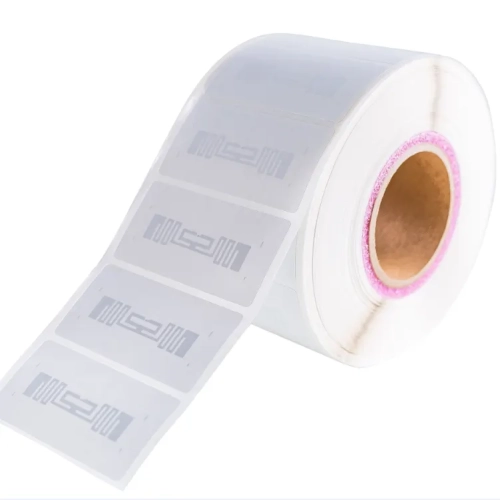
| Item | UHF label or hangtag | Placement, encoding, reader coverage and item-to-record match |
| Case or carton | UHF carton label | Reads on the packed case at receiving and shipping |
| Reusable pallet or container | Attached UHF hard tag | Mounting, damage, cleaning, replacement and asset identity |
These levels can be used separately or together. A pallet read does not prove the contents of every case unless the application also maintains and verifies the relevant aggregation records. Get configuration-specific tag and reader quotes rather than using a generic price or read-distance table.
Build the read and exception workflow
Dock-door portals, handheld readers and other read points can support different tasks. Map exactly where an item should be observed, what counts as a missed or duplicate read, and how an operator corrects the record. Metal, liquid, stacked goods, orientation and neighboring readers can affect performance. Test production-representative tags on the actual packaging and assets at the intended speed and reader settings. Where a barcode is retained as a fallback, document how a manual scan is reconciled with RFID events.
For a heat-exposed or cleaned asset, request the exact finished tag's environmental and attachment evidence. A high-temperature or on-metal product name alone does not establish autoclave suitability or a particular lifetime.
EPCIS records need business context
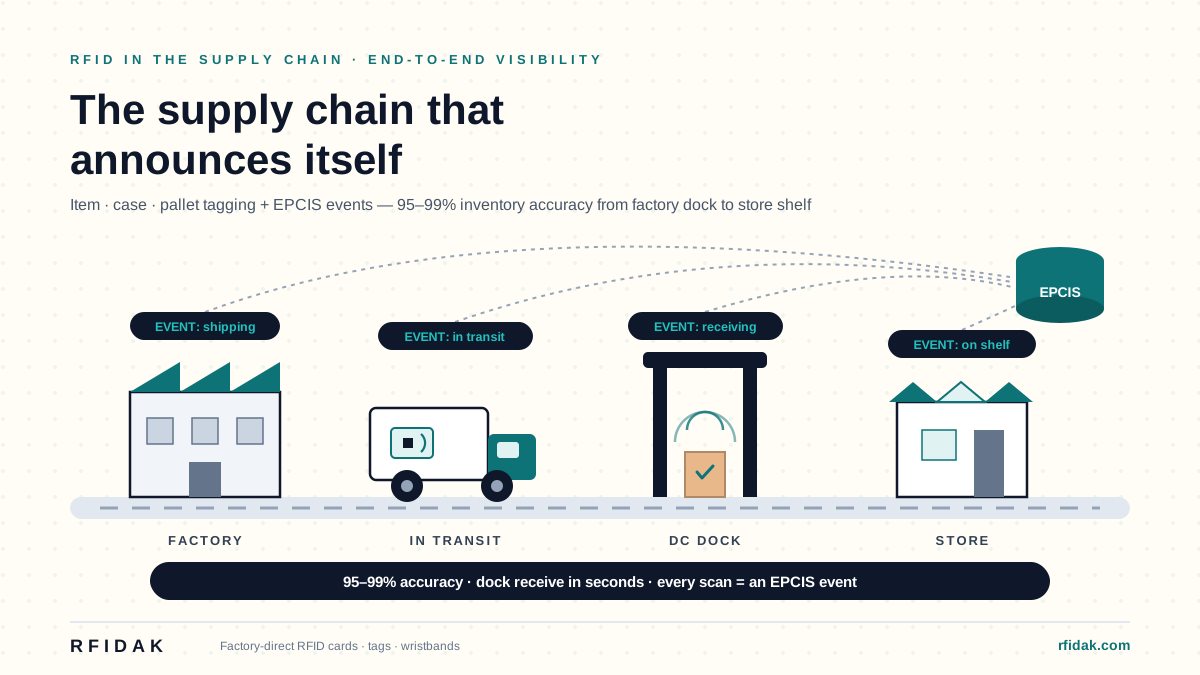
GS1 EPCIS is an event-data standard for sharing visibility information about what was involved, when and where it happened, why it happened and, where applicable, how conditions were measured. A barcode scan or RFID read can trigger an event, but the application must add the correct object identifier, business step, location and time. Not every raw antenna observation is automatically a valid receiving or shipping event. Agree the identifier scheme, duplicate filtering, exception rules and data ownership with the WMS or ERP team before scaling.
EPCIS can support data exchange when trading partners use it, but neither a tag nor EPCIS alone satisfies every food, pharmaceutical or EU product-passport requirement. Assess those obligations for the actual product and business role.
Pilot before estimating benefit
- Choose a representative item, case or reusable-asset group and record the current scan, counting and exception process.
- Agree candidate tags, reader settings, encoding and acceptance criteria before testing.
- Measure valid reads, false or missing reads, task time, record accuracy, rework and tag survival at every planned read point.
- Include tag application, equipment, software, integration, training, freight and ongoing support in the quote.
- Calculate payback from the pilot's observed changes and the site's own baseline; expand only after the data and operating owners accept the workflow.
For a more detailed pilot template, see the RFID pilot guide. There is no transferable percentage for inventory accuracy, stockout reduction, labor saving or tag-failure rate.
Supply Chain RFID FAQ
Do I need both RFID and a barcode?
Keep the printed code when checkout, human-readable fallback or a trading partner requires it. Add RFID only where bulk or hands-free reads justify the equipment and data work; test how exceptions reconcile across both identifiers.
Can a returnable container tag be reused?
Possibly. Check the attachment, cleaning, handling and reader performance of the finished tag across representative cycles. Use the asset identifier agreed by the system owner and calculate cost per accepted service cycle from actual quotes and measured life.
Will my WMS or logistics provider accept RFID events?
Ask the specific WMS vendor or 3PL which reader interfaces, identifier formats, event data and exception processes are supported in your contract and installation. Test a receiving and shipping transaction end to end; no brand name guarantees ready-made integration.
What happens when a tag fails to read?
Define an operator recovery step, such as a verified barcode read or a new tag, and preserve the relationship to the item and shipment record. Measure actual failures in the pilot rather than assuming a standard field-failure percentage.
Sources
- GS1 EPCIS — Electronic Product Code Information Services standard. gs1.org/standards/epcis
- ISO/IEC 18000-63:2015 — UHF RFID air interface (Class 1 Gen 2). iso.org/standard/63675.html
- GS1 EPC Tag Data Standard 2.1 (2023). ref.gs1.org/standards/tds/
- Walmart Newsroom — RFID expansion announcements (2022–2024). corporate.walmart.com
- IDTechEx — "RFID Forecasts, Players and Opportunities 2024-2034". idtechex.com
- McKinsey & Company — "How retailers can use RFID to bring down costs" (2023). mckinsey.com/retail
- Auburn University RFID Lab — Apparel inventory accuracy studies (2018, 2022). rfid.auburn.edu
Whatever your supply chain throws at a tag — metal surfaces, liquids, extreme temperatures, or simply relentless volume — RFIDAK offers UHF labels, hard tags, and specialized constructions built for it. Contact us for supply chain RFID solutions tailored to your needs.
Need help turning this guidance into a product shortlist?
Use this next step when the article has narrowed the direction and you now need help choosing chips, formats, samples or the closest product family.
Comparison Pages
Compare the closest alternatives before you request samples
Open one of these if the article clarified the topic but the team still needs a cleaner format, chip or frequency decision.
Quick FAQ
Questions buyers often ask after reading this guide
What is RFID in supply chain management?
RFID in supply chain management uses passive UHF inlays under ISO/IEC 18000-63 to identify tagged items, cartons and pallets at read points without line-of-sight scanning. A serialized EPC can feed receiving, picking and shipping events into a WMS or ERP. Retailer tagging programs, including Walmart category-specific requirements, can affect upstream labeling; check the exact item specification rather than assuming one rule applies to all merchandise.
What ROI can I expect from a supply chain RFID rollout?
ROI depends on the existing receiving and counting process, item mix, reader coverage, integration and tag cost. Record current labor time, inventory accuracy, missed reads, exceptions and loss rates before a pilot. Test the same measures at one facility with production-representative tags and readers, then calculate payback from observed changes and a full equipment, software and maintenance budget.
How much does it cost to deploy RFID in a distribution center?
Budget the complete workflow: tags, readers and antennas, installation, data integration, software, training, maintenance and exceptions. Get configuration-specific quotes and measure the current process against a limited pilot before estimating payback. No universal hardware price or payback period applies across sites.
Should I use SGTIN-96 or GIAI-202 EPC encoding?
Use SGTIN-96 (Serialized Global Trade Item Number) for trade items moving through retail, distribution and consumer channels, especially anything mandate-driven. SGTIN-96 encodes the GS1 GTIN plus a 38-bit serial. Use GIAI-202 (Global Individual Asset Identifier) for returnable transit packaging, IT assets, reusable containers and any asset that does not have a GTIN. Mixing both schemes is fine if the WMS integration layer can normalize them. Keep one scheme per asset class to avoid serialization conflicts.
What chip should I specify for supply chain UHF inlays?
Start from the required EPC memory, reader region, item packaging, retailer program and finished-inlay performance. Compare production-representative NXP, Impinj or other Gen2 candidates on the actual product; reader compatibility, antenna tuning and approval depend on the exact inlay and program. Obtain a configuration-specific quote instead of treating a chip family as a universal default.
Will my existing WMS integrate with RFID?
Modern WMS platforms from Manhattan, Blue Yonder, SAP EWM, Korber and Oracle Cloud all support EPC-tagged item streams via REST or EPCIS event ingestion. The constraint is usually not the WMS but the integration layer in between: a middleware or edge gateway that throttles raw reader events, deduplicates within a 5-second window, maps EPC to internal SKU and emits clean ObjectEvent or AggregationEvent messages. Plan for 4-8 weeks of integration work even with a WMS that supports RFID natively.
Do I need to tag every carton, or just pallets?
Tag the level the read points need to verify. Pallet-only tagging is cheaper and supports yard and dock-door receiving but cannot answer what is in a specific carton. Carton-level adds traceability and powers cross-dock sortation. Item-level is required for retail mandates and is the only level that supports in-store cycle counts. Most rollouts start with pallet plus carton at the DC, then add item-level once the upstream supplier mandate kicks in.
What is the minimum order quantity for supply chain RFID tags?
RFIDAK's published standard tags-and-labels MOQ baseline is 1,000 pieces. Confirm the exact chip, antenna, construction, print, encoding and quantity per design in a written quote. Free stock samples (up to 5 pieces) — buyer covers DHL/FedEx freight ($25–60), refunded 1:1 against the first production order over $500. Larger evaluation lots, custom samples, production timing and delivery are agreed separately for the selected configuration.
Author
RFIDAK RFID Editorial Team
RFID supply editorial team
RFIDAK publishes practical RFID guides to help buyers compare chips, product formats, sampling plans and sourcing options before production.