
Custom PVC RFID Card
Printed access or identification cards. Confirm the accepted chip, issuer configuration, visible numbering and printer or holder requirements.
Building access credentials
Order access credentials around the readers, controllers and issuance software already in use. The system provider should confirm the accepted chip, credential data format and enrollment method; RFIDAK can then review the physical card or keyfob, printing and supported preparation for a quote. For a new system or chip migration, agree the security configuration with your integrator first. Approve samples through real enrollment, door access and replacement checks before defining the production specification.
Reader and issuer references · Credential format · Quantity · Sample terms
Updated · Product selection and sample planning
Confirm the chip, construction and system fit for your configuration.
Before choosing a product
A frequency or chip family narrows the options. Reader configuration, credential format and issuer support determine whether a finished credential can be used.
Cards support visible identification; keyfobs suit key rings; rigid clamshell cards need suitable holders and printing arrangements. Test each chosen body at the door.
An initial read is one checkpoint. Include authorized enrollment, correct permissions, denied access and the administrator’s lost-credential procedure in the pilot.
Ask the system owner to approve the electronic specification before selecting artwork or a substitute chip. These are procurement checkpoints, not a certification of any access platform.
Scroll across the table to compare all columns.
| Your project | What to specify | What a sample must demonstrate |
|---|---|---|
| Replenish an existing credential | Approved chip variant, credential format, enrollment method and reader/controller versions. | New credentials enroll and receive the intended permissions on representative doors. |
| Add a printed staff or visitor card | Card body, printer or preprinting method, holder fit and the rule linking printed numbers to system records. | Print and holder fit, legible identification and correct record-to-card mapping. |
| Use a keyfob or rigid card | The same approved electronic configuration in the proposed body; attachment and carrying requirements. | Reliable presentation at each reader type while carried as intended; check the key-ring or holder fit. |
| Change chip family or security configuration | Integrator-approved reader, issuer, application and migration plan, including old/new credential coexistence. | Issue, authenticate, use and retire credentials under the intended configuration; evaluate every affected reader family. |
| Use one credential across several services | Each service owner’s approval, application allocation and responsibility for issuance and keys. | Each service works independently after enrollment, update and replacement. A shared chip alone is insufficient. |
A shortlist for your evaluation
Open the product page for its specification and evaluation requirements. These are hardware candidates; system integration and sample acceptance depend on your project.
Printed access or identification cards. Confirm the accepted chip, issuer configuration, visible numbering and printer or holder requirements.
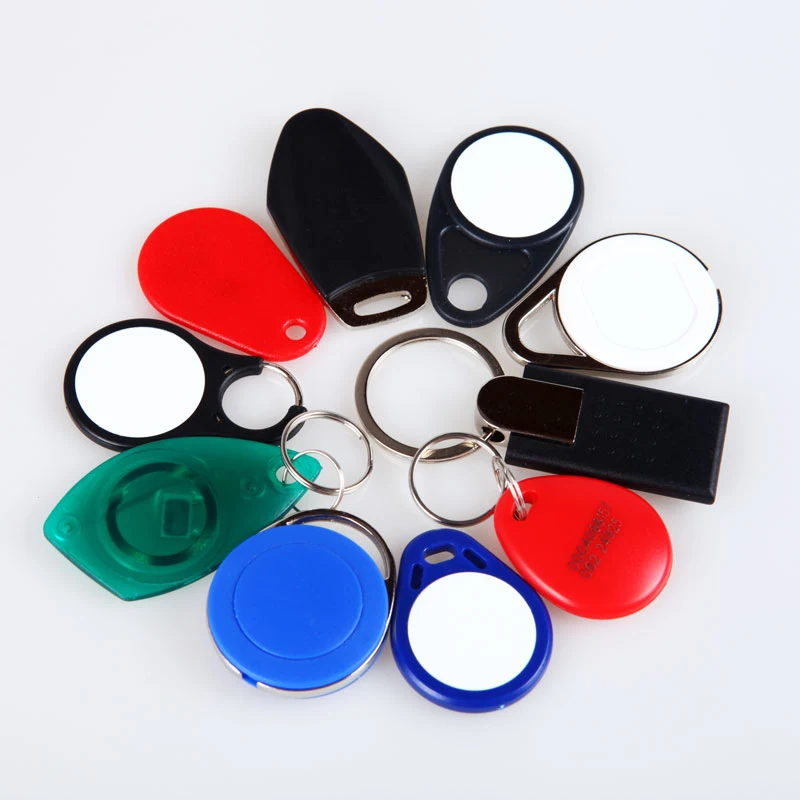
Credentials carried on a key ring. Match the system-approved electronic specification and test the selected body on installed readers.
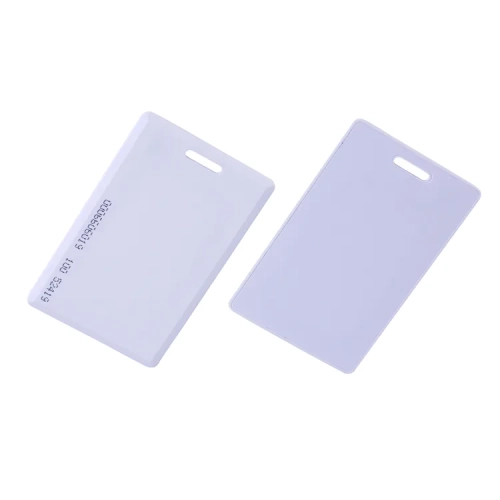
Rigid, slotted credential bodies for a suitable holder or attachment. Confirm chip support and printing method; the body does not establish compatibility.
From shortlist to approval
Your system owner controls credential acceptance and permissions. RFIDAK reviews the physical product, artwork and agreed preparation; the quotation defines what can be supplied and tested.
Buyer questions
No. Frequency is only one requirement. Confirm the accepted protocol and chip variant, the reader’s configuration, the credential data format and the authorized enrollment or personalization process. A reader detecting a chip does not prove that the controller will grant the intended access.
DESFire EV3 provides application-level authentication and configurable files, but the system must implement them. Ask the integrator to choose the chip and security configuration with supported readers, issuance tools and key management. Purchasing an EV3 card alone does not establish the security of the access system.
A keyfob is a candidate when the system accepts its exact chip and prepared credential format. Have the administrator issue a new test credential, then test its body and antenna on representative doors. Card and keyfob form factors can behave differently during presentation, even with the same chip family.
Not necessarily. A printed serial, a chip identifier and the credential number used by the access software can be different fields. Specify the mapping, formatting and numbering responsibility with a synthetic example, then check a sample against the resulting system record.
Use an authorized test credential and the administrator’s normal procedure. Confirm replacement enrollment and the old credential’s expected access outcome at representative doors. For readers that work offline or receive periodic updates, record the system provider’s update behavior and test after the required synchronization.
Share the approved credential specification, body and artwork requirements, quantity, destination and pilot plan. RFIDAK reviews product supply and supported printing or preparation in the quotation. Your authorized administrator or system provider defines access permissions and controls issuance and production keys; no live key or full credential dump is needed for the initial inquiry.
Check the basis for the decision
These references describe published chips, standards, product examples or systems. Confirm the offered RFIDAK configuration and your installation separately.
Chip-level ISO/IEC 14443 Type A interface, configurable applications and authentication features; these do not certify a completed access installation.
AN10969, Rev. 2.1 (2020), explains why key management and operational system measures accompany secure IC selection.
OT5334 (2019) separates reader and firmware versions, supported media, application configuration and issuance infrastructure. Used as a planning reference, not a current chip catalog.
Make the next conversation useful
Share the reader and issuer references, approved credential type, preferred body and order quantity. We can review the product scope and the samples your administrator needs to evaluate.
Use approved specifications and non-sensitive examples. Keep production keys, access permissions and live credential data with the system administrator.
May we use Google Analytics cookies to measure visits and inquiry actions? Your choice does not affect the contact form. Cookie details