RFID Frequency Guide 2026: LF, HF, UHF & Microwave Compared
Different RFID frequencies offer different advantages. This guide helps you understand LF, HF, and UHF RFID and choose the right frequency for your specific application. Includes read-range, cost and interference trade-offs for each band.
Quick Answer
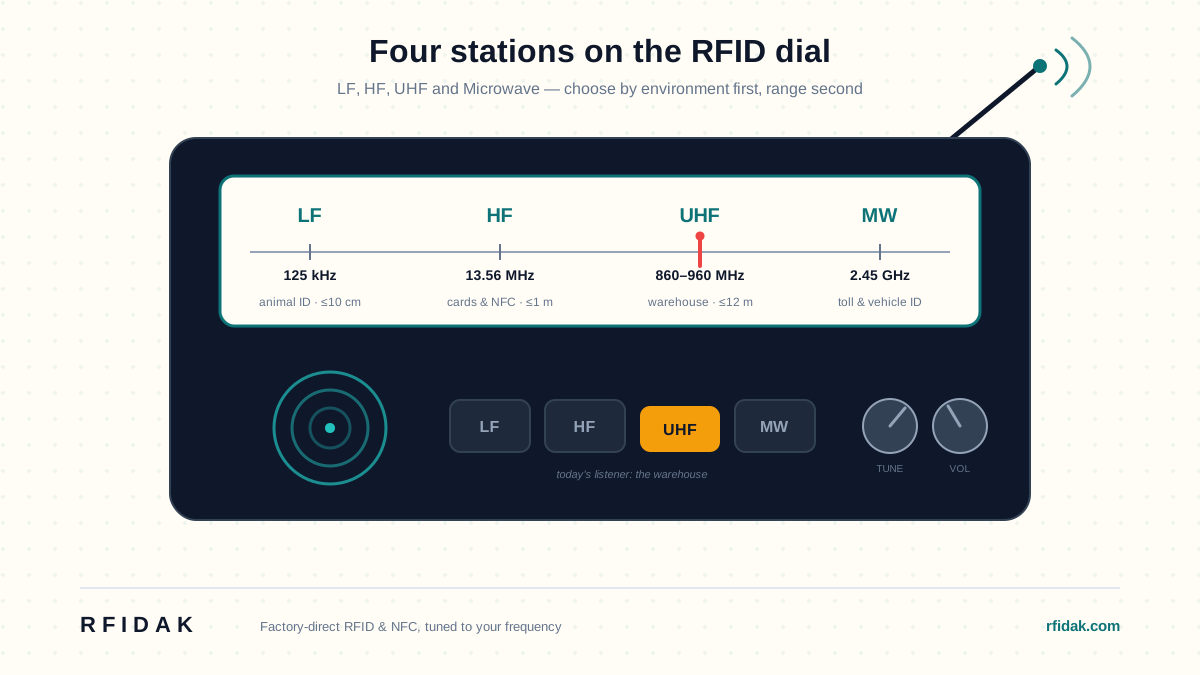
RFID frequency bands sort into four buckets — LF (125 kHz) for animal ID and immobilizers (≤10 cm), HF (13.56 MHz) for smart cards and NFC (≤1 m), UHF (860–960 MHz) for warehouse and retail (≤12 m), and Microwave (2.45+ GHz) for toll and fast vehicle ID. Choose by environment first (metal/moisture penetration favors LF; multi-tag bulk reads favor UHF), then by read range.
Understanding RFID Frequencies
RFID systems operate at four radio bands: Low Frequency (LF, 125 kHz), High Frequency (HF, 13.56 MHz), Ultra-High Frequency (UHF, 860–960 MHz), and Microwave (2.45 GHz). Think of them less as competing products and more as four employees with wildly different job descriptions: each band has different read range, environment tolerance and reader compatibility, so the choice depends on use case rather than absolute capability.
Nobody hires the megaphone for whisper work. For HF vs UHF specifically, see our HF vs UHF comparison guide.
The Physics of Wavelength: Why Frequency Determines Behavior
The behaviour difference between RFID bands is not a marketing distinction — it falls out directly from wavelength, and wavelength does not attend sales meetings.
Lower frequency means longer wavelength means better penetration through dense materials but smaller usable read range; higher frequency means shorter wavelength means longer range but vulnerability to water and metal absorption. Every spec sheet in this guide is that one sentence wearing different outfits.
| Band | Wavelength | Coupling | Penetration |
|---|---|---|---|
| LF 125 kHz | ~2,400 m | Inductive (near-field) | Excellent through metal & water |
| HF 13.56 MHz | ~22 m | Inductive (near-field) | Good through water |
| UHF 915 MHz | ~33 cm | Backscatter (far-field) | Absorbed by water; detuned by metal |
| Microwave 2.45 GHz | ~12 cm | Backscatter (far-field) | Highly absorbed; reflects off metal |
Quick Comparison at a Glance
| Parameter | LF (125 kHz) | HF (13.56 MHz) | UHF (860–960 MHz) | Microwave (2.45 GHz) |
|---|---|---|---|---|
| Read Range | 1–10 cm | 10 cm–1 m | 1–12 m | 1–10 m (with line-of-sight) |
| Data Speed | Slow | Moderate | Fast | Very fast |
| Near Metal | Good | Moderate | Poor (needs on-metal tag) | Reflective (problematic) |
| Near Water | Good | Good | Poor (signal absorbed) | Severely absorbed |
| Multi-Tag Read | No | Limited | Yes (hundreds/sec) | Limited (typically 1 vehicle/lane) |
| Tag Cost | $0.50–$5 | $0.10–$5 | $0.05–$15 | $3–$30 (often active) |
Low Frequency (LF) RFID: 125–134 kHz
Characteristics
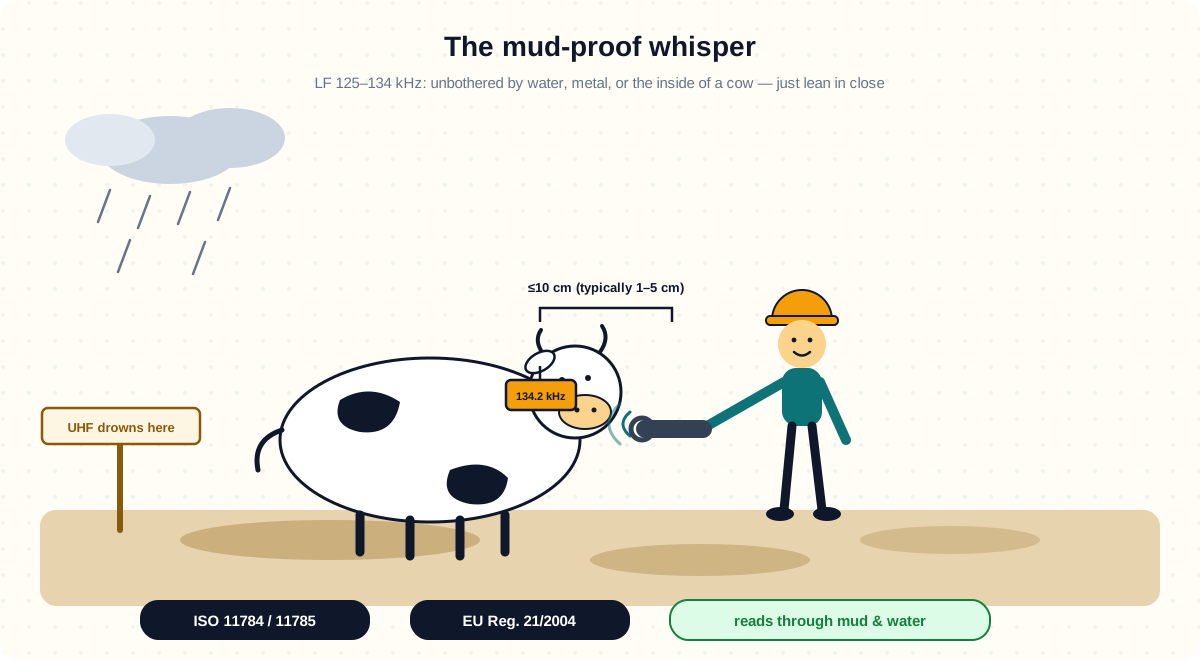
- Read range: Up to 10 cm (typically 1-5 cm)
- Data transfer rate: Low (slower than HF and UHF)
- Performance near metal: Good
- Performance near water/liquids: Good
- Common chips: EM4100, EM4200, T5577, HID Prox
Best Applications
LF is the mud-boots veteran of the family — unimpressed by water, metal, or the inside of a cow, provided you lean in close. It is ideal for applications requiring short-range reading in challenging environments. Common applications include animal identification (pet microchips, livestock tracking), access control keyfobs, vehicle immobilizer systems, and industrial automation in metal-rich environments.
High Frequency (HF) RFID: 13.56 MHz
Characteristics
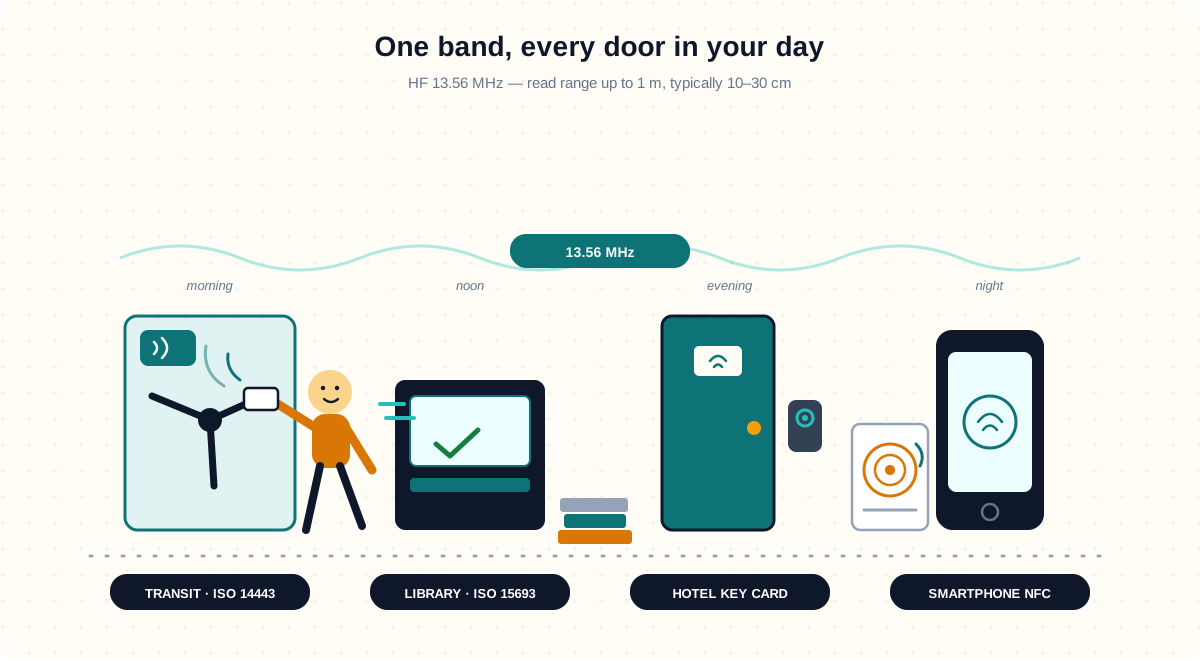
- Read range: Up to 1 meter (typically 10-30 cm)
- Data transfer rate: Moderate
- Performance near metal: Moderate (with proper tag design)
- Performance near water: Good
- Common chips: Mifare Classic, Mifare DESFire, NTAG213/215/216, ICODE SLIX
Best Applications
HF RFID is the most versatile frequency band — the sociable middle child on speaking terms with every smartphone on Earth. It is widely used in contactless smart cards, NFC applications, library management, pharmaceutical tracking, document management, and laundry tracking systems. If you tapped anything today, you shook hands with 13.56 MHz.
HF includes NFC
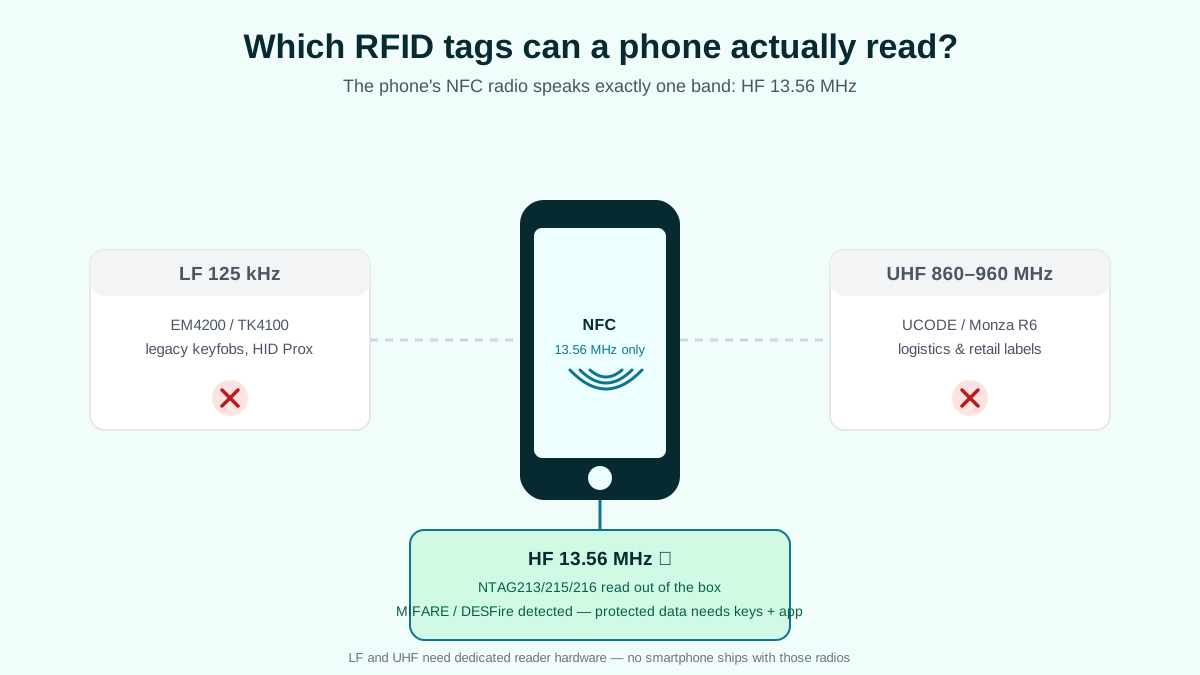
NFC (Near Field Communication) operates within the HF band at 13.56 MHz. Any NFC-enabled smartphone can read HF/NFC tags, making this frequency ideal for consumer-facing applications like marketing, authentication, and digital product passports.
Ultra-High Frequency (UHF) RFID: 860–960 MHz
Characteristics
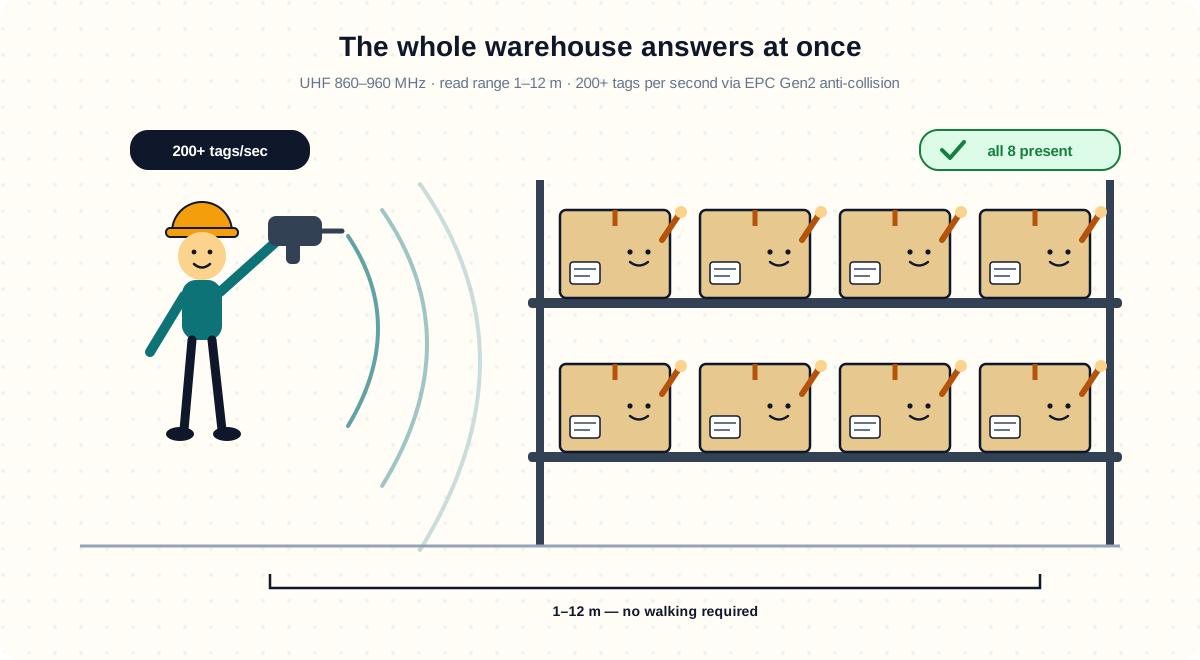
- Read range: Up to 12 meters (passive), 100+ meters (active)
- Data transfer rate: Fast
- Performance near metal: Poor (requires special on-metal tags)
- Performance near water: Poor (signal absorption)
- Common chips: Impinj Monza, NXP UCODE, Alien Higgs
Best Applications
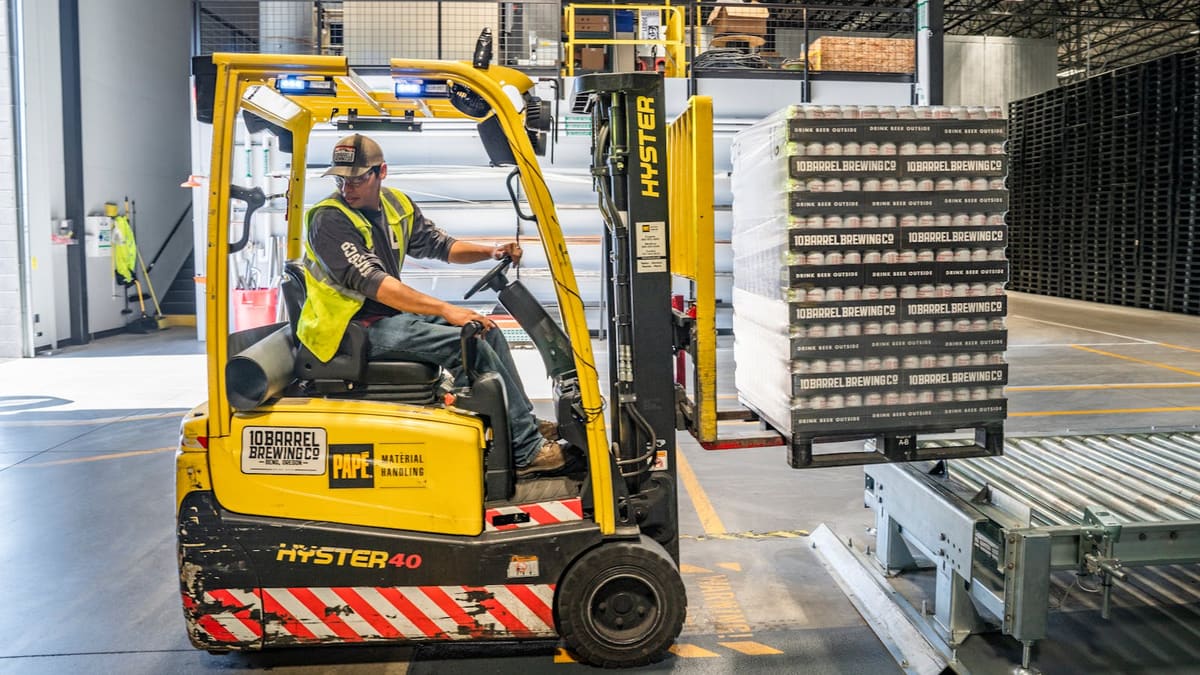
UHF is the loud one — the band that takes attendance for an entire pallet without walking over to it. It excels in applications requiring long read ranges and high-speed scanning. Common uses include supply chain and logistics tracking, retail inventory management, asset tracking, toll collection, and warehouse automation. Its two sworn enemies, as the wavelength table warned: water and bare metal.
Regional UHF regulations
UHF frequencies vary by region: North America uses 902–928 MHz, Europe uses 865–868 MHz, China uses 920–925 MHz, and Japan uses 916–921 MHz. When sourcing UHF tags for international projects, ensure the chip supports your target region's band.
Microwave RFID (2.45 GHz): The Fourth Band
Microwave RFID is the niche fourth band most retail and warehouse operators never touch — the specialist you call for exactly one job, like a wedding DJ or a safecracker. It runs at 2.45 GHz (sharing spectrum with Wi-Fi and Bluetooth) and offers the fastest data rates in RFID — but at the cost of high water absorption, metal reflection issues, and a much shorter usable range than UHF.
Where Microwave is the right call
- Electronic toll collection (ETC) — US E-ZPass, Mexican IAVE, Brazilian Sem Parar, and Chinese ETC all use 2.45 GHz active or semi-active transponders for high-speed lane reads.
- High-speed industrial automation — production lines that need millisecond-grade tag reads as parts move past at conveyor speed.
- Real-time location systems (RTLS) with active 2.4 GHz beacons — hospital asset tracking, prison inmate monitoring.
Most microwave RFID is active (battery-powered) rather than passive, because passive 2.45 GHz tags struggle to harvest enough energy at meaningful range. Tag cost runs $3–$30+ per unit, and EIRP limits in most jurisdictions are far stricter than UHF (typically 1 W or below).
For mass logistics or retail inventory, you almost always want UHF instead. For more on RTLS and active variants, see our RFID types guide.
Frequency Selection Decision Guide
Choose by use case
- Access control, keyfobs, animal ID → LF (125 kHz) — reliable near metal, short range is a security feature
- Smart cards, NFC tap, payments, library → HF (13.56 MHz) — phone-compatible, moderate range
- Warehouse, retail, logistics, bulk scanning → UHF (860–960 MHz) — long range, fast multi-tag read
- Metal assets, tools, IT equipment → UHF with anti-metal tags
- Laundry, uniforms, linens → HF or UHF with textile laundry tags
Frequency Selection Decision Flowchart
Walk through these four questions in order — the first “Yes” tells you the band, no committee meeting required. The flow biases toward the cheapest standards-compliant choice that satisfies your constraints, because physics does not negotiate and budgets should not have to.
Real-World Deployments by Frequency
Theory is cheap; deployments come with invoices. To pressure-test the decision flowchart, here is how four major deployments map to each band:
- LF — USDA Animal Disease Traceability + EU Reg. 21/2004. Mandatory 134.2 kHz LF ear tags on cattle, sheep, and goats EU-wide and increasingly in the US. Boluses for sheep/goats survive the rumen for the animal’s lifetime. Vehicle key immobilizers (Mercedes, BMW, Toyota) also embed LF chips so the engine won’t start without the right key.
- HF — London Oyster + Tokyo Suica + Library NFC. MIFARE DESFire EV1/EV2 at 13.56 MHz powers London Oyster (50M+ cards), Singapore EZ-Link, and Hong Kong Octopus. Tokyo’s Suica runs on Sony FeliCa (NFC Forum Type 3, also at 13.56 MHz). Public libraries worldwide use ISO 15693 SLIX2 for self-checkout.
- UHF — retail item-level identification. Passive UHF 860–960 MHz inlays support serialized inventory reads. For Walmart-bound items, confirm the relevant Auburn ARC inlay specification and GS1 encoding instructions by category. See our Walmart RFID requirements guide.
- Microwave — US E-ZPass + China ETC. Active 915 MHz semi-passive in some implementations, 2.45 GHz active in others. E-ZPass alone covers 19 US states with 50M+ transponders; China’s ETC system (910–1000 MHz / 5.8 GHz dual-band) was rolled out nationwide for highway tolling in 2019–2020.
Key Takeaways
- LF (125–134 kHz): excellent through metal and water; short range; animal ID (ISO 11784/11785) and legacy access control.
- HF (13.56 MHz): mid-range; ISO 14443 / ISO 15693; smart cards, NFC, transit ticketing.
- UHF (860–960 MHz): EPC Gen2 standard; long range; warehouse + retail + supply chain at scale.
- Microwave (2.45+ GHz): fast data transfer; toll collection, vehicle ID, industrial automation.
- Region matters for UHF: 902–928 MHz in the US (FCC) vs 865.6–867.6 MHz in the EU (ETSI) — chip and tag selection must match the deployment region.
⚠️ Common pitfall
A UHF tag certified for FCC 902–928 MHz will under-perform in EU 865–868 MHz deployments and vice versa. Confirm the destination region BEFORE volume production — chip vendors offer FCC-, ETSI-, and global-region SKUs.
RFID Frequency FAQ
Which RFID frequency is the fastest?
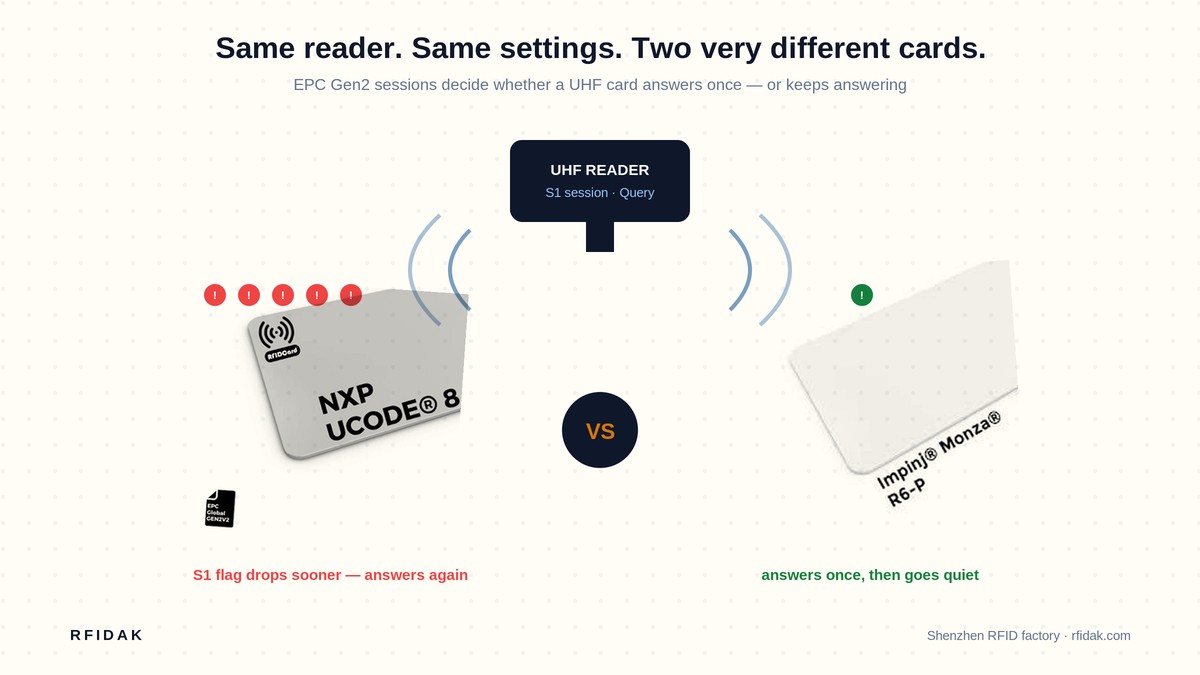
For raw data rate per tag, microwave (2.45 GHz) is fastest, but for total system throughput in real applications, UHF (860–960 MHz) wins because it reads 200+ tags per second in parallel via slotted ALOHA anti-collision. LF and HF are sequential single-tag reads.
Why don’t iPhones read UHF tags?
iPhones (and all major smartphones) only have HF/NFC radio hardware at 13.56 MHz. UHF requires a separate radio at 860–960 MHz, which is much larger physically and would consume battery. UHF reads need a dedicated handheld (Zebra MC3300xR), Bluetooth sled (Chainway, Alien), or fixed-portal reader.
Can one tag work on multiple frequency bands?
Yes — dual-frequency tags exist (typically HF + UHF) and are used where the same item needs both smartphone tap (HF) and bulk inventory read (UHF). Cost is roughly 1.5–2× a single-band tag. Common in luxury goods authentication where consumer-tap and brand-side inventory both matter.
Which RFID frequency works best through metal?
In raw physics, LF (125 kHz) penetrates metal best because of its long wavelength and inductive coupling — that’s why vehicle key chips and animal boluses use LF. UHF can work near metal only with on-metal tag construction that adds a ferrite or air-gap spacer. Microwave at 2.45 GHz is reflective off metal and rarely usable on metal assets.
Do regional UHF differences mean my tags won’t work abroad?
Modern UHF tag chips (Impinj M730, NXP UCODE 9, Alien Higgs-9) ship as global-band — the chip itself works across 860–960 MHz. The difference is in reader tuning and antenna design, plus regulatory compliance. A US (FCC 902–928 MHz) tagged carton will be read by an EU (ETSI 865–868 MHz) reader if the tag’s antenna covers both bands. Specify destination markets in your RFQ to confirm.
Sources
- ISO 11784 / 11785 — Radio frequency identification of animals (LF 134.2 kHz). iso.org/standard/25527.html
- ISO/IEC 14443-1..4:2018 — HF proximity cards (13.56 MHz). iso.org/standard/73598.html
- ISO/IEC 15693:2018 — HF vicinity cards (longer-range 13.56 MHz). iso.org/standard/73602.html
- ISO/IEC 18000-63:2015 — UHF RFID air interface (Class 1 Gen 2). iso.org/standard/63675.html
- FCC Part 15 §15.247 — UHF unlicensed band rules (US 902–928 MHz). ecfr.gov
- ETSI EN 302 208 — UHF RFID radio spectrum (EU 865–868 MHz). etsi.org
- IDTechEx — "RFID Forecasts, Players and Opportunities 2024-2034". idtechex.com
RFIDAK supplies RFID products across all four frequency bands. Browse our product catalog or contact us for expert guidance on frequency selection for your project.
Need help turning this guidance into a product shortlist?
Use this next step when the article has narrowed the direction and you now need help choosing chips, formats, samples or the closest product family.
Comparison Pages
Compare the closest alternatives before you request samples
Open one of these if the article clarified the topic but the team still needs a cleaner format, chip or frequency decision.
Quick FAQ
Questions buyers often ask after reading this guide
What are the main RFID frequency bands?
Common RFID choices include LF around 125–134 kHz, HF at 13.56 MHz and UHF in region-specific bands around 860–960 MHz. They use different air interfaces and reader equipment. For animal identification, check the applicable ISO 11784/11785 transponder and reader protocol; an LF access credential is not automatically animal-ID compatible. Choose the band from the required reader, range, item and workflow.
Which RFID frequency has the longest read range?
Active battery-powered systems can serve longer-range location workflows, while passive UHF often supports multi-item reads at greater distance than typical LF or HF credentials. Actual range depends on the finished tag, antenna, permitted reader power, orientation and environment. Test the proposed system at the intended read point; no single maximum distance applies to a frequency band.
Why does UHF RFID not work on metal or liquid?
Metal can detune a standard UHF inlay, while water-rich contents can absorb or alter its radio response. Purpose-built on-metal tags, alternative placement or different antenna designs may help. LF and HF have their own limits and are not universally able to read through metal. Compare finished-tag samples on the actual item, packaging and reader geometry.
What is the difference between FCC, ETSI and MIIT UHF bands?
UHF reader operating bands and power limits vary by jurisdiction. Confirm current local radio rules for the reader and select a finished inlay tuned for each deployment region. A chip may support a broad frequency span, but the antenna and finished item determine performance; compare candidate tags under the real reader settings.
Can a smartphone read UHF RFID tags?
No. Smartphones only read HF at 13.56 MHz (the NFC subset of HF RFID). UHF, LF and microwave RFID all require dedicated reader hardware. Apple Pay, Google Pay, transit taps and contactless smart cards are all HF. Any consumer-facing tap interaction must be HF, typically encoded on NTAG213/215/216 for open URLs or NTAG424 DNA for secure authentication. UHF is reader-fleet territory: retail dock doors, warehouse portals, handheld inventory guns, never a smartphone.
What is the difference between HF and NFC?
NFC (Near Field Communication, ISO/IEC 18092) is a specific protocol layer within the HF band at 13.56 MHz, tuned for peer-to-peer and card-emulation use cases at roughly 4 cm range. All NFC is HF, but not all HF is NFC. Library vicinity cards on ISO/IEC 15693 are HF but not NFC. MIFARE Classic and DESFire are HF (ISO/IEC 14443A) and readable by NFC smartphones. In procurement language, if the workflow needs a smartphone tap, specify NFC-compatible chips like NTAG213-216 or NTAG424 DNA.
Which RFID frequency is best for livestock or animal ID?
Low Frequency at 134.2 kHz under ISO 11784/11785 is the global standard for livestock ear tags, pet microchips and aquaculture tags. LF penetrates animal tissue and wet environments where HF and UHF fail, and the short read range (5-10 cm) is a feature for individual animal identification at a handheld wand. EM4305 and HDX/FDX-B chips dominate the space. UHF is used for herd-level counting and yard management as a supplement, not a replacement.
How do I choose between HF and UHF for my project?
Use HF/NFC where a supported phone tap or short-range credential workflow is required; use UHF where multiple items need to be read at distance with a dedicated reader. Materials, security, regional rules and the installed system can change the choice. Pilot both only when both workflows are genuinely needed.
Author
RFIDAK RFID Editorial Team
RFID supply editorial team
RFIDAK publishes practical RFID guides to help buyers compare chips, product formats, sampling plans and sourcing options before production.