RFID Labels vs Hard Tags 2026: Format, Cost & Use Case Guide
Compare RFID labels and hard tags across durability, printability, reuse, environment and total operating fit so you can choose the right format before sampling. Includes environment, lifespan and cost-per-use decision factors.
Quick Answer
RFID labels can suit printable, one-way packaging and inventory workflows. Hard tags can suit reusable assets or harsher handling when the tested enclosure and attachment justify them. Compare finished-tag quotes and read performance on the actual item.
The core difference between RFID labels and hard tags
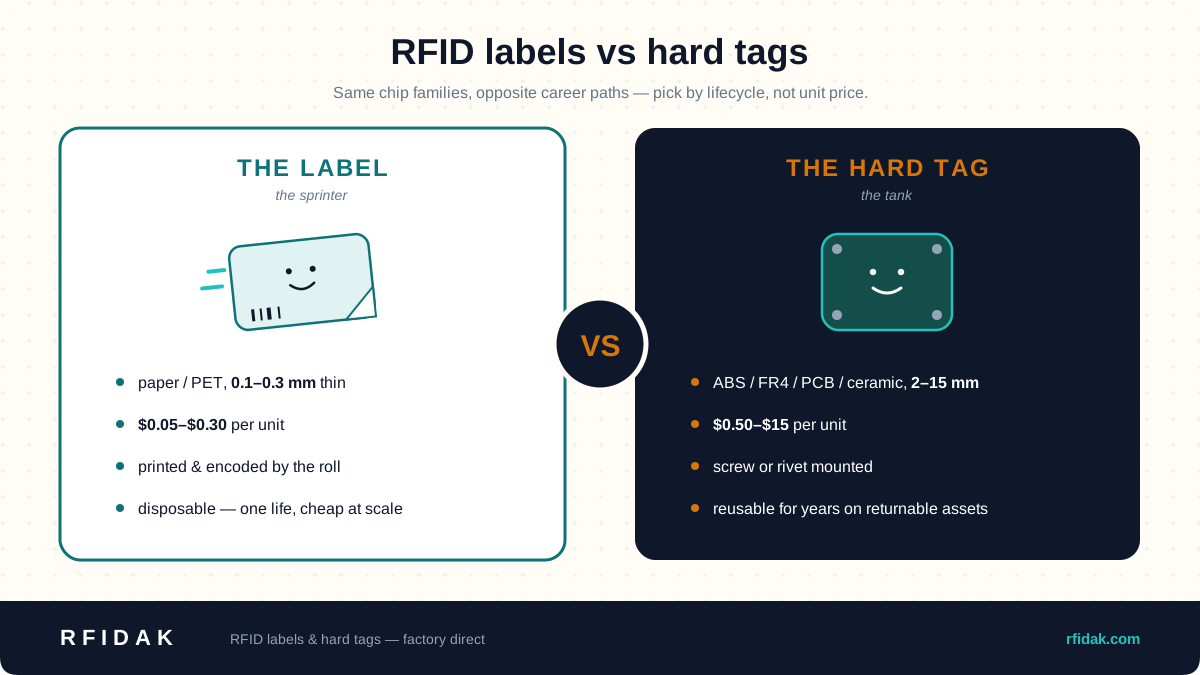
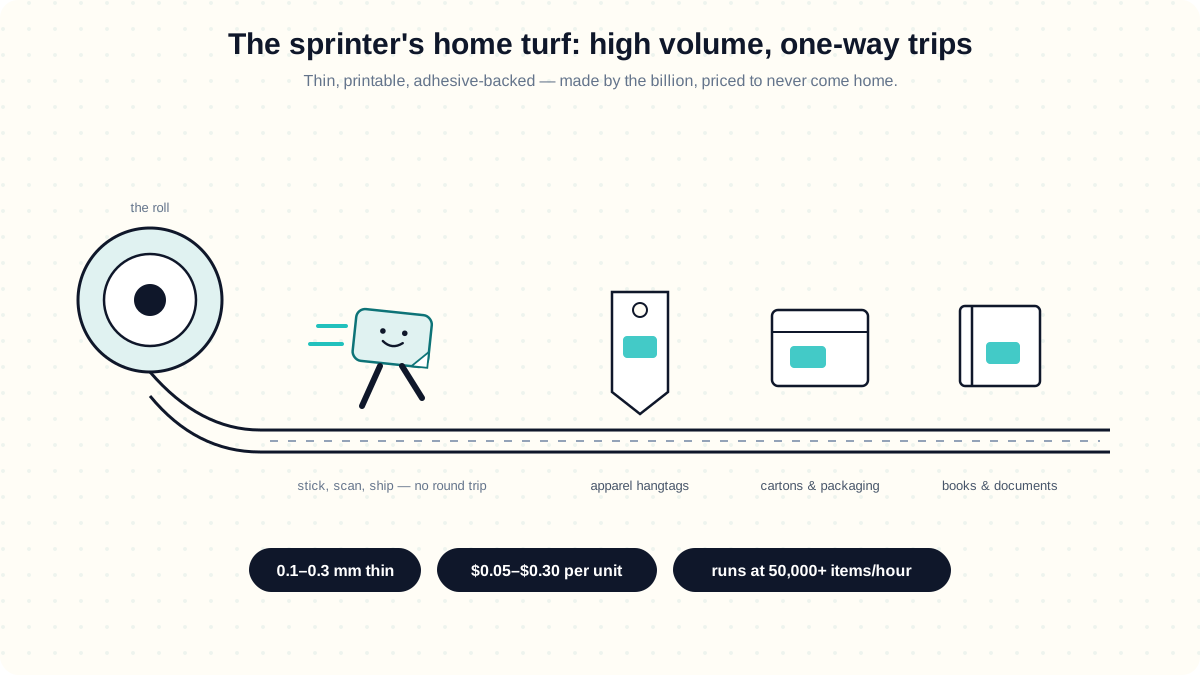
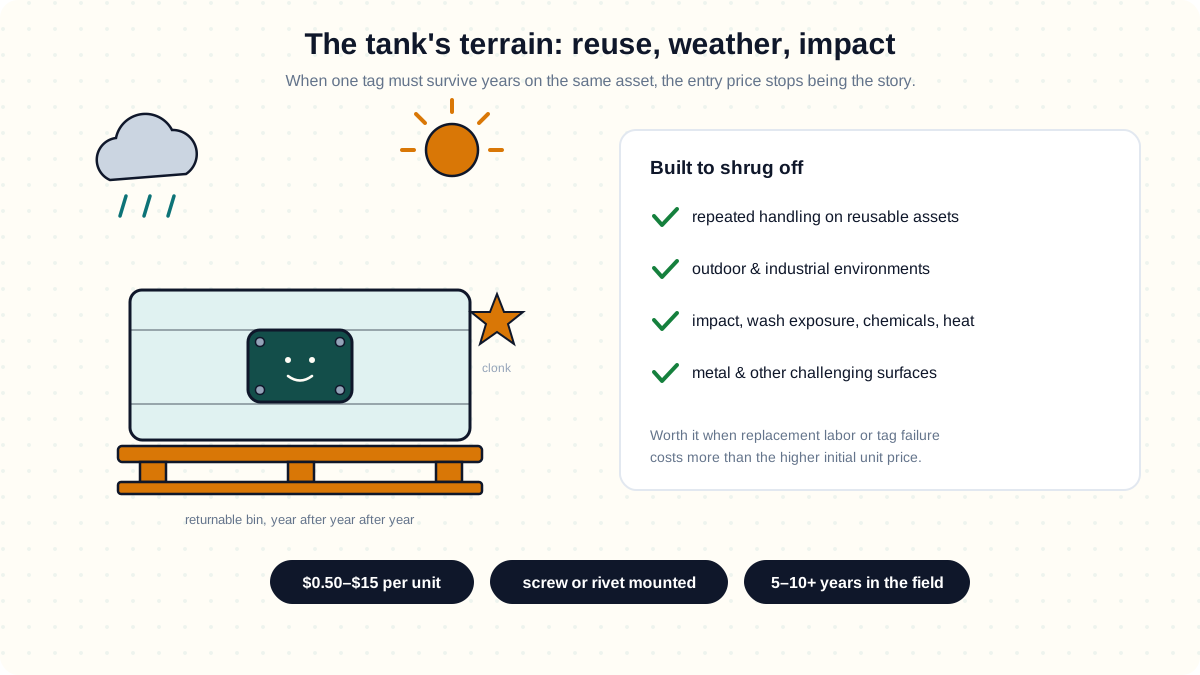
RFID labels and hard tags can use similar chips, but they interview for different jobs. The label is the sprinter: thin, adhesive-backed and easy to print in volume. The hard tag is the tank: thicker, more durable and built for repeated handling, harsher environments or reusable assets. Same silicon, opposite career paths.
Teams often compare them only on unit price, which is like hiring by shoe size. A better comparison looks at how the item is handled, whether the tag is disposable or reusable, and what happens when the surface or environment becomes more difficult.
RFID Label Construction: From Wet Inlay to Printed Roll
Knowing how an RFID label is actually built explains why the same chip behaves so differently across labels and hard tags — the sandwich is the story. The label production stack runs through three layers, each with vendor specialties:
- Inlay layer (chip + antenna), the filling — the chip (Impinj M730, NXP UCODE 9, Alien Higgs-9) is flip-chip bonded onto a copper or aluminium antenna pattern printed on a thin PET film. This is the “dry inlay.”
- Wet inlay (adhesive-backed), the filling gone sticky — the dry inlay gets a release liner and self-adhesive backing applied. Wet inlays are sold by the reel for direct lamination into final labels by converters.
- Label converter (face stock + print), the bread and the branding — converters laminate the wet inlay between a release liner and a printable face stock (paper or PET), then ship rolls of finished blank or pre-printed labels for thermal-transfer printing on demand.
Chip, antenna, adhesive, face stock, printing and quality checks all affect a finished label quote. Their cost shares depend on the selected design and quantity; no universal chip percentage or unit-price floor applies.
Hard tags use the same chip families but are over-molded in plastic, FR4, or ceramic instead of laminated into a label — the sandwich trades its wrapper for a suit of armor. That adds material cost, mold tooling cost, and per-piece assembly time, and it produces a tag that survives industrial handling for years.
When RFID labels are the better choice
- Large SKU counts where unit cost matters
- Cartons, packaging, books, apparel or document tracking
- UHF labels and printed materials are ideal for projects that need visible print, barcode or QR plus RFID
- Operations where the tagged item is not expected to return
Retail, logistics and smart packaging are the sprinter’s podium finishes: visible information and RFID in one thin format, applied at line speed, never expected back.
When hard tags are the better choice
- Reusable containers, pallets, tools and fixed assets
- Outdoor or industrial environments
- Projects involving impact, wash exposure, chemicals or heat
- Assets mounted on metal or other challenging surfaces
Hard tags earn their keep wherever replacement labor or tag failure costs more than the higher initial unit price — the tank is expensive to hire and cheap to employ.
RFID Hard Tag Materials: ABS, FR4, PCB, Ceramic, Polyurethane
Hard tag material decides what conditions the tag survives — choose the armor before admiring the paint. The five most common over-molding materials, with their strengths:
| Material | Temperature | IP Rating | Best For |
|---|---|---|---|
| ABS plastic | Check finished model | Check finished model | Indoor reusable containers, tool tracking |
| FR4 (fiberglass-epoxy) | Check finished model | Check finished model | Outdoor industrial, IT asset tagging |
| PCB-style | Check finished model | Check finished model | Compact on-metal, returnable bins |
| Ceramic | Check finished model | Check finished model | High-temp manufacturing, autoclave |
| Polyurethane / silicone | Check finished model | Check finished model | Wet environments, washable, flexible mount |
Pick material first by the worst-case environment, then by mounting method. A pallet tag bolted to a wooden pallet rarely needs ceramic; a tag inside an autoclave or kiln-mounted asset definitely does. Buy for the worst Tuesday, not the average one.
Printability and serialization
RFID labels are the print shop’s favorite child: barcode, QR code, logo, serial number and variable data printing, delivered on rolls that slide into established packaging or warehouse labeling workflows. Hard tags can still be serialized, laser marked or printed, but they are less suited to high-speed variable-print environments — nobody feeds a ceramic block through a thermal printer.
Surface and environment considerations
| Decision point | RFID label | Hard tag |
|---|---|---|
| Flat packaging or cartons | Usually best fit | Often unnecessary |
| Reusable industrial asset | May wear out faster | Usually stronger option |
| Visible print requirement | Excellent | Moderate |
| Harsh or outdoor conditions | Only with specialized construction | Often preferred |
| Direct mounting on metal | Needs on-metal design | Many good purpose-built options |
Reusable economics versus disposable economics
Labels usually win on entry cost for one-way packaging and high-volume item tagging — the sprint is their race. Hard tags often win when the same tag stays with a returnable asset for months or years. In those projects, the better metric is not only tag price but replacement frequency, labor to retag and read reliability over time: the marathon has different judges.
Lifecycle Cost: Disposable Label vs Reusable Hard Tag Math
The unit-price comparison (label cheaper than hard tag) usually flips when you account for the full lifecycle — this is where the tank quietly wins the accounting meeting. The right metric is per-cycle cost, not per-unit cost:
per-cycle cost = (tag price + labor to apply + replacement frequency) ÷ expected cycles
- Disposable label scenario: include the quoted finished label, application labor and disposal in the cost of each one-way item.
- Reusable hard tag scenario: divide quoted tag, attachment, cleaning and replacement costs by the number of successful cycles measured in the pilot.
- Hidden cost: relabeling (the sequel nobody budgets for) — if a label fails or wears off, replacing it requires labor, software re-encoding, and inventory disruption. For mission-critical assets the labor cost dwarfs the tag cost.
There is no universal reuse count at which a hard tag wins. Calculate it from current quotes, replacement rate, handling labor and verified tag life on the actual asset.
Hybrid deployments are common
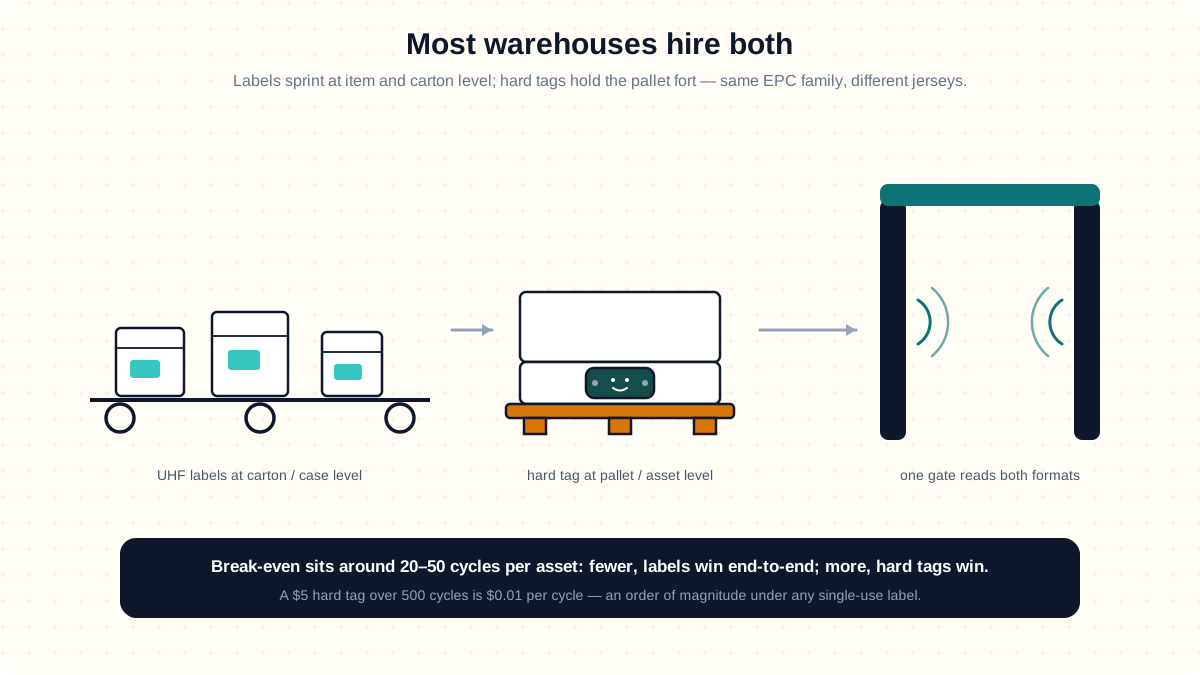
Happily, nobody has to marry one format. A warehouse may use UHF labels for cartons and hard tags for pallets, cages or reusable bins. A brand may use NFC labels for packaging and hard tags for internal fixed assets. Hybrid deployments often produce the most practical result — the sprinter and the tank on the same payroll.
Questions to answer before sampling
- Is the tagged item disposable or reusable?
- Do we need visible print or only electronic identification?
- Will the item be exposed to heat, moisture, chemicals or abrasion?
- What surface is available for mounting?
- How long should the tag remain readable in the field?
Final takeaway
Quick format selector
High volume, disposable: UHF sticker labels
Reusable, harsh environment: Hard on-metal tags
Washable textiles: Textile laundry tags
Library / document: UHF library labels
Key Takeaways
- Labels: evaluate printable one-way formats on the intended item and printer; request a current quote.
- Hard tags: evaluate the finished enclosure and attachment against the expected cleaning, impact and reuse process.
- Print-time encoding: labels work with Zebra ZD500R / ZT411R for in-house print + EPC encode workflow.
- Hard tags are usually pre-encoded at the factory due to volume + per-unit setup cost.
- Hybrid usage: many warehouses use labels at carton/case level, hard tags at pallet/asset level — same EPC family, different physical durability.
⚠️ Common pitfall
A generic UHF label can detune on metal. State the mounting surface in the RFQ and test an on-metal construction on the actual asset.
RFID Labels vs Hard Tags FAQ
Can I print on a hard tag?
Yes — hard tags can carry laser-engraved serial numbers, UV-printed logos, or pad-printed graphics. The print quality is lower than label thermal-transfer printing because the surface is non-flat and per-piece, not roll-fed. Hard tags also typically don’t support variable per-piece printing in high-speed batch mode — suitable for fixed branding, not changeable barcodes.
Do labels survive metal mounting?
A standard UHF inlay may detune on direct metal. Compare a purpose-built on-metal label with the ordinary label on the actual asset and reader. Price and useful range depend on construction and volume.
What is the typical MOQ for a custom hard tag?
RFIDAK’s published minimum for tags and labels is 1,000 pieces; custom tooling generally starts at 2,000–5,000 pieces depending on tooling. Confirm the exact hard-tag model, mold, chip and quantity in a written quote.
Can I encode RFID labels in-house with my own printer?
A compatible RFID printer-encoder can print visible data and write a supported UHF inlay. Test the exact printer, media profile and encoding file, then compare current equipment and service quotes in our printer-encoder guide.
How long do RFID labels last vs hard tags?
Finished-label and hard-tag lifetimes depend on construction, attachment, handling and exposure. Ask for model-specific evidence and verify samples over the expected operating process.
Sources
- ISO/IEC 18000-63:2015 — UHF RFID air interface (Class 1 Gen 2). iso.org/standard/63675.html
- Avery Dennison Smartrac — RFID inlay product catalog. rfid.averydennison.com
- IEC 60529 — IP rating standard (water/dust ingress protection). iec.ch
- Zebra Technologies — ZT411R RFID printer-encoder datasheet. zebra.com/zt411r
- NXP Semiconductors — UCODE 9 product datasheet. nxp.com/UCODE-9
- GS1 EPC Tag Data Standard 2.1. ref.gs1.org/standards/tds
- IDTechEx — "RFID Forecasts, Players and Opportunities 2024-2034". idtechex.com
RFID labels remain the right choice for thin items because they print on standard thermal-transfer rolls and run at 50,000+ items per hour — and hard tags remain the right choice for everything that has to come back. Compare RFID labels and hard tags to find the best fit. RFIDAK supplies both formats and can help buyers compare sample sets. Contact us for guidance.
Need help turning this guidance into a product shortlist?
Use this next step when the article has narrowed the direction and you now need help choosing chips, formats, samples or the closest product family.
Comparison Pages
Compare the closest alternatives before you request samples
Open one of these if the article clarified the topic but the team still needs a cleaner format, chip or frequency decision.
Quick FAQ
Questions buyers often ask after reading this guide
What is the difference between RFID labels and hard tags?
Labels are thin converted inlays suited to appropriate printed or adhesive applications; hard tags use a protective housing for demanding attachment and reuse. Both require model-specific chip, antenna, environmental and reader tests. Compare total installed and replacement cost from current quotes.
When should I use RFID labels vs hard tags?
Use RFID labels for disposable workflows: cartons, apparel hangtags, retail item-level, library books, document tracking, and any one-way shipping label. Use hard tags for reusable or durable workflows: pallets, returnable transit packaging, tools, machinery, fixed assets, gas cylinders and any asset that cycles for months or years. Most warehouse and retail operations run hybrid: labels on disposable carton flow plus hard tags on pallets and reusable bins.
How much do RFID labels and hard tags cost?
Unit price depends on the exact chip and inlay, finished construction, approved quantity per design, printing, encoding, packaging and QC requirements. Request a dated itemized quote showing sample and setup charges, unit tiers, freight and lead time; a generic chip or tag price does not establish the cost of the approved product.
Can I print variable data on RFID hard tags?
Limited. RFID labels accept industrial-speed variable data printing: barcodes, QR codes, serial numbers, variable logos and color artwork via thermal transfer or inkjet at 30-100 labels per minute. Hard tags accept laser etching or pad printing but at much slower speeds and with fewer data variations. If variable data (SGTIN-96 serial + human-readable) is part of the workflow, specify labels. If only UID-based electronic identification is needed, hard tags are acceptable.
Are RFID labels durable enough for industrial use?
Durability depends on the finished label stock, adhesive, laminate, attachment and exposure. Some industrial labels are designed for metal, weather or cleaning, while harsh abrasion, heat or chemicals may call for a protected hard tag. Compare the manufacturer’s model-specific limits and run the actual process cycle on attached samples; no material class has a universal temperature cutoff.
Can the same project use both RFID labels and hard tags?
Yes, and most do. Hybrid deployments are the norm: UHF labels on outbound cartons plus hard tags on returnable pallets and bins; NFC labels on premium consumer packaging plus hard tags on internal fixed assets; apparel hangtag inlays plus hard RFID security tags at high-value SKUs. The WMS integration layer handles both EPC streams identically because the chip and air interface are the same. Document which SKUs or asset classes switch to each format.
Which chip works in both label and hard tag form?
Almost all major UHF chips run in both formats: NXP UCODE 9 and 9xm, Impinj Monza M730/M750/M800, Alien Higgs-9. HF chips work in both: NXP ICODE SLIX, MIFARE Classic, MIFARE DESFire EV3. NFC chips work in both: NTAG213/215/216, NTAG424 DNA. The chip does not dictate the format; the format is the packaging. Pick chip by workflow (security, memory, range) and format by durability and printability need.
What is the minimum order for RFID labels vs hard tags?
RFIDAK's published standard tags-and-labels MOQ baseline is 1,000 pieces. Confirm the exact chip, antenna, construction, print, encoding and quantity per design in a written quote. Free stock samples (up to 5 pieces) — buyer covers DHL/FedEx freight ($25–60), refunded 1:1 against the first production order over $500. Larger evaluation lots, custom samples, production timing and delivery are agreed separately for the selected configuration.
Author
RFIDAK RFID Editorial Team
RFID supply editorial team
RFIDAK publishes practical RFID guides to help buyers compare chips, product formats, sampling plans and sourcing options before production.