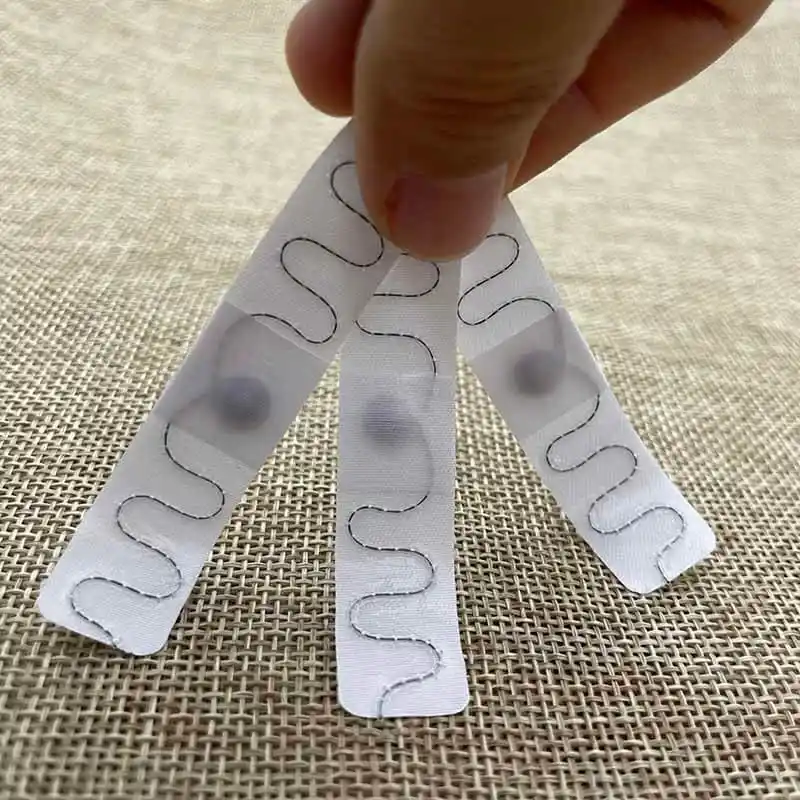
Textile RFID Laundry Tag
Compare eight documented fabric models with separate dimensions, attachment instructions and process conditions.
Laundry RFID · Textile, process and read point
Laundry RFID uses an item-level tag and compatible readers to identify linens, towels or uniforms at planned read points. Software associates those reads with intake, processing and dispatch records. Choose the exact tag, attachment and encoding around the textile and complete laundry process, then validate known wet and dry loads. A chip specification or isolated temperature rating does not establish whole-process performance.
Updated · Product selection and sample planning
Confirm the chip, construction and system fit for your configuration.
Before choosing a product
Provide seam space, textile composition and the sewing, pouch, hem or heat-seal route. Attachment instructions differ between models.
Include each wash and finishing step, chemicals, concentration and mechanical loads. A peak temperature or cycle count alone is not a complete specification.
Use the intended readers and representative wet and dry loads. Agree how missed reads, neighboring loads and duplicate events will be handled.
The textile figures below come from eight linked model sheets. Silicone strips and PPS buttons need their own model documentation and sample checks; housing material alone does not establish relative lifetime, pressure tolerance or read performance.
Scroll across the table to compare all columns.
| Decision factor | Textile tag | Silicone strip | PPS button |
|---|---|---|---|
| Physical fit | Eight fabric models; choose footprint, seam space and chip-position thickness | Check the exact strip dimensions, flexibility and garment fit | Check disc dimensions, mounting and wearer contact |
| Documented models | Seven LDT301 models plus the separate LDT7010; 55 × 12 to 80 × 30 mm footprints | Request the current model drawing and chip specification | Request the current model drawing and chip specification |
| Attachment | Sewing, pouch, hem or heat sealing as specified for the selected model | Approve the attachment method for the supplied strip and textile | Approve the mounting method for the supplied button and textile |
| Process evidence | Each sheet lists 200 cycles for four separately stated temperature/time exposures; see the model page | Confirm temperature, duration, chemistry and test evidence for the exact model | Confirm temperature, duration, chemistry and test evidence for the exact model |
| Pressure evidence | 60 bar appears only on LDT301-5512S, LDT301-7015S and LDT7010 sheets; test conditions need confirmation | Request the applicable pressure test and loading conditions | Request the applicable pressure test and loading conditions |
| Reader selection | UHF EPC Gen2; LDT301: 860–960 MHz, LDT7010: 865–940 MHz; match the installation region | Confirm the ordered chip, protocol and reader band | Confirm the ordered chip, protocol and reader band |
| Read acceptance | Known item counts at the actual read points before and after processing | Use the same load, moisture, reader and timing criteria as the textile candidate | Use the same criteria if the candidate is intended for the same workflow |
| Before approval | Confirm exact code, current chip, attachment, data map and process limits | Require model-specific evidence; do not infer a durability advantage from silicone | Require model-specific evidence; do not infer a cycle limit or batch-reading restriction from the button shape |
A shortlist for your evaluation
Open the product page for its specification and evaluation requirements. These are hardware candidates; system integration and sample acceptance depend on your project.
Compare eight documented fabric models with separate dimensions, attachment instructions and process conditions.
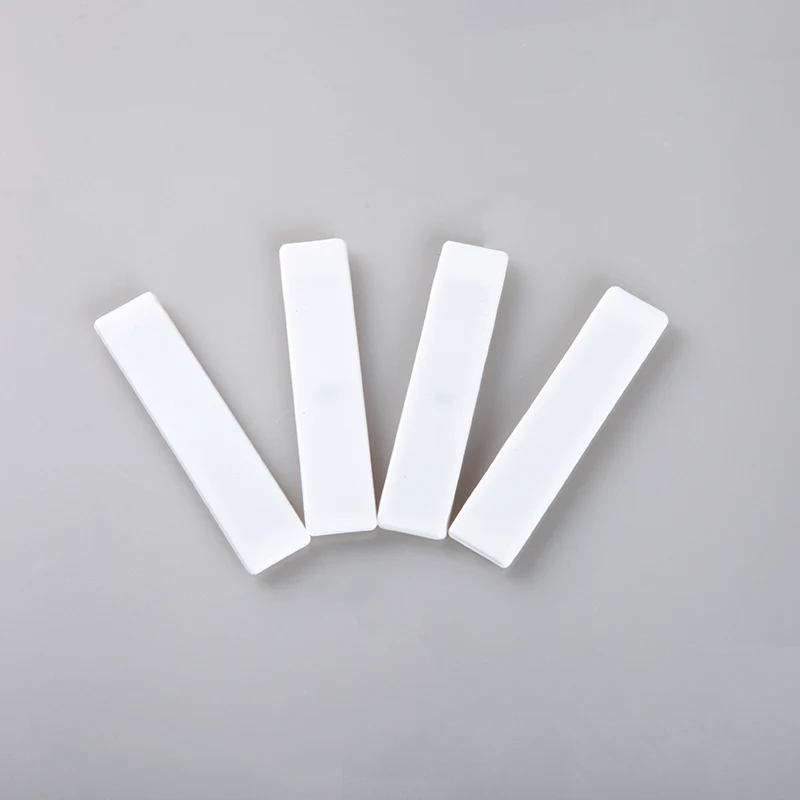
A silicone strip candidate. Confirm the current model, attachment and test evidence before comparing performance.
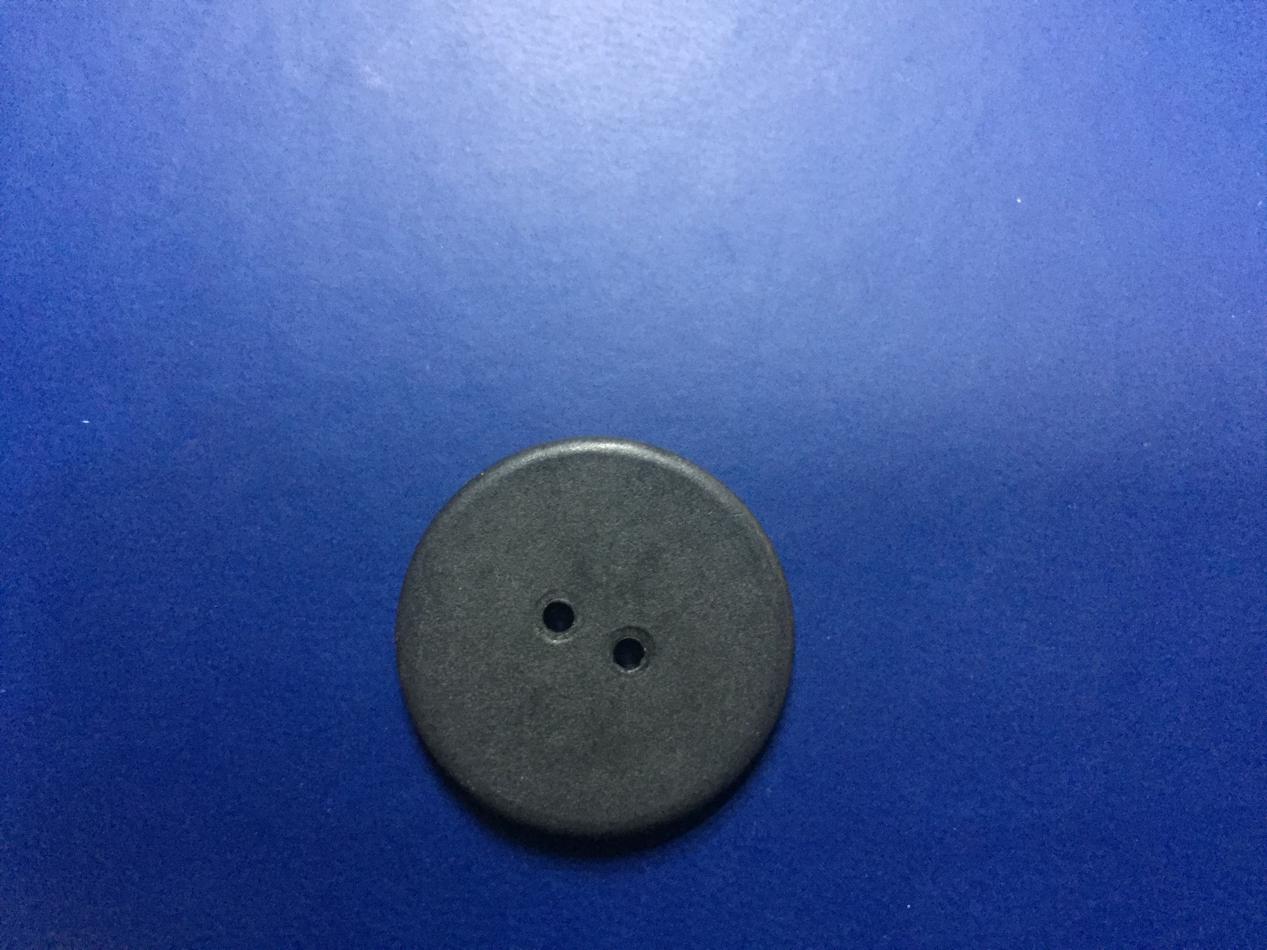
A PPS button candidate with a different housing and mounting route; validate its exact chip and process suitability.
From shortlist to approval
Keep the physical tag, attachment, reader setup and data mapping together in the approved specification.
Buyer questions
Begin with available space, wearer contact and attachment. The textile model page provides eight fabric constructions with different dimensions and installation instructions. Silicone strips and PPS buttons are separate housing candidates, not established performance upgrades or downgrades. Obtain each candidate’s model sheet and compare it through the same processing and reading acceptance plan.
Each supplied textile sheet lists 200 cycles for four separate exposures: washing at 90°C for 15 minutes, pre-drying at 180°C for 30 minutes, ironing at 180°C for 10 seconds and sterilization exposure at 135°C for 20 minutes. These supplier statements do not prove 200 complete cycles through an arbitrary combined process. Agree chemicals, loads, attachment and reading criteria for the pilot.
No. Only LDT301-5512S, LDT301-7015S and LDT7010 sheets list 60 bar, without a pressure test method. LDT301-7015H and LDT301-8030H specify heat sealing at about 210°C, about 0.6–0.8 MPa for less than 18 seconds. LDT7010 separately specifies under 215°C, 18 seconds and 0.6–0.8 MPa. Other models specify sewing, pouch or hem insertion. Press settings are not continuous operating-temperature or extraction-pressure ratings.
Map the decisions staff need to make at intake, sorting, pack-out, dispatch and return receiving. For each point, define expected item counts, load state and the available reading time. Select compatible UHF hardware for the textile models and test antenna placement and event handling at those points. A general HF/NFC desktop reader is not evidence of compatibility with these UHF tags.
Agree an EPC numbering plan and link each encoded EPC to an item record. Keep the factory TID, writable EPC and any printed number distinct. Read back encoded samples and test the mapping-file import. Define how the integration filters repeated reads, records confirmed process events and preserves history when an item is re-tagged.
Start from the installed or proposed reader, required transaction and item flow. The documented textile models use UHF EPC Gen2, so their reader must support the exact chip and regional band. A legacy HF workflow needs a separately specified tag and reader combination. Frequency alone does not determine pressure tolerance, chemical resistance, temperature limits or cycle life.
Record the candidate model, chip, textile, attachment and reader setup. Test known item counts in representative wet and dry loads before processing and at agreed checkpoints afterward. Count missed reads, unintended reads, physical damage and attachment failures separately. Agree thresholds and the person responsible for approval before the pilot begins.
Certificate 23.HCN.97349 describes a UHF laundry tag made with white polyester woven laminated fabric, conductive yarn and white polyester sewing thread, under Product Class II. Match the ordered article to that scope and verify current issuer status. The certificate does not prove laundry lifetime, sterilization efficacy or blanket coverage of silicone, PPS, every textile model or alternative backing. LDT7010’s sheet does not list this certification.
Measure your current item losses, replacement costs, counting time and reconciliation work. During the pilot, compare those measures with the new workflow. Budget tags, application labor, readers, antennas, integration, software, maintenance and replacement separately. Use the observed changes and stated assumptions to calculate the project case; neither the tag material nor an industry loss percentage establishes your payback.
Specify the actual textile and workflow instead of assuming the same process across sectors. A healthcare project may include defined reprocessing requirements; a hotel may focus on linen counts at dispatch and return; workwear may need wearer assignment. Agree each requirement with the operator. Tag survival during a stated exposure does not validate hygiene outcomes or other specialist approvals.
Record model, chip, antenna, construction, backing, attachment and encoded-data format in the order specification. Ask for batch identification and agree change notification. Any proposed substitution should be reviewed for its effect on memory, reader performance and processing before approval; do not assume a replacement chip or housing is interchangeable.
The standard tags-and-labels MOQ baseline is 1,000 pieces. Confirm the minimum for the selected model, chip, attachment and encoding in the quotation. Sample and pilot quantities, charges, freight, production timing and delivery terms are agreed separately under the sample policy.
Check the basis for the decision
These references describe published chips, standards, product examples or systems. Confirm the offered RFIDAK configuration and your installation separately.
Defines reader/tag communication. It does not specify the installed read zone, regional radio permission or business event.
A standard for exchanging event data when required by the integration; an RFID read alone is not a completed process event.
Harmful-substance testing and article scope. The standard does not establish wash life or sterilization efficacy.
Check the current certificate status and ordered-article scope; a historical PDF does not prove current validity.
Make the next conversation useful
Send the textile, candidate models, attachment, process conditions, UHF setup and quantities. Agree the sample specification and pass/fail conditions with your operations and integration teams.
Keep physical, process and integration requirements together. The model drawing and supplied test statements are the starting evidence for an agreed pilot.
May we use Google Analytics cookies to measure visits and inquiry actions? Your choice does not affect the contact form. Cookie details