Laundry RFID Tags: Model Selection, Wash Conditions & Pilot Checklist
Choose laundry RFID tags by textile, attachment, documented process exposure and real reader performance. Includes eight textile models, pilot checks and an itemized RFQ.
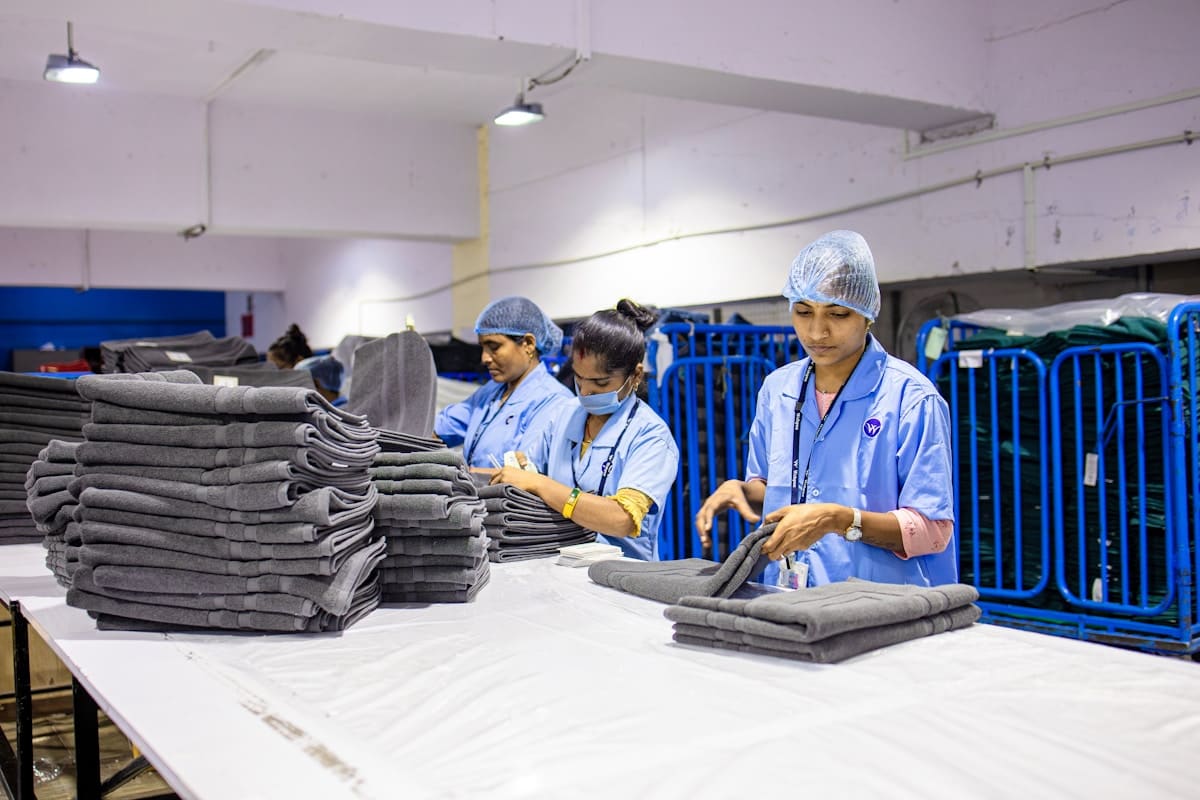
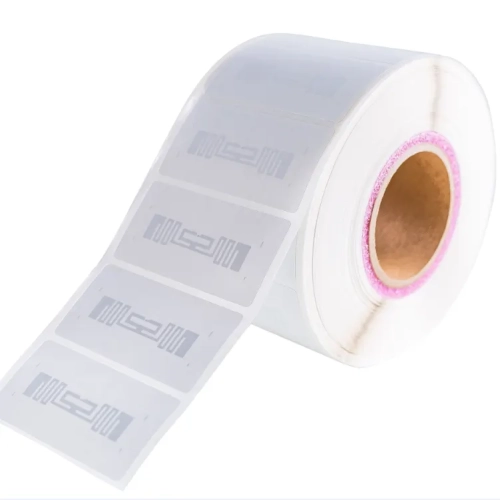
Choose a laundry RFID tag by its documented construction and your complete process. Start with the textile, attachment space, wash and finishing recipe, and the read point where items must be counted. RFIDAK's eight textile-tag sheets give dimensions and separate temperature/time/cycle statements. Compare a production-representative sample on the actual line before approving bulk supply.
Use the textile RFID laundry tag model table for specifications and PDFs. This guide turns that shortlist into a purchasing and acceptance plan.
Start with the textile and attachment
A tag in a towel hem, workwear seam or removable pouch encounters different handling. Decide where it can sit without affecting use, comfort, folding or pressing. Then compare constructions that fit that location.
Swipe the table to compare model details.
| Format | Why shortlist it | Confirm on the proposed model |
|---|---|---|
| Textile tag | A fabric format for seams, hems, pouches or an approved heat-seal patch. | Chip-area thickness, stitch location, backing, retention and process exposure. |
| Silicone strip | A flexible encapsulated body where mounting can accommodate it. | Dimensions, attachment route, chemical exposure and test conditions. |
| PPS button | A rigid disc where a button or pouch suits handling. | Housing, chip/frequency, mounting stress and temperature/time limits. |
The material name alone cannot rank cycle life or establish suitability for steam processing, bleach or extraction. Keep the exact model and its evidence attached to the supplier's proposal.
Eight textile models: compare installation details
Values below come from the supplied model sheets, reviewed September 9, 2026. Each model links to its PDF. LDT7010 is separate from LDT301-7010S even though their listed dimensions match.
Swipe the table to compare model details.
| Model / PDF | Dimensions | Attachment | Pressure stated in sheet |
|---|---|---|---|
| LDT301-5512S | 55 × 12 × 0.73 mm 1.53 mm at the chip | Stitch both ends / pouch | 60 bar listed |
| LDT301-5815 | 58 × 15 × 1.5 mm | Stitch two ends or three sides / pouch | Not specified |
| LDT301-7010S | 70 × 10 × 1.5 mm | Sewing / pouch | Not specified |
| LDT301-7015S | 70 × 15 × 1.5 mm | Stitch two ends or three sides / pouch | 60 bar listed |
| LDT301-7510 | 75 × 10 × 1.5 mm | Insert into a garment or linen hem | Not specified |
| LDT301-7015H | 70 × 15 × 1.3 mm | Heat sealing | Not specified |
| LDT301-8030H | 80 × 30 × 1.6 mm | Heat sealing | Not specified |
| LDT7010 | 70 × 10 × 1.5 mm Separate model from LDT301-7010S | Sewing / pouch / heat sealing | 60 bar listed |
Only three sheets list 60 bar. They do not provide the pressure test method: ask how the stated value relates to loading in your extractor. An omitted rating is an unanswered specification, not a lower measured limit.
Read wash-cycle figures with temperature and duration
Each of the eight textile model sheets lists these exposures separately:
Swipe the table to compare process conditions.
| Exposure | Temperature | Duration | Listed cycles |
|---|---|---|---|
| Washing | 90°C | 15 minutes | 200 |
| Pre-drying | 180°C | 30 minutes | 200 |
| Ironing | 180°C | 10 seconds | 200 |
| Sterilization exposure | 135°C | 20 minutes | 200 |
These rows do not establish 200 complete cycles through your combined wash, extraction, dry and finishing recipe. Record chemicals and concentrations, mechanical loads, attachment and pass/fail criteria for the pilot. A listed sterilization exposure describes a tag requirement; it does not validate healthcare reprocessing effectiveness.
Storage, operation and temporary exposure are separate. LDT301 sheets list storage at −40 to +120°C without a separate operating range. LDT7010 lists operation at −25 to +110°C and storage at −40 to +110°C. See the product process section.
Heat sealing is a model-specific installation process
LDT301-7015H and LDT301-8030H specify approximately 210°C, approximately 0.6–0.8 MPa and less than 18 seconds. LDT7010 gives a different instruction: under 215°C, 18 seconds and 0.6–0.8 MPa. The remaining five sheets specify sewing, pouch or hem insertion.
Approve backing and fabric on the actual press. These settings are not continuous service temperatures or extraction-pressure ratings. For sewn models, agree needle placement clear of the chip and conductive path. Check attachment retention and textile condition after processing, alongside readability.
Test the reading task, not just distance
Define where a count becomes a business event: intake, sorting, a finished-linen cart or dispatch. Specify reader and antennas, installation country, textile moisture, cart material, load density, movement and reading window.
The sheets identify UHF EPC Gen2 and list UCODE 8 or UCODE 9. Confirm the actual supplied chip, memory and reader band. Approve substitutions through a new data-format and RF check. A phone's built-in NFC does not read this UHF family.
- Count a known load independently. Record which items are inside and which neighboring items must be excluded.
- Use realistic conditions. Include wet/dry loads where relevant, normal density and movement.
- Separate missed and unintended reads. A high total can conceal missing items and reads from another cart.
- Repeat after the agreed exposure. Record detached, physically damaged and unreadable tags separately.
Agree EPC and software mapping before encoding
Keep writable EPC, manufacturer TID and printed serial in separate fields. Specify EPC length, numbering, lock plan and export-file layout. Agree replacement and retirement rules. Read back the sample and import it into the intended software; check duplicates, leading zeros, missing records and the resulting events. Keep wearer or patient relationships in the access-controlled software.
Compare cost per accepted service cycle
A planning formula is (tag purchase + attachment + encoding + replacement/rework cost) ÷ accepted service cycles delivered. Use the same scope and time period for numerator and denominator. Reader hardware, software, training and integration belong in the wider project budget.
Illustrative arithmetic only: assume $0.60 installed cost and 150 accepted cycles: $0.004 per cycle. Another option at $0.30 installed over 50 accepted cycles costs $0.006 per cycle. These are invented planning inputs, not RFIDAK quotations or measured lifetimes. Replace them with quotes and pilot results, including early loss or textile retirement.
Build an itemized RFQ
- Textile classes, composition, available space and attachment location.
- Model shortlist, attachment and restrictions on feel or visibility.
- Every process step with temperature, duration, chemistry and mechanical load.
- Reader, antennas, operating region, load density and reading window.
- Chip, EPC format, print, locking and software import file.
- Sample and production quantities by model, destination and arrival date.
- Acceptance criteria, document scope, quote validity and approval responsibilities.
The standard tags-and-labels MOQ baseline is 1,000 pieces; confirm the selected model, chip, attachment and encoding minimum in the quote. Evaluation quantities are separate under the sample policy. Request sample, setup, unit and freight costs, production schedule and transit time separately.
Build a laundry tag inquiry. For operating checkpoints and measurements, read the linen-tracking workflow and pilot guide.
Match each claim to its evidence
The eight model PDFs support the reproduced values; they are supplier statements, not independent field reports. OEKO-TEX certificate 23.HCN.97349 identifies a specified white-polyester UHF construction at Class II. Match the ordered article and verify its current status.
STANDARD 100 concerns harmful-substance testing, not wash life or sterilization effectiveness. Healthcare teams should specify the process from their approved procedures and relevant guidance, such as the CDC laundry and bedding guidance.
Need help turning this guidance into a product shortlist?
Use this next step when the article has narrowed the direction and you now need help choosing chips, formats, samples or the closest product family.
Comparison Pages
Compare the closest alternatives before you request samples
Open one of these if the article clarified the topic but the team still needs a cleaner format, chip or frequency decision.
Quick FAQ
Questions buyers often ask after reading this guide
How many wash cycles can these RFID laundry tags withstand?
The eight linked model sheets list 200 cycles for each stated exposure: washing at 90°C for 15 minutes, pre-drying at 180°C for 30 minutes, ironing at 180°C for 10 seconds, and sterilization exposure at 135°C for 20 minutes. These are supplier datasheet statements. They do not establish the result of 200 complete cycles through your combined process. Agree chemistry, mechanical loads, attachment and reading acceptance criteria for a representative pilot.
Which textile laundry tags have a 60 bar pressure specification?
The LDT301-5512S, LDT301-7015S and LDT7010 datasheets list 60 bar. The other five linked sheets do not state that pressure rating. Confirm how the tag will be loaded during extraction and request the applicable test conditions. The 0.6–0.8 MPa used in heat sealing is an installation setting and should not be treated as an extraction-pressure rating.
Can I heat-seal every model, and is 210°C a working temperature?
No. LDT301-7015H and LDT301-8030H specify heat sealing at approximately 210°C, 0.6–0.8 MPa and less than 18 seconds. LDT7010 gives a separate instruction: under 215°C, 18 seconds and 0.6–0.8 MPa. The other five sheets specify sewing, pouch or hem insertion. These press settings are attachment instructions; approve the tag, backing and textile together on the actual press.
Will the quoted read range translate to a full cart of wet linen?
A distance measured with one tag does not establish complete-cart read performance. Water, folded tags, metal carts, antenna layout, reader power, motion and the available read window can change the result. Test known item counts in representative wet and dry loads, record missed and unintended reads, and repeat after the agreed process exposure.
What does the OEKO-TEX certificate cover?
Certificate 23.HCN.97349 identifies a UHF laundry tag construction using white polyester woven laminated fabric, conductive yarn and white polyester sewing thread, under Product Class II. Match the ordered article to that scope and verify current status with the issuer. STANDARD 100 concerns harmful-substance testing; it does not establish wash-cycle life, sterilization efficacy or coverage of every model, color or adhesive variant.
What are the MOQ, sample costs and production lead time?
The standard tags-and-labels MOQ baseline is 1,000 pieces. Confirm the minimum for your selected model, chip, attachment and encoding in the quotation. Evaluation samples and pilot quantities are discussed separately under the sample policy. Ask for sample charges, freight, unit pricing, quote validity and the production schedule for the approved quantity; transit time is separate from production.
Are silicone or PPS tags always more durable than textile laundry tags?
The material name is not a measured cycle-life comparison. Shortlist the construction by space, attachment, feel and handling, then compare model-specific temperature/time, chemical and mechanical evidence. Run representative attached samples through the same process and reader checks before selecting a bulk configuration.
How should I compare the cost of laundry RFID tags?
Compare tag purchase, attachment, encoding and replacement or rework cost over the accepted service cycles delivered, using the same scope and period for both totals. Add hardware, software and integration to the project budget. Use measured pilot life and current quotes; a hypothetical cost-per-cycle example is not a product lifetime or price promise.
Author
RFIDAK RFID Editorial Team
RFID supply editorial team
RFIDAK publishes practical RFID guides to help buyers compare chips, product formats, sampling plans and sourcing options before production.