On this page
Compare the requirements that change the choice
| Decision point | RFID cards | RFID keyfobs |
|---|---|---|
| Daily carry | Wallet, badge holder or lanyard; approve slot and holder fit | Keyring or strap; check attachment and nearby metal keys |
| Visible identity | Larger area for a photo, role, logo and readable number | Compact marking area; check number size and contrast |
| Local personalization | Confirm the exact card material and printer/encoder feed requirements | Usually needs a marking process suited to the housing; not a standard card-printer item |
| Physical durability | Test bending, abrasion, edge wear and any slot location | Test ring pull, pocket wear, housing joints and specified exposures |
| Read performance | Validate the finished card in its holder or wallet | Validate the selected antenna and housing on the keyring; smaller is not automatically equivalent |
| Mixed issuance | Can serve one user group if the system supports the ordered credential | Can serve another group after the same compatibility and enrollment checks |
| Order definition | Chip, artwork, card construction, visible data and encoding | Chip, selected mold, color, marking, ring/cord and encoding |
- Compatibility comes before housing: Record the reader, controller, credential technology and authorized enrollment method before selecting the card or mold.
- Account for visible identification: A card can show a photo or role clearly. A keyfob needs a separate visual ID arrangement when staff must be identifiable.
- Test loss and replacement: Give each issued credential its own controlled record. Confirm deactivation and replacement on all relevant doors, including sites that update offline.
Shortlist cards when
- Photo ID, a role or guest information must be visible without an electronic read.
- Users already carry a badge holder or the program uses an approved card-personalization workflow.
- The finished card passes both normal-use handling and the installed system’s credential test.
Shortlist keyfobs when
- Users prefer keyring carry and a small readable marking is sufficient.
- The selected housing and attachment suit the expected pocket, wet or outdoor exposure.
- The exact chip, housing and keyring combination passes the same authorized access test as the card.
Issue both formats without losing control of the records
A mixed program can work when each format has an approved specification and each credential is enrolled separately. Test a new card and a new keyfob, including permitted doors, denied doors, revocation and replacement. Check that visible numbers map to the controller’s records instead of assuming the printed number is the chip identifier.
Common decisions
Questions buyers ask before choosing
Are RFID keyfobs more secure than cards?
No. The housing does not define authentication or access permissions. Security depends on the credential technology, application, key management and controller implementation. Evaluate the same transaction and revocation checks for both formats.
Can one access system use cards and keyfobs together?
Yes, when the system supports the exact credential configuration in both. Frequency and a shared chip-family name alone are insufficient. Have the administrator enroll separate authorized samples and test the actual access rules.
Will a smaller keyfob read as far as a card?
Do not assume equal performance. Antenna layout, housing, orientation, the reader and nearby keys affect the result. Define the required presentation position and test each finished format there.
Can a keyfob replace a staff photo-ID card?
Only if the site has another acceptable way to show the required identity. A keyfob may perform the electronic access function while a separate badge provides the photo or role. Treat those as distinct requirements.
Which format lasts longer?
There is no whole-category lifetime ranking. Compare the proposed card construction and keyfob housing under the handling and exposure you expect. Include slot or ring attachment, marking wear and successful reads after the trial.
What should be specified for a repeat order?
Record the chip and credential format, issuer process, approved card or mold, artwork or marking, accessories and quantities per version. Keep visible-number and electronic-record mapping controlled, and confirm sample and delivery terms for the selected configuration.
Move from the guide to a sample
Product options to investigate
These pages describe product formats. Confirm the exact chip, construction and system compatibility for your selected configuration.
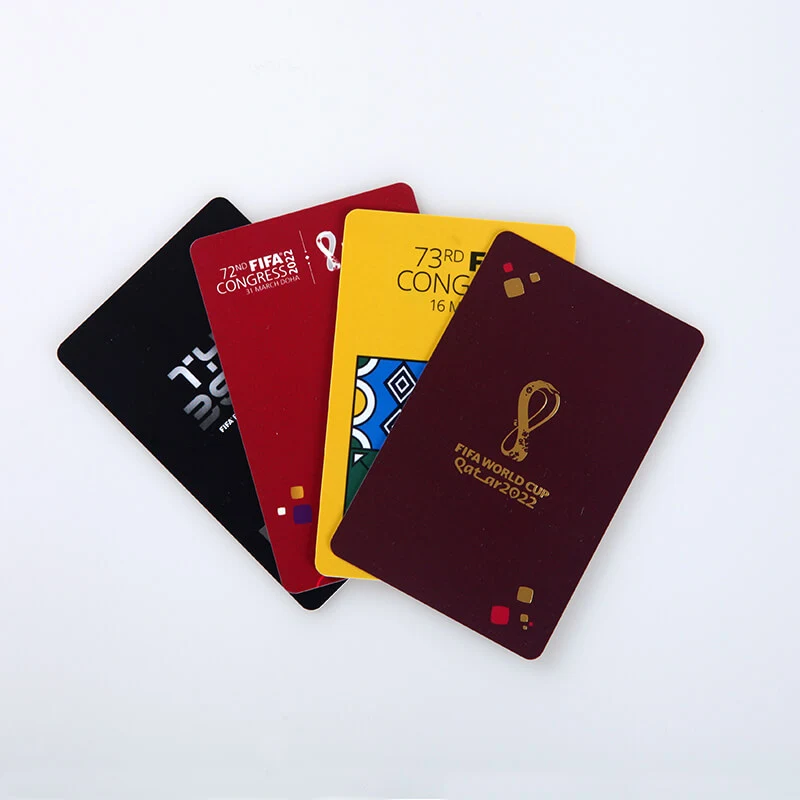
Custom PVC RFID Card
Compare blank, printed and encoded PVC RFID cards by chip, artwork, dimensions and issuer workflow. Review a representative sample before bulk ordering.
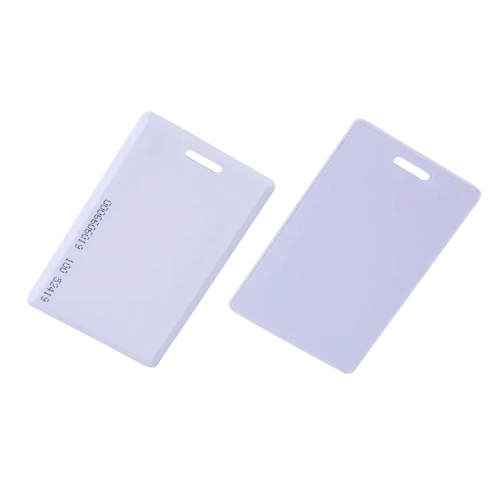
RFID Clamshell Card
Compare C2T41W and C2E42W clamshell cards: 85.5 × 54 × 1.8 mm, antenna construction, read-only EM4200 and writable chip options. View specs and request samples.
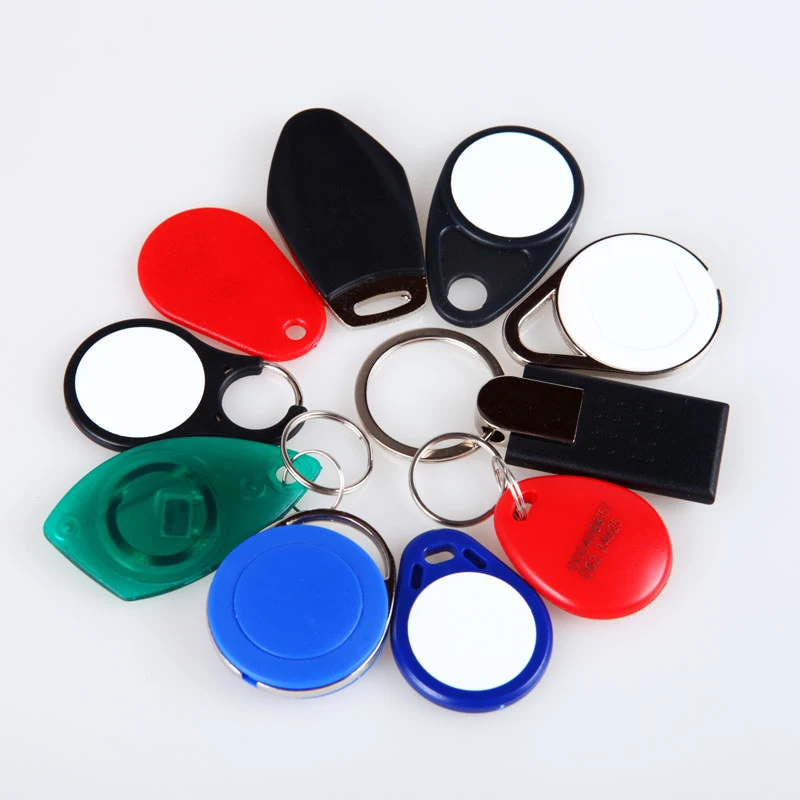
RFID Keyfobs — Materials & Model Comparison
Compare RFID keyfobs by housing, dimensions and chip configuration. ABS, FR4, silicone, leather-style and soft PVC formats solve different carrying and…
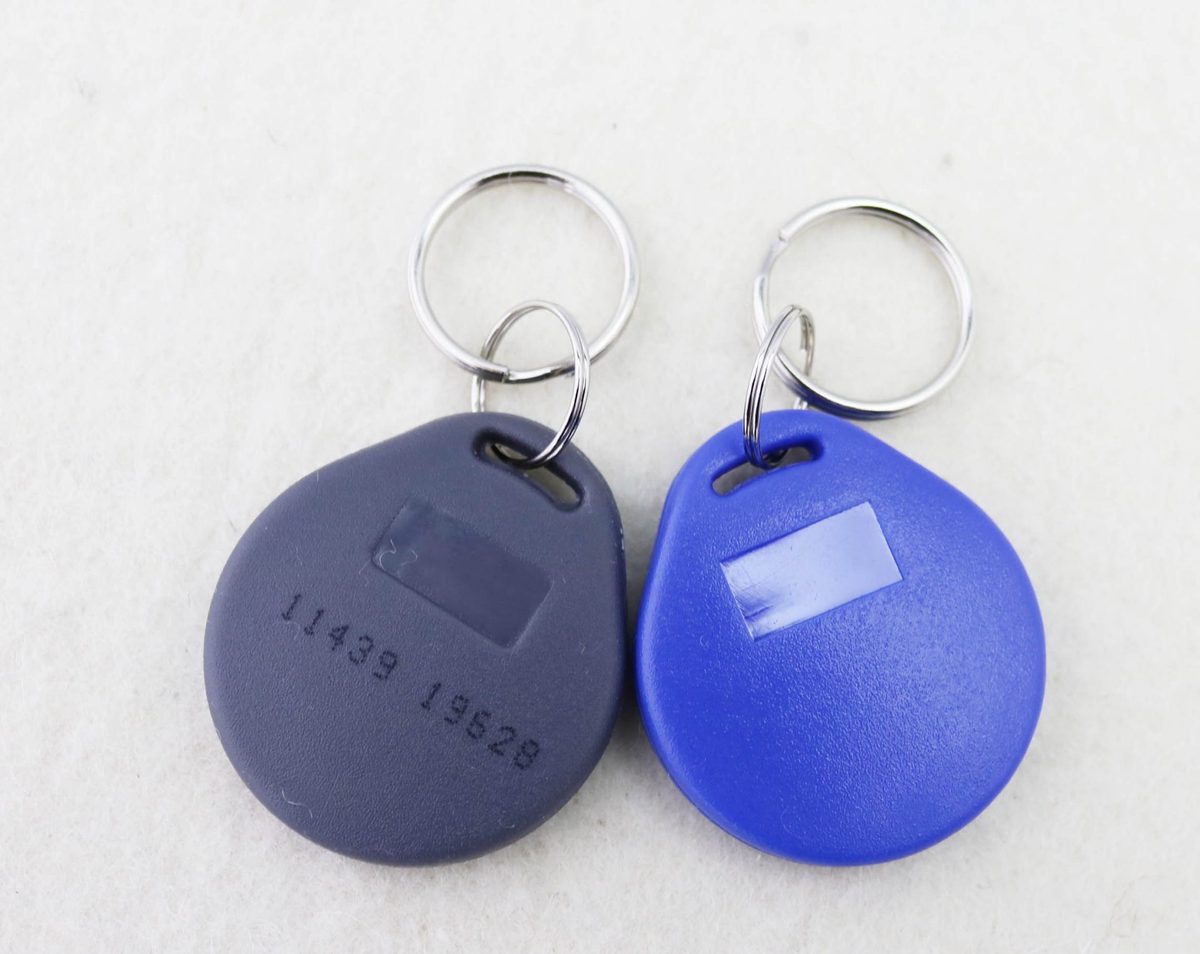
ABS RFID Keyfobs — Mold Catalog
ABS RFID keyfobs provide a rigid carrying format for access credentials and NFC applications. Compare the illustrated mold catalog with the named KF003A,…
Check the basis for your decision
Sources and technical references
Chip and standards references describe their own scope. They do not establish a finished product’s read distance, durability or compatibility.
- NXP: System-level security measures
Security implementation guidance for MIFARE installations; an IC feature is not a complete system design.
- NXP: MIFARE products and UID handling
Identifier handling depends on the selected IC and system; visible numbering is a separate specification.