On this page
Compare the requirements that change the choice
| Decision point | LF | HF |
|---|---|---|
| Common operating examples | 125 kHz access systems; separate 134.2 kHz identification applications | 13.56 MHz systems using a specified protocol |
| Protocol example | EM-family access formats or applicable animal-ID protocols; these are not interchangeable | ISO/IEC 14443 or ISO/IEC 15693, with chip-specific commands and data |
| Phone interaction | A standard phone NFC radio does not read LF credentials | Only supported NFC technologies and application/payload formats work as intended |
| Data and writing | Read-only and writable ICs exist; confirm the exact selected device | Memory layout, access permissions and write support depend on the chip and application |
| Security | Assess the selected credential and system; do not generalize every LF application as simple or insecure | AES-capable chips exist, but HF frequency or a UID read does not establish secure use |
| Replacement order | Match the authorized current format, reader and identifier handling | Match chip generation, protocol, application data and issuer process |
| Sample acceptance | New authorized enrollment, real use, denied use, revocation and identifier mapping | The same workflow plus required authentication or application transactions |
- A frequency number is not a credential format: Identify the chip/protocol, modulation or data format and controller requirements. Two credentials in the same band can be incompatible.
- RFID shapes do not reveal the band: Cards, keyfobs and compact tags can contain different electronic configurations. Use a specification or an authorized sample identification process.
- Treat upgrades as a system change: Moving from LF to HF may require new readers, controllers or application configuration. Buying a new credential body is only one part of that change.
Keep LF in the shortlist when
- An existing LF system has a documented credential or transponder requirement.
- The exact protocol, data format and permitted enrollment process are known.
- The selected sample completes the real workflow; its frequency or appearance is not the only evidence.
Evaluate HF when
- The installed system already specifies an HF credential, library or item protocol.
- A new project needs a supported NFC interaction or authenticated smart-card application.
- The reader and software can be selected or updated alongside the credential and validated before rollout.
Separate access credentials from animal or vehicle transponders
A 125 kHz access keyfob is not a substitute for a 134.2 kHz animal-ID transponder. Vehicle immobilizers are another application-specific system. If the existing chip is unknown, start with the equipment model and its documentation rather than ordering a mixed bag of frequencies. Use authorized test samples and the equipment provider’s acceptance process.
Common decisions
Questions buyers ask before choosing
Are 125 kHz and 134.2 kHz RFID credentials interchangeable?
No. Both may be described as LF, but frequency, protocol and encoding must match the reader. An access credential and an animal-identification transponder should not be substituted based on the LF label.
Can a phone identify or write an LF keyfob?
A phone’s standard NFC radio is for supported 13.56 MHz communication, not LF. An LF identification or writing task requires appropriate external equipment and supported software. Writing capability also depends on the exact IC and authorized application.
Can an LF reader use an HF card?
An LF-only radio cannot communicate with an HF credential. A device described as multi-technology may include both, but its exact supported protocols and controller formats still need confirmation.
Are all LF tags read-only and all HF tags rewritable?
No. These are chip and configuration properties rather than frequency rules. Read-only LF ICs exist, as do LF devices with writable memory; HF data may be writable, locked or restricted by authentication. Confirm the selected IC and the operation the application needs.
Will switching to HF automatically improve access security?
No. Choose a credential and application that actually perform the intended authentication, and plan reader support, key management, issuance and revocation. Merely changing frequency while continuing to trust a public identifier does not establish a secure upgrade.
What should I send if I do not know the existing chip?
Send reader and controller model numbers, the current credential’s non-sensitive specification or packaging reference, and the intended authorized workflow. Ask the equipment provider to confirm the credential format. Do not send live keys, personal access records or assume that a photo identifies the electronics.
Move from the guide to a sample
Product options to investigate
These pages describe product formats. Confirm the exact chip, construction and system compatibility for your selected configuration.
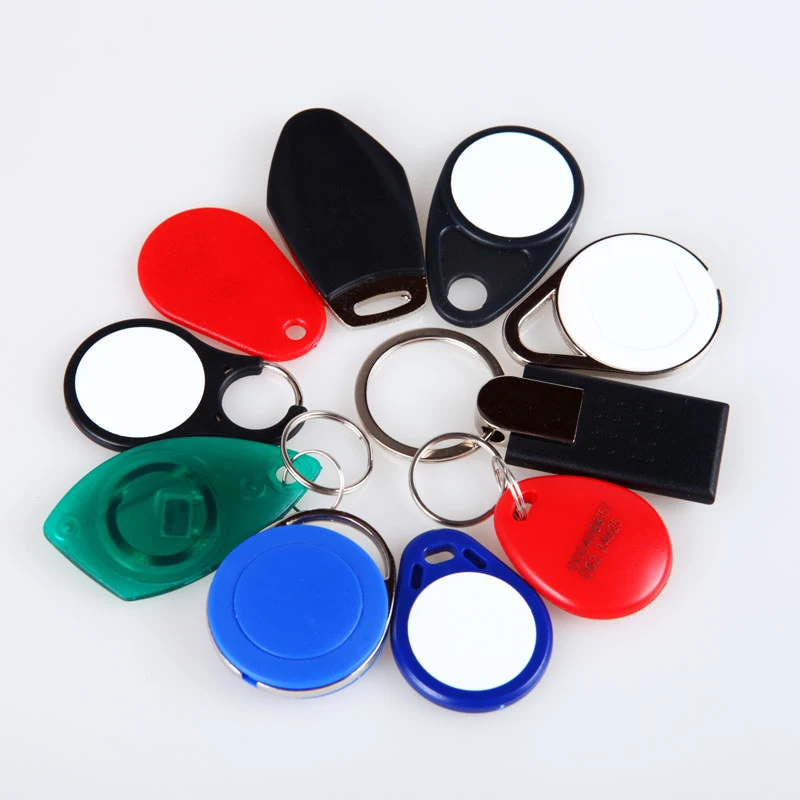
RFID Keyfobs — Materials & Model Comparison
Compare RFID keyfobs by housing, dimensions and chip configuration. ABS, FR4, silicone, leather-style and soft PVC formats solve different carrying and…
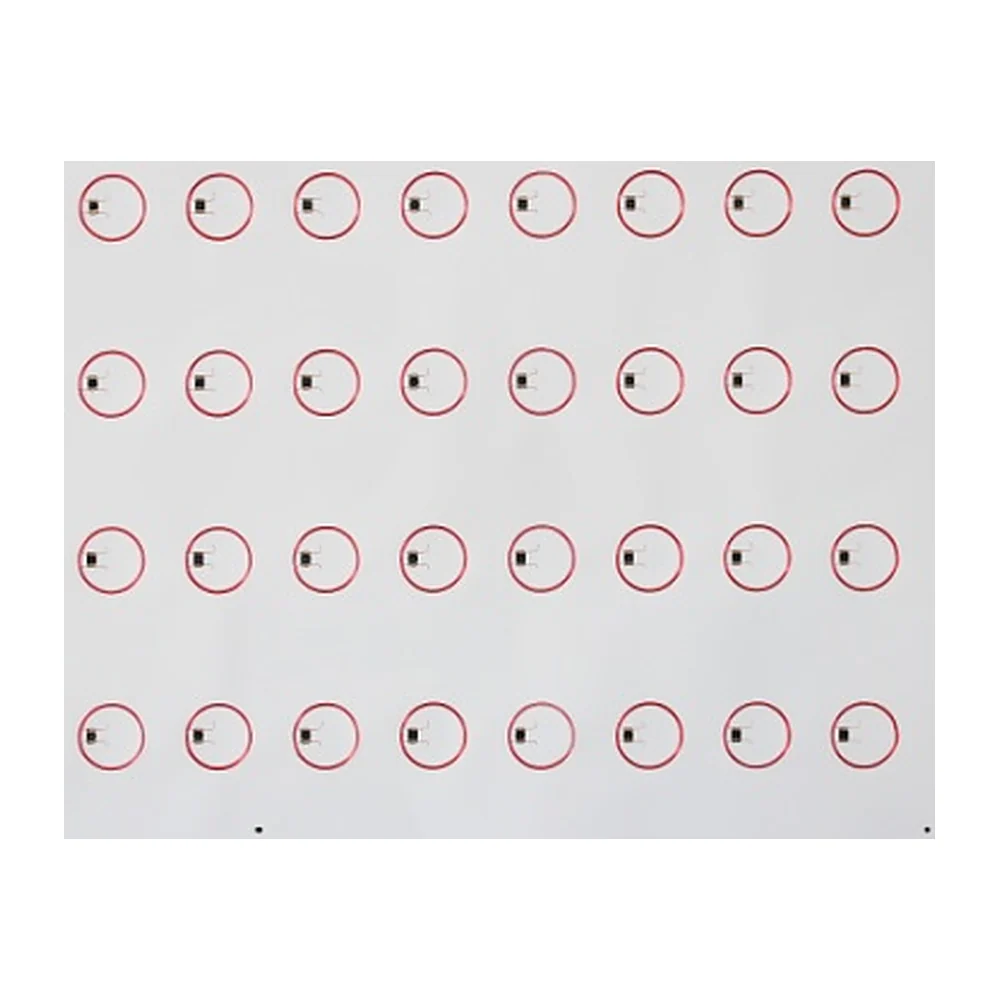
LF Card Inlay (125 kHz)
Compare EM4200, EM4305 and ATA5577C LF chip memory and read/write capabilities. See 3 × 7 and 2 × 5 card-inlay sheets, download technical references and request samples.
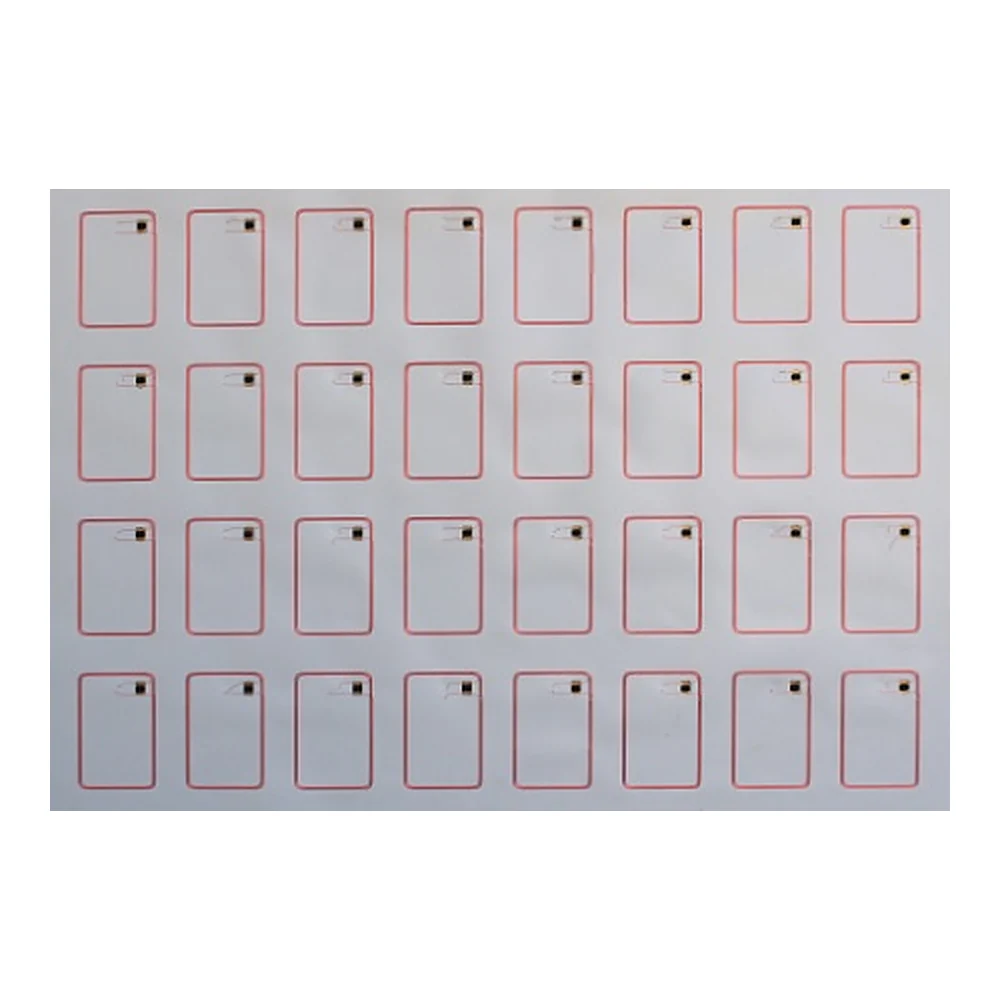
HF Card Inlay (13.56 MHz)
Compare 13.56 MHz HF card inlay chip specifications, 4 × 8 and 5 × 5 sheet examples, and a dimensioned COB stack. Download the technical reference and request samples.
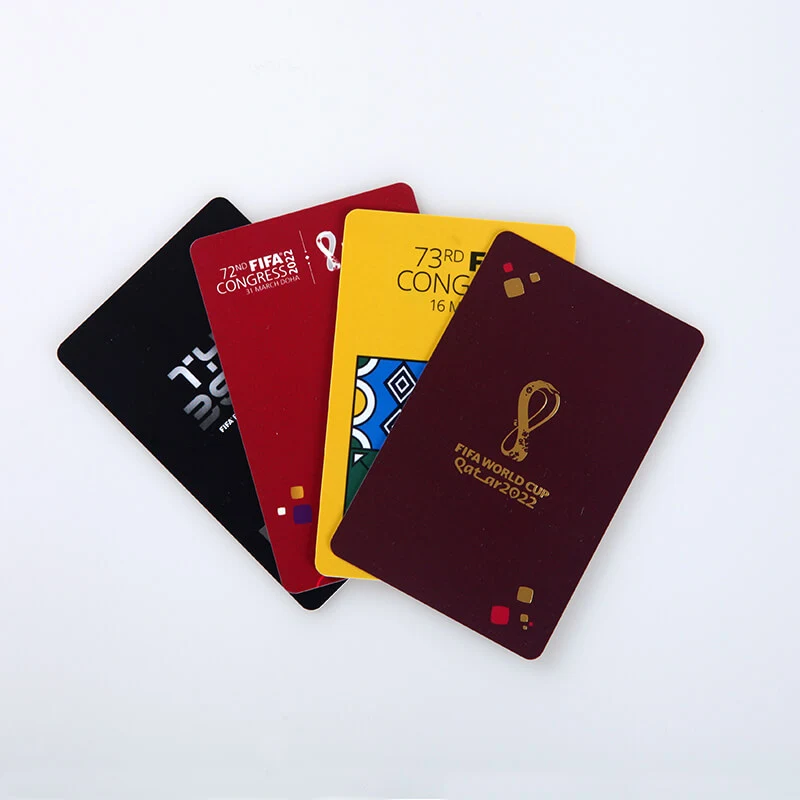
Custom PVC RFID Card
Compare blank, printed and encoded PVC RFID cards by chip, artwork, dimensions and issuer workflow. Review a representative sample before bulk ordering.
Check the basis for your decision
Sources and technical references
Chip and standards references describe their own scope. They do not establish a finished product’s read distance, durability or compatibility.
- EM Microelectronic: EM4200
An LF read-only IC example with defined encoding options; not a claim about every LF credential.
- Texas Instruments: 134.2 kHz transponder
A distinct LF protocol and application example; not evidence of RFIDAK supply or implant suitability.
- NFC Forum: NFC technology
13.56 MHz NFC operation, tag types, NDEF and supported communication standards.
- NXP: System-level security measures
Security implementation guidance for MIFARE installations; an IC feature is not a complete system design.