Digital Product Passport (DPP) Guide 2026: NFC, RFID & QR Carrier Choice
A practical guide to comparing QR, NFC and RFID for digital product passport planning. Separates current battery obligations from future textile rules and explains carrier trade-offs.
Topic Cluster
Continue this topic with the next closest guides
These are the articles buyers usually need next when they are moving from basic research into a real shortlist, pilot or compliance discussion.
QR vs NFC vs RFID 2026: Digital Product Passport Carrier Decision
Compare QR, NFC and UHF RFID by reader workflow, security and durability when planning a digital product passport;
Read this nextRFID TECHNOLOGYBattery Passport 2026: EV/Industrial RFID, NFC & QR Carrier Guide
A practical guide to battery passport programs. Covers where QR codes fit, when RFID or NFC adds value, and how teams...
Read this nextRFID TECHNOLOGYTextile DPP 2026: QR vs NFC vs RFID for Apparel Brands
Textile DPP planning guide: current ESPR timetable, QR, NFC and UHF carrier trade-offs, garment placement and...
Read this nextRFID TECHNOLOGYSunrise 2027 vs RFID 2026: Why 2D Barcodes Won't Replace Item-Level Tagging
A practical guide to the GS1 Sunrise 2027 industry goal. Compare POS-ready 2D barcodes with RFID, retailer...
Read this next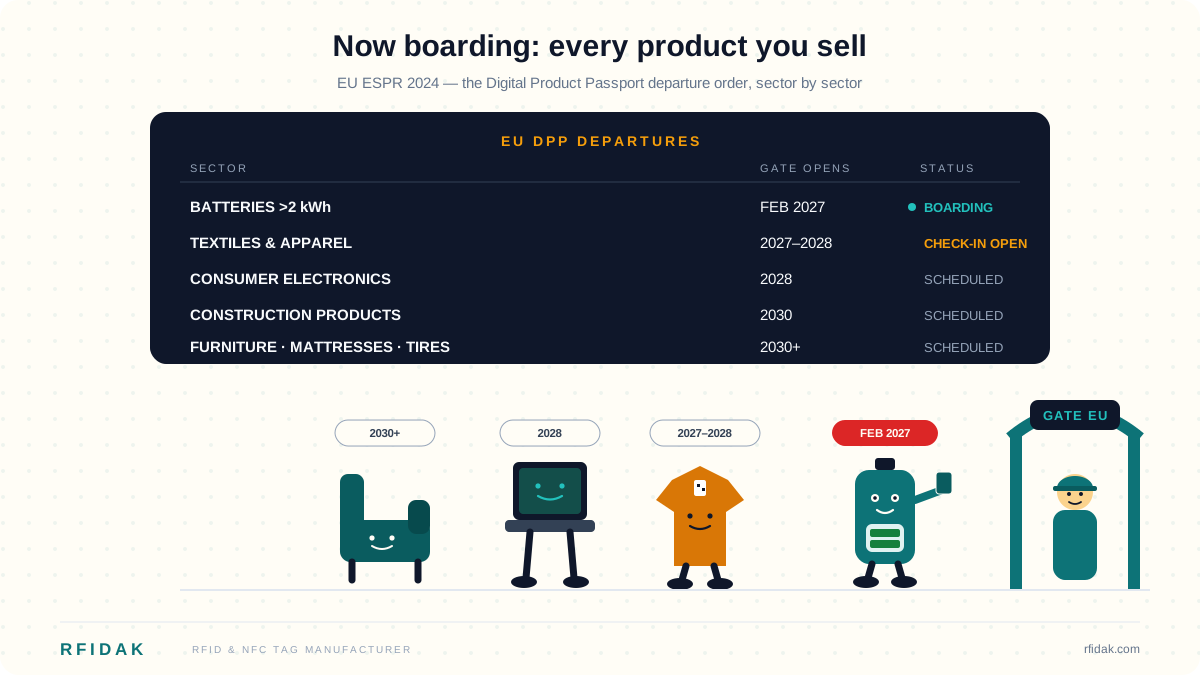
Quick Answer
The Digital Product Passport (DPP) is an EU framework for making product information available through a data carrier. Product-specific ESPR obligations depend on future delegated acts. The Commission lists Q4 2027 as the indicative adoption date for the textile act, not a textile compliance deadline. A separate battery passport applies from 18 February 2027 to EV, light-means-of-transport and industrial batteries above 2 kWh. QR, NFC and UHF solve different access and operational tasks; NFC, UHF and GS1 Digital Link are not general EU DPP mandates.
Why digital product passports are now an RFID topic
Digital Product Passport (DPP) has moved from sustainability concept to active planning topic for brands selling into Europe — the departures board is lit, and products are being called to the gate.
The European Commission's 2025-2030 Ecodesign working plan expands attention across product groups such as textiles, furniture, mattresses, tires and aluminum, while batteries have already set the direction for structured product data. For many teams, the question is no longer whether product-level digital identity is coming, but which data carrier should carry the serialized link in the real world.
That is where RFID and NFC stop being theory and start being luggage. A passport only works when the identifier survives manufacturing, logistics, retail handling, returns and after-sales support — the whole trip, not just the photo at check-in. For many products, especially garments, durable goods and reusable assets, that makes NFC tags and RFID labels more interesting than a print-only approach.
EU DPP: current obligation and planned sector acts
The Ecodesign for Sustainable Products Regulation (ESPR) is a framework. Future product-specific delegated acts will define relevant DPP requirements. The separate Batteries Regulation already sets a date for specified battery categories. The dates below distinguish an obligation from indicative adoption of a future act; an act-adoption date is not a product-compliance date.
| Sector | Current status | Legal route |
|---|---|---|
| EV, light-means-of-transport and industrial batteries (>2 kWh) | Battery passport from 18 February 2027 | EU Battery Reg 2023/1542 |
| Textiles & apparel | Q4 2027 indicative act adoption; application details to follow | ESPR delegated act (textiles) |
| ICT and other energy-related products | Work-plan priorities; no blanket 2028 electronics DPP deadline | Future product-specific measures |
| Construction products | Product-specific rules to be checked | Construction Products Regulation |
| Furniture, mattresses, tires | Indicative work-plan priorities; acts to follow | ESPR working plan 2025–2030 |
| Iron, steel, aluminum (industrial) | Separate indicative product-group timetables | ESPR work plan |
Confirm the category of each product before planning a passport. The 18 February 2027 battery date covers only the battery categories specified in Article 77 of Regulation (EU) 2023/1542. Textile requirements remain subject to the future delegated act and implementing details. The Commission does not list a blanket 2028 electronics DPP obligation.
What is driving urgency in 2026
Three market signals are pushing DPP planning higher on buyer agendas, and none of them is subtle. First, the EU policy path is becoming clearer sector by sector. Second, GS1 Digital Link has matured into a practical bridge between physical product identifiers and web-based product records.
Third, tag suppliers and chip makers are now positioning NFC and secure authentication chips specifically around passport, authenticity and post-purchase engagement workflows — the vendors have already read the departures board.
This combination means DPP is no longer a compliance discussion sustainability teams get to keep to themselves. It is increasingly shared by packaging, product, IT, sourcing and digital experience teams — five departments, one itinerary.
Where QR-only programs usually fall short
QR codes will remain part of many DPP deployments because they are inexpensive and easy to print. But a passport printed on the luggage has predictable problems — QR-only programs often run into four practical issues:
- Fragile ink — codes can be damaged, covered or poorly printed
- Forgeable — serialization can be added, but counterfeit resistance remains limited
- Moody scanning — user experience depends on camera quality, lighting and scan behavior
- Slow at scale — closed-loop operational reading is harder in bulk logistics environments
That does not mean QR is wrong. It means buyers should compare whether a QR-only design is enough for their workflow, or whether a combined QR + NFC or QR + RFID strategy is the safer long-term path.
When NFC is the better DPP carrier
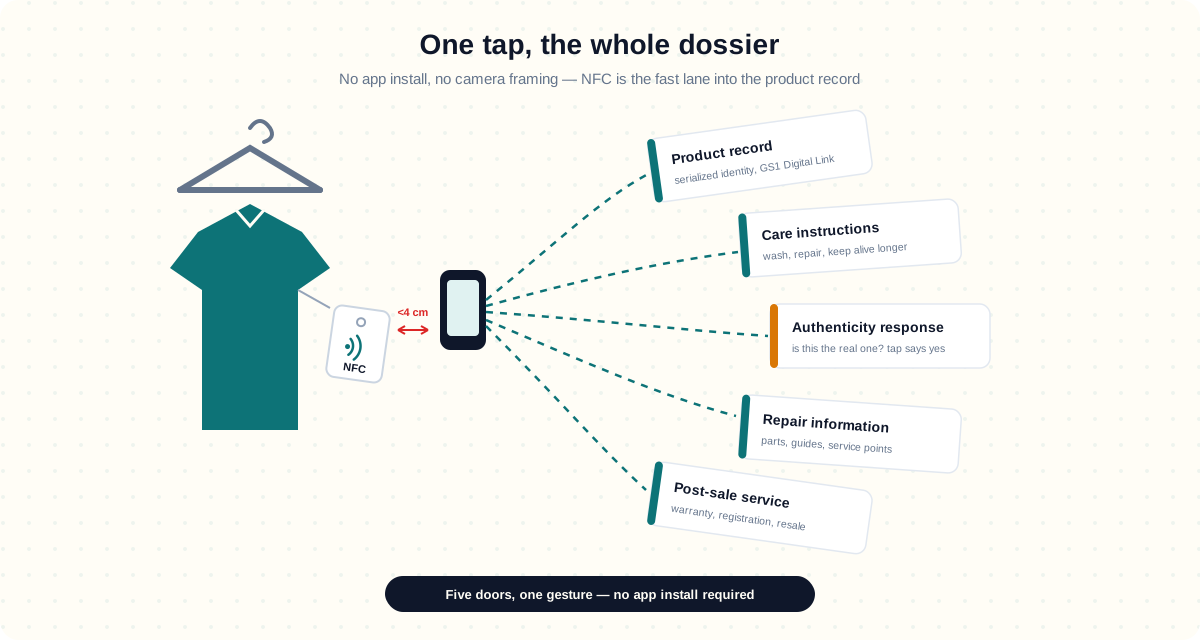
NFC is strongest when the product passport needs a simple consumer tap experience — the fast-track lane where nobody fumbles with a camera. Premium apparel, cosmetics, electronics accessories, warranty registration and resale verification are all strong candidates.
With NFC, the user does not need to frame a camera scan carefully. A tap can open the product record, care instructions, authenticity response, repair information or post-sale service flow: the whole dossier, one gesture.
NFC is especially attractive when the brand also wants to support customer engagement, loyalty or product authentication on the same item.
When UHF or RAIN RFID belongs in the same architecture
If the project also needs operational visibility through logistics, warehouse or store processes, a pure NFC design may not be enough — a tap is intimate, and a warehouse is not. UHF RFID is still the better fit for fast non-line-of-sight reads across cartons, shelves, return flows and inventory counts. That is why some DPP programs are likely to use a layered model:
- QR for universal visual access
- NFC for customer tap and secure interaction
- UHF for logistics, store and reverse-logistics automation
For buyers, the main decision is not which carrier wins forever. It is which combination best fits the product journey — passports do not argue with the itinerary.
How GS1 Digital Link fits the plan
GS1 Digital Link matters because it helps teams connect one product identifier to multiple digital destinations without locking the project into one narrow marketing URL — one passport number, many border posts. In practice, this gives brands a cleaner way to manage product identity across packaging, ERP, e-commerce, service portals and future passport records.
For DPP buyers, this usually means the physical tag decision and the data architecture decision should happen together. Tag projects that start without a clear identifier model often have to be rebuilt later — and re-issuing passports for a million shipped products is nobody’s favorite quarter.
Questions to answer before sampling DPP tags
- Is the passport meant mainly for consumer access, operational tracking or both?
- Does the item need single-item serialization or only SKU-level linkage?
- Will the product need anti-counterfeit or authenticity checks?
- Is the tag embedded in packaging, a sewn label, a hangtag or a durable product surface?
- Should the same item support QR, NFC and UHF together or only one carrier?
A practical pilot path for brands
The strongest DPP pilots usually start with one product family rather than a company-wide rollout — send one traveler through the new border before booking the whole company on the flight. Test one tag construction, one identifier model and one product page flow.
Then validate real-world behavior across packaging, shipping, store handling, consumer tap rate and after-sales service use. If the program also needs authentication, include that in the first pilot instead of bolting it on later.
Questions to verify before citing a DPP pilot
Ask for a dated primary source identifying the actual product, carrier, data model and trial scope. A brand's RFID inventory program does not by itself establish that it has deployed an EU-compliant passport. For a buyer's own pilot, record the product category, responsible operator, identifier mapping, access rules and tests on the finished item.
Final takeaway
EU DPP timeline
Covered battery passports begin 18 February 2027. The textile delegated act is planned for Q4 2027 on an indicative timetable; its application details remain open. See also: Battery Passport guide • Textile DPP guide • QR vs NFC vs RFID for DPP
Key Takeaways
- Regulation: EU ESPR (Ecodesign for Sustainable Products Regulation), enacted 2024.
- Carrier choice: QR, NFC and UHF RFID solve different tasks; no general EU DPP rule requires NFC, UHF or GS1 Digital Link.
- Legal dates: 18 February 2027 applies to specified battery categories; Q4 2027 is an indicative textile act-adoption date, not textile enforcement.
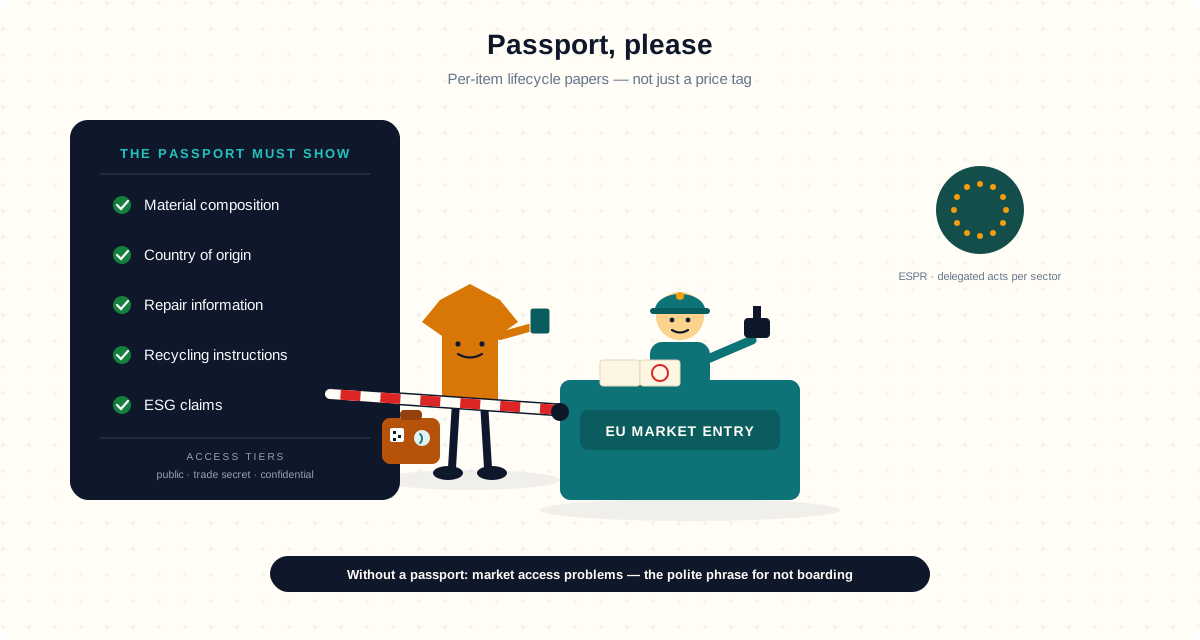
- Data linked: composition, country of origin, repair info, recycling instructions, ESG claims.
- For brand: DPP becomes consumer-facing trust signal — luxury and sustainable brands lead adoption.
⚠️ Common pitfall
A multi-carrier design can serve several workflows, but it is not automatically required or compliant. Check the applicable final product rule and test the chosen identifiers and data access.
Digital Product Passport FAQ
What if I sell into both EU and non-EU markets?
First identify which products are covered by an applicable EU product-specific DPP rule. A common identifier or carrier across markets may simplify operations, but it is a commercial choice rather than a blanket EU requirement for every SKU. Check local obligations and product-data ownership before extending a pilot globally.
Who pays for DPP infrastructure (tags + database)?
Cost falls on the economic operator placing the product on the EU market — usually the manufacturer or the EU importer. Per-tag cost rolls into product BOM. Backend database costs ($500K–$5M for major OEMs to build their DPP backend, far less for smaller brands using SaaS DPP platforms) are a corporate IT investment. Some platforms now offer DPP-as-a-Service to reduce this burden.
Can DPP data be private or commercially sensitive?
EU ESPR specifies tiered data access: public fields (consumer-visible, e.g., recycled content), trade-secret fields (visible only to authorized parties like recyclers, customs, regulators), and confidential fields (manufacturer-only). Brands don’t have to publish their entire BOM — only the regulator-required public fields plus what they choose to share for marketing.
What if my product crosses multiple sectors (e.g., e-bike with battery)?
Check each covered component and complete product against its own applicable legislation. An e-bike's LMT battery is included in the battery-passport scope from 18 February 2027; do not assume a separate vehicle-level DPP exists without a specific legal act. If several records are required, define how their identifiers relate in the product data system.
How do I align suppliers to provide DPP data?
Add DPP data fields to your standard supplier RFQ template + supplier agreement. Specify required data (origin, recycled content %, certifications) + format (machine-readable JSON / CSV) + delivery timing (with each shipment). For tier-2 / tier-3 suppliers without DPP-readiness, plan a 6–12 month onboarding cycle. Industry-standard templates from CIRPASS and ZDHC are emerging to standardize supplier data sharing.
Sources
- European Commission — DPP timetable and product-group scope. Commission DPP overview; textile apparel timetable.
- Regulation (EU) 2023/1542, Articles 13 and 77. Battery passport categories and QR-code access.
- GS1 Digital Link standard. ref.gs1.org/standards/digital-link
- Global Battery Alliance — Battery Passport. globalbattery.org/battery-passport
- EU JRC — Digital Product Passport background & research. joint-research-centre.ec.europa.eu
- CIRPASS — DPP standardisation initiative. cirpassproject.eu
- ISO/IEC 14443 + 18000-63 — carrier standards. iso.org
- IDTechEx — "Digital Product Passports: Markets, Players, Forecasts". idtechex.com
RFIDAK supports DPP-ready NFC stickers, UHF labels, and RFID paper tags for teams evaluating carrier options. Contact us for DPP sample planning.
Turn this identity strategy into a tag shortlist
Best for teams deciding between QR, NFC and RFID and now needing help with tag placement, material fit, sample options or pilot scope.
Comparison Pages
Compare the closest alternatives before you request samples
Open one of these if the article clarified the topic but the team still needs a cleaner format, chip or frequency decision.
Quick FAQ
Questions buyers often ask after reading this guide
Do Digital Product Passports require NFC or RFID?
No general EU DPP rule requires NFC, UHF RFID or GS1 Digital Link. ESPR product-specific delegated acts will define the applicable requirements. QR, NFC and UHF can be assessed against the required data carrier and the actual consumer, authentication or warehouse workflow. Regulation (EU) 2023/1542 separately requires a QR code for covered battery passports; NFC or UHF may be added for a separate operational need.
When does EU ESPR 2024/1781 take effect?
ESPR Regulation (EU) 2024/1781 is a framework; product-specific DPP obligations depend on future delegated acts. The European Commission lists Q4 2027 as the indicative adoption date for the textile delegated act, followed by technical and implementation measures, not a 2027 textile compliance deadline. The separate Batteries Regulation (EU) 2023/1542 requires a passport from 18 February 2027 for EV batteries, light-means-of-transport batteries and industrial batteries above 2 kWh. There is no general 2028 electronics DPP deadline.
Is QR code enough for Digital Product Passport?
That depends on the product-specific legal requirements and the chosen workflow. The textile delegated act has not yet fixed its DPP carrier requirements, so a QR label cannot already be called compliant for all apparel. A QR code is required for the battery passports covered by Regulation (EU) 2023/1542. Optional NFC can support phone tap or cryptographic authentication, while UHF can support bulk operational reads; neither is a general ESPR DPP mandate.
What is NTAG424 DNA SUN for DPP?
NTAG 424 DNA supports configurable secure messaging that a backend can verify. Define key custody, URL configuration, counter or replay handling and the product-record linkage. The feature may help an authentication workflow but is not a required or sufficient EU DPP solution; request a quote for the finished tag and service.
How much does a DPP NFC tag cost?
Unit price depends on the exact chip and inlay, finished construction, approved quantity per design, printing, encoding, packaging and QC requirements. Request a dated itemized quote showing sample and setup charges, unit tiers, freight and lead time; a generic chip or tag price does not establish the cost of the approved product.
Which DPP carrier is best for textiles?
No textile DPP carrier has been prescribed yet. The European Commission plans to adopt the textile ESPR delegated act in Q4 2027 on an indicative timetable; the final requirements will follow that act. For a pilot, compare a durable optical code with NFC when phone tap or authentication matters and UHF when inventory reads matter. Test the selected construction through the actual garment care process, and do not describe a pilot carrier as already EU-compliant.
How do I integrate DPP data into my existing systems?
First identify the product category, responsible economic operator and applicable final rules. Define the identifier, product data, access permissions and maintenance owner before selecting a carrier. GS1 Digital Link can be one way to connect an identifier to web records, but EU DPP law does not generally require that URL format. Test the chosen data model and carrier with the receiving systems and the product lifecycle.
When should I start my DPP pilot?
A textile pilot can begin while the product-specific delegated act is being developed, but treat it as an evaluation rather than proof of future compliance. The Commission lists Q4 2027 as the indicative textile act adoption date, with implementation measures to follow. For covered EV, light-means-of-transport and industrial batteries above 2 kWh, Regulation (EU) 2023/1542 specifies 18 February 2027. Set pilot size, carrier and acceptance criteria from the actual product and data workflow.
Author
RFIDAK RFID Editorial Team
RFID supply editorial team
RFIDAK publishes practical RFID guides to help buyers compare chips, product formats, sampling plans and sourcing options before production.