HF vs UHF RFID 2026: Frequency, Range, Cost & When to Choose
A practical comparison of HF (13.56 MHz) and UHF (860-960 MHz) RFID. Covers read range, chip families, standards, cost per tag and the environments where each frequency performs best — plus when one project needs both.
Quick Answer
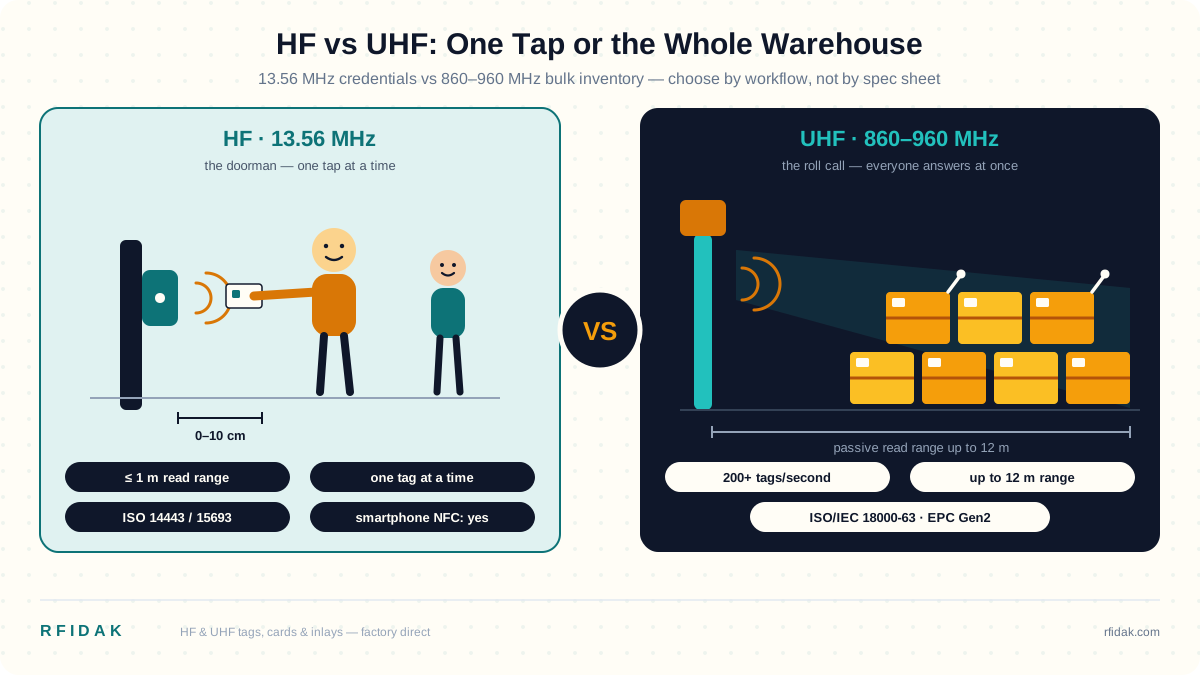
HF (13.56 MHz) and UHF (860–960 MHz) serve fundamentally different RFID workflows. HF wins for short-range card and payment use cases (ISO 14443, ≤1 m, smartphone NFC compatibility). UHF wins for warehouse, retail, and apparel inventory at meters of range (ISO/IEC 18000-6C / EPC Gen2, up to 12 m, fast multi-tag reads). Choose HF for credentials and tap; UHF for bulk inventory at scale.
Why the HF vs UHF decision matters
Frequency is the one decision on an RFID project you don’t get to change your mind about later: it locks in the chip family, reader hardware, read distance and form factor for the entire project.
HF and UHF are the two most commercially relevant RFID frequency bands, and they behave like two employees who should never swap shifts — one works the door, the other works the warehouse. Make the right call early and you never have to learn, invoice by invoice, what “costly re-engineering” actually costs.
The Physics: Why HF and UHF Behave Differently
The behaviour difference between HF and UHF is not a marketing distinction — it is hard physics, set by wavelength and the resulting interaction with antenna size, water, and metal. No sales deck, however confident, has ever renegotiated a wavelength.
| Property | HF (13.56 MHz) | UHF (915 MHz) |
|---|---|---|
| Wavelength | ~22 m (long — near-field magnetic coupling) | ~33 cm (short — far-field radiation) |
| Coupling mechanism | Inductive (magnetic field, like a transformer) | Backscatter (radio reflection) |
| Antenna size | Coil — can be a few cm sq. | Half-wave dipole ~16 cm long |
| Water absorption | Low — field passes through | High — absorbed by water content |
| Metal proximity | Tolerable (some detuning) | Severe detuning unless on-metal design |
In practice: the 22 m HF wavelength means antennas are physically small (a thin coil on a credit card), water is mostly transparent, and the read mechanism is intentional one-card-at-a-time — a handshake, not a broadcast.
The 33 cm UHF wavelength means antennas can be small and printable, but water absorbs strongly and metal detunes the matching network — both fixable with on-metal hard-tag construction, neither fixable by wishful thinking. This is also why fresh-meat retail and beverage cans are still hard for UHF while transit cards and hotel keys are easy for HF.
HF RFID at a glance - 13.56 MHz
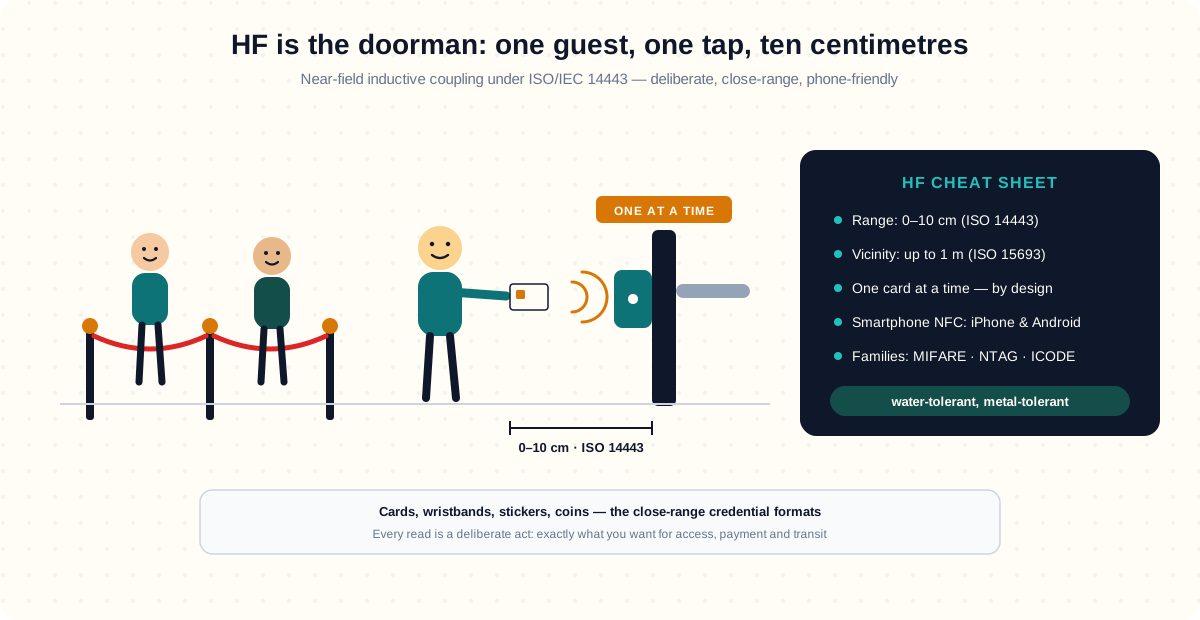
HF is the introvert of the pair: it does its best work one-on-one, at conversational distance. Systems follow ISO 14443 (short-range smart cards) or ISO 15693 (vicinity cards). Read range is typically 0-10 cm for ISO 14443 and up to 1 m for ISO 15693 — close enough that every read is a deliberate act, which is exactly what you want from a credential.
Common HF chip families
- MIFARE Classic, Plus, DESFire - the credential dynasty: access control, transit, payments
- NTAG 213/215/216 - the extrovert that talks to phones: NFC stickers, smart packaging, digital business cards
- ICODE SLIX - the quiet librarian: library management, pharmaceutical tracking
Where HF excels
HF is the standard for contactless smart cards, hotel key cards, NFC-enabled products, laundry tracking and close-range credential workflows. Its moderate read range and strong security options make it ideal for intentional one-at-a-time interactions — the doorman who checks each invitation personally and has never once waved a crowd through.
UHF RFID at a glance - 860-960 MHz
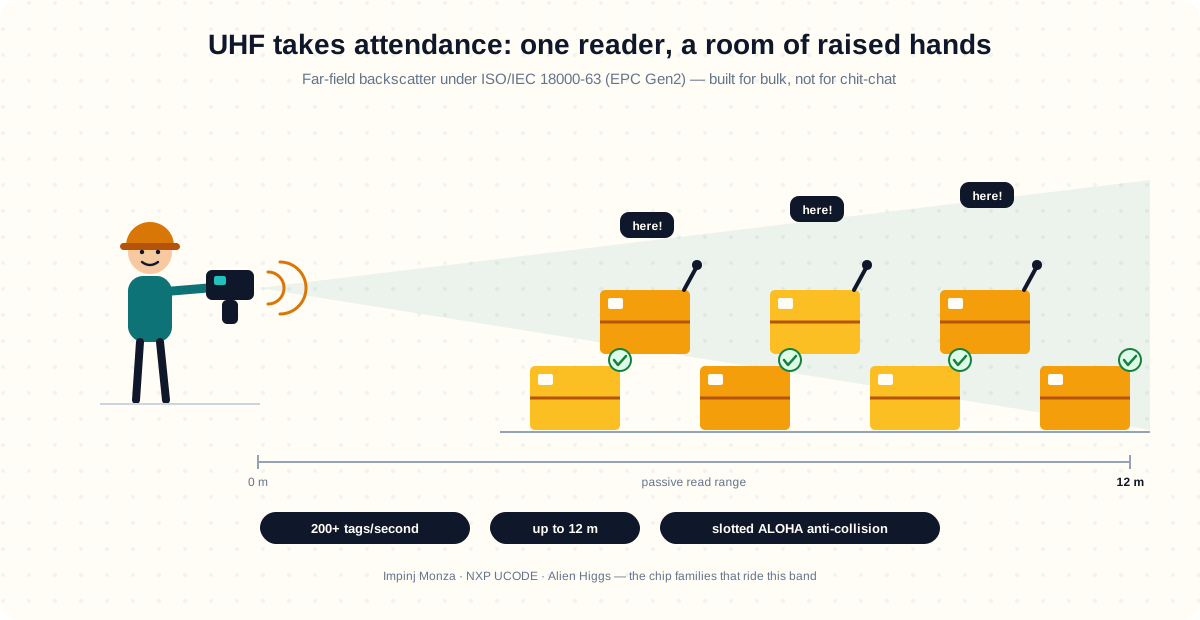
UHF is the extrovert: it addresses the whole room and expects everyone to answer at once. It follows ISO 18000-6C (EPC Gen2). Passive read range can reach 10-12 m, and UHF readers can scan hundreds of tags per second — less a conversation, more a roll call taken at industrial speed.
Common UHF chip families
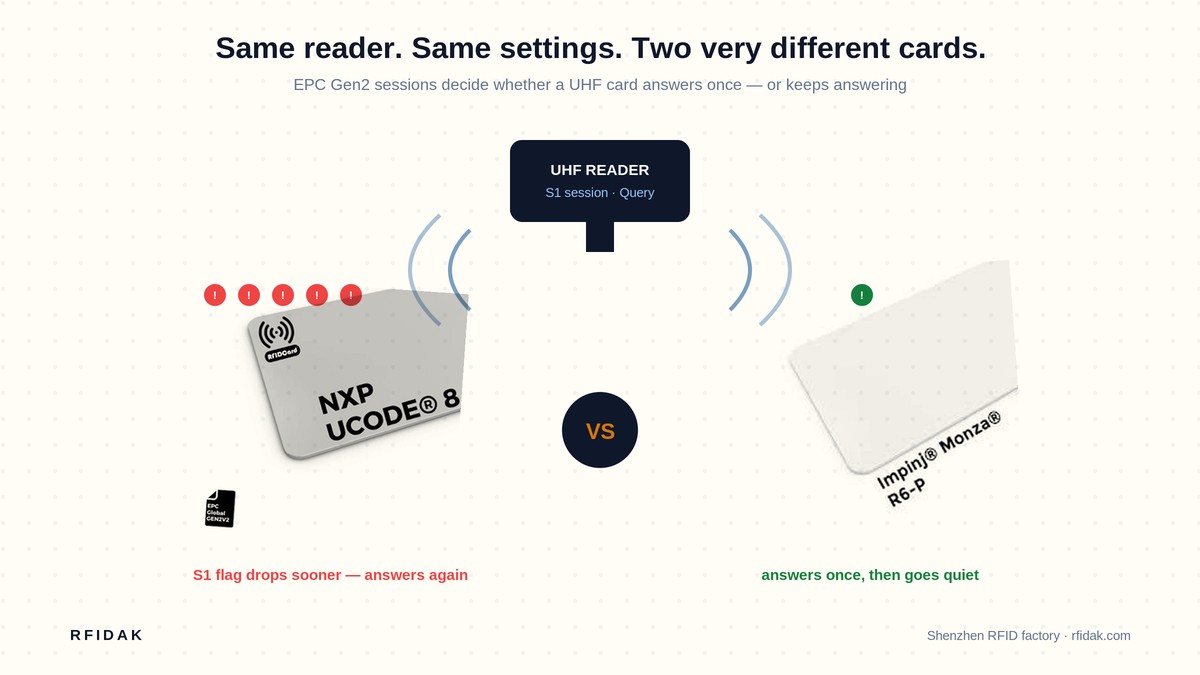
- Impinj Monza R6/M730 - the retail workhorse: retail, apparel, general logistics
- NXP UCODE 8/9 - the long-haul specialist: supply chain, automotive, item-level tagging
- Alien Higgs - the heavy lifter: warehouse, pallet and container tracking
Where UHF excels
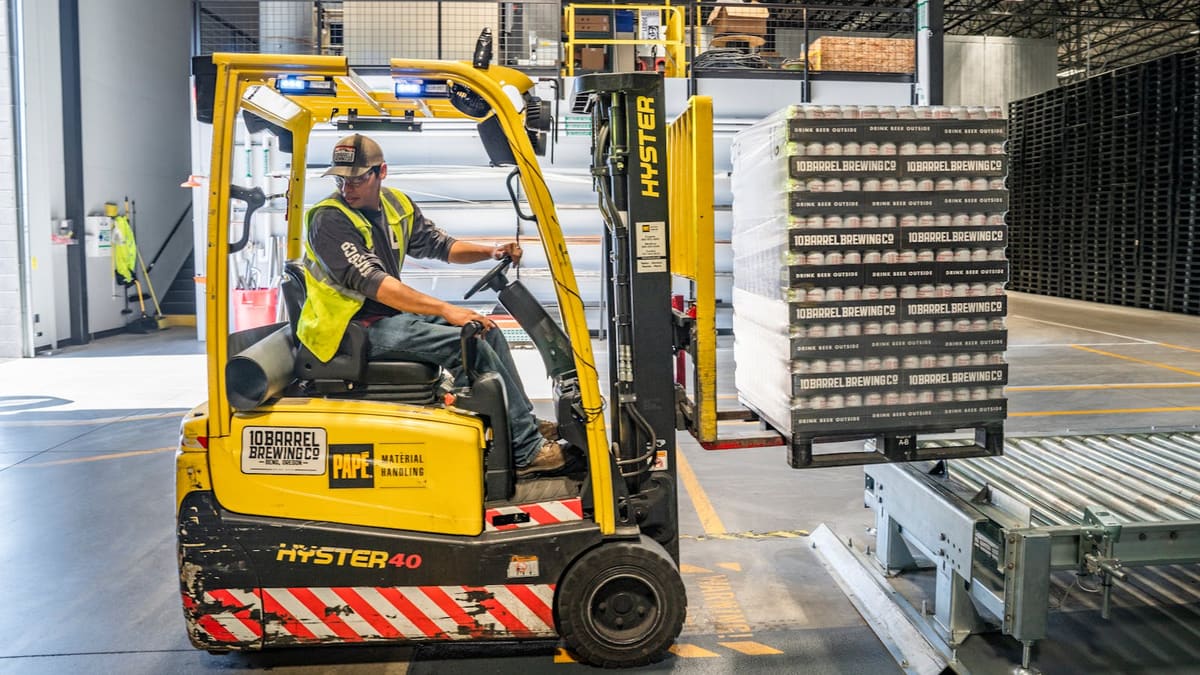
UHF dominates industrial asset tracking, warehouse inventory, retail stock-takes and logistics gate reads. Its long range and fast multi-tag scanning make it the best choice when volume and speed matter — nobody has ever enjoyed counting a stockroom one tap at a time. RFIDAK supplies UHF labels, pallet tags and anti-metal UHF tags.
Where LF (125 kHz) Fits in the Three-Band Picture
HF and UHF aren’t the only choices — there is a third sibling who lives on a farm and is doing absolutely fine, thanks for asking.
LF (Low Frequency, 125–134 kHz) remains the right answer for a narrow set of use cases where its sub-10-cm range and excellent metal/water penetration are decisive: livestock identification (ISO 11784/11785 ear tags and boluses), vehicle key immobilizers (the chip embedded in your car key), and legacy access control (HID Prox card systems still found in older buildings).
LF tags are slow (<10 reads/second), short-range, and offer minimal storage (often just a 64-bit ID), but they survive environments that defeat both HF and UHF — mud, blood, dense biological mass, frozen meat. LF is the tractor of RFID: slow, unglamorous, and still running long after shinier machinery has excused itself. For most modern projects, HF and UHF cover 95% of decisions; LF appears only when the operating environment forces it. For the full three-band picture, see our RFID frequency guide.
Side-by-side comparison
| Factor | HF (13.56 MHz) | UHF (860–960 MHz) |
|---|---|---|
| Read range | 0–100 cm | 1–12 m (passive) |
| Multi-tag speed | 1 tag at a time | 200+ tags/second |
| Standard | ISO/IEC 14443 / 15693 | ISO/IEC 18000-63 (EPC Gen2) |
| Security | AES-128 (DESFire EV3) | EPC Gen2 access password / Gen2v2 |
| Smartphone read | Yes (NFC, iPhone 7+ & Android) | No (needs UHF reader) |
| Anti-collision | Sequential / single read | Slotted ALOHA (parallel) |
| Near metal | Moderate | Needs on-metal design |
| Near liquid | Good | Signal absorption |
| Typical form | Cards, stickers, coins, wristbands | Labels, hard tags, inlays, hangtags |
| Typical applications | Access, payment, transit, NFC tap | Inventory, supply chain, apparel, baggage |
| Unit cost (volume) | Quote by finished tag | Quote by finished tag |
Can you use both on the same project?
Yes — and nobody has to file a conflict-of-interest form. Dual-frequency deployments are common. A hotel might use HF key cards for room access and UHF tags for linen tracking. A warehouse might use UHF for pallet-level inventory and HF for employee badges. The key is matching each frequency to its strongest use case, rather than forcing one band to moonlight in the other’s job.
Dual-Frequency Deployments: 3 Real-World Examples
The reason dual-frequency is the default in mature operations — not the exception — is that the workflows differ enough that one band can’t serve both. Asking HF to run a warehouse is like asking a doorman to take stadium attendance; asking UHF to guard a door goes even worse. Three concrete cases:
Hotel chain (HF rooms + UHF linen)
An example hotel design uses compatible HF credentials for the installed room locks and separate UHF laundry tags for linen counts. Validate card issuance with the lock system and linen reading with known loads. Select the laundry model from its documented process conditions; the frequency does not establish a batch-read rate or wash-cycle life.
The two workflows require their own reader and data compatibility checks; their software may exchange records through an agreed integration. See our hotel key card guide and laundry RFID guide.
Apparel retail (UHF SKU + HF staff/POS)
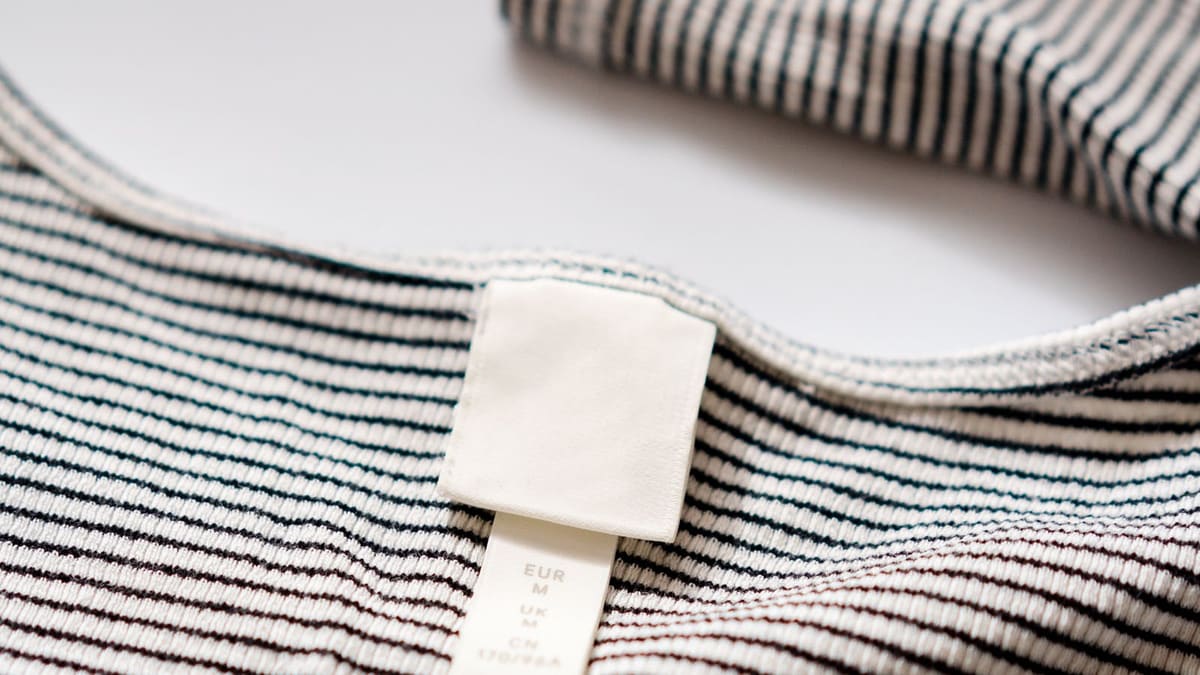
An apparel store may use UHF item tags for cycle counts, HF credentials for staff access and NFC labels for consumer information. These are separate workflows; confirm each retailer's actual program before describing a named store as using all three. Detail: retail RFID inventory guide.
Hospital (HF patient + UHF assets)
A hospital uses HF wristbands on patient admission for EHR look-up at bedside (close-range, intentional, secure), UHF tags on infusion pumps, wheelchairs, and rolling diagnostic carts (long-range cycle counts, asset utilisation), and HF NFC stickers on medication trays for nurse verification. Patient-side flow uses HF; asset-side flow uses UHF.
Regional Standards Cheat Sheet
Unlike HF (globally harmonised at 13.56 MHz — the one topic every regulator on Earth agrees on), UHF rules are region-specific. Cross-border projects need either dual-band tags, region-specific SKUs, or readers tuned to the destination band. The four blocs that cover ~95% of UHF deployments:
| Region | UHF Band | Max EIRP | Regulation |
|---|---|---|---|
| United States / Canada | 902–928 MHz (50 channels FHSS) | 4 W | FCC Part 15 §15.247 |
| European Union / EFTA | 865–868 MHz (10 channels LBT) | 2 W ERP (~3.28 W EIRP) | ETSI EN 302 208 |
| China | 920–925 MHz | 2 W | MIIT GB/T 29768 |
| Japan | 916–924 MHz | 1 W | ARIB STD-T106 |
Tags from major chip families (Impinj M730, NXP UCODE 9, Alien Higgs-9) ship as global-band chips that work across all four blocs — the difference is in reader tuning and antenna design. Specify destination markets in your RFQ before locking the SKU — customs officers are famously unmoved by “but it worked in the demo”.
How to decide
Ask three questions: (1) How far do you need to read? (2) How many items at once? (3) What level of security is required? If close-range, one-at-a-time and secure, HF is usually the answer. If long-range, bulk scanning and speed, UHF wins. If your answers point both ways, congratulations: you’re a dual-frequency site, like most grown-up operations. For a deeper dive, see our full HF vs UHF comparison page.
Quick frequency decision
- Tap-to-open, payment, NFC → HF — smart cards, NFC stickers
- Warehouse, retail, logistics → UHF — UHF labels, on-metal tags
Key Takeaways
- HF (13.56 MHz), ISO 14443A/B and ISO 15693: smart cards, payments, library, hotel keys, smartphone NFC — read range under 1 m.
- UHF (860–960 MHz), ISO/IEC 18000-6C (EPC Gen2): pallet, carton, apparel, baggage tracking — up to 12 m read range with anti-collision.
- HF survives metal/water proximity better than UHF unless on-metal UHF construction is specified.
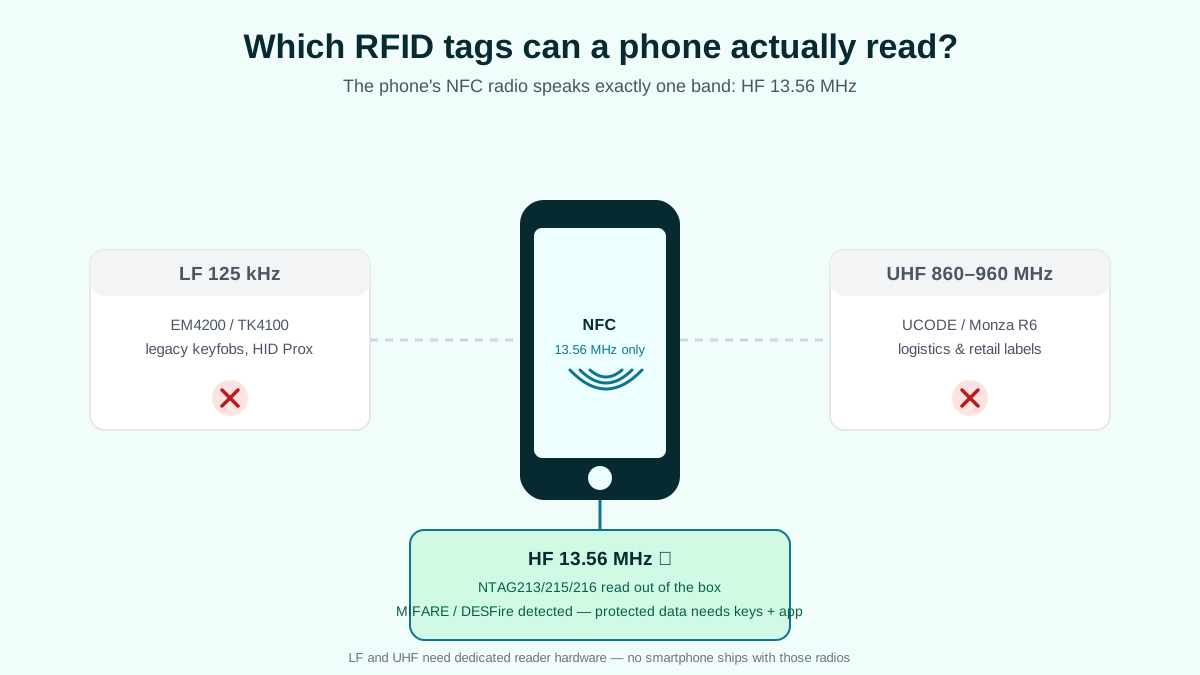
- Smartphone-based reading = HF only (NFC); UHF requires fixed or handheld dedicated readers.
- Same chip family does not mean same reader compatibility — verify ISO 14443A vs B and Crypto-1 vs DESFire variant before committing.
⚠️ Common pitfall
A standard UHF inlay may detune near metal or water. State the mounting material in the RFQ and test the proposed finished tag at the intended read point.
HF vs UHF FAQ
Is NFC the same as HF RFID?
NFC is a subset of HF — specifically the standards published by the NFC Forum (ISO/IEC 18092) layered on ISO/IEC 14443 Type A. Every NFC tag is HF RFID, but not every HF RFID tag is NFC. ISO 15693 vicinity cards are HF but not NFC-compliant. Read our NFC technology guide.
Why does UHF lose range on metal?
Direct metal mounting can detune a standard UHF inlay. Test a purpose-built on-metal construction on the real asset and compare capture using the intended reader, antenna and orientation.
Can a UHF reader read HF cards?
No. HF and UHF use different antennas, different protocols, and different physics. Multi-frequency readers do exist (combo HF + UHF in one chassis from Zebra, Feig, and Impinj), but a single-frequency UHF-only reader cannot interrogate HF cards or vice versa.
Which is cheaper at 100K MOQ?
HF and UHF unit costs vary by chip article, antenna, material, encoding and order volume. Compare current quotes for the finished construction and include any required reader or software changes; one frequency is not universally cheaper.
Do iPhones read UHF tags?
No. iPhones (and Android phones) only read HF / NFC at 13.56 MHz. UHF requires a dedicated UHF reader — either a fixed-portal reader at receiving / shipping, a handheld like the Zebra MC3300xR, or a Bluetooth sled that pairs with the phone. There is no iPhone UHF SDK because iPhones don’t have UHF radio hardware.
Sources
- ISO/IEC 14443-1..4:2018 — Identification cards / contactless integrated circuit cards / proximity cards (HF 13.56 MHz). iso.org/standard/73598.html
- ISO/IEC 15693:2018 — Cards and security devices for personal identification: vicinity cards (HF, longer-range). iso.org/standard/73602.html
- ISO/IEC 18000-63:2015 — UHF RFID air interface (Class 1 Gen 2 / EPC Gen2). iso.org/standard/63675.html
- GS1 EPC Tag Data Standard 2.1 (2023). ref.gs1.org/standards/tds/
- FCC Part 15 §15.247 — UHF unlicensed band rules (US 902–928 MHz). ecfr.gov
- ETSI EN 302 208 — UHF RFID radio spectrum (EU 865–868 MHz). etsi.org
- NXP Semiconductors — UCODE 9 UHF RFID chip datasheet. nxp.com/UCODE-9
RFIDAK supplies products across both frequencies. Request samples for side-by-side testing. See also our full RFID frequency guide for a three-band comparison.
Need help turning this guidance into a product shortlist?
Use this next step when the article has narrowed the direction and you now need help choosing chips, formats, samples or the closest product family.
Quick FAQ
Questions buyers often ask after reading this guide
What is the main difference between HF and UHF RFID?
HF at 13.56 MHz supports short-range credential and compatible phone-tap workflows; passive UHF under ISO/IEC 18000-63 is often used for multi-item reads with dedicated readers. Read rate and distance depend on the tag, antenna, reader, local spectrum rules and surrounding materials. Choose by the required interaction and validate performance on the actual item rather than assuming a universal tags-per-second figure.
Which is better for retail, HF or UHF?
UHF is often chosen for retail item-level inventory because it can read multiple tags without line of sight. NFC can support a separate smartphone tap or authentication workflow. If a retailer requires UHF tagging, confirm the exact category, approved inlay and encoding rules; do not infer them from another retailer or product category.
Can a smartphone read UHF RFID tags?
No. Smartphones only read HF at 13.56 MHz (the NFC subset). Every iPhone since iPhone 7 and mainstream Android since 2018 reads HF natively; Background Tag Reading launches URL NDEF records without an app from iPhone XS onward. UHF, LF and microwave RFID all require dedicated reader hardware. Any workflow that needs consumer tap must be HF, typically on NTAG213/215/216 for open URLs or NTAG424 DNA for secure authentication.
Which RFID frequency has better security, HF or UHF?
HF offers stronger native security options. MIFARE DESFire EV3 provides AES-128 with key diversification for hotel locks and regulated access; NTAG424 DNA generates cryptographic SUN (Secure Unique NFC URL) tokens that rotate per tap to defeat cloning. UHF Gen2v2 offers an access password and untraceable mode but nothing comparable to DESFire AES. For any workflow where a cloned tag would cause real damage (payments, access control, anti-counterfeit), HF with the right chip wins on security.
Which is cheaper, HF or UHF RFID tags?
Unit price depends on the exact chip and inlay, finished construction, approved quantity per design, printing, encoding, packaging and QC requirements. Request a dated itemized quote showing sample and setup charges, unit tiers, freight and lead time; a generic chip or tag price does not establish the cost of the approved product.
Can I use both HF and UHF RFID in the same deployment?
Yes, hybrid HF + UHF is the default in hotel, retail, apparel and event operations. Hotels typically run HF MIFARE DESFire EV3 for room access plus UHF textile tags for laundry tracking. Premium retail runs HF NTAG424 DNA in premium SKUs for DPP and anti-counterfeit plus UHF UCODE 9 in hangtags for bulk inventory. Each band uses its own reader fleet; integration happens at the WMS or ERP layer, not at the air interface.
What chip should I choose for HF or UHF RFID?
Choose HF/NFC for a supported phone tap or credential and UHF for tested bulk reads with a dedicated reader. Select the exact chip and finished antenna against memory, security, mounting material, reader region and any retailer program. Different UHF Gen2 chips still require finished-inlay and reader testing; request current quotes for comparable approved constructions.
What is the minimum order quantity for HF and UHF RFID tags?
RFIDAK's published standard tags-and-labels MOQ baseline is 1,000 pieces. Confirm the exact chip, antenna, construction, print, encoding and quantity per design in a written quote. Free stock samples (up to 5 pieces) — buyer covers DHL/FedEx freight ($25–60), refunded 1:1 against the first production order over $500. Larger evaluation lots, custom samples, production timing and delivery are agreed separately for the selected configuration.
Author
RFIDAK RFID Editorial Team
RFID supply editorial team
RFIDAK publishes practical RFID guides to help buyers compare chips, product formats, sampling plans and sourcing options before production.