RFID Wristbands 2026: Events, Hotels, Resorts & Cashless Payment Guide
A practical guide for venues, resorts and event teams choosing RFID wristbands for access, cashless payment, guest ID and branded experiences. Covers materials, chips, integration patterns and procurement steps.
Quick Answer
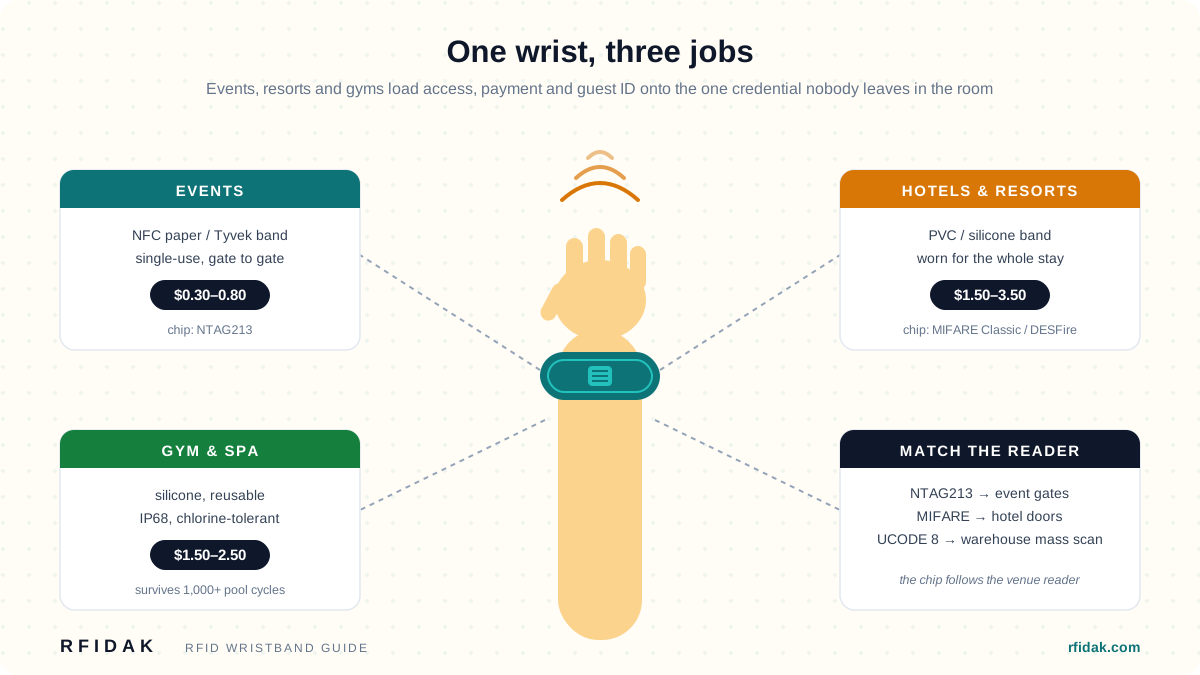
RFID wristbands can serve events, hotels, resorts and fitness venues, but the chip must match each installed reader and application. Choose material and closure for the intended wear, cleaning and water exposure. Confirm the finished model's ratings and request a current quote for the selected chip, printing, encoding and quantity.
Why wristbands are different from cards in guest-facing projects
A card lives in a pocket, a phone case, or — by day two of any conference — the laundry. A wristband lives on the guest. That single fact is most of the pitch: the credential stays attached for the entire visit, which is why Hotel access control systems, festivals, water parks, spas, clubs and family entertainment venues keep picking bands over cards. Fewer lost credentials, and every tap happens at wrist height instead of after a pocket excavation.
Start with the venue workflow
Resist the urge to open the color catalog first. Before material or Pantone enters the conversation, write the band’s job description — event and hospitality teams routinely stack several jobs onto one strip of wrist real estate:
- Event access control at gates, rooms or VIP zones
- Cashless payment or stored value
- Locker or towel management
- Guest identification and anti-transfer control
Get that list on paper and the rest of the project turns into multiple-choice: chip type, band construction and print method all follow from the workflow.
Choosing the right wristband material
Silicone wristbands
Silicone is a popular choice for resorts, gyms and water attractions for thoroughly unglamorous reasons: it can be comfortable and reusable when the finished chip housing, closure and print withstand the venue conditions. Ask for model-specific water and chemical test evidence, then validate samples under the intended wear and cleaning cycle.
Fabric wristbands
Fabric bands own the festival circuit because they are comfortable, tamper-resistant and easy to brand — half credential, half merchandise. Choose them when the visual design matters as much as the chip inside it, which at a festival is always.
Disposable short-life bands
For one-day events, visitor control or lower-cost short programs, disposable styles are the honest answer: they work one shift, cost accordingly, and nobody has to chase guests for returns afterwards.
Wristband Material & Closure Comparison
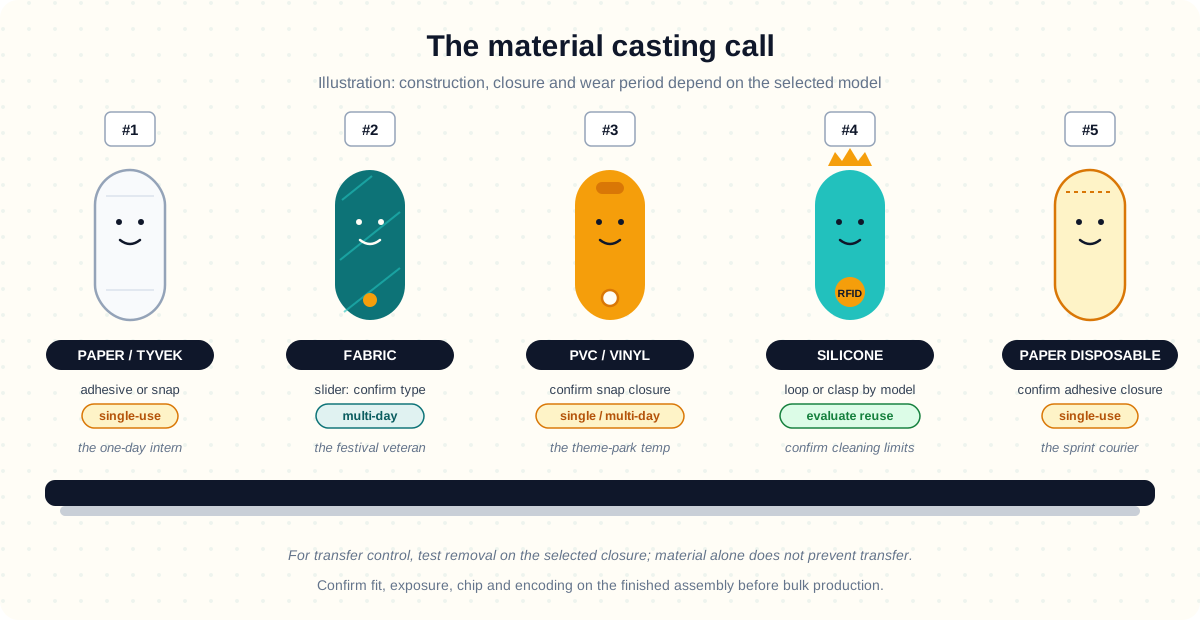
Material decides whether the wristband survives water, sweat, sun, and a determined teenager trying to slip it off. Five common constructions, with their trade-offs:
| Material | Closure | Reuse | Best For |
|---|---|---|---|
| Tyvek paper | Adhesive seal (anti-transfer) | Single-use | 1-day events, conferences, visitor control |
| Woven fabric | Sliding bead (one-way lock) | Multi-day, single-event | Festivals, multi-day passes, branded campaigns |
| Vinyl / TPU | Snap or one-way clasp | Single or multi-day | Theme parks, water attractions (short-term) |
| Silicone | Stretch-on, optional clasp | Potentially reusable; test the finished assembly | Resorts, gyms, water parks, season passes |
| Paper / disposable | Tear-off adhesive | Single-use | Healthcare patient ID, voter ID, rapid issuance |
Anti-transfer closure matters when the wristband secures access to a paid event or restricted area — once attached, attempting to remove it should physically destroy the closure. Tyvek with adhesive seal and fabric with one-way bead are the standard for ticket-validation use.
Access only or access plus payment?
An entry-only band is a doorman; a payment band is a doorman who also runs a bank branch. They are not hired on the same résumé. If payment, spend control or guest wallet integration is part of the program, bring that into the supplier conversation early — chip and encoding choices have to line up with the backend system, and retrofitting security later is nobody’s favorite sport.
Cashless Payment & Stored-Value Workflow
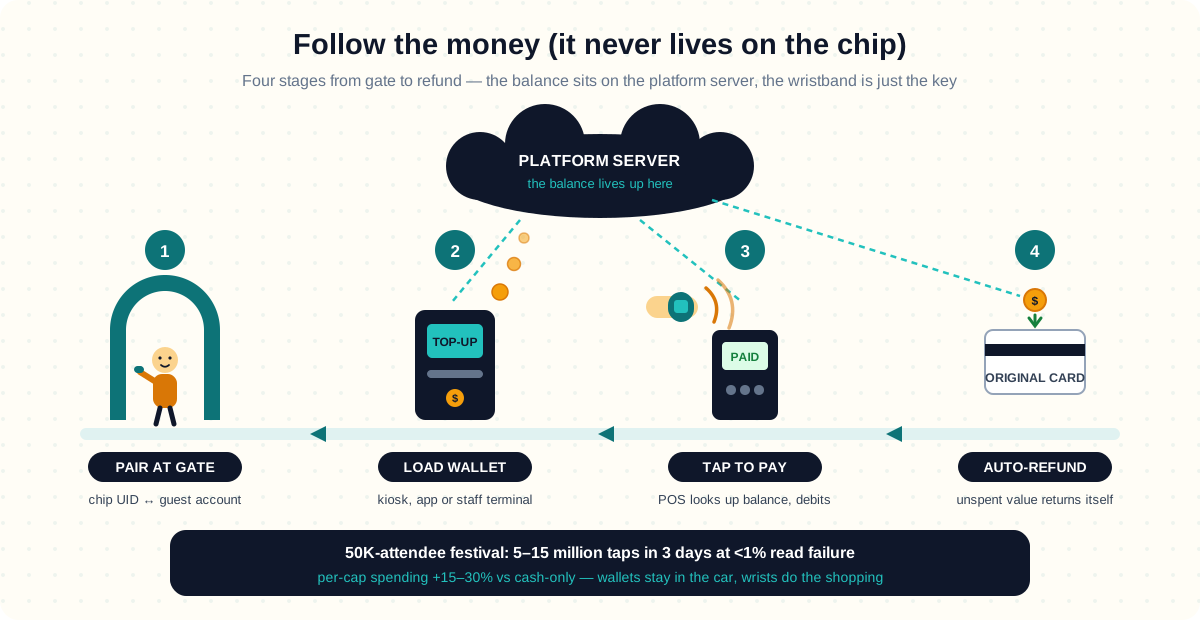
Cashless wristband programs at festivals, resorts, and water parks have quietly become the dominant payment mechanism for the venue’s on-property spending — the wallet stays in the car, the wrist does the shopping. The workflow runs through four stages:
- Issuance & pairing — at gate or registration, the wristband’s chip UID is paired with the guest’s account (name, ticket type, age verification, room number). MIFARE Classic or DESFire is typical for HF; NTAG213 + database lookup for events.
- Top-up / wallet load — guest pre-loads value via credit card at kiosks, in-app, or at staff terminals. Balance lives on the platform server, NOT on the chip. The chip is just an authenticated key.
- Tap to pay — at every POS terminal across the venue, the guest taps; the terminal looks up the balance via wireless connection to the cashless platform; payment is debited; receipt printed or emailed.
- Reconciliation & refund — at end-of-event, unspent balances are auto-refunded to the original payment method. Vendors run on platforms like Intellitix, PayLogic, Token, AdmitOne, Inntopia.
The platform and reader layout determine throughput, failed-payment handling and reconciliation. Record the venue baseline, then pilot payment success, queue time, refunds and spend per attendee before estimating any commercial benefit.
Branding and sizing questions
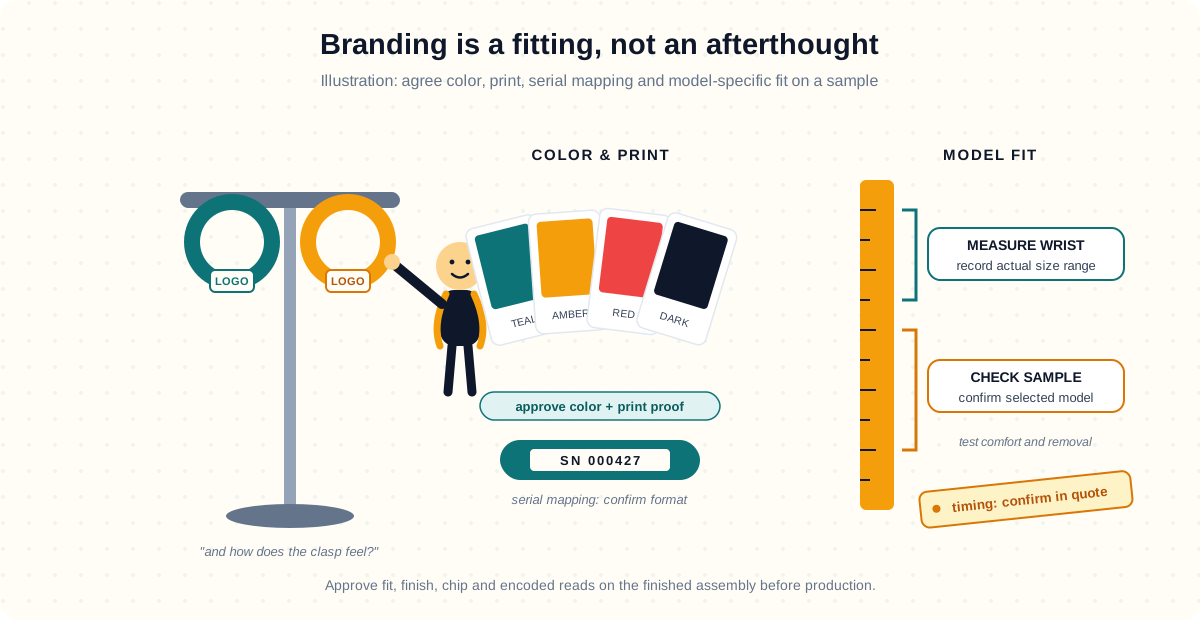
Most RFID tags live out their careers hidden inside a hangtag or a pallet label. A wristband is on camera all day — in selfies, on the pool deck, across the dinner table — so color matching, logo treatment, serial numbering and size options matter more than they do for tags nobody sees. Resorts and family venues should also confirm child sizing, closure style and comfort expectations before approving a band style; a band that fits dad but slides off his daughter is half a product.
Water exposure and wear time
Not every wristband is built for the deep end. Pools, showers, beach weeks and long continuous wear are a standing stress test — ask explicitly whether the band must survive chlorine, sunlight, sweat, daily cleaning or extended outdoor exposure. Expected wear time usually settles the silicone-versus-fabric-versus-disposable debate before marketing gets a vote.
Representative wristband pilots
For a festival, test entrance throughput, replacement bands and the selected cashless platform. For a resort, test room and amenity access, water exposure, cleaning and reuse. For a family venue, include child sizing and closure retention. These are pilot scenarios, not claims about a named operator's deployment or results.
How to sample wristbands properly
A wristband sample that has only ever met a desk reader has passed a rehearsal, not the show. Gate readers, hotel doors, lockers and POS readers each force a slightly different wrist motion — test at the real reader positions. And if children or family guests are a major user group, test comfort and closure usability on the small wrists too, not just the procurement manager’s.
When a card or keyfob may still be better
Honesty corner: wristbands are not the right answer for every user type, and Cards may be better for some users. Business travelers rarely want a resort band under a suit cuff — hotels with standard room-key issuance may still prefer cards for them, while membership programs may prefer keyfobs that stay on a keychain. Some operators simply mix formats, offering cards for rooms and wristbands for amenity or resort access, and let each guest carry what suits them.
Final takeaway
RFIDAK wristband options
Silicone wristbands — reusable, waterproof, ideal for resorts and gyms
Full wristband catalog — fabric, disposable, and custom options
Key Takeaways
- Event wristbands: choose a closure and approved NFC/HF chip after testing the gate reader and ticketing software; confirm MOQ by configuration.
- Hospitality wristbands (multi-day): silicone or PVC + MIFARE Classic/DESFire — guest room access plus cashless on property.
- Fitness or water-park wristbands: request model-specific ingress, cleaning and skin-contact evidence, then test the finished band with the access system.
- Sequential UID encoding: pre-encode at factory mapping to ticket database — saves on-site enrollment time at gate.
- Colour and print options: confirm the artwork method, proof approval and production schedule for the selected band.
⚠️ Common pitfall
Single-use Tyvek wristbands torn before use cannot be re-issued. Always order 5–10% spare stock for events to cover damaged or lost wristbands at gate ingress.
RFID Wristband FAQ
How fast can I print and ship custom wristbands for an event?
Stock-color Tyvek and fabric wristbands ship within 5–7 business days from order. Custom Pantone colors or printed artwork add 2–5 days for setup and proofing. Air freight to most major event venues globally adds 3–5 days. Plan minimum 3 weeks from PO to event-ready stock for custom programs.
Can the wristband be reused for next year’s event?
Tyvek and one-way fabric wristbands are destroyed at removal — not reusable. Silicone wristbands are reusable across thousands of cycles, but the chip’s encoded data (ticket ID, season pass) typically gets re-encoded between events. Some resorts collect, sanitize, and reissue silicone wristbands across guests — reducing waste while keeping the same physical inventory.
Which wristband chip works with iPhone tap?
HF/NFC chips at 13.56 MHz (NTAG213, NTAG216, MIFARE Classic, DESFire) work with iPhone (iPhone 7+, iOS 13+) and Android NFC. UHF wristbands (rare) are not iPhone-readable. For consumer-tap workflows like loyalty signup or social check-in at events, NTAG213 wristbands are the standard.
Are sized variants OK for kids?
Yes — family resorts, water parks, and pediatric programs typically order two sizes: child (130–160 mm circumference) and adult (180–220 mm). Some operators add a third “XL adult” for larger wrists. Both sizes carry the same chip; the wristband strap length is the only difference. Sample stage testing should include child wear comfort.
Does silicone wristband cause skin reaction?
Medical-grade silicone (FDA food-contact compliant, Shore 65A hardness) is hypoallergenic for the vast majority of users. Skin irritation is usually caused by sweat trapped under the band rather than the silicone itself — rinse and dry guidance helps. For high-allergy populations (some hospital programs), specify medical-grade Shore 50A silicone with breathable construction.
Sources
- ISO/IEC 14443-1..4:2018 — HF proximity cards (13.56 MHz). iso.org/standard/73598.html
- ISO/IEC 18000-63:2015 — UHF RFID air interface. iso.org/standard/63675.html
- NXP Semiconductors — NTAG & MIFARE family product datasheets. nxp.com/rfid-nfc
- IEC 60529 — IP rating standard (water/dust ingress protection). iec.ch
- Walt Disney World — MagicBand+ official product page. disneyworld.disney.go.com/bands
- Intellitix — festival cashless RFID platform case studies. intellitix.com
- IDTechEx — "RFID Forecasts, Players and Opportunities 2024-2034" (wristband segment). idtechex.com
Hotel key card systems and wristbands both serve access needs. The best choice depends on venue type, wear duration, chip workflow and branding goals. Contact RFIDAK for samples based on your guest experience requirements.
Need help turning this guidance into a product shortlist?
Use this next step when the article has narrowed the direction and you now need help choosing chips, formats, samples or the closest product family.
Comparison Pages
Compare the closest alternatives before you request samples
Open one of these if the article clarified the topic but the team still needs a cleaner format, chip or frequency decision.
Quick FAQ
Questions buyers often ask after reading this guide
What is the best RFID wristband material for festivals?
Choose woven fabric, paper/Tyvek, vinyl or silicone against event duration, comfort, tamper evidence, artwork, water exposure and disposal needs. A cashless platform may require a particular chip and personalization method; no major festival brand establishes a universal specification. Test the finished band, closure and reader workflow before placing a production order.
Can RFID wristbands handle pool water and chlorine?
For pool use, request a finished wristband with documented water and chemical resistance for the intended cleaning and pool conditions. Silicone and vinyl constructions are common candidates, but chip housing, closure, print and adhesive vary. Immerse and cycle actual samples at the venue conditions, then verify readability and band integrity.
How much does a cashless RFID wristband cost?
Unit price depends on the exact chip and inlay, finished construction, approved quantity per design, printing, encoding, packaging and QC requirements. Request a dated itemized quote showing sample and setup charges, unit tiers, freight and lead time; a generic chip or tag price does not establish the cost of the approved product.
Which chip should I use for a cashless wristband?
Start with the cashless platform provider’s approved credential list, reader models, key-management and personalization requirements. A secure chip such as DESFire may be appropriate where the platform supports it; a chip name or certification does not make a payment workflow secure. Test issuance, top-up, spend, refunds, lost-band handling and reconciliation before bulk production.
Are RFID wristbands waterproof?
Water resistance is a finished-product property, not a guarantee from the chip or wristband material alone. Ask for the exact assembly rating and test immersion, closure strength, print and read performance under the event’s real conditions, including pool chemicals where relevant.
Can I reuse RFID wristbands for multiple events?
A reusable program needs a reclosable band that survives cleaning and a platform that supports credential reassignment or re-encoding. One-way closures and many paper bands are intended for single use. Measure actual loss, wear, processing time and successful reads in a pilot before setting the reuse budget.
What size RFID wristband should I order for children?
Size by measured wrist circumference, closure design and retention requirements for the actual age group; there is no universal child-size percentage or age-to-band mapping. Ask for physical samples and test fit, removal and comfort under supervised venue conditions.
What is the minimum order for custom RFID wristbands?
RFIDAK's published standard wristband MOQ baseline is 500 pieces. Confirm the material, closure, size range, chip, artwork, encoding and quantity per design in a written quote. Free stock samples (up to 5 pieces) — buyer covers DHL/FedEx freight ($25–60), refunded 1:1 against the first production order over $500. Larger evaluation lots, custom samples, production timing and delivery are agreed separately for the selected configuration.
Author
RFIDAK RFID Editorial Team
RFID supply editorial team
RFIDAK publishes practical RFID guides to help buyers compare chips, product formats, sampling plans and sourcing options before production.