NFC Tags for Business 2026: 10 Use Cases & ROI Examples
Discover 10 ways businesses are using NFC tags in 2026 to boost customer engagement, simplify operations, and drive revenue growth.
Quick Answer
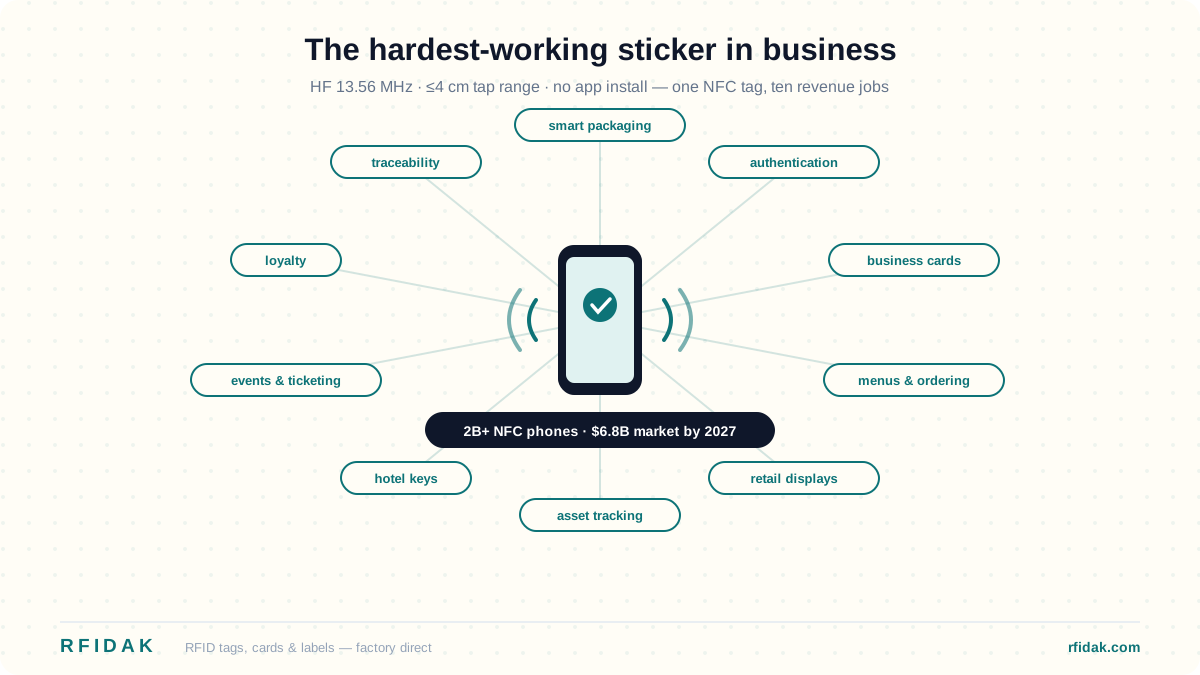
NFC tags (HF 13.56 MHz, ≤4 cm range) enable smartphone-tap interactions across 10+ business use cases — product authentication, marketing campaigns, asset check-in, inventory, attendance, contactless payment, smart packaging, equipment manuals, customer feedback, and event check-in. Native iPhone (iOS 11+) and Android (4.0+) NFC reading means no app install for many workflows.
Why NFC Tags Are Transforming Business in 2026
Near Field Communication (NFC) tags have evolved from simple data carriers into powerful business tools. With over 2 billion NFC-enabled smartphones in use worldwide and growing consumer familiarity with tap-to-interact experiences, NFC technology offers businesses opportunities to connect physical products with digital experiences.
The NFC tag market is projected to reach $6.8 billion by 2027, driven by applications in product authentication, smart packaging, and contactless customer engagement. Here are 10 powerful use cases transforming businesses today.
1. Smart Product Packaging
Brands embed NFC tags in product packaging to create interactive unboxing experiences. When customers tap the packaging with their smartphone, they can access product tutorials, usage tips, recipe ideas, warranty registration, and reorder options.
ROI Impact: Brands report 15-25% increase in repeat purchases when NFC-enabled packaging includes easy reorder links. Customer engagement time increases by an average of 45 seconds per interaction.
2. Product Authentication & Anti-Counterfeiting
Luxury goods, pharmaceuticals, wine, and electronics companies use NFC tags with cryptographic authentication to verify product authenticity. Each tag contains a unique digital signature that cannot be cloned.
Key Benefits: Consumers can instantly verify authenticity via smartphone tap. Brands gain supply chain visibility and can track grey market distribution. According to the OECD, counterfeiting costs businesses over $500 billion annually, making authentication a critical investment.
3. Digital Business Cards
NFC-enabled business cards allow professionals to share contact information, LinkedIn profiles, portfolios, and social media links with a single tap. Unlike paper cards, NFC cards can be updated remotely, ensuring contacts always have current information.
Cost Comparison: A single NFC business card (approximately $3-5) replaces hundreds of paper cards over its lifetime. RFIDAK offers custom-printed NFC business cards with NTAG213 or NTAG216 chips.
4. Contactless Menu & Ordering
Restaurants and cafes embed NFC tags in table markers or menu stands. Customers tap to view the digital menu, place orders, and make payments without downloading an app. This reduces wait times, eliminates printing costs for menu updates, and improves table turnover rates.
5. Smart Retail Displays
Retailers place NFC tags on product displays, shelf labels, and promotional materials. Shoppers tap to access detailed product information, customer reviews, comparison charts, and exclusive in-store discounts. This bridges the gap between online research and in-store purchasing.
Case Study: A major electronics retailer reported a 32% increase in accessory attachment rates after deploying NFC-enabled product displays that showed compatible accessories.
6. Asset Tracking & Maintenance
Facilities managers attach NFC tags to equipment, machinery, and infrastructure. Maintenance staff tap the tag to view service history, report issues, access technical manuals, and log completed work. This creates a digital maintenance trail without paperwork.
7. Hotel & Hospitality Experiences
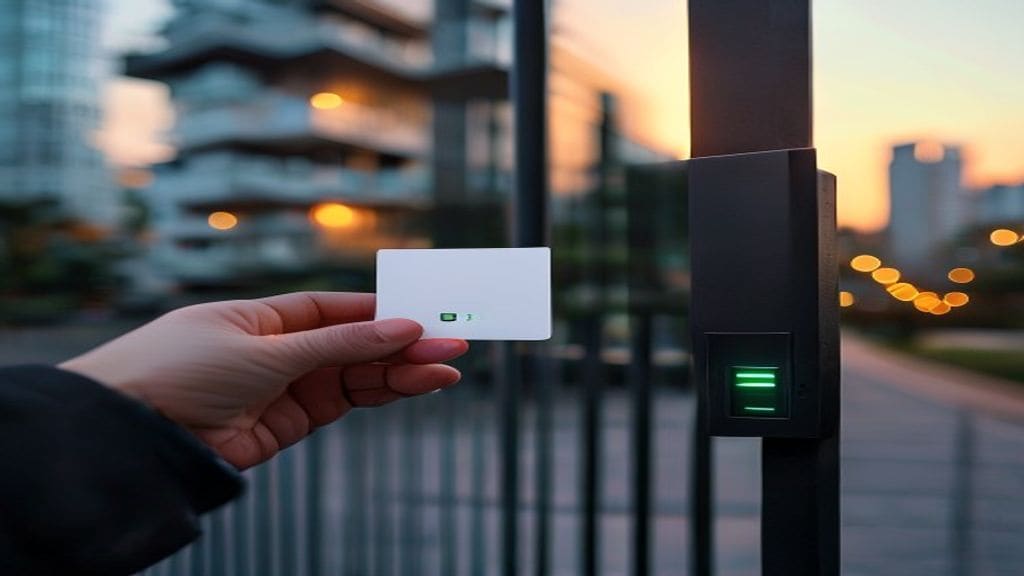
Hotels use NFC technology for keyless room entry, in-room service ordering, spa booking, and local attraction recommendations. NFC-enabled wristbands at resorts serve as room keys, payment devices, and activity trackers all in one.
8. Event Management & Ticketing
Event organizers use NFC wristbands and badges for access control, cashless payments, session check-in, lead capture at exhibitions, and social media integration. NFC wristbands reduce entry queue times by up to 80% compared to paper tickets.
9. Loyalty Programs & Customer Rewards
NFC-enabled loyalty cards or key fobs allow customers to earn and redeem points with a simple tap. Unlike app-based loyalty programs with low adoption rates (averaging 12%), physical NFC loyalty tokens achieve participation rates above 60%.
10. Supply Chain Traceability
Food producers, pharmaceutical companies, and luxury brands use NFC tags to provide consumers with complete supply chain transparency. A tap reveals origin information, production dates, transportation conditions, and certifications, building consumer trust and meeting regulatory requirements.
Use Case ROI Comparison Table
Each of the 10 use cases above produces measurable business value, but the metrics differ. The cross-industry pattern below summarizes typical chip choice, deployment cost, and observable outcomes:
| Use Case | Typical Chip | Per-tag Cost | Reported Impact |
|---|---|---|---|
| Smart packaging | NTAG 213/216 | $0.10–$0.20 | +15–25% repeat purchase rate |
| Anti-counterfeit | NTAG 424 DNA | $0.40–$0.60 | Brand-protection ROI |
| Digital business card | NTAG 215/216 | $3–$5/card | Replaces 100s of paper cards |
| Smart retail display | NTAG 213/216 | $0.10–$0.30 | +32% accessory attach (electronics) |
| Asset tracking | NTAG 215 / on-metal | $0.50–$3 | Eliminate paper logbooks |
| Hotel digital key | MIFARE DESFire EV2 | $0.80–$1.50 | Faster check-in, brand UX |
| Event wristband | NTAG 213 + Tyvek | $0.30–$0.80 | -80% gate queue time |
| Loyalty token | NTAG 215 (keyfob) | $0.40–$1.20 | 60% participation vs 12% app-only |
| Supply chain traceability | NTAG 216 / 424 DNA | $0.20–$0.60 | DPP / FSMA 204 compliance |
NFC Chip Selection Decision Tree
Most NFC business projects narrow to one of four chip choices. Walk through the questions in order — the first “yes” selects your chip:
- Need cryptographic anti-counterfeit? → NTAG 424 DNA ($0.40–$0.60) for SUN-authenticated tap-to-verify.
- Tag will hold >500 bytes (vCard, multi-record NDEF, Wi-Fi config)? → NTAG 216 ($0.15–$0.25) for 888-byte memory.
- Tag needs a serial number, mid-size memory, or password write-protect? → NTAG 215 ($0.10–$0.18) for 504-byte memory + gaming-figurine-style apps.
- Just need a URL / vCard / tap-to-link experience? → NTAG 213 ($0.05–$0.15) covers 80% of marketing use cases at lowest cost.
For deeper chip-level coverage, see our NFC technology guide and NTAG 424 DNA guide.
Getting Started with NFC Tags
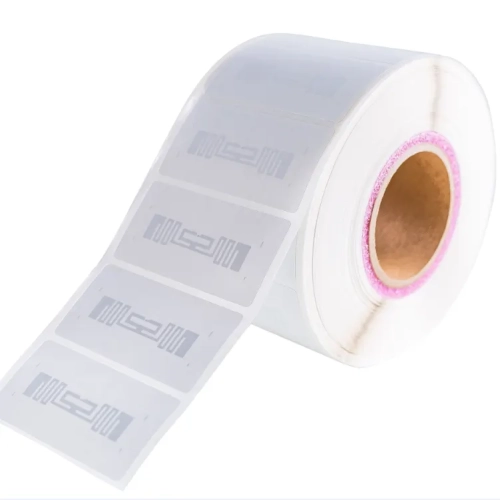
Implementing NFC solutions is simpler than most businesses expect. The basic requirements include NFC tags (NTAG213 for URLs, NTAG216 for more data), a web-based platform for managing tag content, and NFC-compatible encoding software. No app development is required since modern smartphones natively read NFC tags.
Chip selection tip
NTAG213 (144 bytes) is sufficient for most URL-based use cases. Choose NTAG216 (888 bytes) when you need to store vCards, Wi-Fi configs, or multi-record NDEF messages. See our NFC technology overview for chip details.
Key Takeaways
- Smartphone NFC reading: iPhone 7+ (iOS 11+), Android 4.0+ — native, no reader hardware needed.
- Common chips: NTAG213/215/216 for read-write workflows; NTAG424 DNA for anti-counterfeit.
- Use case categories: marketing/branding, asset tracking, payment, authentication, attendance.
- Cost: $0.05–$0.20/tag for NTAG213; $0.40–$1.20/tag for NTAG424 DNA (anti-counterfeit).
- Tap-to-launch URL via NDEF format works without any app — opens default browser directly.
⚠️ Common pitfall
NTAG213 (144 bytes) is enough for a URL but NOT for storing customer data. For workflows that need offline data storage on the tag (e.g., maintenance log), use NTAG216 (888 bytes) or NTAG424 DNA — pick the chip by data payload, not just price.
NFC Business Use Cases FAQ
Do consumers actually tap NFC tags in real life?
Engagement varies by category. Premium / curiosity-driven products see 15–35% tap rates with clear “tap here” signage; mass-market products see <5%. NFC engagement is typically 2–5× QR scan engagement when both are offered, because the tap is faster and lower friction.
Is the iPhone vs Android tap experience the same?
Mostly yes for plain NDEF URL tags — both open the URL in default browser without any app. iPhone has a slightly different antenna position (top edge vs back-center on Android), so “tap here” signage should account for both. iOS background reading is more restricted than Android; for advanced workflows (e.g., automatic counter increment without app), Android offers more capability.
What does it cost to deploy 1,000 NFC tags?
Per-1,000-tag deployment cost (NTAG 213 stickers, no custom artwork): $80–$150 for tags + $50–$200 for shipping. Add custom print + setup tooling: $300–$1,500 one-time. Total entry-level pilot: under $2,000 for 1,000 customer-facing NFC tags. NTAG 424 DNA at the same volume: $400–$700.
How do I update tag content after deployment?
Two approaches: (1) Server-side — the tag carries a static URL pointing to a server-controlled page; updating the page changes the experience without touching the tag. This is the dominant pattern (90%+ of deployments). (2) Re-encode the tag — physically tap each tag with a writer device. Required only for tags where the data lives on-chip (Wi-Fi config, vCard).
Do NFC tags work in cold storage or wet environments?
Yes — with appropriate construction. NFC chips operate from -30 to +60°C; the limit is the tag’s adhesive and substrate. For freezer / cold-chain (-20°C), specify cold-rated adhesive. For wet environments (food packaging, kitchen), use sealed PVC or epoxy laminate. Avoid plain paper-substrate NFC stickers for water exposure.
Sources
- NFC Forum — Tag Type Technical Specifications (Type 1–5). nfc-forum.org/specifications
- NXP Semiconductors — NTAG 213/215/216 + NTAG 424 DNA datasheets. nxp.com/rfid-nfc
- Apple Developer — Core NFC framework. developer.apple.com/corenfc
- ISO/IEC 14443-1..4:2018 — HF NFC. iso.org/standard/73598.html
- OECD/EUIPO — Trade in Counterfeit Goods 2021 Report. oecd.org
- IDTechEx — NFC market forecasts. idtechex.com
- Statista — NFC-enabled smartphone penetration data. statista.com
RFIDAK manufactures NFC stickers, NFC epoxy cards, NFC coins, and custom NFC products compatible with all major chip types. We offer free samples and technical consultation to help you design the perfect NFC solution. Contact us to get started. Also see our NFC anti-counterfeit guide for brand protection use cases.
Need help turning this guidance into a product shortlist?
Use this next step when the article has narrowed the direction and you now need help choosing chips, formats, samples or the closest product family.
Comparison Pages
Compare the closest alternatives before you request samples
Open one of these if the article clarified the topic but the team still needs a cleaner format, chip or frequency decision.
Quick FAQ
Questions buyers often ask after reading this guide
What are the top NFC tag use cases for business in 2026?
Ten NFC business workflows run at production scale: smart product packaging with reorder links (15-25% repeat purchase lift), anti-counterfeit authentication with NTAG424 DNA SUN, digital business cards, contactless restaurant menu and ordering, smart retail product displays (32% accessory attachment lift in published cases), asset tracking and maintenance logs, hotel keyless room entry, event ticketing and wristband access (80% faster entry vs paper), loyalty programs (60%+ participation vs 12% app-based), and supply chain traceability feeding Digital Product Passport workflows under EU 2024/1781.
Which NFC chip is best for smart packaging?
For most smart packaging, NTAG213 at $0.10-$0.20 per sticker is sufficient: 144 bytes of user memory covers short URLs, campaign tracking parameters and basic reorder links. Upgrade to NTAG215 ($0.15-$0.30) if UTM tags, language codes and vCard data push the payload past NTAG213 capacity. For premium products needing anti-counterfeit authentication or DPP workflows under ESPR, specify NTAG424 DNA at $0.40-$0.80 with Secure Messaging generating per-tap rotating URLs verified by a backend.
How much does an NFC tag cost for business applications?
At 10,000+ unit volume: NTAG213 stickers $0.10-$0.20, NTAG215 $0.15-$0.30, NTAG216 $0.25-$0.50, NTAG424 DNA $0.40-$0.80. NFC PVC cards run $0.30-$1.50, NFC epoxy cards $0.50-$2.50, NFC coins $0.40-$1.00, NFC metal business cards $2.00-$5.00. Custom shapes, logo printing and AES-128 key personalization add 30-80%. On-metal NFC tags with ferrite layer add $0.50-$1.00 premium for mounting on aluminum packaging or metal products.
How do I set up an NFC smart packaging campaign?
Five steps. Step 1: choose chip (NTAG213 for simple URL, NTAG215 for UTM tracking, NTAG424 DNA for anti-counterfeit). Step 2: design campaign landing page with tap detection and conversion funnel. Step 3: encode NDEF URL record using https (required for iPhone Background Tag Reading). Step 4: lock the tag before shipping production batches to prevent overwrite. Step 5: deploy A/B test on 10% of SKUs first, measure tap rate and downstream conversion before scaling. Budget 4-8 weeks end-to-end.
Can customers tap NFC tags without an app?
Yes, for URL records. Every iPhone since iPhone XS with iOS 12+ supports Background Tag Reading that launches https URLs automatically on tap, no app required. Every Android 9+ (2018 and later) device reads NFC URL records natively. Apple Pay card emulation works on every iPhone since iPhone 6. Only proprietary NDEF formats or MIME types require a dedicated app to handle. For 99% of marketing, packaging and retail workflows, https URL records on NTAG213/215/216 work with no app.
What is the ROI of NFC business cards vs paper cards?
A single NFC business card at $3-$5 per piece replaces hundreds of paper cards over its lifetime and provides remote content updates (LinkedIn, portfolio, contact info) without reissuing cards. Studies show 2-3x higher contact retention when information is accessed digitally rather than typed from a paper card. For senior executives and sales teams, NFC metal business cards at $5-$25 per piece also serve as a premium brand signal. RFIDAK manufactures custom-printed NFC business cards in PVC, metal and wood.
How does NFC compare to QR codes for business engagement?
NFC and QR solve different problems. QR is cheapest (printed, $0 incremental cost) and works from any distance with smartphone camera; best for physical signage, menus, posters. NFC requires a tag ($0.10-$0.80 per piece) but eliminates camera framing, works through fabric and plastic, and NTAG424 DNA supports cryptographic authentication that QR cannot match at the print layer. Most modern B2B workflows layer both: QR for public access, NFC for premium, authentication or single-tap experiences.
What is the minimum order for custom NFC tags?
RFIDAK typical MOQ is 1,000 pieces for stock NTAG213/215/216 inlays in sticker, card or coin formats. Custom shapes, printed artwork or on-metal housings move the MOQ to 3,000-5,000 pieces. NTAG424 DNA orders with AES-128 SUN personalization start at 5,000 pieces because of the key custody overhead. Sample quantities of 50-200 pieces free for B2B evaluation including iOS and Android tap validation. Lead time is 2-3 weeks for stock, 4-6 weeks for custom or secure chip personalization.
Author
RFIDAK RFID Editorial Team
Manufacturer editorial team
RFIDAK publishes practical RFID guides to help buyers compare chips, product formats, sampling plans and sourcing options before production.