Hotel Key Card RFID 2026: Chips, Materials & Lock Compatibility Guide
A practical buying guide covering MIFARE chip comparison, lock brand compatibility, eco-friendly card materials, market data and encoding workflow for hotel RFID key card projects.
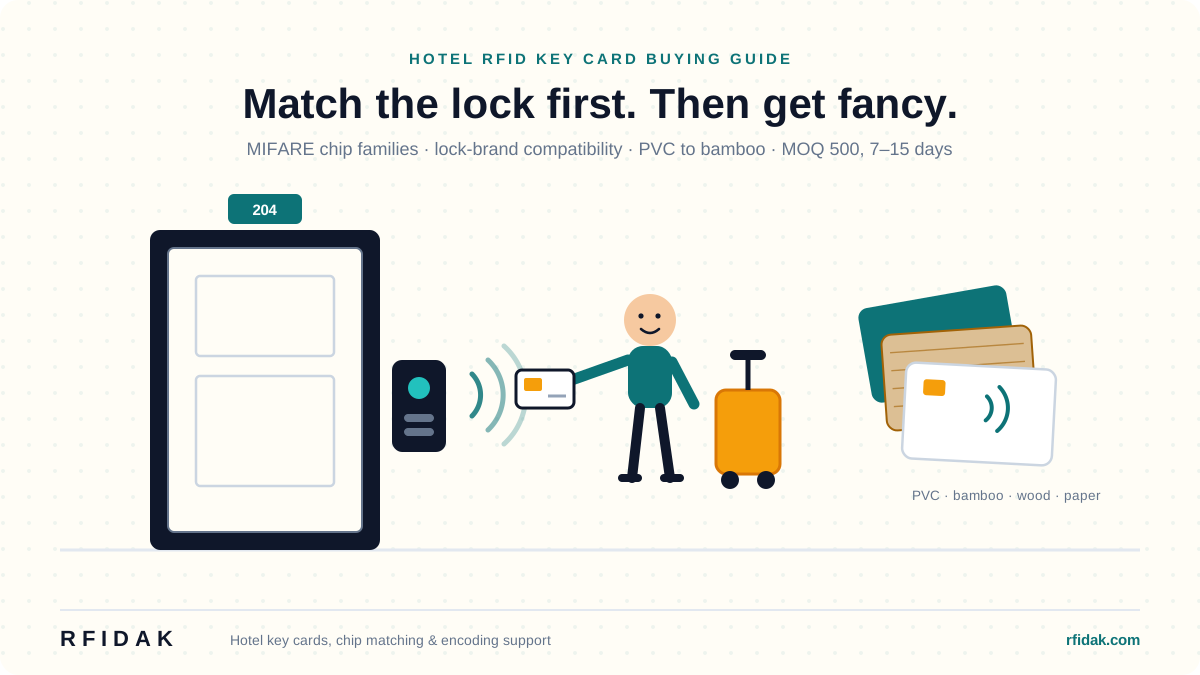
Quick Answer
Hotel RFID key cards run on HF 13.56 MHz (MIFARE Classic 1K, MIFARE Plus, MIFARE DESFire EV2, NTAG, ICODE) compatible with installed Saflok, VingCard, Onity, SALTO, Häfele, and dormakaba locks. PVC body is industry standard at 0.76–0.84 mm; eco alternatives include bamboo, wood, paper, and recycled-plastic stock. MOQ from 500 pieces with 7–15 day lead time.
What hotel key card buyers need to decide first
Every hotel key card project contains three decisions wearing a trench coat: lock-system compatibility, card appearance, and pre-issue services such as encoding or numbering. Projects move fastest when the team separates them early — and stall hardest when buyers fall in love with card material or artwork before confirming the card protocol used by the installed door locks. The lock does not care how beautiful the card is. The lock has standards, and they are technical.
If you already have a live hotel lock system, the safest first step is delightfully unglamorous: identify the current card type or send a sample credential to your supplier. If the property is part of a new build or a lock upgrade, align the lock vendor, PMS workflow, card issuance process and procurement plan before finalizing the card specification — in that order, before anyone opens a mood board.
Choose the chip family based on the lock system
Legacy low-frequency hotel systems
Some older hospitality projects still run on 125 kHz credentials — the rotary phones of door access. They can be cost-effective for replacement orders, but they are not the best fit when the property wants stronger security or mobile-friendly workflows.
HF hotel cards at 13.56 MHz
Many modern hotel systems use HF chips because they offer better security options and broad support in hospitality locks. Common project conversations involve MIFARE Classic, Ultralight, DESFire or other HF-compatible chips — and the shortlist is always written by the lock brand, not the card catalog.
When higher security matters
If the hotel group wants better key management, stronger cryptography or a future path toward multi-use credentials — room key today, spa and cashless bar tomorrow — higher-security chips such as DESFire are worth discussing early. The chip cost is only one part of the decision. Reader compatibility, software setup and issuance workflow matter just as much, and they are far less patient about being retrofitted.
MIFARE chip comparison for hotel key cards
MIFARE Classic uses legacy Crypto-1; MIFARE Ultralight C supports 3DES authentication; suitable DESFire parts support AES authentication and multi-application designs. Those chip-family facts do not prove that a property lock, encoder or access application accepts a particular card. Ask the lock-system owner for the approved chip article, credential format and key procedure, then test a finished card at the actual doors.
Card price depends on the approved chip, card body, artwork, encoding, quantity and delivery terms. Request current like-for-like quotes only after the reader and issuance workflow pass a sample test.
Which lock brands use which chips
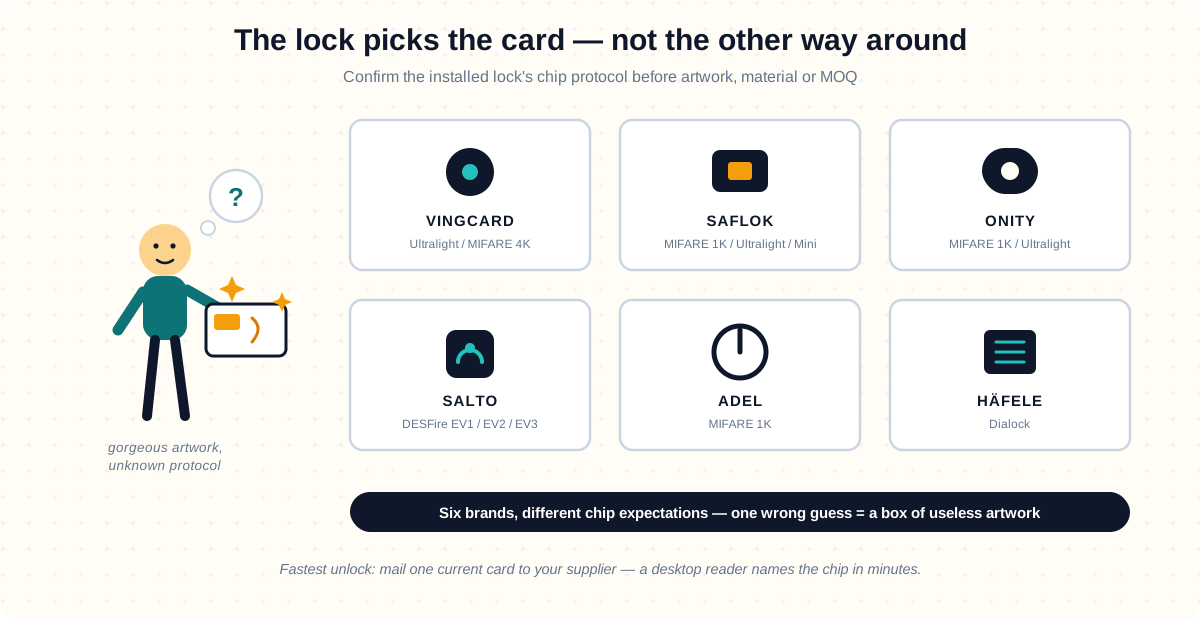
The most common compatibility question buyers face is: "Which chip does my lock need?" It is also the question most often asked after the artwork is approved, which is the wrong order. This table covers the major hotel lock brands and their typical RFID chip requirements:
If you are unsure which chip your locks require, the fastest path is to send a current card sample to RFIDAK for identification. We can read the chip type and recommend the correct RFID card match.
Card material and finish decisions
Standard PVC remains the workhorse of hotel key cards — stable, printable, and familiar to every issuance team that has ever re-coded a card at 2 a.m. That said, hospitality buyers increasingly compare additional finishes and materials:
Standard PVC
For everyday room keys, confirm the exact chip and card construction against the installed lock and front-desk encoder. Request a current quote for the approved specification.
Matte or frosted finish
Reduces fingerprint visibility and feels cleaner in hand. Popular for boutique and lifestyle hotels that want a premium tactile experience.
Wood or bamboo cards
A wood or bamboo body may carry an HF chip, but matching frequency does not prove compatibility with an installed lock or encoder. Confirm the exact chip, antenna, thickness, format and keys, then test the finished card at the property.
Paper cards
Best for short-life programs, event-style guest credentials, or properties with high turnover where card return rates are low.
For most hotels, the deciding questions are less about novelty and more about wear resistance, print quality and whether the front desk printer or encoder workflow will stay simple. A card that photographs beautifully but jams the encoder is a very expensive business card.
The sustainability shift in hotel key cards
Why hotels are moving away from virgin PVC
2.6B
Hotel key cards currently in global circulation
520K
Tons of PVC key card waste generated by hotels annually
70%
Of travelers actively prefer eco-friendly accommodations
Wood or bamboo card bodies can be considered for a materials goal, but matching the HF frequency alone does not prove lock compatibility. Test finished cards for reader performance, print quality and durability, then compare current delivered quotes with the approved PVC design.
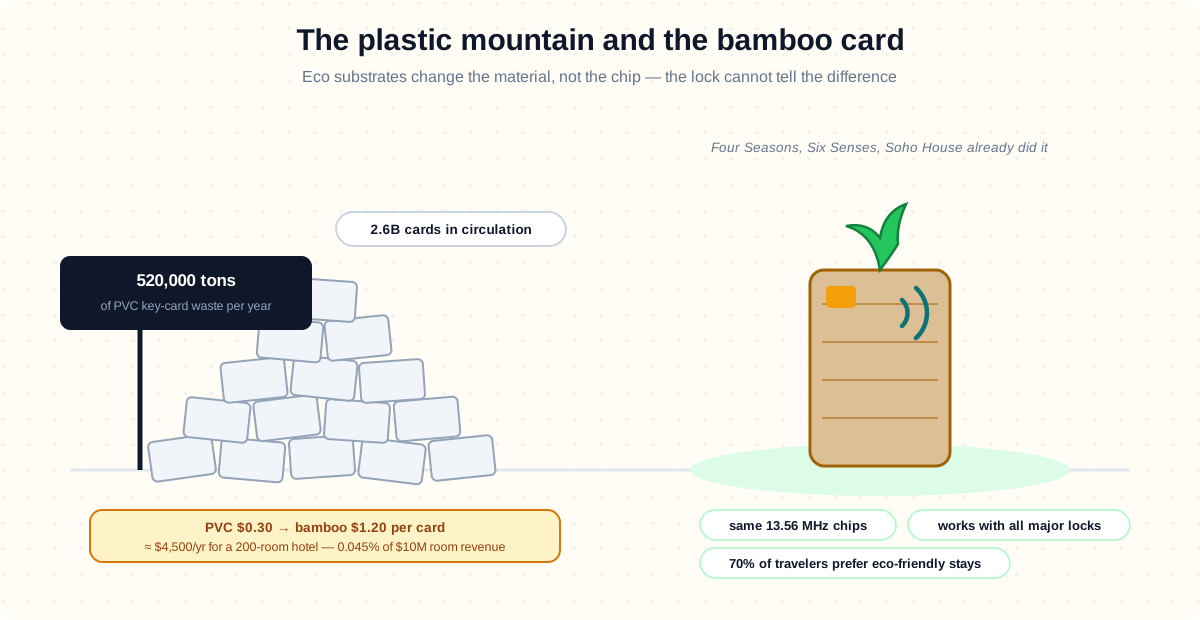
Other sustainable options include recycled PVC (70–100% recovered material), PETG from recycled plastic, and PLA biodegradable cards derived from corn starch or sugarcane. Look for FSC certification for wood cards and Global Recycled Standard (GRS) for recycled materials.
The mobile key trend and what it means for card buyers
Mobile key growth: +190% in one year
Mobile-enabled digital key installations surged from 1.1 million units (2023) to 3.2 million units (2024). Hotels should plan for mobile as a complement, not a replacement — physical key cards remain essential for guests without compatible smartphones, as backup credentials, and for properties where mobile infrastructure is not yet mature.
Printing, numbering and branding details that often get missed
Hospitality buyers can recite their chip's encryption standard and still get ambushed by the visible parts of the card. Before quoting, ask your supplier whether you need offset printing, digital printing, variable QR codes, UID print, barcode, magnetic stripe, signature panel or sleeve packaging — each is cheap to specify now and annoying to retrofit later.
If the hotel group runs multiple brands or room programs, clarify whether the artwork is shared across properties or customized per site. This affects proofing, MOQ planning and replenishment speed.
Do you need pre-encoding before shipment?
Some buyers only need blank hotel key cards that will be issued on site. Others want cards pre-encoded, pre-numbered or grouped by property — arriving ready to work, like staff who have already had their coffee. Neither option is universally better. The right choice depends on how the front desk, system integrator and lock software are set up.
Before asking for pre-encoding, prepare these details:
- Exact chip model or current card sample
- Whether cards are blank, encoded or UID managed
- Property count and quantity split by hotel
- Any requirement for back-office numbering or pack labeling
A desktop RFID reader/writer is useful for on-site encoding, card testing, and verifying chip compatibility before bulk orders.
When a wristband or keyfob is a better fit than a card
Hotels and resorts do not always need a classic card format — cards famously dislike swimming. Beach resorts, water parks, spas and family destinations often prefer RFID wristbands because they stay with the guest during the entire visit, pool included. Extended-stay projects or staff-access workflows may also consider keyfobs for selected user groups.
A practical sample plan for hotel card projects
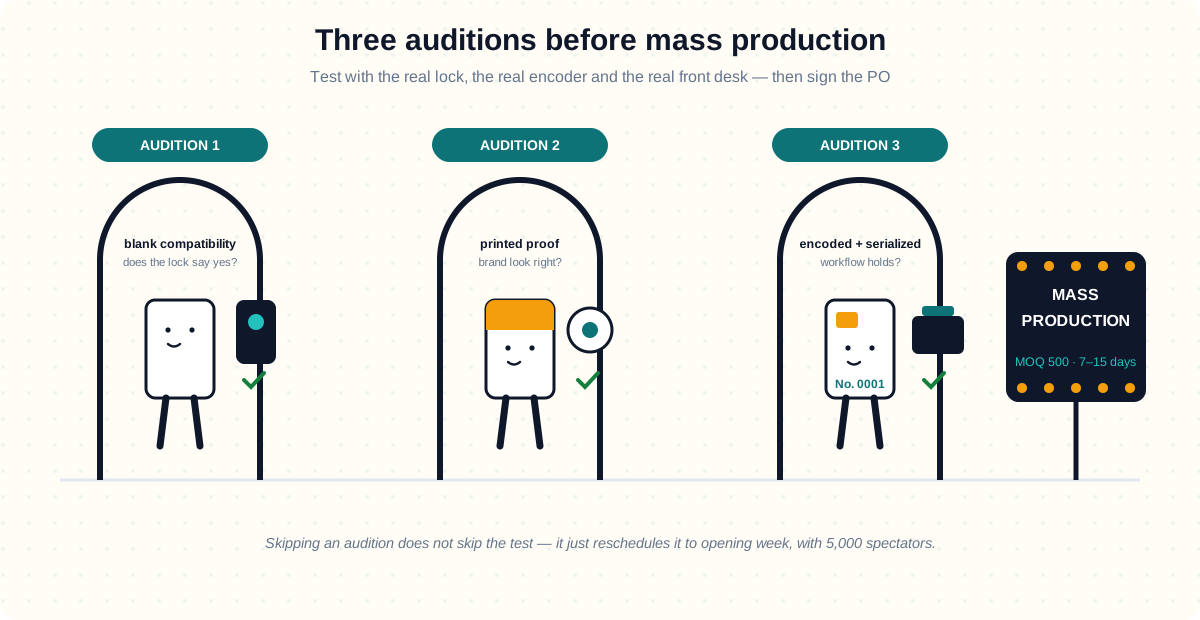
Requesting one generic sample is like auditioning an orchestra by listening to the triangle. A stronger sample plan runs three auditions: a blank compatibility sample, a printed proof sample and, when relevant, an encoded or serialized sample. Test the card with the actual lock, card writer and front desk process before confirming mass production — the lock is the only critic whose review matters.
Sample plan checklist
- Identify your lock brand and chip type (check the table above or send a current card to your supplier)
- Request a blank compatibility sample — test it with the actual lock and front desk encoder
- Request a printed proof sample with your artwork and finish preferences
- If needed, request an encoded or serialized sample to validate the full issuance workflow
- Confirm MOQ, lead time, and replenishment terms before mass production
Questions to send your supplier before quoting
- Which chip is required by the installed hotel lock brand?
- Do we need blank cards, encoded cards or variable numbering?
- What finish is best for heavy guest turnover?
- Can the supplier support repeat orders with consistent print color and chip sourcing?
- Is an eco-friendly card option (wood, recycled PVC, PLA) available in the same chip?
- What sample path is recommended before bulk production?
- Can you provide a desktop reader/writer for on-site card testing?
Hotel RFID Key Card FAQ
How do I identify which RFID chip my existing hotel locks use?
The fastest path is to mail one of your current keycards to your supplier — a desktop reader (e.g. ACR1252U) returns the chip type, ATQA / SAK and protocol within minutes. Alternatively, the lock vendor's PMS specification sheet usually lists the supported chip families (MIFARE Classic 1K, Ultralight, DESFire EV2/EV3, etc.).
Can I switch chip family without replacing the locks?
Sometimes. A compatible MIFARE Plus part can support a staged Classic-to-AES migration, but the lock reader, controller, application and key plan must support the target security level. DESFire EV3 does not emulate Classic; moving to DESFire may require a supported reader or lock upgrade. Test the exact card-and-lock combination before ordering.
Do mobile keys (BLE / NFC) replace RFID key cards entirely?
Not yet. Mobile-key adoption grew ~190 % year-on-year, but most major chains still issue physical cards alongside the mobile credential. Reasons: guests without compatible smartphones, dead-battery scenarios, third-party occupants (cleaners, contractors), and properties where the lock fleet doesn't yet support BLE.
What is the difference between Crypto-1, 3DES, and AES-128 hotel cards?
MIFARE Classic Crypto-1 has published attacks. The practical risk depends on the installed keys, reader and access application. For a new secure credential, assess a supported AES design and test the complete lock-and-issuance system; see our MIFARE Classic vs DESFire guide.
Are wood / bamboo hotel cards compatible with existing locks?
Only after testing the finished construction. A wood or bamboo card can use an approved HF chip, but material thickness, antenna geometry and encoder handling may differ from PVC. Confirm the lock model, credential format and keys, then test guest-room and shared-area doors plus the front-desk encoder. Request chain-of-custody evidence for any FSC claim on the quoted material.
Sources
- NXP MIFARE family overview (Classic, Plus, DESFire)
- ASSA ABLOY VingCard hotel locks & supported credentials
- dormakaba (Saflok) lodging locks
- SALTO Systems — XS4 platform & DESFire EV3 support
- ISO/IEC 14443 — HF / NFC card standard
- Forest Stewardship Council (FSC) — wood card certification
- Hospitality Net — mobile-key adoption research
Final takeaway
The best hotel RFID card program is rarely the flashiest one. It is the one that keeps lock compatibility simple, issuance predictable and replenishment boring for the procurement team — in the best possible sense of boring. With the RFID lock market growing at 13% CAGR and eco-friendly alternatives now matching standard lock compatibility, 2026 is a good time to review both your chip strategy and card materials.
Key Takeaways
- Lock-first selection: Saflok 5000/RT-Plus, VingCard Vision/Allure, Onity Advance/Trillian, SALTO XS4, Häfele Dialock, dormakaba — verify chip protocol BEFORE ordering custom-printed cards.
- MIFARE Classic 1K: legacy lock fleets (pre-2018); Crypto-1 publicly broken since 2008 but still acceptable for low-risk hotel keys.
- MIFARE DESFire EV2/EV3: current default for new hotel installations — AES-128, multi-application (room key + spa + restaurant cashless).
- Material options: PVC standard, ABS thick clamshell for back-of-house, bamboo/wood/paper for sustainability programs.
- Custom print: full-color CMYK + hot-stamping + UV + Pantone colour matching for brand consistency across the property.
⚠️ Common pitfall
Specifying “hotel key card” without confirming the LOCK BRAND first is the #1 cause of incompatible card delivery. Always verify lock model (e.g., Saflok RT) and chip protocol (e.g., MIFARE Classic 1K) BEFORE artwork approval, not after.
RFIDAK supports hotel projects with card samples, chip matching, print customization, wood card options and export-oriented manufacturing support. If you already know the lock brand or current card type, send that first and the project will move much faster.
Need help turning this guidance into a product shortlist?
Use this next step when the article has narrowed the direction and you now need help choosing chips, formats, samples or the closest product family.
Comparison Pages
Compare the closest alternatives before you request samples
Open one of these if the article clarified the topic but the team still needs a cleaner format, chip or frequency decision.
Quick FAQ
Questions buyers often ask after reading this guide
Which RFID chip do hotel locks use?
Hotel locks use different credential technologies even within one brand. Obtain the exact lock and encoder model, firmware, approved chip article, credential format and key plan from the property or system vendor. Test the finished proposed card at guest-room, common-area and backup access points before approving artwork or quantity.
How much does a hotel RFID key card cost?
Unit price depends on the exact chip and inlay, finished construction, approved quantity per design, printing, encoding, packaging and QC requirements. Request a dated itemized quote showing sample and setup charges, unit tiers, freight and lead time; a generic chip or tag price does not establish the cost of the approved product.
Are wood or bamboo hotel key cards compatible with normal locks?
Possibly, but matching frequency or chip family alone does not prove lock compatibility. Confirm the exact lock and encoder model, approved chip part, card thickness, antenna geometry, data format and key plan. Test a finished wood or bamboo card on guest-room, common-area and backup workflows before ordering. Ask for a quote on the selected construction; material and encoding costs vary by design and volume.
Should we upgrade hotel cards from MIFARE Classic to DESFire EV3?
For a new secure installation, evaluate DESFire EV3 with the lock-system provider: MIFARE Classic Crypto-1 is vulnerable, but the replacement credential must match the installed lock, firmware, encoder and key management. If the locks are Classic-only, a compatible MIFARE Plus part may support staged card issuance in a Classic-compatible mode; AES security still needs reader and application support. Test the complete lock-and-card workflow before bulk ordering.
Should hotel key cards ship blank or pre-encoded?
Confirm the lock vendor and property-management workflow before choosing. Blank cards may be encoded on site if the property has the approved encoder, while supplier personalization needs an agreed data format, key custody, test plan and sign-off. Quote both options against the same finished-card specification and test samples on the installed system.
Will mobile key replace hotel key cards?
Mobile key adoption depends on the installed locks, app, guest devices and operating procedures. Many properties still need physical credentials for guests and staff or as a contingency. Ask the lock provider to document mobile and card workflows, then test issuance, revocation and fallback on the actual property system.
What is the typical hotel key card lead time?
Stock sample preparation and courier estimates are described in the sample policy (1 business day; DHL / FedEx express, 2–5 days worldwide). The production schedule starts only after the exact chip, artwork, encoding, sample approval and current stock are confirmed in the order-specific quote. Custom constructions and secure personalization need their own schedule.
What is the minimum order quantity for hotel RFID cards?
RFIDAK's published standard card MOQ baseline is 500 pieces. Confirm the exact chip, card construction, printing, encoding and quantity per design in a written quote. Free stock samples (up to 5 pieces) — buyer covers DHL/FedEx freight ($25–60), refunded 1:1 against the first production order over $500. Larger evaluation lots, custom samples, production timing and delivery are agreed separately for the selected configuration.
Author
RFIDAK RFID Editorial Team
RFID supply editorial team
RFIDAK publishes practical RFID guides to help buyers compare chips, product formats, sampling plans and sourcing options before production.