QR vs NFC vs RFID 2026: Digital Product Passport Carrier Decision
Compare QR, NFC and UHF RFID by reader workflow, security and durability when planning a digital product passport; confirm product-specific EU requirements before claiming compliance.
Topic Cluster
Continue this topic with the next closest guides
These are the articles buyers usually need next when they are moving from basic research into a real shortlist, pilot or compliance discussion.
Digital Product Passport (DPP) Guide 2026: NFC, RFID & QR Carrier Choice
A practical guide to comparing QR, NFC and RFID for digital product passport planning.
Read this nextRFID TECHNOLOGYBattery Passport 2026: EV/Industrial RFID, NFC & QR Carrier Guide
A practical guide to battery passport programs. Covers where QR codes fit, when RFID or NFC adds value, and how teams...
Read this nextRFID TECHNOLOGYTextile DPP 2026: QR vs NFC vs RFID for Apparel Brands
Textile DPP planning guide: current ESPR timetable, QR, NFC and UHF carrier trade-offs, garment placement and...
Read this nextRFID TECHNOLOGYSunrise 2027 vs RFID 2026: Why 2D Barcodes Won't Replace Item-Level Tagging
A practical guide to the GS1 Sunrise 2027 industry goal. Compare POS-ready 2D barcodes with RFID, retailer...
Read this next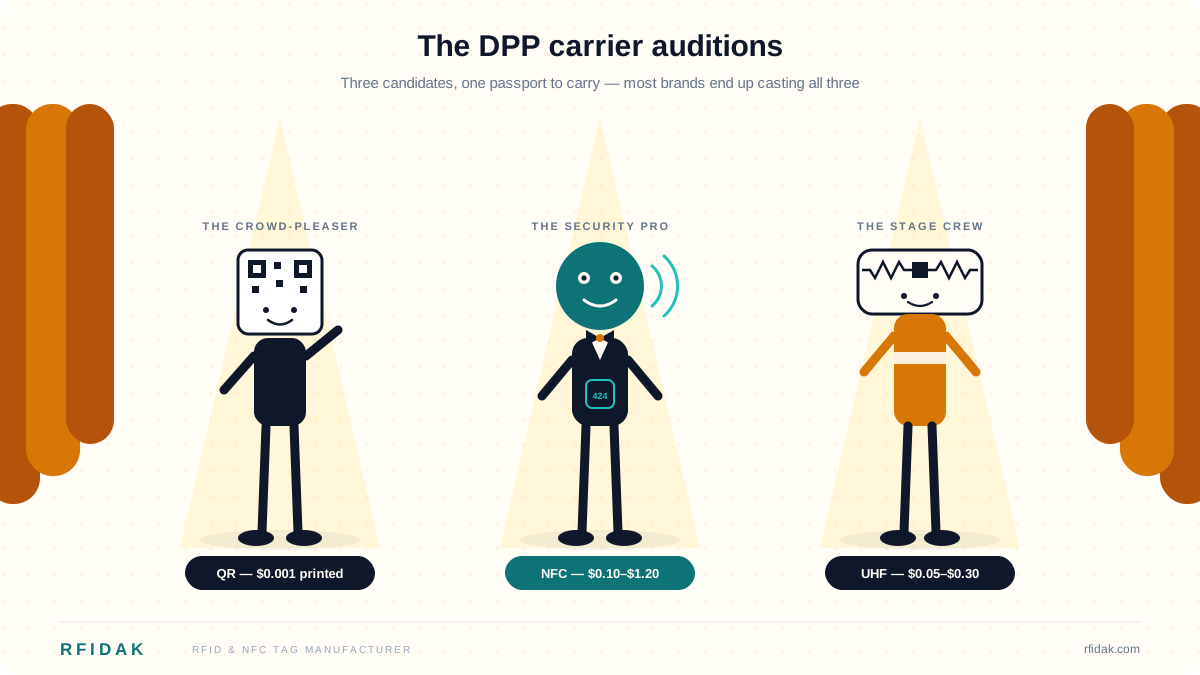
No single QR, NFC or UHF RFID carrier is universally required for every EU digital product passport. The Ecodesign for Sustainable Products Regulation (ESPR) provides a framework; applicable product-specific delegated acts determine the passport data and carrier requirements. Choose any additional carrier for a separately justified consumer, authentication or operational read workflow.
Start with the applicable rule
The ESPR Regulation (EU) 2024/1781 defines the DPP framework and relies on delegated acts for product-group requirements. Before ordering labels, identify the product category, current applicable act, required identifier and data access rules. A technically readable tag does not by itself establish legal compliance.
QR code: camera access
A printed code can open a web record on a phone camera and remain visible for manual inspection. Its printed content can be copied, so an open URL is not an authentication proof. Test symbol size, contrast, abrasion and placement on the finished product. Cost depends on artwork, variable-data printing, verification and packaging process; there is no universal per-code price.
NFC: close-range phone tap
NFC can open a product record with a supported phone. An open NDEF tag is convenient but copyable; an authenticated design requires an appropriate chip, protected keys and a verification service. Metal, foil and phone position affect the finished tag's read reliability. Request a current quote for chip, antenna, conversion and data service.
UHF RFID: operational reads
UHF can support item, case or asset reads at a configured warehouse or retail point with dedicated readers. A UHF EPC identifies an object; it is not itself a consumer-facing web page. Map EPCs to the same authoritative product record as any QR or NFC identifier and test read capture on actual packaging.
Capability comparison
| Question | Printed QR | NFC | UHF RFID |
|---|---|---|---|
| Typical reader | Phone camera or optical scanner | Supported phone or HF reader | Dedicated UHF reader |
| Read behavior | Visible code, optical view | Close tap | Configured bulk read zone |
| Authentication | Needs server-side design; static code is copyable | Requires suitable chip and key-managed service | Depends on chip and system design |
| Cost basis | Artwork, variable data and verification | Chip, antenna, conversion and data | Inlay, encoding, readers and integration |
When one carrier is enough
If the applicable rule permits the chosen carrier and it meets the real reader workflow, avoid adding hardware without a use case. Test access to the required product record, lifetime legibility and replacement or repair handling.
When to combine carriers
A printed code for phone access and UHF for inventory may be useful when both optical and bulk operational reads are required. NFC may add a justified tap or cryptographic verification experience. Link all identifiers to the same authoritative record and define how a returned or refurbished product is updated.
Sampling checklist
- Identify the applicable product-specific EU rule and data owner.
- Define consumer, service and warehouse reader workflows separately.
- Choose unique identifiers and a resolver or backend mapping.
- Test each finished carrier after printing, packaging and expected wear.
- Compare current quotes and data-operation costs for only the carriers the workflow needs.
See the DPP planning guide for additional implementation questions, or request a carrier sample review with your product material and reader setup.
Turn this identity strategy into a tag shortlist
Best for teams deciding between QR, NFC and RFID and now needing help with tag placement, material fit, sample options or pilot scope.
Comparison Pages
Compare the closest alternatives before you request samples
Open one of these if the article clarified the topic but the team still needs a cleaner format, chip or frequency decision.
Quick FAQ
Questions buyers often ask after reading this guide
Which DPP carrier is cheapest to launch?
A printed QR code may have the lowest incremental carrier cost when it fits existing artwork. NFC and UHF add component, encoding and testing costs. A low-cost pilot is not automatically compliant: check the final product-specific rules, identifier and access requirements before selecting any DPP carrier.
When should brands combine QR, NFC and RFID for DPP?
Combine carriers only when the product has separately justified reader workflows: a camera-readable code for public access, optional NFC for a supported phone tap or authentication service, and optional UHF for operational reads. The final product-specific DPP rules determine legal requirements; no general evidence shows that most brands use all three. Test each carrier’s durability, data linkage and total cost.
Is NFC better than RFID for Digital Product Passport?
NFC is one form of HF RFID that may support an intentional phone tap; UHF RFID generally needs a dedicated reader and may help operational bulk reads. A printed code can support camera access. No single carrier is universally best or generally mandated by ESPR; check the applicable product-specific rules and test the actual lifecycle and reader audiences.
What is GS1 Digital Link for DPP?
GS1 Digital Link is an optional GS1 web-URI syntax for resolving product identifiers to online information. It can be useful when existing GS1 identifiers and web services need to work together. It is not a general EU DPP requirement, and a UHF EPC is an identifier rather than a stored web URL. Map any QR, NFC or EPC identifiers to the same authoritative product record through a tested resolver or backend.
Can QR code alone meet EU ESPR DPP requirements?
Do not assume so before the relevant product-specific delegated act is final. The European Commission has not yet defined textile-specific DPP carrier requirements. A QR code may be a sensible pilot option for phone access, but its identifier, durability, availability and data flow must meet the applicable final rules. NFC and UHF can be added for authentication or operational reads without being general legal requirements.
How much does a hybrid QR + NFC + UHF DPP cost per item?
Budget the complete workflow: tags, readers and antennas, installation, data integration, software, training, maintenance and exceptions. Get configuration-specific quotes and measure the current process against a limited pilot before estimating payback. No universal hardware price or payback period applies across sites.
Which DPP carrier is best for textiles?
The final textile DPP requirements are still being developed. Compare a persistent optical code for camera access with optional NFC for phone tap or authentication and UHF for inventory, based on the garment lifecycle and actual reader network. GS1 Digital Link is one possible identifier architecture, not a mandatory textile carrier or format. Confirm the final delegated act before making compliance claims.
How early should brands start DPP carrier pilots?
Pilot timing should follow the applicable product and readiness of its data, not a claimed textile compliance deadline. The Commission lists Q4 2027 as the indicative date for adopting the textile delegated act, with implementation details to follow. The separate battery-passport obligation begins 18 February 2027 for EV batteries, light-means-of-transport batteries and industrial batteries above 2 kWh. Use a pilot to test identifiers, carrier durability, data governance and access.
Author
RFIDAK RFID Editorial Team
RFID supply editorial team
RFIDAK publishes practical RFID guides to help buyers compare chips, product formats, sampling plans and sourcing options before production.