Skip to content
RFID Tags

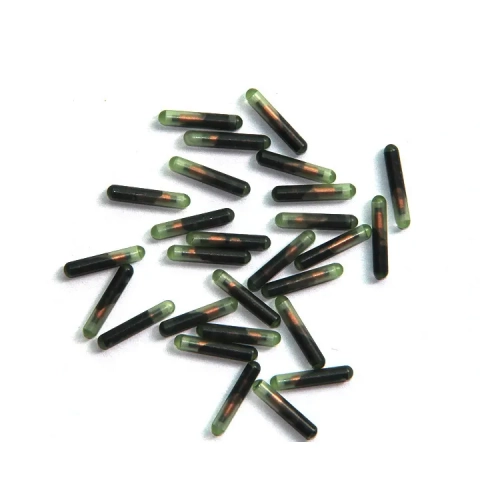
RFID Glass Tag

Need a compact RFID format for tight space or embedded placement?

MOQ
1,000 pcs

Stock SKU. Custom tooling from 2,000 pcs.

Lead time
7–15 days

Standard; rush possible on request.

Free sample
Ships in 1–3 days

Stock samples via DHL / FedEx.

Use this compact form factor when the RFID unit needs to fit inside a small product, tool, or molded part. Confirm available space, substrate, and required read distance before the sample plan is locked.

What buyers usually confirm first

swipe →

Surface Match

Will it sit on metal, textile, wood, plastic, or rubber?

The mounting surface usually decides tag construction faster than chip selection does.

Environment

Does it need to survive washing, heat, UV, or rough handling?

Laundry, anti-metal, tire, and rugged asset workflows all need different enclosures and materials.

Installation

Adhesive, screw, sew-on, nail-in, or loop install?

Attachment method changes both field speed and real-world read consistency, so it should be confirmed early.

Spec Check

What to confirm before you sample this tag

Surface material, enclosure, attachment method, and environmental limits usually matter more than a broad tag name alone.

Product Name RFID Glass Tag (Animal Microchip / Glass Transponder)
Housing Material Biocompatible glass tube (Schott 8625 bioglass, FDA approved); standard glass optional for non-implant use
Dimensions Dia 1.25 x 7 mm, 1.4 x 8 mm, 2.12 x 12 mm, 3 x 13 mm, 3 x 15 mm, 4 x 30 mm (6 stock sizes)
Color Translucent (chip and antenna visible through glass)
Weight 0.06 g (1.25 x 7) to 0.9 g (4 x 30)
Operating Frequency 125KHz (animal ID, automotive), 134.2KHz (livestock default per ISO 11784)
Compliance ISO 11784 / 11785 (international animal ID standard); CE mark; RoHS 3
Communication Protocol FDX-A (ISO 11784 Part 2), FDX-B (ISO 11784 Part 4), HDX (ISO 11784 Part 3)
Chip Options EM Microelectronic EM4200 (read-only 64-bit), EM4305 (R/W 512-bit), EM4305 + lockbit, NXP Hitag S (2048-bit for automotive)
Memory 64 bit (EM4200 read-only) to 2048 bit (Hitag S read/write)
Read Range 2-5 cm (handheld); 10-25 cm (panel reader)
Data Retention 20+ years (chip specification)
Write Endurance 100,000 cycles (EM4305 R/W only)
Operating Temperature -20 deg C to +60 deg C
Storage Temperature -20 deg C to +60 deg C
Sterility Individually sterile-packaged in blister pack (gamma-irradiated); 5-year shelf life from manufacture
Biocompatibility Certifications ISO 10993 biocompatibility, USP Class VI plastics, FDA 21 CFR 177 (food contact if orally dosed)
Delivery Method Syringe-injectable (pre-loaded sterile needle applicator, gauge 12 / 14 / 16) or manual embedding for automotive / research
Target Species Companion (dog, cat, rabbit, ferret), livestock (cattle, sheep, horse, pig), research (mice, rat, primate, fish), wildlife, poultry, equine, aquaculture broodstock
Lifetime Permanent (implanted); requires surgical removal
MOQ 1,000 pieces (stock, pet / companion); 10,000 pieces (livestock / research bulk); 50,000 pieces (automotive OEM)
Lead Time 7-14 business days stock; 15-25 business days custom chip encoding

Shortlist Logic

Why buyers shortlist this tag format

These features help teams decide whether the tag suits the environment, installation method, and read expectations of the real workflow.

Biocompatible glass tube - verified safe for subcutaneous injection in animals per veterinary biocompatibility standards
ISO 11784/11785 compliant - meets the international standard for animal identification used by 100+ countries and mandatory in the EU, UK, and Australia
FDX-A, FDX-B, and HDX protocol support - readable by all ISO-compliant animal ID readers from Allflex, Datamars, and Trovan worldwide
6 size options from 1.25 x 7 mm to 4 x 30 mm - covers fish, reptiles, companion animals, livestock, and equine injection requirements
Ferrite core with precision copper coil - amplifies RF field for read range exceeding capsule size limitations at 125KHz and 134.2KHz
Syringe-injectable delivery - standard veterinary syringe applicator enables subcutaneous implantation in under 3 seconds

Use Cases

Where this tag format usually works best

Use cases matter because the right tag depends on surface, environment, attachment, and read distance in the field.

Pet microchipping

permanent identification for dogs, cats, and companion animals meeting mandatory registration laws in 40+ countries

Livestock management

tag cattle, sheep, pigs, and poultry for breeding records, health tracking, and supply chain traceability

Wildlife conservation

implant endangered species with unique IDs for population monitoring and anti-poaching tracking programs

Laboratory animal identification

tag research animals for experiment assignment, dosing records, and regulatory compliance

Aquaculture and fish tagging

implant high-value broodstock for genetic tracking and health record management

Automotive immobilizer chips

embed in car key housings for ignition authentication and anti-theft systems

Glass Tag vs Clear PVC Tag — How To Choose

Biocompatible glass capsule or transparent PVC disc? Pick by embedding environment

Both formats keep the RFID invisible or subtle in the final product. Glass tags are biocompatible capsules for implantation (pets, livestock, human-adjacent) or fluid immersion. Clear PVC tags are flat transparent discs for embedding into clear plastics, glass panels, or decorative displays where the chip should stay subtle.

RFIDAK RFID glass tag — biocompatible cylindrical glass capsule 2-4mm diameter for pet microchipping, livestock identification, and fluid-environment embedding Option A

Glass Tag (this product — biocompatible capsule)

Biocompatible glass, 2-4 mm capsule

Material
Biocompatible borosilicate glass
Shape
Cylindrical capsule Ø2-4 × 8-18 mm
Environment
Living tissue, fluids, chemicals
Unit price (MOQ 1K)
$0.95 – 2.20

Best for

  • Pet microchipping (veterinary ISO 11784)
  • Livestock identification (cattle, sheep, poultry)
  • Automotive immobilizer embedding (car keys)
RFIDAK RFID clear transparent PVC tag — flat disc for embedding into clear plastics, glass displays, and products where chip visibility should stay subtle Option B

Clear PVC Tag (sibling — transparent disc)

Transparent flat disc, PVC / PET

Material
Transparent PVC or PET
Shape
Flat disc or square Ø15-50 mm
Environment
Dry or splash, flat embedding
Unit price (MOQ 1K)
$0.28 – 0.85

Best for

  • Embedding into clear consumer products
  • Smart dining / restaurant chip on glass cutlery
  • Translucent packaging brand authentication

Quick decision tip — If the tag needs to go inside a living organism or be immersed in fluids, glass (Option A) is the only biocompatible option — veterinary and livestock regulation worldwide requires ISO 11784/11785 glass capsules. If the tag embeds into a transparent flat surface (glass, clear plastic, display) and biocompatibility is not a factor, clear PVC (Option B) at 1/3 the cost is more cost-effective and accepts printing on the rim.

RFID Glass Tag Types

1 Should I choose the RFID glass tag for my animal / immobilizer program?

Yes if you need permanent subcutaneous animal identification for pets, livestock, research, wildlife conservation, or aquaculture; or if you are an automotive OEM building vehicle immobilizer key housings that need LF authentication. The The glass tag is ISO 11784 / 11785 compliant at 125KHz or 134.2KHz, supports FDX-A / FDX-B / HDX protocols for universal Allflex / Datamars / Trovan reader compatibility, and ships in 6 sizes from 1.25 x 7 mm (fish, small reptiles) to 4 x 30 mm (livestock, equine).

Pick a different tag if the workflow needs external (ear tag) rather than implanted identification (use LF ear-tag HDX transponder), if smartphone tap matters (use HF NFC on a different product), or if range > 10 cm is required (use UHF hard tag). Pick a glass tag when the identifier must be permanent, tamper-proof (requires surgical removal), and readable with the global ISO 11784 animal ID reader network.

2 Spec decision matrix animal ID alternatives

Comparison across the 4 animal ID tag classes veterinary clinics, livestock operators, and conservation programs typically evaluate. Prices indicative at MOQ 10,000 pieces.

ClassSizeAttach methodISO standardBest fitUnit price
The glass tag (implantable) 1.25-4.0 x 7-30 mmSubcutaneous injectionISO 11784/11785 (FDX-A/B, HDX)Permanent pet, livestock, research, conservation ID$0.55-2.20
LF ear tag (flag)30-60 mm plastic flagEar-pierce applicatorISO 11784/11785 (HDX typical)Livestock with external visual + RFID$0.85-2.45
LF bolus (rumen) 15 x 60 mm ceramicOrally swallowed, settles in rumenISO 11784/11785 (HDX)Cattle, sheep (permanent, recoverable at slaughter)$2.80-6.50
LF wristband / leg bandPlastic strap + embedded chipLeg band (birds) or collar (larger mammals)ISO 11784/11785Poultry, birds, zoo mammals where implant not preferred$0.45-1.80

Verdict: glass tag implant wins for permanence, tamper-proof, and small-animal workflows where external tags are lost or rejected. Ear tags win for livestock with visual ID needs. Bolus wins for cattle (orally dosed, no injection needed). Band wins for poultry and non-implantable species.

3 Typical deployment pattern - companion animal identification

National pet identification schemes run on ISO 11784/11785 FDX-B microchips registered to a national database at implant time. Veterinary distributors evaluate suppliers on capsule biocompatibility, anti-migration coating, syringe packaging sterility, and pre-loaded unique ID integrity, because duplicate or malformed IDs are the failure mode that damages a registry.

We supply parylene-C-coated bioglass capsules with pre-loaded IDs and syringe-compatible packaging for exactly this supply chain.

4 Compatibility reference protocols, readers, species

Verified compatibility across ISO 11784/11785 communication protocols, veterinary reader brands, and target species.

CategorySupportedNotes
Communication protocolsFDX-A (ISO 11784 Part 2), FDX-B (ISO 11784 Part 4), HDX (ISO 11784 Part 3)FDX-B is the global default; HDX preferred for cattle / ear-tag applications
Chip optionsEM Microelectronic EM4200 (read-only), EM4305 (R/W), EM4305 + lockbit, NXP Hitag SEM4305 R/W allows re-programming for research animals
Reader brands handheldAllflex (MSD Animal Health), Datamars LD-1, Trovan LID-573, Destron Fearing, AVID PowerTrackerAll 5 read FDX-B universally; HDX sometimes requires dual-protocol reader
Reader brands stationaryAllflex panel reader, Gallagher W-1 reader, Roxan iD10, Tru-Test reader stationsUsed at farm gate, milking parlor, shelter intake
Target species companionDog (1.4 x 8 mm between shoulder blades), cat (1.25 x 7 mm between shoulder blades), rabbit (1.4 x 8 mm), ferret (1.25 x 7 mm)Needle gauge 12 (dogs) or 14 (cats, small animals)
Target species livestockCattle (3 x 13-15 mm subcutaneous), horse (4 x 30 mm nuchal ligament), sheep (2.12 x 12 mm or HDX ear tag)Implant site varies by species and national regulation
Target species conservationFish (1.25 x 7 mm dorsal musculature), reptiles (1.4 x 8 mm), small mammals (1.4 x 8 mm)Aquaculture uses dedicated mini-tags; reptile / amphibian tagging is species-regulated
Target species researchMice (1.25 x 7 mm intraperitoneal), rats, rabbits, primates, laboratory fishLab animal codes (IACUC, NACLAR) apply; EM4305 R/W preferred for data storage
Automotive immobilizerNXP Hitag S, Philips PCF7935 equivalentEmbedded in key fob; HDX communication typical
Syringe applicatorNeedle gauge 12 / 14 / 16 (size-dependent); sterile single-use or auto-clavable reusableThe ships pre-loaded sterile applicators; separate reusable applicator sold for bulk livestock programs

5 Cost at volume FAQ

How much does the The glass tag cost at 10K pcs? Stock 1.4 x 8 mm pet tag with EM4305 chip, FDX-B protocol, biocompatible glass, and pre-loaded sterile applicator: $1.10-1.45 per unit at MOQ 10,000. Volume brackets: MOQ 1,000 = $1.85-2.40; MOQ 10,000 = $1.10-1.45 (base); MOQ 100,000 = $0.75-1.00; MOQ 500,000+ = $0.55-0.75.

Size variations? 1.25 x 7 mm (cat / small animal): base price. 1.4 x 8 mm (dog / standard pet): +$0.05-0.10. 2.12 x 12 mm (sheep / mid-size): +$0.15-0.25. 3 x 13-15 mm (cattle / livestock): +$0.30-0.55. 4 x 30 mm (horse): +$0.65-1.10.

Applicator and packaging? Pre-loaded sterile single-use applicator: included. Reusable applicator (auto-clavable, used with unloaded tags): sold separately at $45-85 per unit economic at > 500 implantations. Individual sterile pouch packaging: included. Bulk non-sterile (research / livestock): -$0.08-0.15 per unit.

Protocol and chip options? FDX-B (global default): included. HDX (livestock-preferred): +$0.08-0.15. EM4305 R/W upgrade for re-programmable research: +$0.12-0.22. Hitag S (automotive immobilizer): +$0.25-0.45.

Biocompatible vs standard glass? Biocompatible (Schott 8625 bioglass, FDA approved): included. Standard glass (for automotive, non-implant): -$0.20-0.35 per unit.

ROI vs ear tag only for livestock? Ear tag loss rate averages 4-8% per year (livestock knock tags off in fences / gates / feeders). Implanted glass tag loss rate: 0.05-0.2% per year (requires surgical removal or death-loss). For a 10,000-head cattle operation, ear-tag re-tagging at 6% $1.50/tag + labor = $3,200/year. Implant at 0.1% $1.20/tag + labor = $84/year. 38x savings on re-tagging labor + eliminates visual-ID-lost compliance issues.

6 Market context - companion animal microchipping

Companion-animal microchipping is mandatory or strongly incentivized in a growing list of countries, and national registries continue to expand. That regulatory push keeps steady demand for ISO 11784/11785 FDX-B capsules through veterinary distribution channels, with anti-migration coatings and ID data integrity as the differentiators buyers ask about first.

Supplier Fit

Why buyers source RFID Glass Tag from RFIDAK

Once the format is right, most teams still need confidence in manufacturing control, sample support, and repeat-order reliability.

ISO 9001

Quality-focused manufacturing and sample support for custom RFID projects.

Since 2008

RFID manufacturing experience across cards, tags, labels, wristbands and readers.

Free Samples

Test product compatibility before bulk purchasing and customization decisions.

Commercial Fit

How buyers usually move this product from shortlist to sample

Most inquiry-ready visitors want to know whether this product matches their workflow, region and approval stage. These cues help them move faster without leaving the product page.

System integrators

Often validating tag fit, reader behavior and installation method before including the product in a wider solution.

Laundry and textile operators

Usually focused on wash-cycle durability, attachment method and read consistency in bulk handling.

Industrial tracking teams

Typically comparing on-metal, pallet, tyre or rugged tags for repeat deployment in harsh environments.

Quote Checklist

What to send us for a faster recommendation

  • The exact surface or object the tag will be attached to, especially if metal, textile or plastic is involved.
  • Working environment such as heat, washing, chemicals, UV, outdoor exposure or repeated impact.
  • Required read distance, reader type and whether the tag is disposable or reusable.
  • Preferred attachment method, quantity and whether UID print or encoding is needed.

Market Notes

Regional conversations often tied to this category

North America

Frequent projects include warehouse visibility, IT asset management, returnable packaging and on-metal identification.

Europe

Industrial laundry, reusable transport items and traceability projects often require careful sample validation and repeatability.

Middle East, Africa and Oceania

Outdoor assets, utilities and long-service industrial tagging often put more weight on enclosure durability and field conditions.

More Ways To Source This

Order this by chip, format or region

These sourcing pages cover the chip-specific and market-specific buying details that often decide the final spec for this product.

Before You Order

Procurement guides every RFID Tags buyer reads first

Five short reads on the procurement-side topics every B2B RFID buyer wants answered before signing a quote — MOQ thresholds, lead time reality, pricing transparency, sample policy, and how to audit a Chinese factory before your first order.

Buyer Questions

Questions buyers usually ask before sample approval

These FAQs cover the points that usually come up between a first shortlist and a real sample or quote request.

What is the minimum order quantity (MOQ) for RFID Glass Tag? +

For RFID Glass Tag, the standard MOQ starts at 1,000 pieces on stock SKUs. Custom shape, material or antenna tooling typically requires 3,000–5,000 pieces to cover one-time mold / die-cut setup cost. Exact MOQ and unit pricing are quoted per project once chip, customization and packaging are confirmed.

Does RFIDAK provide free samples of RFID Glass Tag? +

Yes. Stock rfid tags samples of RFID Glass Tag are typically free; we only ask buyers to cover DHL/FedEx express shipping. Samples ship in 1–3 business days after your order is confirmed and arrive in 2–5 days to most countries. Custom samples (new chip, new size, printed artwork) usually take 3–7 additional days.

What is the production lead time for RFID Glass Tag? +

Standard RFID Glass Tag orders ship in 7–15 business days after PO confirmation and artwork approval. Large runs (>100k units) or orders with complex encoding / custom molds may take 15–25 business days. Rush production is available on request for time-sensitive launches; confirm MOQ and artwork early to protect the timeline.

Can RFID Glass Tag be customized for my brand or project? +

Yes. RFID Glass Tag supports end-to-end customization: full-color CMYK / silk-screen / UV printing, laser engraving, serial numbering, custom chip encoding (UID write, NDEF, sector locking), custom shape / size (subject to tooling MOQ), and packaging. Share your artwork, chip requirement and quantity and we will return a spec sheet + price within 24 hours.

Which RFID chips are supported for RFID Glass Tag? +

RFID Glass Tag supports EM Microelectronic EM4200 (read-only 64-bit), EM4305 (R/W 512-bit), EM4305 + lockbit, NXP Hitag S (2048-bit for automotive). Before ordering, share your reader model or current credential so we can confirm the exact chip variant (e.g., MIFARE Classic 1K vs DESFire EV3, NTAG213 vs 215) and avoid compatibility issues after lamination.

What certifications and quality control does RFIDAK apply to RFID Glass Tag? +

RFIDAK operates under ISO 9001:2015 (Quality Management) and ISO 14001 (Environmental Management), audited by SGS. RFID Glass Tag is subject to incoming material inspection, in-process QC at every lamination / bonding / encoding step, and 100% electrical performance testing before shipment. Products meet CE, FCC, RoHS and REACH as applicable by market. Full test reports are available on request for buyer audits.

Can RFID Glass Tag be pre-encoded or printed with my artwork before shipment? +

Yes. RFID Glass Tag can ship with UID range assignment, NDEF URL encoding (for NFC), sector-locked user data, serial numbering, and CMYK / silk-screen / UV printing of your artwork. Provide an AI/PDF artwork file at 300 dpi with 3 mm bleed and a chip-encoding spec; we return a digital proof for approval before production.

How does RFIDAK ship RFID Glass Tag internationally? +

RFIDAK ships RFID Glass Tag via DHL / FedEx / UPS (door-to-door, 3–5 days to most countries), air cargo (5–7 days for heavier orders), or sea freight (20–35 days for bulk over 500 kg). Standard Incoterms are EXW, FOB Shenzhen and DDP; choose based on customs clearance preferences. Commercial invoice, packing list and CoC / MSDS are included automatically.

How does RFIDAK handle repeat orders of RFID Glass Tag? +

For repeat buyers, RFIDAK locks tooling, artwork and chip encoding on file so subsequent POs ship faster — typically 5–10 business days for stock chip types at previously-run quantities. Price is adjusted transparently per chip market rate and FX movement; we flag any chip shortage (e.g., DESFire EV3) before quotation so the project plan stays realistic.

What are the technical specifications of RFID Glass Tag? +

Key RFID Glass Tag specs: frequency 125 kHz (animal ID, automotive), 134.2 kHz (livestock default per ISO 11784); dimensions Ø1.25 x 7 mm, Ø1.4 x 8 mm, Ø2.12 x 12 mm, Ø3 x 13 mm, Ø3 x 15 mm, Ø4 x 30 mm (6 stock sizes); substrate Biocompatible glass tube (Schott 8625 bioglass, FDA approved); standard glass optional for non-implant use. A full technical datasheet including read range, chip memory map, IP / temperature rating and compliance certificates is available on request; attach your reader model and target environment so we can confirm suitability before quoting.

Get Free RFID Samples

Try before you buy. Request free samples of any RFID product from our 50+ SKU catalog. Samples shipped via DHL/FedEx within 1-3 business days worldwide.

Not ready to chat? Just drop your email and we'll send the RFIDAK product catalog (PDF).

We'll only use your email to send the catalog and reply to your inquiry.

WhatsApp Get a Quote